Topagnosis: Why Your Brain Loses Track of Touch
Scientifically Reviewed · Dr. Marwa Abd-Alazim · August 21, 2026
Review Criteria & Clinical Standards
This content undergoes rigorous scientific peer-review and medical editorial standards at Arab Psychology Network to ensure clinical accuracy, validity, and compliance with evidence-based guidelines from leading psychological and healthcare authorities (APA / WHO).
The Core Definition of Topagnosis
Topagnosis is a complex neurological deficit characterized fundamentally by the loss of the capacity to precisely localize tactile stimulation on the body, despite the patient retaining the basic ability to feel the touch itself. In its primary and most common usage within clinical settings, this condition describes a failure of spatial mapping within the sensory system. A person with Topagnosis can confirm that they have been touched, reporting the sensation clearly, but they are utterly incapable of identifying the exact location of arousal, distinguishing, for instance, between stimulation on the forearm versus the upper arm. This condition highlights a critical distinction between primary sensory input and the subsequent, higher-order cognitive processing required for spatial integration and self-awareness of the body schema.
The core principle underlying Topagnosis involves a disruption in the integration pathways connecting raw sensory input with the brain’s established topographical maps. The sensory signals—transmitted via peripheral nerves and the spinal cord—arrive successfully at the primary sensory cortices; therefore, the patient experiences the raw sensation (e.g., pressure, vibration, temperature). However, the subsequent step, which involves assigning a precise spatial coordinate to that sensation using inputs from proprioception and visual memory, is impaired. This functional disconnection means the individual perceives a generalized feeling of touch without the necessary spatial specificity required for targeted physical reaction or conscious localization, creating a significant barrier to interaction with the environment and one’s own body.
It is important to note that the term Topagnosis is sometimes used more broadly, or in older literature, to describe a different, though conceptually related, deficit: the loss of the capacity to recognize surroundings that one is familiar with. While both definitions involve a failure of “place” recognition (the Greek root topos meaning place), modern clinical neuroscience typically reserves the term for the somatosensory deficit. The spatial disorientation meaning is now more frequently categorized under specific forms of topographical disorientation or agnosia, emphasizing the need for clarity when discussing patient symptomatology. Regardless of the specific manifestation, the condition underscores the vital role of integrated spatial awareness in both bodily function and navigation.
Neurological Basis and Mechanisms
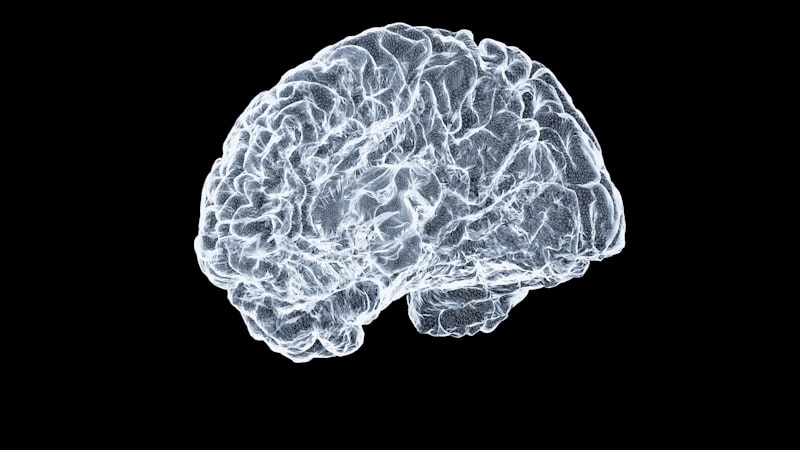
The precise mechanism behind somatosensory Topagnosis is rooted in damage to the crucial areas of the brain responsible for mapping and integrating sensory information, most commonly located within the parietal lobe. This area houses the somatosensory cortex, which is organized somatotopically—meaning that specific areas of the cortex correspond directly to specific areas of the body, creating a neurological “map.” When damage, often resulting from stroke, trauma, or localized lesions, affects the secondary processing areas of the parietal lobe, the ability to interpret and utilize this somatotopic map is compromised, even if the primary reception area remains intact.
For localization to occur successfully, the initial tactile signal must be relayed through the thalamus to the primary somatosensory cortex (S1), which registers the presence and intensity of the touch. Crucially, this information must then be passed to the secondary somatosensory cortex (S2) and associated posterior parietal areas, where integration with existing body schema, memory, and proprioceptive data takes place. Topagnosis arises not from a failure in the initial registration (S1 function remains largely preserved), but from the breakdown in this subsequent integrative process. The signal is received, but the neural network responsible for calculating the precise spatial coordinates fails to function, resulting in the localized “blindness” characteristic of the disorder.
Furthermore, Topagnosis often co-occurs with other somatosensory deficits, such as Astereognosis (inability to identify objects by touch) or Agraphesthesia (inability to recognize writing on the skin), indicating that the underlying pathology affects a complex, overlapping network of spatial and tactile recognition pathways. The presence of these related symptoms helps clinicians pinpoint the extent of the damage within the parietal association areas. Understanding the specific location of the lesion provides invaluable insight into the highly specialized nature of the brain’s spatial processing hierarchy, demonstrating that simple awareness of sensation is a distinctly different function from the complex cognitive task of assigning that sensation a place in physical space.
Historical Discovery and Context
The study of agnosias, including Topagnosis, has deep roots in the late 19th and early 20th centuries, a period dominated by the rise of clinical neurology and the drive to correlate specific behavioral deficits with localized brain damage. Early researchers, particularly those studying the effects of localized injuries sustained during wartime, began distinguishing between primary sensory loss (e.g., complete numbness) and higher-order recognition failures (agnosias). Topagnosis, as a specific type of somatosensory agnosia, was recognized when neurologists observed patients who could clearly feel a pinprick or light touch but could not consistently or accurately point to the location where they were stimulated. This demonstrated that the sensation pathway was separate from the localization pathway.
Key figures in this era, such as Henry Head and his contemporaries, meticulously documented and categorized various forms of sensory loss. Their work helped establish the principle of functional segregation within the cortex, arguing that sensory perception was not a monolithic function but a hierarchy of processing stages. The observation of Topagnosis provided powerful empirical evidence for this hierarchical model: if the primary sensory pathways were intact, yet localization failed, it logically followed that a higher cortical mechanism dedicated solely to spatial mapping was damaged. This distinction solidified the concept that agnosias represent failures of recognition or integration, rather than failures of primary input.
The research context that led to the formal definition of Topagnosis was largely driven by lesion studies—examining patients post-mortem or through clinical correlation with localized trauma. These studies were crucial in establishing the role of the posterior parietal cortex in spatial awareness and the construction of the body image. While the term may not be as widely used today as “astereognosis” or “topographical disorientation,” its historical significance lies in its clear demonstration that the ability to place oneself and one’s sensations within a spatial framework is a distinct cognitive function requiring specific neural machinery separate from basic sensory reception.
A Practical Example of Somatosensory Topagnosis
To fully grasp the impact of somatosensory Topagnosis, one must consider a common, everyday scenario where precise touch localization is essential, such as dealing with an irritating insect bite or a minor burn. In a healthy individual, the moment a mosquito lands and bites, the sensation immediately triggers a motor response directed accurately to the exact spot. For a person suffering from Topagnosis, this seemingly simple sequence breaks down, illustrating the profound disability caused by the loss of spatial acuity in the somatosensory system.
Imagine a patient, whom we shall call David, suffering from Topagnosis affecting his right arm. If a tiny splinter lodges itself just above his wrist, David will immediately feel an irritating sensation—he knows something is wrong with his arm. However, when he attempts to locate the splinter to remove it, he cannot pinpoint the source. He might rub his entire forearm, scratch his elbow, or mistakenly focus his search on his shoulder. This inability to correlate the felt sensation with a specific anatomical coordinate demonstrates the central feature of the disorder: sensation is registered, but location is lost.
The application of the psychological principle in this practical example can be detailed step-by-step, showing the functional failure:
-
Primary Sensory Input (Intact): The noxious stimulus (splinter) activates mechanoreceptors and nociceptors in the skin, sending a signal via peripheral nerves and the spinal cord to David’s primary somatosensory cortex (S1). David consciously feels the irritation.
-
Spatial Mapping Failure (Impaired): The signal proceeds to the parietal association areas responsible for converting raw input into a spatial coordinate on the body map. Due to the lesion, this conversion fails; the brain receives a non-specific alarm signal rather than a precise location pin.
-
Behavioral Outcome (Inaccurate): David initiates a scratching or searching behavior, but because the motor cortex receives only generalized or highly imprecise location data, the resulting action is inaccurate, often covering a large, non-specific area of the arm. The targeted, efficient removal of the splinter is impossible without external, visual guidance.
Significance in Cognitive Neuroscience
The study of Topagnosis holds significant importance for the field of cognitive neuroscience, primarily because it offers a clear window into the functional architecture of the parietal lobe and the hierarchical nature of sensory processing. By demonstrating that high-fidelity touch sensation can exist independently of spatial localization ability, Topagnosis supports the modularity thesis of brain function—the idea that different cognitive processes are handled by distinct, specialized neural circuits. This evidence is vital for developing accurate models of how the brain constructs the complex, integrated experience of the physical self.
In a clinical context, the principles derived from studying Topagnosis are applied in diagnosing the precise location and extent of neurological damage following trauma or stroke. Testing for Topagnosis helps clinicians differentiate between primary sensory nerve damage and higher cortical integration deficits. If a patient reports numbness, the issue is peripheral or in the primary cortex; if the patient reports feeling the touch but cannot locate it, the issue points squarely to the secondary somatosensory and parietal association areas, guiding treatment and prognosis.
Furthermore, understanding Topagnosis informs rehabilitation strategies. Therapies for patients with parietal damage often focus on cross-modal sensory integration, using visual feedback or auditory cues to help the patient re-learn the spatial relationship between sensation and location. By isolating the localization deficit, researchers can design targeted interventions aimed at rebuilding the damaged neural maps or encouraging neighboring brain regions to compensate for the lost function, thus improving the patient’s ability to interact purposefully with their environment and regain bodily autonomy.
Connections to Related Agnosias and Spatial Disorders
Topagnosis belongs to the broad category of agnosias—neurological disorders characterized by the inability to process sensory information and recognize objects, persons, sounds, shapes, or smells, despite the specific sense itself being intact. Specifically, it falls under the umbrella of somatosensory agnosias. Its existence is closely linked to several other related recognition failures, making its study crucial for mapping the interconnectedness of parietal lobe functions.
One closely related deficit is Astereognosis, the inability to identify an object by touch alone (e.g., recognizing a key or a coin placed in the hand). While Astereognosis involves the failure to synthesize tactile, thermal, and proprioceptive information into a recognizable object concept, Topagnosis is a more fundamental breakdown, focusing solely on the spatial coordinate of the touch, irrespective of what caused the sensation. Another related condition is Agraphesthesia, the inability to recognize letters or numbers traced on the skin. Both Astereognosis and Agraphesthesia often co-occur with Topagnosis because they all rely on the same critical spatial and integrative mechanisms within the parietal cortex.
When considering the second, less common definition of Topagnosis—the inability to recognize familiar surroundings—it connects directly to Topographical Disorientation. This latter condition describes a failure in navigational abilities, where patients cannot recognize landmarks or their relative spatial positions, leading them to become lost even in familiar environments. While the neurological substrates may overlap (both rely on spatial processing in the parietal and related temporal lobes), the somatosensory definition of Topagnosis remains distinct as it addresses body-space mapping, whereas topographical disorientation concerns external environment mapping. Ultimately, the study of Topagnosis contributes significantly to the field of Clinical Neuropsychology, offering insights into how the brain constructs and manages the internal representation of both the body and the external world.