The Topographic Model: Map Your Hidden Mental Layers
Scientifically Reviewed · Dr. Marwa Abd-Alazim · October 4, 2026
Review Criteria & Clinical Standards
This content undergoes rigorous scientific peer-review and medical editorial standards at Arab Psychology Network to ensure clinical accuracy, validity, and compliance with evidence-based guidelines from leading psychological and healthcare authorities (APA / WHO).
Introduction to the Topographic Model
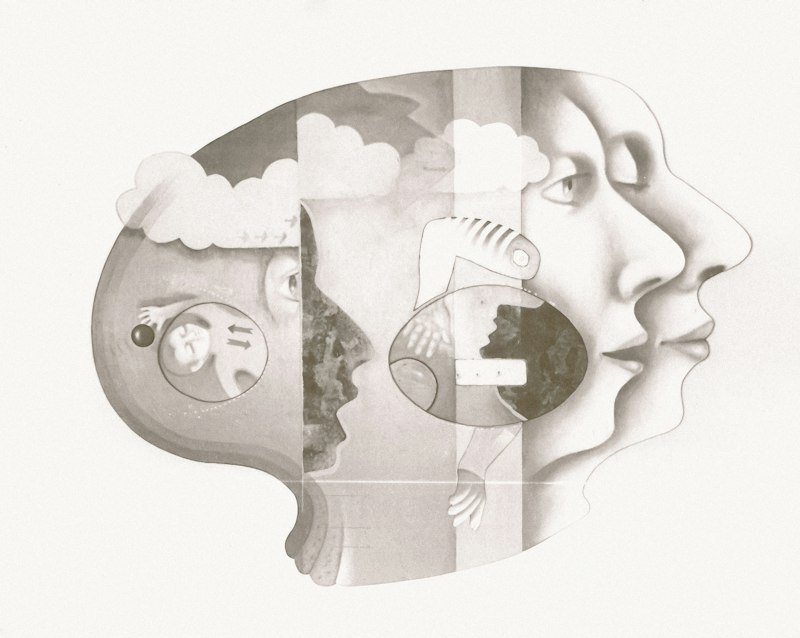
The term topographic, within the realm of psychology, refers primarily to Sigmund Freud’s foundational model of the human mind, which postulates distinct levels of mental awareness. This model, often called the topographic model of the mind, categorizes mental processes and content into three primary regions: the conscious, the preconscious, and the unconscious. It serves as a crucial framework for understanding how thoughts, feelings, and memories are organized and how they influence an individual’s behavior and experience, even when not directly accessible to immediate awareness. This conceptualization represented a revolutionary shift in psychological thought, moving beyond a purely descriptive understanding of mental states to an explanatory one that acknowledged hidden psychological forces.
At its core, Freud’s topographic model provides a spatial metaphor for the mind, akin to different layers or territories within a mental landscape. Each level possesses unique characteristics regarding the accessibility of its contents and the nature of the mental processes occurring within it. The delineation of these levels allowed Freud to theorize about the origins of psychological distress, suggesting that many mental phenomena, particularly those related to neuroses, stem from conflicts and dynamics occurring outside of an individual’s conscious perception. This model laid the groundwork for the development of psychoanalysis as a therapeutic approach, aiming to bring unconscious material into conscious awareness to resolve inner conflicts.
Understanding the topographic model is indispensable for grasping the fundamental principles of Freudian theory and its subsequent developments in psychodynamic thought. It posits that while we are directly aware of our conscious thoughts, a vast reservoir of mental content and processes operates beneath the surface, profoundly shaping our perceptions, motivations, and interactions with the world. The interactions and boundaries between these three levels are dynamic and permeable, constantly influencing one another and contributing to the complexity of human psychological functioning. This intricate interplay underscores the model’s enduring relevance in psychological discourse.
The Levels of the Mind: Conscious
The conscious mind represents the smallest and most superficial layer of the mental topography, encompassing everything we are currently aware of. It includes our immediate perceptions, thoughts, feelings, and memories that are directly accessible at any given moment. This is the realm of direct experience, where we engage with the external world and internal reflections that are within our immediate grasp. For instance, when reading this text, your conscious mind is processing the words, forming an understanding, and perhaps even contemplating the meaning, all within your direct awareness. It operates under the reality principle, dealing with the objective world through logical and rational thought processes.
While seemingly straightforward, the conscious mind is fleeting and constantly shifting. Its contents are transient, continually being replaced by new sensations, thoughts, and feelings. This dynamism highlights its role as the ‘executive’ of the mind, responsible for making decisions, engaging in problem-solving, and interacting purposefully with the environment. However, the conscious mind is not an isolated entity; it is deeply influenced by the contents and processes of the preconscious and unconscious levels. It acts as the gateway through which internal and external information must pass to be experienced directly, but it does not account for the entirety, or even the majority, of mental activity.
The thoughts and perceptions within the conscious mind are often logical and organized, reflecting a secondary process of thinking that aims for rational and adaptive behavior. It is the part of the mind that allows us to communicate our experiences, plan for the future, and engage in self-reflection. However, its limited capacity means that only a fraction of our total mental content can be held in conscious awareness at any one time. The vast amount of information processed by the brain, both sensory and cognitive, quickly moves in and out of this immediate awareness, underscoring the necessity of the other mental levels for comprehensive psychological functioning.
The Levels of the Mind: Preconscious
Situated between the conscious and the unconscious, the preconscious mind acts as a mental waiting room or a readily accessible storage area for thoughts, memories, and information that are not currently in our awareness but can easily be retrieved and brought into the conscious mind. It contains material that is not repressed and can be recalled with a moderate amount of effort. Think of it as your mental ‘notepad’ or ‘short-term memory’ combined with a vast archive of readily available data. For example, your phone number, the capital of your country, or what you had for breakfast yesterday are typically stored in your preconscious mind, accessible upon request.
The preconscious serves as a crucial bridge, allowing for the smooth flow of information between the deeper, less accessible unconscious and the immediate, aware conscious mind. It functions as a filter, allowing certain information to pass through to consciousness while holding back other material that might not be immediately relevant or that has been deemed less critical by the mind’s internal mechanisms. This selective accessibility is vital for efficient mental functioning, preventing the conscious mind from being overwhelmed by a deluge of information from the unconscious or from stored memories.
Furthermore, the preconscious mind is a repository for learned skills and habits that, while not requiring constant conscious attention, can be brought to awareness when needed. For instance, the ability to ride a bicycle or play a musical instrument, once mastered, resides largely in the preconscious. While the execution of these tasks might feel automatic, the underlying knowledge and procedural memories are readily available to conscious thought if focus is directed towards them. This intermediate level highlights the dynamic nature of mental processing, where information is constantly being accessed, processed, and stored across different degrees of awareness.
The Levels of the Mind: Unconscious
The unconscious mind represents the most profound and influential layer of Freud’s topographic model, comprising a vast reservoir of thoughts, memories, desires, and impulses that are entirely outside of an individual’s conscious awareness. This inaccessible realm is believed to be the primary determinant of human behavior, operating independently of rational thought and often manifesting its influence through dreams, slips of the tongue (Freudian slips), neurotic symptoms, and symbolic actions. It is a powerful, dynamic force, containing repressed traumatic experiences, primitive instincts, and unfulfilled wishes that continue to exert a profound impact on an individual’s personality and psychological well-being.
Unlike the conscious and preconscious, the unconscious operates according to the pleasure principle, seeking immediate gratification of desires without regard for reality or social norms. Its thinking processes are often characterized by primary process thinking, which is illogical, non-sequential, and disregards time and space. This mode of thought allows for contradictions and the merging of disparate ideas, as seen in the fantastical and symbolic nature of dreams. The contents of the unconscious are not directly observable or controllable, making therapeutic techniques like free association and dream analysis essential tools for its exploration in psychoanalysis.
Freud posited that much of our psychological suffering, including various forms of psychopathology, originates from unresolved conflicts and repressed material residing in the unconscious. These hidden contents, though unacknowledged, exert pressure on the conscious mind, leading to anxiety, defense mechanisms, and symptomatic behaviors. The concept of the unconscious revolutionized the understanding of mental illness, shifting the focus from purely biological or moral explanations to an appreciation of the complex interplay of internal psychological forces. Its pervasive influence underscores the depth and complexity of the human psyche, suggesting that much of what drives us remains hidden beneath the surface of conscious awareness.
Historical Foundations and Development
The origins of Freud’s topographic model are deeply rooted in his early clinical work and theoretical explorations in the late 19th and early 20th centuries. Initially trained as a neurologist, Freud became increasingly dissatisfied with purely physiological explanations for psychological phenomena, particularly in cases of hysteria. His collaboration with Josef Breuer on the case of Anna O., which involved the “talking cure” to address her hysterical symptoms, highlighted the profound impact of unremembered traumatic experiences on current psychological states. This pivotal work suggested that mental content could exist outside of conscious awareness yet still exert significant influence.
Freud’s observations led him to theorize about a dynamic unconscious, a realm where painful memories and unacceptable desires were actively repressed. He proposed that these repressed elements did not simply disappear but continued to operate, manifesting in disguised forms such as dreams, neuroses, and everyday mistakes. The development of the topographic model was an attempt to provide a systematic framework for understanding these observations, categorizing mental processes based on their accessibility to consciousness. This marked a crucial transition from a neurological perspective to a purely psychological one, laying the groundwork for psychoanalysis as a distinct field.
The conceptualization of the conscious, preconscious, and unconscious mind provided Freud with a powerful lens through which to interpret a wide range of human experiences, from normal psychological functioning to severe mental illness. His work challenged prevailing notions of rationality and free will, suggesting that much of human behavior is driven by hidden, irrational forces. This model was a cornerstone of his early theories, providing the initial structural understanding of the mind before he later introduced the structural model (Id, Ego, Superego) to describe the functional components and their dynamic interactions within these topographic levels.
Illustrative Examples in Everyday Life
To fully grasp the practical implications of the topographic model, one can observe its manifestations in various everyday occurrences. A common example involves the phenomenon of ‘tip-of-the-tongue’ experiences. When you struggle to recall a name or a piece of information that you know you possess, but cannot quite access it immediately, that information resides in your preconscious mind. It is not currently in your conscious awareness, but it is not deeply repressed in the unconscious either; it is merely temporarily out of reach, awaiting retrieval. Often, with a slight cue or a moment of distraction, the information effortlessly surfaces into consciousness, demonstrating the fluid boundary between the preconscious and conscious levels.
Another compelling illustration is the Freudian slip, or parapraxis, which involves an error in speech, memory, or physical action that is interpreted as revealing an unconscious thought, feeling, or desire. For instance, a speaker might accidentally say, “I’m glad to see you’re leaving” instead of “I’m glad to see you’re here.” Freud would interpret such a slip not as a random error, but as a momentary breakthrough of an unconscious wish or hostility into conscious expression. This type of error vividly demonstrates how unconscious material, despite being repressed, can subtly influence and even override conscious intentions, revealing hidden psychological dynamics.
Dreams also provide a rich landscape for understanding the topographic model. According to Freud, dreams are the “royal road to the unconscious,” serving as disguised fulfillments of repressed wishes. The manifest content of a dream (what you remember seeing and doing in the dream) is a symbolic representation of the latent content (the underlying unconscious desires and conflicts). During sleep, the mind’s defenses are lowered, allowing unconscious material to surface, albeit in a highly symbolic and often distorted form. Through dream analysis, the psychoanalyst attempts to decode these symbols, bringing the unconscious latent content into conscious awareness, thereby shedding light on unresolved psychological issues and demonstrating the profound influence of the unconscious on mental life.
Profound Significance in Psychology
The introduction of the topographic model by Freud marked a seismic shift in psychological thought, profoundly altering the understanding of the human mind. Prior to Freud, many psychological phenomena were attributed to conscious will, moral failing, or purely biological causes. The topographic model, however, presented a revolutionary perspective by positing that a vast, inaccessible realm of the unconscious actively shapes our thoughts, feelings, and behaviors. This insight challenged the prevailing rationalist view of humanity, suggesting that much of what drives us operates outside of our direct awareness, thereby opening entirely new avenues for psychological inquiry and intervention.
The concept of the unconscious, in particular, provided a compelling explanation for complex psychological symptoms and behaviors that seemed irrational or self-defeating. It offered a framework for understanding conditions like hysteria, phobias, and obsessive behaviors not as simple malfunctions, but as manifestations of underlying, unresolved unconscious conflicts. By acknowledging the power of hidden mental processes, Freud’s model laid the groundwork for a dynamic understanding of the psyche, where internal forces are constantly interacting and competing, shaping an individual’s personality and experiences in profound ways. This dynamic perspective contrasted sharply with more static or purely descriptive psychological approaches of the time.
Moreover, the topographic model’s emphasis on the unconscious provided a critical foundation for the development of psychoanalysis as a therapeutic modality. The goal of psychoanalytic therapy became to bring unconscious material into conscious awareness, thereby allowing individuals to confront and resolve the conflicts that were previously beyond their grasp. This focus on introspection and the exploration of hidden meanings revolutionized the treatment of mental distress, moving beyond symptom management to address the deeper roots of psychological suffering. The model’s influence permeated not only clinical practice but also broader cultural and intellectual discourse, shaping how society understood human motivation, creativity, and pathology.
Applications in Therapy and Beyond
The practical applications of Freud’s topographic model are most evident in the realm of psychoanalysis and psychodynamic therapies. The core therapeutic aim in these approaches is to render the unconscious conscious, thereby alleviating psychological distress stemming from repressed conflicts. Techniques such as free association, where patients are encouraged to speak whatever comes to mind without censorship, are designed to bypass the defenses of the conscious and preconscious minds, allowing unconscious material to emerge. Similarly, dream analysis is employed to interpret the symbolic content of dreams, which are considered disguised expressions of unconscious wishes and fears, thereby providing insights into the patient’s hidden psychological landscape.
Beyond the clinical setting, the topographic model has profoundly influenced various other fields. In literature and art, the concept of the unconscious has provided a rich source of inspiration for exploring characters’ hidden motivations, symbolic imagery, and complex psychological narratives. Artists and writers often delve into themes of repression, desire, and the irrational, drawing parallels with Freudian ideas about the mind’s deeper layers. Literary criticism, in particular, frequently utilizes psychoanalytic concepts to interpret the underlying meanings and psychological dynamics within texts, revealing subtexts that operate beneath the overt narrative.
Furthermore, the model has left its mark on fields such as social psychology, advertising, and even legal studies. Understanding that individuals are often driven by motivations they are unaware of has informed research into implicit biases, consumer behavior, and decision-making processes. Advertising, for instance, often targets unconscious desires and associations rather than purely rational choices. While specific Freudian concepts may have evolved or faced critiques, the fundamental idea that non-conscious processes profoundly influence human behavior remains a cornerstone of modern psychological understanding across diverse disciplines.
Interconnections with Other Freudian Concepts
The topographic model, while foundational, is not an isolated concept within Freudian theory; it intimately interacts with and is complemented by other key Freudian constructs. Most notably, it forms a crucial backdrop for the structural model of the mind, which comprises the Id, Ego, and Superego. While the topographic model describes the *levels* of the mind based on accessibility, the structural model describes the *functions* or *agencies* operating within these levels. The Id, representing primal instincts and desires, is entirely unconscious. The Superego, encompassing internalized morals and ideals, has conscious, preconscious, and unconscious aspects. The Ego, the rational mediator, operates across all three levels, striving to balance the demands of the Id, the Superego, and external reality.
The interplay between the topographic and structural models helps explain the dynamic nature of mental conflict. For example, an unconscious Id impulse (e.g., aggression) might be partially censored by the unconscious Superego, leading the Ego to employ defense mechanisms. These mechanisms, such as repression, denial, or projection, are largely unconscious strategies employed by the Ego to manage anxiety arising from internal conflicts and external threats. They operate primarily in the unconscious and preconscious realms, preventing unacceptable thoughts or feelings from reaching conscious awareness. Understanding where these mechanisms operate within the topographic map is crucial for appreciating their function in protecting the psyche.
Furthermore, concepts like the psychosexual stages of development are also intertwined with the topographic model. Fixations or unresolved conflicts from these early developmental stages are believed to be repressed into the unconscious, continuing to influence adult personality and behavior. The specific characteristics of an individual’s personality, their neuroses, or their character traits are often understood as the enduring legacy of these unconscious dynamics. Thus, the topographic model provides the spatial framework within which the Id, Ego, and Superego interact, defense mechanisms operate, and developmental experiences leave their lasting, often hidden, imprint on the psyche.
Broader Context and Legacy
The topographic model of the mind is a cornerstone of psychoanalysis and the broader field of psychodynamic psychology. It provided the initial conceptualization for understanding the mind as a complex system with hidden depths, challenging the prevailing notion that all mental processes were accessible to conscious introspection. This model was instrumental in establishing the idea that psychological phenomena, including symptoms of mental illness, could have roots in unconscious processes, rather than being solely attributed to conscious will or organic pathology. Its influence extended beyond psychology, permeating into philosophy, literature, and art, profoundly shaping 20th-century thought about human nature.
While Freud’s original topographic model has undergone significant evolution and critique over the decades, its fundamental premise—that much of mental life operates outside of conscious awareness—remains highly influential. Contemporary cognitive psychology, for instance, extensively researches non-conscious processing, implicit memory, and automaticity, albeit through different methodologies and theoretical lenses. While not directly endorsing Freud’s specific constructs, these modern fields tacitly acknowledge the significant role of processes that are not immediately accessible to the conscious mind, thereby echoing the core insight of the topographic model.
The enduring legacy of the topographic model lies in its revolutionary contribution to understanding the complexity of the human psyche. It paved the way for exploring the irrational, the symbolic, and the hidden motivations behind human actions, laying the groundwork for subsequent theories of personality, development, and psychopathology. Despite criticisms regarding its scientific testability and its deterministic implications, the topographic model forever changed how psychologists and the general public conceive of the mind, emphasizing its dynamic, layered, and often mysterious nature. It remains a crucial starting point for anyone seeking to understand the historical development and foundational concepts of psychoanalytic and psychodynamic thought.