Brain Herniation: Anatomy of a Neurological Crisis
Scientifically Reviewed · Dr. Marwa Abd-Alazim · August 22, 2026
Review Criteria & Clinical Standards
This content undergoes rigorous scientific peer-review and medical editorial standards at Arab Psychology Network to ensure clinical accuracy, validity, and compliance with evidence-based guidelines from leading psychological and healthcare authorities (APA / WHO).
The Core Definition and Pathophysiological Mechanism
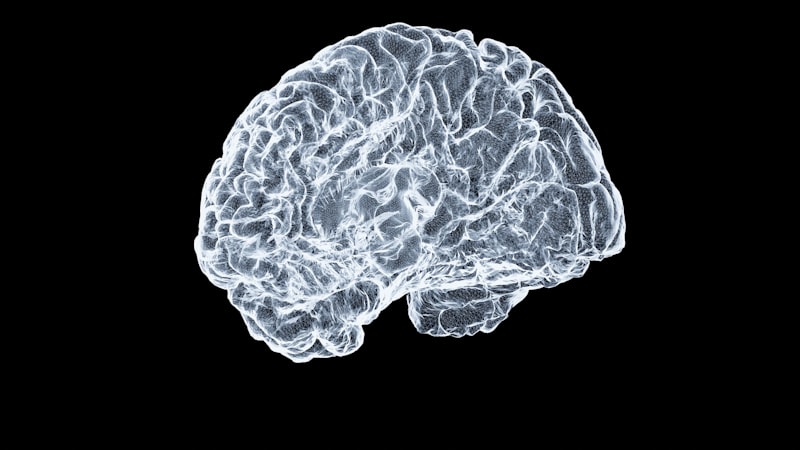
Transtentorial herniation represents a catastrophic neurological event defined by the displacement of brain tissue from its normal compartment across the Tentorial Notch, the opening in the tentorium cerebelli. This process is invariably triggered by severely elevated Intracranial Pressure (ICP) within one of the cerebral hemispheres, usually secondary to a rapidly expanding mass lesion such as a hematoma or tumor. The physical mechanism involves the medial structures of the temporal lobe, most notably the uncus, being forced downward and medially. This descent results in the compression and subsequent distortion of the vital structures housed within the brainstem, particularly the Midbrain and pons, leading rapidly to loss of consciousness, failure of autonomic functions, and ultimately, death if not immediately reversed.
The fundamental principle driving this devastating shift is the Monro-Kellie doctrine, which posits that the cranial cavity, being rigid, contains a fixed volume composed of brain parenchyma, cerebrospinal fluid (CSF), and blood. An increase in the volume of any one component, without a compensatory decrease in the others, leads to a significant rise in ICP. Once compensatory mechanisms—such as the displacement of CSF into the spinal column and venous blood out of the skull—are exhausted, the pressure gradient becomes so steep that the soft brain tissue is extruded through the path of least resistance, which is the tentorial opening. This mechanical displacement causes severe compression and shearing forces on delicate neuronal pathways responsible for consciousness and cardiorespiratory regulation.
The initial displacement often involves the medial temporal lobe, specifically the uncus, a situation frequently referred to clinically as Uncal Herniation, which is a specific and common type of transtentorial herniation. The immediate consequence of this lateral shift is the compression of the ipsilateral third cranial nerve (Oculomotor nerve) as it traverses the space between the herniating uncus and the clivus. This compression provides the classic initial clinical sign: dilation and fixation of the pupil on the side of the lesion, marking a critical transition point in the patient’s clinical course.
Classification and Subtypes of Transtentorial Displacement
While transtentorial herniation is often used synonymously with uncal herniation, the overall category encompasses several distinct patterns of tissue displacement, classified primarily by the direction of the brain shift. The most common and clinically urgent is the **Descending Transtentorial Herniation**, where structures move from the supratentorial compartment (above the tentorium) to the infratentorial compartment (below the tentorium). This descent can be further categorized as lateral (or uncal), where the medial temporal lobe pushes inward, or central, where the entire diencephalon and midbrain are symmetrically pushed downward through the tentorial notch, a phenomenon often associated with diffuse cerebral edema rather than a focal mass.
A less frequent but equally serious subtype is **Ascending Transtentorial Herniation**, sometimes referred to as reverse herniation. This occurs when a mass or rapidly developing pressure increase in the posterior fossa (infratentorial space), such as a cerebellar hemorrhage or tumor, forces cerebellar tissue upward through the tentorial incisura. While the mechanisms differ, the result is still compression of the midbrain, leading to acute hydrocephalus due to obstruction of the cerebral aqueduct, and subsequent severe brainstem dysfunction. Recognizing the subtype is crucial for surgical planning, as managing posterior fossa lesions requires a distinct approach compared to managing supratentorial mass effects.
Regardless of the specific subtype, the resulting compression of the brainstem is the mechanism that precipitates mortality. The Midbrain houses crucial nuclei, including those governing consciousness (Reticular Activating System) and vital signs (cardiovascular and respiratory centers). Horizontal and vertical displacement of the midbrain stretches and distorts the penetrating blood vessels, leading to secondary ischemic infarcts and hemorrhages within the brainstem (known as Duret hemorrhages). These secondary injuries render the damage irreversible, even if the primary pressure source is subsequently relieved, highlighting why time is the single most important factor in the management of this condition.
Historical and Clinical Recognition
The recognition of internal cerebral herniation syndromes evolved primarily through post-mortem pathology and the development of clinical neurology and neurosurgery. Early anatomical studies established the fixed nature of the skull and the boundaries created by the dura mater folds, such as the tentorium cerebelli. However, the acute clinical syndrome associated with transtentorial herniation became prominent in the early 20th century as physicians began to correlate specific patterns of neurological deterioration—such as unilateral pupillary dilation followed by rapid coma—with findings of severe cerebral compression observed during autopsy. Physicians recognized that progressive neurological decline was not merely due to the mass itself, but to the secondary structural shifts.
Key figures in neurosurgery and neurology, including Harvey Cushing, contributed significantly to the understanding of elevated ICP and its systemic effects, such as the classic Cushing’s response (hypertension, bradycardia, and irregular respiration). While Cushing’s work focused broadly on the consequences of mass lesions, the specific mechanics of herniation were further delineated as diagnostic capabilities improved. The advent of modern neuroimaging techniques, specifically Computed Tomography (CT) scanning in the 1970s, revolutionized the ability to diagnose transtentorial herniation while the patient was still alive. Before CT, the diagnosis was largely clinical and often presumptive; afterward, physicians could visualize the exact extent of the tissue displacement, the size of the mass, and the degree of brainstem compression in real-time, transforming transtentorial herniation from a fatal certainty into a potentially survivable emergency requiring immediate, targeted intervention.
A Clinical Case Illustration
To illustrate the destructive sequence of transtentorial herniation, consider a high-impact motor vehicle accident resulting in severe Traumatic Brain Injury (TBI) and the subsequent development of an acute epidural hematoma in the right temporal region. Initially, the patient may exhibit a brief period of lucidity or mild confusion, but as arterial blood rapidly fills the epidural space, the mass volume increases exponentially, driving up ICP within minutes. This escalating pressure overwhelms the brain’s ability to compensate.
The sequence of events leading to herniation unfolds in distinct, rapid steps. Step 1: The localized pressure exerted by the rapidly expanding hematoma pushes the right cerebral hemisphere medially. Step 2: The innermost structure of the temporal lobe, the uncus, is forced into the rigid opening of the Tentorial Notch. Step 3: As the uncus descends, it exerts pressure on the adjacent structures, crucially compressing the right third cranial nerve (oculomotor nerve) as it exits the brainstem. Clinically, this manifests as pupillary dilation (mydriasis) and sluggish or absent light reflex on the right side, often the first definitive sign of imminent herniation. Step 4: Continued pressure forces the midbrain and upper brainstem against the contralateral free edge of the tentorium. This displacement causes severe compression of the Reticular Activating System, leading to rapid deterioration of consciousness, progression from confusion to stupor, and finally, deep coma.
This example demonstrates the extreme urgency of the condition. The transition from a dilated pupil to profound coma and respiratory arrest can occur within minutes. If neurosurgical decompression (e.g., evacuation of the hematoma) is not performed immediately upon recognition of the pupillary changes, the secondary effects—brainstem ischemia and Duret hemorrhages—will lead to irreversible damage and brain death, regardless of subsequent treatment.
Significance in Neuropsychology and Clinical Application
Transtentorial herniation holds profound significance in clinical neuropsychology, serving as the ultimate illustration of the necessity for structural integrity for the maintenance of core psychological functions, particularly consciousness and executive control. The catastrophic loss of function resulting from brainstem compression underscores the absolute dependence of the mind on the functional state of the neural architecture. For neuropsychologists, understanding the signs and progression of herniation is crucial because it informs immediate consultation regarding prognosis and potential long-term cognitive deficits if the patient survives.
In clinical practice, the concept of herniation dictates the urgency of monitoring and treating elevated Intracranial Pressure. Treatment applications are aggressive and multimodal. Acute management focuses on reducing brain volume and ICP rapidly, often involving measures such as intravenous administration of osmotic diuretics (like Mannitol or hypertonic saline), controlled hyperventilation (to induce vasoconstriction and reduce cerebral blood volume), and sedation. Definitive treatment, however, requires addressing the underlying mass effect, which frequently necessitates emergent neurosurgical procedures, such as hematoma evacuation or decompressive craniectomy, where a section of the skull is temporarily removed to allow the swollen brain tissue room to expand without causing fatal internal shifts.
The long-term impact on survivors of transtentorial herniation is a key area for neuropsychological rehabilitation. Even if the patient survives the acute crisis, the period of severe brainstem compression often results in hypoxic-ischemic injury to vulnerable higher cortical areas. Survivors frequently present with significant cognitive impairment, including memory deficits, slowed processing speed, impaired executive functions, and profound changes in emotional regulation and personality. Rehabilitation programs must be tailored to address the specific, localized damage caused by the initial compression and the secondary systemic injuries.
Connections to Related Psychological Concepts
Transtentorial herniation is intrinsically linked to several broader psychological and neurological concepts. It falls primarily under the domain of Biological Psychology (or Physiological Psychology), as it concerns the direct relationship between pathological changes in brain structure and the resulting functional deterioration of the organism. Furthermore, its acute clinical management and chronic sequelae place it firmly within the specialization of Clinical Neuropsychology, particularly in the assessment and rehabilitation of severe neurological injury.
The condition is closely associated with **Traumatic Brain Injury** (TBI), as TBI is a leading cause of the hematomas and edema that precipitate herniation. Assessment tools used in the acute setting, such as the Glasgow Coma Scale (GCS), are essential for monitoring the progressive deterioration indicative of herniation. A sudden, rapid decline in the GCS score, especially when coupled with the classic pupillary changes associated with uncal compression, signals a dire emergency. Finally, the study of herniation and brainstem compression is fundamental to understanding the neural basis of consciousness. The rapid loss of consciousness seen in these patients directly relates to the crushing of the Reticular Activating System (RAS) within the Midbrain, demonstrating that consciousness is not a diffuse property of the cortex but depends critically on the functional integrity of the brainstem structures.
Understanding the geometry of the skull and the critical role of structures like the Tentorial Notch provides a clear anatomical framework for predicting functional loss. When the uncus compresses the midbrain, the psychological functions that are immediately jeopardized include wakefulness, basic alertness, and the regulation of autonomic processes essential for sustaining life. Therefore, transtentorial herniation serves as a powerful, albeit tragic, example of the mind-body connection, illustrating how minute mechanical shifts in physical structure can instantaneously extinguish the most complex psychological capabilities.