Trial-and-Error Learning: How Mistakes Fuel Your Growth
Scientifically Reviewed · Dr. Marwa Abd-Alazim · September 22, 2026
Review Criteria & Clinical Standards
This content undergoes rigorous scientific peer-review and medical editorial standards at Arab Psychology Network to ensure clinical accuracy, validity, and compliance with evidence-based guidelines from leading psychological and healthcare authorities (APA / WHO).
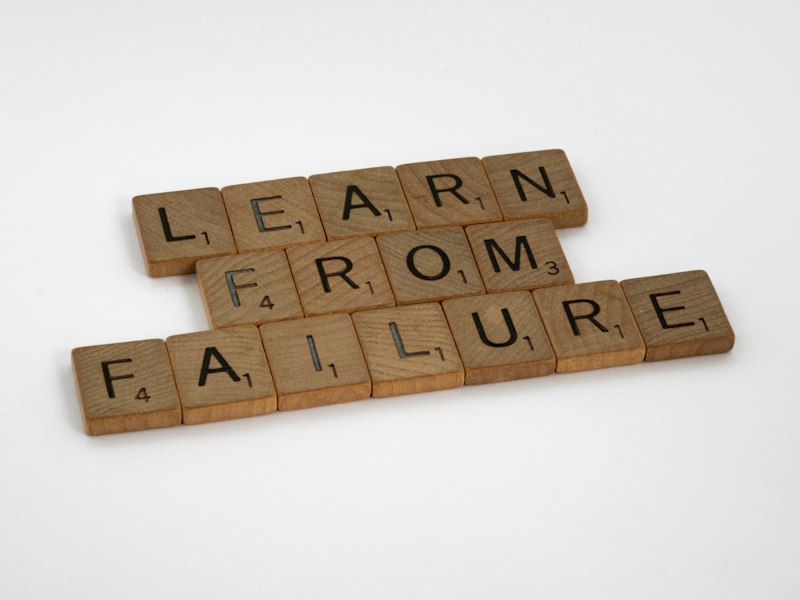
Conceptual Foundations of Trial-and-Error Learning
Trial-and-error learning represents a fundamental behavioral mechanism through which organisms acquire new knowledge and refine skills by interacting directly with their environment. At its core, this process involves the repeated, often varied, attempts to reach a specific goal or solve a particular problem, followed by the observation of the outcomes resulting from those attempts. When an action yields a positive result, the association between the stimulus and the successful response is strengthened; conversely, when an action results in failure or an undesirable outcome, the association is weakened. This iterative feedback loop serves as a primary driver of cognitive and behavioral development across a vast spectrum of biological life, providing a pragmatic way to navigate complex and unpredictable surroundings without the need for prior instruction or innate programming.
The philosophical and psychological underpinnings of trial-and-error learning are deeply rooted in the concept of reinforcement learning. In this paradigm, the organism is viewed as an active agent that explores its environment, receiving signals in the form of rewards or punishments. These signals act as the primary motivators for behavioral change, guiding the organism toward optimal strategies over time. This form of learning is distinguished by its lack of a formal “teacher”; instead, the environment itself provides the necessary feedback. Consequently, trial-and-error is often characterized by a high degree of initial randomness, which gradually gives way to more structured and efficient patterns of behavior as the subject identifies which actions are most likely to produce the desired effects.
Furthermore, the efficiency of trial-and-error learning is often dictated by the relationship between exploration and exploitation. During the initial stages of learning, an organism must explore a wide variety of potential actions to map out the consequences of its behavior. As knowledge is accumulated, the organism shifts toward exploitation, where it consistently chooses the actions that have previously yielded the highest rewards. This transition is crucial for survival, as it allows for the rapid adaptation to new challenges while eventually settling into a stable, successful routine. The complexity of this process varies significantly depending on the cognitive capacity of the organism and the intricacy of the task at hand, ranging from simple motor skill acquisition to complex abstract problem-solving.
Historical Evolution: From Aristotle to Thorndike
The intellectual history of trial-and-error learning can be traced back to classical antiquity, where early thinkers sought to understand the nature of human experience and the acquisition of wisdom. Aristotle, one of the most influential figures in Western philosophy, touched upon these concepts through what he described as the law of experience. Aristotle posited that human beings and other animals learn primarily through their interactions with the physical world, noting that “the things we have to learn before we can do them, we learn by doing them.” He recognized that mistakes were not merely failures but were essential components of the learning process, providing the necessary data for an organism to adjust its future conduct and achieve mastery over its environment.
It was not until the late 19th and early 20th centuries, however, that trial-and-error learning was formalized as a scientific concept within the field of psychology. Edward Thorndike, a pioneering American psychologist, is credited with coining the term and providing the first rigorous experimental evidence for the phenomenon. Thorndike’s most famous experiments involved the use of puzzle boxes, into which he placed hungry cats. To escape and reach food placed outside, the cats had to perform a specific sequence of actions, such as pulling a string or pressing a lever. Initially, the cats exhibited frantic and random behaviors; however, through repeated trials, they eventually stumbled upon the correct response. Over time, the random behaviors disappeared, and the cats became increasingly efficient at escaping the box.
Thorndike’s observations led to the formulation of the Law of Effect, a cornerstone of behavioral psychology. This law states that responses followed by satisfaction to the animal will, other things being equal, be more firmly connected with the situation, so that, when it recurs, they will be more likely to recur. Conversely, responses followed by discomfort will have their connections weakened. Thorndike’s work shifted the focus of psychology from introspection to observable behavior, laying the groundwork for later theories of operant conditioning developed by B.F. Skinner. His research demonstrated that learning was not necessarily a matter of sudden “insight” but was often a gradual process of pruning unsuccessful actions and reinforcing successful ones.
Categorical Forms of Trial-and-Error Methodologies
In contemporary psychology and cognitive science, trial-and-error learning is categorized into several distinct forms, each characterized by different strategies and cognitive demands. The most common form is trial-and-error problem solving. In this modality, an organism is faced with a specific obstacle and attempts to overcome it through a series of varied actions. This is often seen in both natural and laboratory settings, such as a bird trying different ways to crack a nut or a human attempting to assemble a complex piece of furniture without instructions. The key feature here is the direct interaction with the physical or conceptual problem and the immediate feedback provided by the success or failure of each attempt.
Another significant variation is trial-and-error search, which is frequently employed in information processing and spatial navigation. This form involves the systematic or random scanning of an environment or a dataset to locate a specific target or solution. For example, a predator searching for prey in a vast forest may use trial-and-error search by checking different locations until a successful encounter occurs. In digital contexts, search algorithms often use similar principles to navigate through vast amounts of data, refining their parameters based on whether previous search paths led to the desired information. This form emphasizes the importance of persistence and the ability to discard unpromising avenues of investigation.
Finally, trial-and-error learning by imitation represents a more advanced cognitive process where an organism learns by observing the consequences of others’ actions. While traditional trial-and-error is based on personal experience, observational learning allows an individual to bypass some of the risks and time costs associated with direct experimentation. By watching a peer succeed or fail at a task, an observer can narrow down the field of potential actions to those most likely to result in a reward. This form of learning is particularly prevalent in social species, such as primates and cetaceans, and serves as a vital mechanism for the transmission of cultural knowledge and complex survival skills within a population.
Manifestations in Animal Ethology and Behavioral Adaptation
The role of trial-and-error learning in animal behavior cannot be overstated, as it is a primary driver of adaptation and survival in the wild. Animals living in fluctuating environments must constantly update their behavioral repertoires to account for changes in food availability, predator presence, and climate. Through trial-and-error, an animal can discover new food sources or develop more effective hunting techniques. For instance, many species of birds have learned to exploit human-made environments, such as opening milk bottles or using traffic to crack open nuts, through a process of initial accidental discovery followed by repeated reinforcement.
Beyond simple survival, trial-and-error learning is essential for the development of complex skills and tool use. Primates, such as chimpanzees, provide some of the most striking examples of this, as they spend years perfecting the art of “termite fishing” or using stones to crack hard-shelled fruits. These behaviors are not purely instinctive; they require a long period of experimentation where the young animal observes its elders and then attempts the task itself, making numerous errors before achieving proficiency. This process of refinement ensures that the skills are finely tuned to the specific environmental conditions and materials available to the group.
Moreover, trial-and-error facilitates cooperative behavior and social coordination among group-living animals. In social structures, individuals must learn how to interact with others to minimize conflict and maximize the benefits of group living. A young wolf, for example, learns through trial-and-error which social signals effectively communicate submission or dominance, thereby avoiding unnecessary physical altercations. Similarly, during group hunts, predators must learn to coordinate their movements based on the reactions of their pack-mates and the prey. These social “trials” allow for the emergence of sophisticated group dynamics that enhance the fitness of all participating individuals.
Computational Integration: Trial-and-Error in Artificial Intelligence
In the realm of artificial intelligence (AI), trial-and-error learning has been translated into mathematical frameworks known as reinforcement learning (RL). RL is a subfield of machine learning where an “agent” is trained to make sequences of decisions by receiving rewards or penalties for its actions. This computational approach mirrors biological learning by emphasizing the importance of feedback and long-term goal achievement. Modern AI systems, such as those that play complex games like Go or Chess at a superhuman level, rely heavily on trial-and-error. These systems play millions of simulated games against themselves, learning from every loss and reinforcing the moves that lead to victory.
The application of trial-and-error learning in AI extends far beyond gaming. It is a critical component in the development of autonomous algorithms used in finance, logistics, and data management. In these fields, algorithms are designed to optimize specific outcomes, such as maximizing investment returns or minimizing delivery times. By processing vast amounts of historical data and simulating various scenarios, the AI can perform “virtual” trial-and-error, identifying the most effective strategies without the risks associated with real-world experimentation. This allows for the creation of systems that are highly efficient and capable of adapting to rapidly changing market conditions or supply chain disruptions.
Furthermore, trial-and-error is essential for the training of neural networks through processes like backpropagation. When a neural network makes a prediction, the error (the difference between the prediction and the actual result) is calculated and used to adjust the internal weights of the network. This iterative process of error correction is a form of trial-and-error that allows the model to “learn” the underlying patterns in the data. Over thousands or millions of iterations, the network becomes increasingly accurate, demonstrating the power of trial-and-error as a fundamental principle for generating intelligence from raw information.
Robotics and Autonomous Systems Development
The field of robotics relies heavily on trial-and-error learning to enable machines to interact with the physical world in a fluid and adaptive manner. Unlike traditional robots that follow rigid, pre-programmed instructions, modern autonomous robots use learning algorithms to master complex physical tasks. For instance, a robot designed to walk over uneven terrain must constantly adjust its balance and gait based on the sensory feedback it receives from its environment. Through trial-and-error, the robot learns which leg movements prevent it from falling, eventually developing a stable and resilient walking pattern that can handle a variety of surfaces.
In addition to locomotion, trial-and-error learning is vital for robotic manipulation and object handling. Teaching a robot to pick up fragile objects or use tools involves a high degree of complexity, as the machine must account for variables such as grip strength, object weight, and texture. By performing thousands of trials in a simulated environment before being deployed in the real world, a robot can learn the precise movements required for success. This “sim-to-real” transfer of knowledge is a major area of research, as it allows robots to learn from their mistakes in a safe, digital space before performing tasks in human environments.
Furthermore, reactive learning agents in robotics use trial-and-error to improve their navigational capabilities. In unpredictable settings, such as disaster zones or deep-sea exploration, pre-mapping the environment is often impossible. Robots in these scenarios must use trial-and-error to find paths, avoid obstacles, and locate targets. By remembering which routes led to dead ends or collisions, the robot can refine its internal map and improve its efficiency over time. This ability to learn on the fly is essential for the next generation of robots that will work alongside humans in homes, hospitals, and factories.
Transformative Applications in Modern Education
In the field of education, the principles of trial-and-error learning are being harnessed to create more effective and personalized learning systems. Traditional educational models often penalize errors, which can discourage students from taking risks and exploring new ideas. However, pedagogical approaches that embrace trial-and-error—often referred to as “experiential learning” or “inquiry-based learning”—encourage students to experiment, make mistakes, and learn from them. This foster a “growth mindset,” where failure is seen as a necessary stepping stone to mastery rather than a reflection of innate ability.
The rise of educational technology (EdTech) has further integrated trial-and-error into the classroom. AI-enabled personalized learning platforms can adapt to a student’s unique learning pace and style. If a student consistently struggles with a particular concept, the system can provide tailored instruction and practice problems, allowing the student to use trial-and-error to find the correct solution. These systems provide immediate feedback, which is crucial for the reinforcement process. By allowing students to fail in a low-stakes environment and providing them with the tools to correct their mistakes, EdTech can significantly improve learning outcomes and student engagement.
Moreover, trial-and-error is a cornerstone of STEM education (science, technology, engineering, and mathematics). In these disciplines, the scientific method itself is a structured form of trial-and-error, involving the formulation of hypotheses, experimentation, and the subsequent refinement of theories based on observed data. By engaging in hands-on projects, such as coding a program or building a bridge, students learn that the first attempt is rarely perfect. This iterative process teaches critical thinking, resilience, and problem-solving skills that are highly valued in the modern workforce, preparing students for careers in fields that require constant innovation and adaptation.
Clinical and Healthcare Innovations via Adaptive Learning
The application of trial-and-error learning in healthcare is paving the way for personalized medical treatments and improved patient outcomes. In clinical settings, finding the most effective treatment for a patient often involves a degree of trial-and-error, particularly in fields like oncology or psychiatry, where individual responses to medication can vary widely. AI in healthcare is now being used to streamline this process by analyzing vast datasets of patient records, genetic information, and treatment histories. By identifying patterns that correlate with successful outcomes, these systems can suggest the most promising treatments for a specific individual, effectively reducing the number of “trials” needed to find a cure.
Furthermore, trial-and-error is instrumental in the development of assistive technologies and rehabilitative robotics. For patients recovering from strokes or spinal cord injuries, learning to regain motor function is a slow and arduous process of trial-and-error. Robotic exoskeletons and neuroprosthetics can assist in this process by providing real-time feedback and support. These devices can adapt to the patient’s progress, gradually reducing the level of assistance as the patient’s movements become more accurate and coordinated. This iterative reinforcement helps to rewire the brain’s neural pathways, facilitating a more efficient and effective recovery.
In the administrative and diagnostic sectors of healthcare, trial-and-error algorithms are improving the accuracy of medical imaging and early disease detection. AI systems trained on millions of medical images can learn to identify subtle anomalies that might be missed by the human eye. Through continuous feedback from radiologists and clinical outcomes, these systems refine their diagnostic criteria, becoming increasingly reliable over time. This application not only saves lives through early intervention but also reduces the burden on healthcare systems by optimizing the allocation of resources and ensuring that patients receive the most appropriate care from the outset.
Synthesis and Future Directions in Learning Theory
In conclusion, trial-and-error learning is a multifaceted and powerful mechanism that spans the biological, computational, and social domains. From its early philosophical roots in the works of Aristotle to the rigorous experimental frameworks of Edward Thorndike, it has remained a central theme in our understanding of how intelligence emerges and evolves. Whether it is a cat learning to escape a puzzle box, a robot learning to navigate a room, or a student mastering a new language, the fundamental process remains the same: action, feedback, and adjustment. This simple yet profound cycle allows for the emergence of complex behaviors and the solution of intricate problems without the need for a predefined roadmap.
The future of trial-and-error learning lies in the continued synergy between biological insights and technological innovation. As we gain a deeper understanding of the neural mechanisms that underlie reinforcement in the human brain, we can design AI and robotic systems that are even more efficient and human-like in their learning capabilities. Conversely, the development of sophisticated machine learning algorithms provides researchers with new tools to model and understand the complexities of animal and human behavior. This cross-disciplinary exchange promises to unlock new frontiers in education, medicine, and artificial intelligence, making our systems more adaptive and our learning processes more effective.
Ultimately, the enduring relevance of trial-and-error learning serves as a reminder of the value of persistence and the utility of failure. In an increasingly complex and rapidly changing world, the ability to learn from one’s mistakes and adapt to new challenges is perhaps the most critical skill an organism or an organization can possess. By embracing the iterative nature of learning, we can foster a culture of innovation and resilience that is capable of addressing the most pressing issues of our time. As we continue to refine our methodologies and expand our applications, trial-and-error will undoubtedly remain a cornerstone of progress in both the natural and digital worlds.
References
- Aristotle. (1941). The works of Aristotle translated into English (Vol. 2). Oxford: Clarendon Press.
- Thorndike, E. L. (1911). Animal intelligence: An experimental study of the association processes in animals. New York: Macmillan.
- García-Cerezo, A., & Prieto, A. (2018). Reactive learning agents for robotic applications: A review. Robotics and Autonomous Systems, 103, 306-321. https://doi.org/10.1016/j.robot.2018.01.003
- Kumar, A., & Jain, P. (2018). AI in healthcare: Trends and opportunities. IEEE Access, 6, 9-18. https://doi.org/10.1109/ACCESS.2018.2795942
- Rai, A., & Srivastava, S. (2017). AI-enabled personalized learning in higher education. IEEE Access, 5, 5593-5606. https://doi.org/10.1109/ACCESS.2017.2664447