The Two-Process Model: How Your Brain Retrieves Memories
Scientifically Reviewed · Dr. Marwa Abd-Alazim · October 14, 2026
Review Criteria & Clinical Standards
This content undergoes rigorous scientific peer-review and medical editorial standards at Arab Psychology Network to ensure clinical accuracy, validity, and compliance with evidence-based guidelines from leading psychological and healthcare authorities (APA / WHO).
The Core Definition of Recall
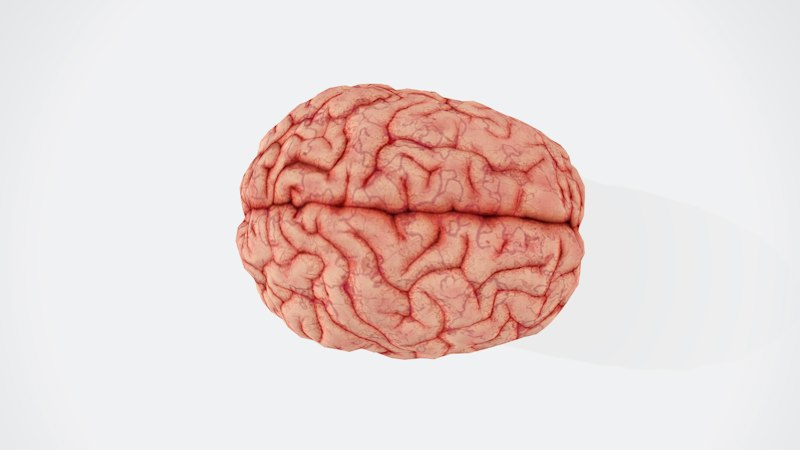
The Two-Process Model of Recall serves as a foundational theoretical framework within cognitive psychology, positing that the act of retrieving information from long-term memory is not a singular event but rather a sequence of two distinct cognitive operations. Fundamentally, recall—the ability to reproduce previously learned material without external cues—is understood through the lens of success or failure in these two phases. This model is critical because it moves beyond viewing memory as a simple storage container, instead emphasizing the dynamic processes required both to store information initially and to access it later. The initial, crucial step involves the establishment of a robust memory trace, while the subsequent step involves the search and recovery of that specific trace when needed. Failures in memory are therefore attributed specifically to breakdowns in either the input mechanism (the first process) or the output mechanism (the second process), allowing for targeted investigation and intervention.
The key idea underpinning this model is the strict separation between the acquisition phase and the execution phase of memory. The first process, known as encoding, dictates how information is initially transformed and deposited into the long-term memory store. The effectiveness of future recall is largely predetermined by the quality and depth of this initial encoding effort. If information is poorly attended to, minimally processed, or lacks meaningful connection to existing knowledge structures, the resulting memory trace will be fragile and difficult to locate later. Conversely, the second process, retrieval, concerns the mechanisms used to search for and bring the stored information back into conscious awareness. This process requires effective search strategies and the utilization of appropriate internal or contextual cues to navigate the vast archives of long-term memory.
In essence, successful recall requires both a well-formed memory trace and an effective retrieval mechanism capable of locating it. The model implies that a failure to remember something could mean one of two things: either the information was never properly stored in the first place (an encoding failure), or the information is stored but the necessary search cues or strategies were unavailable or ineffective (a retrieval failure). This distinction is vital for researchers attempting to isolate the causes of memory deficits and for developing memory enhancement techniques that target specific points in the memory pathway, rather than treating memory as a monolithic function.
Historical Foundation and Key Proponents
The formal articulation of the Two-Process Model of Recall is primarily credited to cognitive psychologists Richard C. Atkinson and Richard M. Shiffrin, who proposed their influential framework in 1968. Their work emerged during a period of intense focus on information processing in psychology, where researchers sought to understand the mind using analogies drawn from computer science. This era saw the development of the broader Multi-Store Model of Memory, often referred to as the Atkinson-Shiffrin model, which provided a comprehensive architecture for how information moves through sensory, short-term, and long-term stores. The Two-Process Model of Recall specifically builds upon the operational aspects of the long-term store within this larger architecture, detailing the mechanics by which information is handled upon entering and exiting this permanent storage system.
Prior to Atkinson and Shiffrin, memory research often struggled to differentiate between genuine forgetting (loss of information) and temporary inaccessibility (inability to locate information). The 1968 paper provided the necessary conceptual distinction, formalizing the idea that memory must pass through control processes. By dividing the process into two distinct stages—storage preparation and conscious access—Atkinson and Shiffrin provided a rigorous framework that allowed subsequent experimental research to test these stages independently. This separation was revolutionary, moving psychological investigation away from simple measures of retention and toward nuanced analyses of processing efficiency.
Further historical validation and refinement came from later researchers who explored the quality of the encoding process. Seminal work by Fergus Craik and Endel Tulving in the mid-1970s introduced the concept of the Levels-of-processing effect, which strongly reinforced the importance of the encoding stage. They demonstrated empirically that the depth at which information is processed determines its likelihood of successful retrieval. Shallow processing (e.g., noting the typeface of a word) yields poor recall, whereas deep, semantic processing (e.g., understanding the meaning of a word) leads to robust, lasting memory traces. This body of research provided compelling empirical evidence supporting the model’s fundamental premise: the quality of the first process (encoding) is inextricably linked to the success of the second process (retrieval).
The Mechanism: Encoding vs. Retrieval
The first process, encoding, is an active cognitive operation where new information is transformed into a format that can be accepted and stored by the memory system. This transformation involves various mechanisms, including selecting which details to attend to, organizing those details into meaningful units, and linking them to existing schemas or knowledge networks. The depth of processing, as highlighted by Craik and Tulving, is crucial here; effective encoding often involves elaborative rehearsal, where new information is associated with prior knowledge, creating multiple pathways or retrieval routes. This initial cognitive investment determines the strength of the memory trace, which is the physical or chemical representation of the memory residing in the neural structure. A strong trace, generated through deep encoding, is resistant to decay and interference, making it easier to locate later.
The second process, retrieval, is the mechanism through which the stored trace is located and activated, bringing the corresponding information back into conscious awareness. Retrieval is often characterized as a complex search process that relies heavily on the use of retrieval cues. These cues act as pointers or triggers that can activate the associated memory trace. Retrieval cues can be external, such as the physical environment where learning occurred (context-dependent memory), or internal, such as a particular mood state (state-dependent memory) or a related thought. The effectiveness of retrieval is often dependent on the principle of transfer-appropriate processing, which states that memory is best when the type of processing used during encoding matches the type of processing required during retrieval. If the original information was encoded semantically, a semantic cue will be far more effective than an acoustic cue.
The interaction between encoding and retrieval forms the core dynamic of the Two-Process Model. If encoding is successful, a stable trace exists; the challenge then shifts entirely to retrieval efficiency. If encoding is weak, even the best retrieval efforts may fail, as the trace itself is too faint or disorganized to be found. Researchers like John Anderson have conducted studies demonstrating the distinct nature of these processes, showing that manipulations affecting the initial learning phase (encoding) have a measurable impact on subsequent recall performance that is separate from manipulations affecting the search phase (retrieval). This empirical separation validates the structural assumption of the model, confirming that the input and output functions of memory operate under different, though related, cognitive principles.
A Practical Illustration: Remembering a Name
To illustrate the Two-Process Model, consider the common, frustrating scenario of meeting a new person, “David,” at a large professional networking event and later failing to recall his name. This everyday event can be broken down step-by-step to show how encoding and retrieval failures contribute to the memory lapse, and conversely, how successful execution of both processes leads to successful recall.
-
Initial Encoding (Failure): When David introduces himself, you are simultaneously distracted by the noise of the room, thinking about your next conversation, and perhaps focusing on his distinctive tie. Because your attention is divided and you fail to meaningfully associate the sound “David” with his face or context, the encoding process is shallow. You do not engage in elaborative rehearsal, such as thinking, “David looks like the actor David Tennant,” or repeating the name aloud. The resulting memory trace for his name is weak and isolated, making it highly susceptible to interference from the dozens of other names you hear that evening.
-
Attempted Retrieval (Initial Failure): An hour later, a colleague asks, “Who was that man you were just talking to?” You attempt to retrieve the name. Your search process begins, but because the trace is weak and you have no specific cues tied to the name (only a vague memory of the tie), the retrieval mechanism fails to locate the necessary information. You experience a “tip-of-the-tongue” phenomenon—you know the information exists somewhere, but the access pathway is blocked. This confirms that the retrieval process is struggling due to inadequate input from the encoding stage.
-
Successful Re-Encoding and Retrieval: Later that night, you review your notes from the meeting. You see David’s business card and specifically link his name to the distinct memory of his tie and the company he works for. This time, the encoding is deep and elaborative. The next morning, when you see David across the room, the visual cue (his face and tie) acts as a powerful retrieval cue. The sight of the tie triggers the established pathway, and the name “David” is successfully brought into conscious awareness because the original trace was reinforced and linked to multiple strong identifiers. This successful sequence demonstrates that when both processes are optimized—deep encoding followed by cue-triggered retrieval—recall is immediate and accurate.
Significance in Cognitive Psychology and Application
The Two-Process Model of Recall holds immense significance within cognitive psychology because it provided the first clear, testable, and falsifiable framework for understanding the mechanisms of complex memory retrieval. By segmenting recall into distinct stages, researchers could move beyond correlational studies to truly experimental manipulation, isolating variables that affect encoding (e.g., study environment, task difficulty, processing depth) from those that affect retrieval (e.g., cue presence, context similarity, time delay). This theoretical precision was essential for the subsequent development of memory science and led directly to specialized fields of study, such as the investigation of false memory and eyewitness testimony.
The application of this model extends far beyond the academic laboratory, influencing areas such as education, clinical psychology, and forensic science. In education, the model dictates that mere exposure (shallow encoding) is insufficient for learning; effective pedagogy must enforce deep processing, such as through summarizing, teaching the material to others, or relating new concepts to existing knowledge structures. Techniques like elaborative rehearsal and spaced repetition are direct applications of optimizing the encoding process to create stronger, more durable memory traces.
Furthermore, in clinical settings, understanding the encoding-retrieval distinction is crucial for diagnosing and treating memory disorders. For example, some memory impairments, such as certain types of amnesia, may involve a failure primarily in the encoding stage (the inability to form new memories), while others may involve a significant retrieval deficit (the inability to access existing memories). By identifying which process is impaired, therapists can tailor interventions. For instance, interventions for retrieval failure focus on providing better cues or training patients in more effective search strategies, demonstrating the practical power of this two-stage conceptualization of memory function.
Relationships with Other Memory Theories
The Two-Process Model of Recall is deeply embedded within the broader tapestry of memory research and shares crucial relationships with several other key psychological terms and theories. It belongs fundamentally to the subfield of Cognitive Psychology, specifically within the study of human memory and information processing. Its most direct predecessor is the Multi-Store Model of Memory (Atkinson-Shiffrin, 1968), which established the sequential flow of information through sensory, short-term, and long-term stores; the Two-Process Model elaborates specifically on the dynamics of the long-term store.
A closely related concept is the distinction between Recall and Recognition. While recall (studied by the Two-Process Model) requires generating the information from scratch, recognition (e.g., a multiple-choice test) only requires identifying familiar information. Some theories, such as the dual-process theories of recognition, suggest that recognition itself involves two processes: familiarity (fast, automatic) and recollection (slow, effortful retrieval of details). This parallel structure reinforces the idea that complex memory functions are generally segmented into multiple, interacting cognitive stages.
Finally, the model relates strongly to theories concerning Context-Dependent Memory and Transfer-Appropriate Processing. Context-dependent memory highlights that the environment (or context) acts as a powerful retrieval cue; if the encoding context matches the retrieval context, recall improves dramatically. This relationship directly supports the Two-Process Model by emphasizing the crucial role of external cues in initiating and guiding the retrieval process. Conversely, theories of forgetting, such as Retrieval Failure Theory, are essentially explanations of why the second process of the model breaks down, suggesting that stored memories are not lost but merely temporarily inaccessible due to the lack of necessary cues or ineffective search strategies.