Margaret Floy Washburn: Psychology’s First Female Icon
Scientifically Reviewed · Dr. Marwa Abd-Alazim · October 8, 2026
Review Criteria & Clinical Standards
This content undergoes rigorous scientific peer-review and medical editorial standards at Arab Psychology Network to ensure clinical accuracy, validity, and compliance with evidence-based guidelines from leading psychological and healthcare authorities (APA / WHO).
Introduction: Defining a Legacy
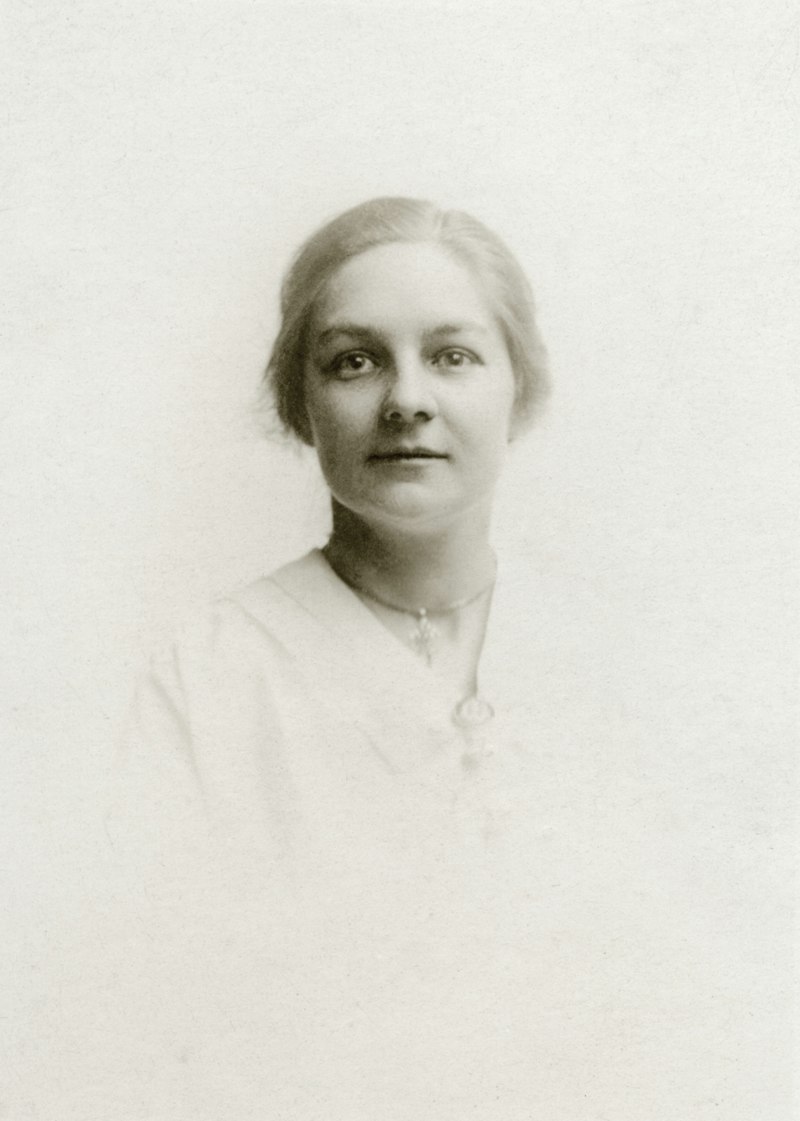
Margaret Floy Washburn (1871-1939) stands as a monumental figure in the annals of American psychology, distinguished not only by her profound scholarly contributions but also by her trailblazing achievements as a woman in a predominantly male-dominated academic sphere. She is widely recognized as the first woman to earn a doctoral degree in psychology in the United States, a feat she accomplished in 1894. Beyond this singular accomplishment, Washburn’s career was marked by a relentless pursuit of knowledge, particularly in the burgeoning field of animal behavior, which she meticulously explored through rigorous experimental methods and innovative theoretical frameworks. Her work fundamentally altered how psychologists approached the study of non-human species, advocating for an understanding that integrated both observable actions and inferred mental processes, thereby laying crucial groundwork for future developments in comparative and cognitive psychology.
The core of Washburn’s intellectual contribution lies in her comprehensive approach to understanding animal consciousness and behavior, articulated most notably in her seminal work, The Animal Mind: A Text-Book of Comparative Psychology (1908). This publication became a standard text for decades, synthesizing existing research and proposing new directions for inquiry. Her key idea revolved around the concept that animal behavior, far from being purely mechanistic, could be understood as a complex interplay of learned responses and innate instincts, often accompanied by a form of conscious experience, however rudimentary. This perspective positioned her uniquely between the emerging school of behaviorism, which eschewed mental states, and earlier structuralist views focused solely on human introspection. Her advocacy for studying animals to understand the evolutionary continuity of mind was a crucial step in legitimizing comparative psychology as a scientific discipline.
Early Life, Education, and Formative Influences
Born in New York City in 1871, Margaret Floy Washburn’s intellectual journey began with a strong foundation in liberal arts. She pursued her undergraduate education at Vassar College, a pioneering institution for women’s education, graduating in 1891. It was during her time at Vassar that her nascent interest in psychology began to crystallize, spurred by an innate curiosity about the natural world and the complexities of living organisms. This period of academic exploration proved pivotal, as she developed a particular fascination with animal behavior, foreshadowing the trajectory of her illustrious career. Her early experiences with observations and rudimentary experiments on animals like cats and birds during her undergraduate years solidified her commitment to this emerging field, setting the stage for advanced studies.
Following her graduation from Vassar, Washburn sought to deepen her understanding of psychology, a field still in its infancy and with limited opportunities for women. Her determination led her to Cornell University, where she initially faced challenges in gaining full admission due to her gender, a common barrier for women in higher education at the time. However, her persistence paid off, and she was eventually admitted as a graduate student. At Cornell, she studied under the tutelage of Edward B. Titchener, a prominent figure in American psychology and a proponent of structuralism, who had established one of the first psychology laboratories in the United States. Under Titchener’s rigorous guidance, Washburn immersed herself in experimental psychology, conducting meticulous research that culminated in her earning a Ph.D. in 1894. This achievement marked a significant milestone, not only for her personally but also for the broader landscape of women in science and academia, breaking a crucial barrier that had previously limited access to advanced psychological training for women.
Pioneering Achievements and Breaking Barriers
Margaret Floy Washburn’s career was characterized by a series of unprecedented achievements that underscored her exceptional intellect and unwavering dedication. Beyond being the first woman to earn a doctoral degree in psychology, she continued to shatter glass ceilings throughout her professional life. Her election as president of the American Psychological Association (APA) from 1921 to 1922 was another historic milestone, marking her as the first woman to hold this prestigious leadership position. This recognition by her peers, just a few decades after her own doctoral studies, reflected the profound respect she commanded within the scientific community and her substantial influence on the direction of psychological research and theory. Her tenure as APA president further solidified her role as a prominent voice in the field, advocating for scientific rigor and the expansion of psychological inquiry.
Further cementing her status as a pioneer, Washburn was elected to the National Academy of Sciences in 1925, making her the first woman psychologist, and only the second woman overall, to achieve this esteemed membership. This honor signified the highest level of scientific recognition in the United States, acknowledging the exceptional quality and impact of her research. These achievements were not merely personal triumphs but served as powerful inspirations for future generations of women aspiring to careers in science. Her sustained presence and leadership in these prominent organizations provided tangible proof that women could excel at the highest echelons of academia and scientific research, challenging prevailing societal norms and opening doors for greater inclusivity within the scientific community. Her unwavering commitment to both her research and her advocacy for women’s roles in science left an indelible mark on the field.
Contributions to Comparative Psychology and “The Animal Mind”
Throughout her distinguished career, Margaret Floy Washburn dedicated a significant portion of her research to the systematic study of animal behavior, particularly focusing on the behavior of cats, which she used as a model to explore broader principles of animal cognition and learning. Her approach was distinct from many of her contemporaries, as she sought to bridge the gap between observable actions and the inferred mental states that might accompany them. She meticulously documented various forms of animal learning, sensory experiences, and problem-solving abilities, contributing a wealth of empirical data to the nascent field of comparative psychology. Her work aimed to establish a scientific framework for understanding the psychological lives of animals, moving beyond anecdotal observations to systematic experimentation and theoretical interpretation.
Washburn’s most enduring legacy in this domain is her monumental textbook, The Animal Mind: A Text-Book of Comparative Psychology, first published in 1908. This comprehensive volume served as the authoritative synthesis of comparative psychology for decades, drawing together research from various species and experimental paradigms. In this work, she advanced her theory of “psychological behaviorism,” a nuanced perspective that sought to integrate the study of observable behavior with inferences about internal mental states, specifically consciousness. Unlike the radical behaviorism that would later emerge, which strictly avoided any reference to consciousness or internal mental processes, Washburn argued that while we cannot directly introspect into an animal’s mind, we can infer its mental life through careful observation of its actions and reactions, considering the evolutionary continuity of mental functions. She proposed that animal behavior could be explained by a combination of learning processes, such as classical and operant conditioning, and innate, instinctual drives, all of which contributed to a dynamic and adaptive organism.
Her approach to “psychological behaviorism” was a sophisticated attempt to reconcile the scientific demand for objective observation with the philosophical and psychological interest in mental experience. She contended that mental activity in animals, though perhaps simpler than in humans, could be inferred from their adaptive and complex behaviors, providing a window into the evolution of consciousness itself. This theoretical stance was crucial in shaping the early development of comparative psychology, offering a robust framework that encouraged detailed experimental analysis while simultaneously acknowledging the potential for internal psychological states in non-human species. Her book became an indispensable resource for students and researchers, guiding empirical inquiry and theoretical discussions for generations of psychologists interested in understanding the minds of animals.
A Practical Example: Inferring Animal Cognition
To illustrate Margaret Floy Washburn’s approach to understanding animal behavior and the inference of mental processes, consider a common scenario involving a pet cat attempting to access a treat placed just out of reach, perhaps behind a partially open door or inside a simple puzzle feeder. A purely radical behaviorist might observe the cat’s actions—pawing at the door, pushing its head against the opening, eventually manipulating it to get the treat—and conclude that the cat has simply learned a series of stimulus-response associations through trial and error, without necessarily attributing any internal “understanding” or conscious intent.
Washburn, however, would advocate for a more nuanced interpretation, characteristic of her “psychological behaviorism.” Her “how-to” approach would involve the following steps and inferences:
- Systematic Observation of Behavior: First, one would meticulously observe the cat’s entire sequence of actions, noting not just the successful attempts but also the hesitations, varied approaches, and even signs of frustration. For instance, does the cat try different methods? Does it pause and look at the obstacle before acting?
- Inferring Sensory and Motor Processes: Washburn would acknowledge that the cat is perceiving the treat visually and possibly olfactorily, and executing a series of motor commands. The initial attempts might be random, but if the cat shows a pattern of refining its movements based on proximity to the treat, it suggests sensory feedback is influencing motor control.
- Postulating Internal Imagery or Expectancy: Crucially, Washburn would suggest that the cat might be forming some kind of “motor image” or “expectancy” of the desired outcome. When the cat pushes the door open slightly and sees the treat becoming more accessible, it’s not just a response to a visual stimulus; it’s an action driven by an anticipated reward. The cat might be mentally “picturing” the treat as it plans its next move, or at least holding an internal representation of the goal.
- Recognizing Learning and Adaptation with Conscious Elements: As the cat repeatedly performs the action and successfully retrieves the treat, it learns. But for Washburn, this learning isn’t just a blind association. Instead, she would argue that the cat’s increasing efficiency and directedness in its actions suggest a form of conscious awareness or problem-solving, however simple. The cat isn’t just reacting; it’s actively engaging with its environment, using its past experiences to guide its present behavior, and exhibiting a rudimentary form of intentionality to achieve its goal. This inference of internal states, derived from careful observation of complex, adaptive behavior, is the hallmark of her approach, bridging the gap between pure stimulus-response and full human-like cognition.
This example demonstrates how Washburn’s framework moved beyond a purely mechanistic view, allowing for the scientific inference of mental activity in animals based on observable actions, thereby contributing a more holistic understanding of animal psychology.
Significance and Enduring Impact
Margaret Floy Washburn’s contributions to the field of psychology are multifaceted and enduring. Her primary significance lies in her pioneering efforts in comparative psychology, where she established a rigorous, empirical approach to studying animal behavior while simultaneously advocating for the consideration of animal consciousness. Her work challenged the prevailing reductionist views of the time, particularly those emerging from radical behaviorism, by insisting on the value of inferring mental processes from observable actions. This nuanced perspective provided a critical intellectual bridge, preventing the complete abandonment of the study of mind in the pursuit of scientific objectivity and thereby paving the way for later developments in cognitive ethology and animal cognition research. She legitimized the scientific study of animal minds at a time when such inquiries were often dismissed as anthropomorphic or unscientific.
Beyond her direct research, Washburn’s impact is profoundly felt in her role as a trailblazer for women in science. Her extraordinary achievements—being the first woman to earn a Ph.D. in psychology, the first female president of the APA, and the first woman psychologist elected to the National Academy of Sciences—served as powerful examples of female intellectual capability and leadership. These accomplishments broke significant societal and academic barriers, inspiring and empowering countless women to pursue advanced education and careers in psychology and other scientific disciplines. Her presence in these prominent roles opened doors and created pathways for subsequent generations of women scholars, fundamentally altering the demographic and intellectual landscape of American psychology. Her legacy is thus not only one of scientific discovery but also one of social progress and advocacy for equality in academia.
Today, Washburn’s concepts and methodologies continue to resonate within various applications of psychology. Her emphasis on understanding the interplay of learning and instinct in shaping behavior is fundamental to fields such as ethology, animal training, and even aspects of developmental psychology. Her foundational work in comparative psychology provided a framework for understanding the evolutionary roots of behavior and cognition, informing studies on everything from animal intelligence to the origins of human language. Furthermore, the “Margaret Floy Washburn Award for excellence in psychology,” established by the American Psychological Association in 1966, stands as a testament to her lasting influence, recognizing outstanding contributions to the field. Her pioneering spirit and intellectual rigor continue to inspire researchers to explore the complexities of behavior and mind across species, ensuring her place as one of psychology’s most important figures.
Connections and Relations to Broader Psychological Fields
Margaret Floy Washburn’s work occupies a pivotal position within the broader landscape of psychological thought, serving as a crucial link between early experimental psychology and later developments in behaviorism and cognitive science. Her primary affiliation was with the subfield of comparative psychology, a discipline dedicated to studying the behavior and mental processes of non-human animals to understand evolutionary relationships and the continuities between species. However, her theoretical approach, which she termed “psychological behaviorism,” demonstrates a rich engagement with multiple intellectual currents of her time, distinguishing her from a narrow categorization.
Her work stands in fascinating relation to the emerging behaviorism championed by figures like John B. Watson. While both emphasized the objective study of behavior, Washburn’s “psychological behaviorism” differed significantly by not entirely discarding the concept of consciousness. Unlike Watson, who famously dismissed the study of internal mental states as unscientific, Washburn argued that while consciousness could not be directly observed in animals, its presence and influence could be inferred from complex, adaptive behaviors. This nuanced position meant that she embraced the scientific rigor of behaviorism’s methodology—focusing on observable actions—but retained a connection to the earlier structuralist tradition of studying mental life, albeit through indirect inference rather than direct introspection. This made her a transitional figure, bridging the gap between introspective psychology and the purely external focus of radical behaviorism.
Moreover, Washburn’s emphasis on the inferential study of animal minds can be seen as a precursor to aspects of modern cognitive psychology and cognitive ethology. Her willingness to consider internal representations, expectancies, and rudimentary forms of problem-solving in animals laid conceptual groundwork for later researchers who would rigorously investigate animal intelligence and complex cognitive processes. Her comprehensive synthesis of animal research in The Animal Mind also connected her work to experimental psychology, as she relied heavily on laboratory studies and empirical data to build her theoretical arguments. Thus, Washburn’s contributions extend across several critical domains within psychology, demonstrating a sophisticated and forward-thinking perspective that continues to inform contemporary research in animal behavior, the history of psychology, and the evolution of mind.