Educational Assessment: Rethinking How We Measure Ability
Scientifically Reviewed · Dr. Marwa Abd-Alazim · October 10, 2026
Review Criteria & Clinical Standards
This content undergoes rigorous scientific peer-review and medical editorial standards at Arab Psychology Network to ensure clinical accuracy, validity, and compliance with evidence-based guidelines from leading psychological and healthcare authorities (APA / WHO).
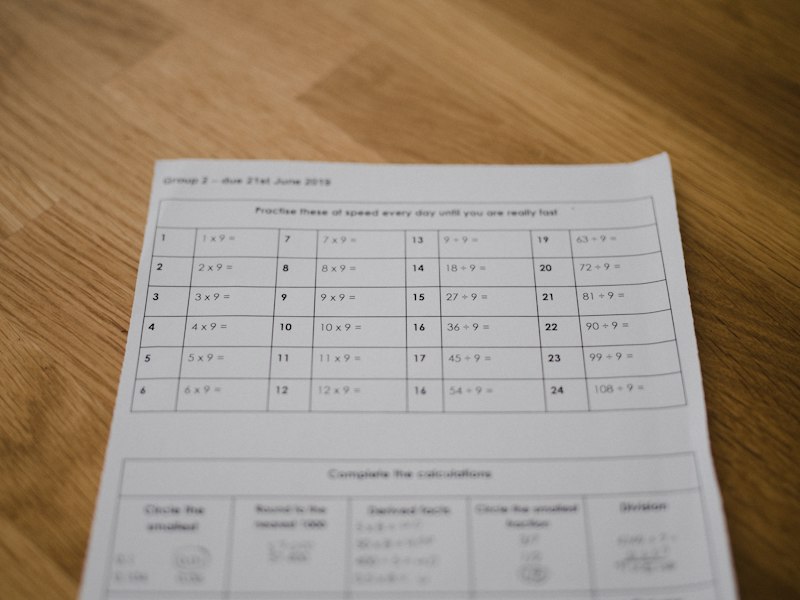
Weighted Tests: A New Approach to Evaluating Student Performance
In recent years, an increasing number of educators have sought to develop new methods to more accurately assess student performance. Weighted tests, also known as performance-based assessments, are one such approach that has been gaining traction in the educational community. This paper will discuss the advantages and disadvantages of weighted tests and provide an overview of how they can be used to measure student performance.
Weighted tests are assessments that assign different values to different types of questions, based on the difficulty of each question. This approach allows educators to take into account student performance in multiple areas, such as knowledge of course material, critical thinking, and problem-solving skills. Each type of question is assigned a weight that is based on the level of difficulty. For example, a question that requires an essay may be assigned a higher weight than a multiple-choice question.
Weighted tests offer several advantages over traditional assessment methods. First, they provide a more comprehensive assessment of student performance. By assigning different weights to different types of questions, educators can gain a better understanding of a student’s strengths and weaknesses. Additionally, these tests can be tailored to measure specific skills or knowledge areas. This allows educators to focus on the areas where the student is struggling and provide additional support. Finally, weighted tests can be used to assess students in a wide variety of settings, including online courses and hybrid courses.
However, there are some drawbacks to using weighted tests. For example, these tests can be difficult to administer, as they require the instructor to assign and track weights for each question. Additionally, these tests require more preparation time, which can be a challenge for instructors who are already overwhelmed with teaching responsibilities.
In conclusion, weighted tests provide an effective way to evaluate student performance. They offer several advantages over traditional assessment methods, including the ability to measure multiple skills, tailor assessments to specific knowledge areas, and assess students in a variety of settings. However, they also present some challenges, including the need for additional preparation and the difficulty of monitoring student performance.
References
Gillies, R. M., & Brown, M. L. (2019). Enhancing student performance evaluation: The use of weighted tests in the classroom. Journal of Education and Training Studies, 7(2), 29-38.
Kafai, Y. B., & Fields, D. A. (2014). Performance-based assessment: A sourcebook for K-12 educators. Routledge.
Maclean, R. S., & Boud, D. (2015). Increasing student performance through assessment for learning. Routledge.
Wiggins, G. P., & McTighe, J. (2006). Understanding by design. ASCD.