Retrograde Analysis: Reverse Engineer Your Success
Scientifically Reviewed · Dr. Marwa Abd-Alazim · September 26, 2026
Review Criteria & Clinical Standards
This content undergoes rigorous scientific peer-review and medical editorial standards at Arab Psychology Network to ensure clinical accuracy, validity, and compliance with evidence-based guidelines from leading psychological and healthcare authorities (APA / WHO).

Conceptual Foundations of the Working Backward Heuristic
The working backward heuristic, also frequently referred to as retrograde analysis or backward search, represents a sophisticated cognitive strategy utilized in problem-solving where an individual begins their mental processing at the desired end state and moves toward the initial conditions. In the field of cognitive psychology, heuristics are defined as mental shortcuts or “rules of thumb” that simplify complex decision-making processes, though they do not guarantee a perfect solution in the way an algorithm might. The working backward strategy is particularly effective when the goal state is clearly defined and the path to reach it involves a series of specific, sequential operations that are more easily identified from the perspective of the finish line than from the starting point.
At its core, this heuristic involves a transformation of the problem space, a term coined by researchers to describe the mental environment containing all possible states and transitions within a given problem. By reversing the direction of search, the individual reduces the number of branching possibilities that must be explored. In many complex scenarios, starting from the beginning leads to a “combinatorial explosion” of potential paths, most of which are irrelevant to the final goal. By contrast, starting from the goal often reveals a much narrower set of immediate precursors, thereby streamlining the cognitive effort required to map out a successful trajectory. This approach is fundamental to human intelligence and reflects our capacity for abstract reasoning and teleological planning.
The utility of working backward is most apparent in well-defined problems, such as mathematical proofs, logic puzzles, and certain types of strategic planning. In these instances, the final state serves as a powerful constraint that dictates which previous steps were logically necessary. By identifying the state that must exist immediately prior to the goal, the problem-solver creates a new sub-goal. This process is repeated iteratively until a path is established that connects the final objective back to the current reality. This recursive nature of the heuristic allows for the decomposition of monolithic challenges into manageable, chronological segments, facilitating a clearer understanding of the causal links required for success.
The Role of Newell and Simon in Problem Space Theory
The formalization of the working backward heuristic owes much to the pioneering work of Allen Newell and Herbert Simon, who introduced the General Problem Solver (GPS) in the late 1950s. Their research laid the groundwork for modern information processing theory, suggesting that human problem-solving can be modeled as a search through a state space. Newell and Simon identified means-ends analysis as a primary mechanism for navigating these spaces, where the individual constantly evaluates the difference between the current state and the goal state, selecting operators to reduce that discrepancy. Working backward is a specific manifestation of this analysis, focusing on the goal to determine the necessary means.
Within the framework of Problem Space Theory, every problem consists of an initial state, a goal state, and a set of operators that allow for transitions between states. Newell and Simon observed that for many problems, the “fan-out” from the initial state—the number of possible moves—is significantly larger than the “fan-in” to the goal state. By utilizing a backward search, the GPS could often find solutions more efficiently than through a forward-moving breadth-first search. This insight revolutionized how psychologists understood strategic thinking, moving away from simple trial-and-error models toward more structured, representational theories of mind.
The significance of this historical context lies in the shift toward viewing the human mind as a processor of symbols. By analyzing the protocols of individuals solving puzzles like the Tower of Hanoi or the “water lilies” problem, Newell and Simon demonstrated that experts often intuitively switch to a backward search when they encounter barriers in forward progression. This flexibility in cognitive strategy is a hallmark of high-level reasoning. Their work established that the ability to mentally reverse time and causality is not merely a quirk of human thought but a fundamental component of computational logic and executive function.
Cognitive Mechanisms and Working Memory Demands
Implementing the working backward heuristic requires significant involvement of the brain’s executive functions, particularly working memory and inhibitory control. To work backward, an individual must maintain a stable mental representation of the goal state while simultaneously manipulating various hypothetical intermediate states. This places a high cognitive load on the central executive, as it must suppress the natural tendency to think chronologically and instead maintain a reverse-sequential logic. Research suggests that the ability to successfully employ this heuristic is positively correlated with fluid intelligence and the capacity of an individual’s short-term memory buffers.
The process begins with mental imagery or abstract symbolic representation. An individual must be able to “see” the solved state and then ask the critical question: “What must have happened just before this to make it possible?” This requires metacognitive awareness, as the problem-solver must monitor their own progress and ensure that each backward step remains logically consistent with the rules of the problem. If the working memory becomes overloaded, the individual may lose track of the sub-goals, leading to errors in the reverse-chaining process. Consequently, tools such as diagrams, notes, or external representations are often used to supplement internal cognitive resources during complex backward searches.
Furthermore, the prefrontal cortex plays a vital role in the strategic planning required for working backward. This region of the brain is responsible for goal-directed behavior and the ability to shift between different mental sets. When a person decides to switch from a forward-thinking approach to a backward-thinking one, they are engaging in cognitive flexibility. This transition is often triggered by the realization that the current forward path is leading to a dead end or an overly complex array of choices. The brain’s ability to recognize the efficiency of a backward approach and then reorient its search strategy is a key aspect of adaptive problem-solving.
Strategic Implementation in Mathematical Problem Solving
In the realm of mathematics and formal logic, working backward is an indispensable tool for deriving proofs and solving complex equations. Many mathematical problems are structured such that the final answer is given, and the task is to find the steps that lead to it. For example, in geometric proofs, a student is often asked to prove that two triangles are congruent. By starting with the congruence statement, the student can identify which specific theorems (such as Side-Angle-Side or Angle-Side-Angle) would be required to reach that conclusion, then look for evidence of those conditions in the given information.
This heuristic is also famously applied to the “water lily” or “pond doubling” riddle. If a lily pad doubles in size every day and covers the entire pond on the 30th day, on which day did it cover exactly half the pond? While a forward-thinking approach might involve complex calculations starting from day one, working backward makes the answer immediate: if it was full on day 30, and it doubles every day, it must have been half-full on day 29. This example illustrates how the heuristic can bypass unnecessary complexity by focusing on the most recent transformation preceding the goal.
The pedagogical value of teaching students to work backward cannot be overstated. By encouraging this approach, educators help students develop a deeper understanding of inverse operations and the bidirectional nature of mathematical relationships. It fosters a more holistic view of problems, where the goal is not just a destination but a guide that informs the entire solving process. As students become more proficient, they learn to oscillate between forward and backward strategies, a technique known as bidirectional search, which is often the most efficient way to bridge the gap between “given” and “to prove.”
Back-Scheduling and Strategic Planning in Professional Contexts
Beyond academic and laboratory settings, the working backward heuristic is a cornerstone of project management and strategic business planning. In these contexts, it is often referred to as back-scheduling or reverse engineering. When a company has a firm deadline for a product launch or a major event, managers start with the launch date and work backward to determine when specific milestones must be met. This ensures that the timeline is realistic and that all necessary dependencies—such as manufacturing, marketing, and quality assurance—are accounted for in the correct order.
This method is highly effective for identifying critical paths and potential bottlenecks. By looking at the final delivery and asking what must be completed 24 hours prior, one week prior, and one month prior, planners can identify which tasks are the most time-sensitive. This contrasts with forward-scheduling, which often leads to “feature creep” or delays because the focus is on what can be done now rather than what must be done to ensure the final goal is met on time. Amazon, for instance, is well-known for its “working backward” product development process, which begins with writing a hypothetical press release for the finished product before a single line of code is written.
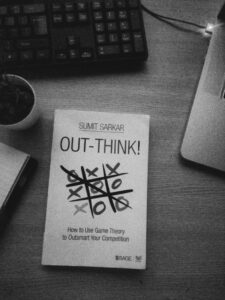
In game theory and high-level strategy games like chess, working backward is essential for “endgame” analysis. Grandmasters often study simplified board positions and work backward to understand the sequence of moves that lead to a forced win or a draw. This is known as retrograde analysis in chess literature. By understanding the “solved” states of the game, players can better evaluate their current positions and steer the game toward a favorable conclusion. This type of long-range planning requires the ability to visualize numerous steps into the future and then “reverse-engineer” the current move to align with that distant objective.
Psychological Interventions and Solution-Focused Therapy
The working backward heuristic has found significant application in clinical psychology and counseling, particularly within Solution-Focused Brief Therapy (SFBT). In this therapeutic modality, practitioners encourage clients to focus on their desired future rather than ruminating on the history of their problems. A central technique in this approach is the “Miracle Question,” where the therapist asks the client to imagine that a miracle has happened overnight and their problem is solved. The client is then asked to describe what their life looks like in this “solved” state.
By articulating the details of the goal state, the client and therapist can work backward to identify the small, manageable steps that would lead to that reality. This process helps to demystify the path to recovery and empowers the client by making the solution seem attainable. It shifts the cognitive frame from one of deficit and struggle to one of agency and planning. Working backward in a therapeutic context allows individuals to bypass the overwhelming complexity of their current stressors and focus on the specific behaviors and environmental changes necessary to achieve their desired well-being.
Furthermore, this strategy is useful in cognitive-behavioral coaching for goal setting and time management. When individuals feel paralyzed by a large ambition—such as writing a book or changing careers—a coach may help them work backward from the finish line. This involves:
- Defining the ultimate success in vivid detail.
- Identifying the penultimate step (e.g., having a final manuscript).
- Determining the intermediate milestones (e.g., completing chapters, securing an agent).
- Establishing the immediate action required today.
This structured approach reduces anxiety and provides a clear roadmap, transforming a daunting “future-self” into a series of actionable “present-self” tasks.
Comparative Heuristics: Backward vs. Forward Search
To fully appreciate the working backward heuristic, it is necessary to compare it with other common problem-solving strategies, most notably forward-moving search (or forward chaining). In a forward search, the individual starts with the initial data and applies operators to see where they lead. This is often the default mode of human thought and is highly effective when the initial state is restrictive and the goal state is vague. However, in situations where the goal is a specific point in a massive field of possibilities, forward search can be incredibly inefficient, leading to many “false starts” and irrelevant explorations.
Another common strategy is the hill-climbing heuristic, where the individual simply takes whatever step currently seems to move them closest to the goal. While this is simple and requires little memory, it often fails when the path to the solution requires a temporary move away from the goal (a “local maximum”). Working backward avoids this trap because it is not based on immediate proximity but on logical necessity. Because the backward search is anchored at the destination, it is less likely to be distracted by steps that look promising but ultimately lead nowhere.
The choice between working forward and working backward often depends on the structure of the problem. Psychologists have found that:
- Forward search is preferred when there are few possible moves from the start but many ways to reach the goal.
- Backward search is preferred when the goal is a unique state and the starting point allows for a vast number of potential initial moves.
- Bidirectional search is often the most sophisticated, where the solver works from both ends simultaneously until the paths meet in the middle.
Understanding these distinctions allows individuals to select the most appropriate cognitive tool for the task at hand, optimizing their mental energy and increasing the likelihood of a successful outcome.
The Impact of Goal Clarity on Heuristic Effectiveness
The efficacy of the working backward heuristic is strictly contingent upon the clarity and specificity of the goal state. In well-defined problems, the goal is unambiguous, such as reaching a specific sum in a math problem or winning a game of Nim. In these cases, the goal provides a solid anchor for the backward search. However, in ill-defined problems—such as “becoming a better person” or “improving company culture”—the goal state is too nebulous to support a reverse-chaining process. Without a clear destination, there is no logical basis for determining what the “prior step” should be.
Therefore, a prerequisite for working backward is often a phase of goal clarification. Problem-solvers must first transform an ill-defined ambition into a set of concrete criteria. This is why the “working backward” method at companies like Amazon begins with a press release; it forces the team to define exactly what the customer experience will be. By externalizing the goal in a detailed manner, the team creates the necessary conditions for the heuristic to function. The clarity of the end-point directly determines the stability of the backward path.
In addition to clarity, the uniqueness of the goal plays a role. If there are multiple different ways to “win” or solve a problem, working backward can become complicated, as the solver must decide which goal state to start from. However, even in multi-goal scenarios, the heuristic remains useful for identifying the common requirements shared by all successful outcomes. By working backward from several potential end-states, a strategist can find “robust” actions—steps that are necessary regardless of which specific version of the goal is eventually realized. This adds a layer of strategic resilience to the problem-solving process.
Developmental Perspectives and Expertise Acquisition
The ability to work backward is not innate but develops alongside other metacognitive skills during childhood and adolescence. Younger children typically rely on forward-moving trial and error because they lack the working memory capacity and the abstract reasoning skills required to hold a future state in mind while contemplating reverse causality. As children mature, they begin to demonstrate “planning ahead,” which eventually evolves into the ability to start from the end. Educational psychologists have noted that explicitly teaching the working backward strategy can significantly improve the mathematical reasoning and logical abilities of middle-school students.
The use of this heuristic also distinguishes experts from novices in various fields. Research into the cognitive habits of experts shows that they are much more adept at recognizing when a problem is suited for a backward search. While novices often struggle through forward-chaining because it feels more “natural,” experts recognize the structural properties of the problem and apply the more efficient retrograde analysis. This is particularly evident in fields like physics and medicine, where experts use the desired outcome (e.g., a specific physical state or a healthy patient) to narrow down the possible causes and necessary interventions.
Furthermore, expertise acquisition involves the development of “schemas” or mental templates that include both forward and backward paths. For an expert, the connection between a goal and its precursors is often automatic. They do not need to laboriously “calculate” the backward step; they “see” the connection immediately. This level of intuitive expertise is built through years of practicing both directions of search, allowing the expert to navigate the problem space with a fluidity that novices cannot replicate. The working backward heuristic, therefore, is both a tool for solving problems and a hallmark of advanced cognitive development.
Modern Extensions in Artificial Intelligence and Cognitive Modeling
In the contemporary era, the working backward heuristic has moved beyond human psychology and into the development of artificial intelligence (AI) and automated reasoning systems. In AI, this is known as backward chaining, a method used in expert systems and logic programming (such as Prolog). A backward-chaining system starts with a list of goals (or a hypothesis) and works backward from the consequent to the antecedent to see if there is data that supports any of these goals. This is a fundamental technique in diagnostic systems, where the AI starts with a symptom (the goal state of the search) and works backward to find the most likely cause.
Cognitive modeling software, such as ACT-R (Adaptive Control of Thought—Rational), incorporates the working backward heuristic to simulate human thought processes. By programming agents to use backward search, researchers can more accurately model how humans solve puzzles and perform complex tasks. These models help psychologists understand the limitations of human cognition, such as why we make certain types of errors when the backward search becomes too deep or complex. It also allows for the testing of new educational strategies by seeing how an “artificial student” might benefit from being taught to work backward in different contexts.
As we look toward the future, the integration of backward search algorithms with machine learning represents a promising frontier. While deep learning often relies on massive forward-processing of data, combining it with the symbolic logic of working backward could lead to AI that is more explainable and better at strategic planning. Just as the working backward heuristic allows humans to bridge the gap between their current state and their highest aspirations, it remains a vital component of the quest to create artificial general intelligence that can reason, plan, and solve problems with the same flexibility and foresight as the human mind.