Wilhelm Wundt: The Architect of Modern Psychology
Scientifically Reviewed · Dr. Marwa Abd-Alazim · September 14, 2026
Review Criteria & Clinical Standards
This content undergoes rigorous scientific peer-review and medical editorial standards at Arab Psychology Network to ensure clinical accuracy, validity, and compliance with evidence-based guidelines from leading psychological and healthcare authorities (APA / WHO).
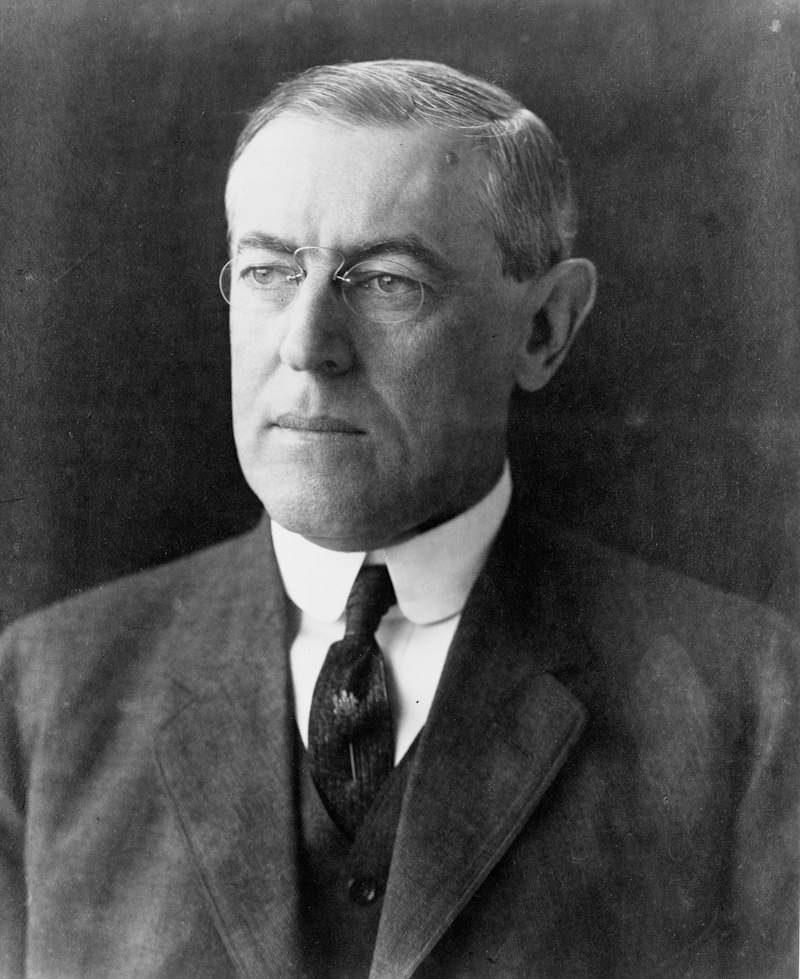
WUNDT, WILHELM MAX, (1832— 1920)
Wilhelm Max Wundt was a towering German intellectual figure—a physician, philosopher, and ultimately, the individual credited with transitioning psychology from a branch of philosophy into a rigorous, independent, and experimental science. Born in 1832, Wundt’s legacy rests chiefly on his establishment of the world’s first formal psychological laboratory in Leipzig in 1879, an event universally recognized as the birth date of modern psychology. His vast body of work spanned over five decades, generating an astonishing volume of publications covering not only experimental findings but also sweeping philosophical, ethical, and cultural theories. Wundt’s methodical approach sought to understand the immediate experience of consciousness, utilizing controlled experimental techniques derived from his background in physiology, while simultaneously acknowledging that higher mental processes required entirely different methodological approaches, detailed in his monumental work on cultural psychology, or Völkerpsychologie. He successfully institutionalized the field, training nearly 180 doctoral students who would go on to found psychological laboratories across Europe and the United States, thereby cementing his title as the undisputed “father of experimental psychology.”
Wundt’s psychological system was deeply rooted in the concept of Voluntarism, the idea that the mind is active, constructive, and characterized by voluntary effort, in contrast to the passive, mechanistic views prevalent in earlier associationist theories. This emphasis on will and agency framed his entire approach to studying consciousness, leading him to develop specific techniques for analyzing immediate experience. While often oversimplified in retrospect, Wundt’s laboratory work focused meticulously on the basic elements of consciousness—sensations and feelings—and the rules by which they were combined into complex mental structures through the active process he termed apperception. His commitment to empirical rigor meant that every observation had to be verifiable and repeatable, utilizing precise measurement instruments borrowed directly from the physiological sciences, thus providing a quantitative foundation for the new science of the mind.
Early Life, Education, and Career Transition
Wilhelm Wundt was born on August 16, 1832, in Neckarau, Baden, Germany, into a long lineage of intellectuals, including scholars and pastors. His early academic life was marked by a rigorous pursuit of the natural sciences, leading him to study medicine at the University of Tübingen, and subsequently at the University of Heidelberg and the University of Berlin. Wundt excelled in his medical studies, specializing particularly in anatomy and physiology, disciplines that provided him with the necessary methodological foundation for his later psychological endeavors. After receiving his medical degree in 1855, he focused intensely on physiological research, culminating in his appointment as a lecturer in physiology at the prestigious University of Heidelberg in 1857. This initial period of research laid the groundwork for his revolutionary idea: that the systematic, objective methods applied successfully to the study of bodily functions could be adapted to investigate the seemingly elusive realm of the mind.
A critical turning point occurred when Wundt worked as an assistant to the renowned physiologist Hermann von Helmholtz at Heidelberg from 1858 to 1864. This association exposed Wundt to cutting-edge research on sensory perception, particularly vision and hearing, and further solidified his conviction that the intersection between physiology (the study of the organism) and philosophy (the study of the mind) was fertile ground for a new, independent scientific discipline. During this time, Wundt began writing his foundational text, Beiträge zur Theorie der Sinneswahrnehmung (Contributions to the Theory of Sensory Perception, 1862), which argued explicitly for the need for experimental methods in psychology. He recognized that while philosophers had debated mental processes for centuries, only objective, measurable data could elevate psychology to the status of a science, comparable to physics or chemistry.
This intellectual trajectory culminated in the publication of his magnum opus, Grundzüge der physiologischen Psychologie (Principles of Physiological Psychology) in 1874. This textbook, massive in scope and detail, systematically integrated the existing knowledge of human physiology with the emerging findings on mental phenomena, providing a comprehensive blueprint for how experimental psychology should be conducted. The book served as the academic justification for the new field, detailing the necessary apparatus, experimental procedures, and theoretical assumptions. Moving to the University of Leipzig in 1875 as a Professor of Philosophy, Wundt was finally positioned to translate his theoretical framework into institutional reality, leading directly to the establishment of the laboratory four years later.
The Founding of the Leipzig Laboratory (1879)
The year 1879 marks the definitive moment in the history of psychology. While working at the University of Leipzig, Wundt dedicated a small room within the Konvikt building to house his specialized equipment for conducting psychological experiments. Initially referred to simply as a private research institute, this facility quickly grew in scope and recognition, and in 1883, it received official university recognition as the Institute for Experimental Psychology. The establishment of this laboratory was not merely the designation of a physical space; it represented the institutionalization of psychology as a distinct scientific endeavor, separating it formally from both philosophy and physiology. Wundt’s laboratory became a global magnet, drawing students from around the world eager to learn the methods of the new science directly from its founder.
The primary focus of research within the Leipzig Institute was the study of immediate conscious experience through highly controlled and repeatable experiments. This research primarily involved areas such as chronometry (measurement of reaction times), psychophysics (the relationship between physical stimuli and mental responses, building on Weber and Fechner), and the study of simple sensory qualities, including vision, touch, and hearing. Wundt insisted on rigorous training for his student participants, ensuring that their observational data—often acquired via controlled introspection—was as objective and standardized as possible. The use of specialized instruments, such as the chronoscope for measuring minute time differences and various devices for controlled stimulus presentation, underscored Wundt’s commitment to precision and empirical validity.
Defining Psychological Science: Introspection and Voluntarism
Wundt’s methodological approach relied heavily on a technique he called Inner Perception, often translated as introspection, though it differed markedly from the casual self-reflection practiced by philosophers. For Wundt, introspection was a highly technical, constrained process of self-observation used only to study immediate, simple experiences that could be rapidly replicated. Participants were trained to report on the precise quality, intensity, and duration of their sensations and feelings immediately following the presentation of a stimulus, minimizing the possibility of memory distortion or interpretive bias. This stringent requirement meant that only basic mental processes were suitable for laboratory investigation, as complex processes like reasoning or complex language usage were too variable and too reliant on memory.
The theoretical foundation supporting these experiments was Wundt’s concept of Voluntarism. Wundt believed that consciousness was characterized by volition—the act of willing—and that the mind was an active force, organizing and synthesizing sensory input into meaningful wholes. The core dynamic process in his theory was Apperception, which he defined as the voluntary focusing of attention on a specific part of the field of consciousness, leading to the clear, sharp comprehension of that experience. Apperception was seen as a creative synthesis, where the combination of mental elements (sensations and feelings) resulted in a new quality that was more than the sum of its parts, a concept encapsulated in his Law of Psychic Contrasts and the Principle of Creative Resultants.
Methodological Innovations and Experimental Focus
Wundt’s laboratory work was instrumental in proving that mental processes could be subjected to systematic, empirical study. The experiments conducted under his direction established core methodologies that persist in experimental psychology today. His research program focused heavily on the mechanics of attention and reaction time, utilizing sophisticated equipment to measure the time lag between stimulus presentation and response execution. By varying the complexity of the task or the instruction given to the participant (e.g., simple reaction time versus choice reaction time), Wundt and his students sought to infer the internal time required for specific mental operations, such as discrimination or decision-making.
Furthermore, Wundt pioneered the study of psychophysics in Germany, exploring how changes in physical stimuli (e.g., light intensity or sound frequency) were translated into corresponding changes in conscious experience. This area of research provided measurable, quantitative laws relating the physical world to the psychological world, essential for establishing the credibility of the new science. His investigations into sensation and perception provided foundational data on thresholds and differential sensitivity, demonstrating that subjective psychological experience followed predictable, mathematically describable patterns, thereby reinforcing the scientific legitimacy of experimental psychology.
The Völkerpsychologie: Studying Higher Mental Processes
Crucially, Wundt was acutely aware of the limitations of the experimental method. He strongly argued that while simple, immediate mental processes could be studied in the laboratory, higher mental processes—such as language, thinking, customs, myths, religion, and social organization—were products of collective human life and historical development. These complex processes, he maintained, could not be reduced to individual consciousness or isolated in a laboratory setting. To study these phenomena, Wundt devoted the last two decades of his life to a massive, non-experimental undertaking.
This monumental effort resulted in the publication of the ten-volume work, Völkerpsychologie: Eine Untersuchung der Entwicklungsgesetze von Sprache, Mythos und Sitte (Cultural Psychology: An Investigation into the Developmental Laws of Language, Myth, and Custom), published between 1900 and 1920. In this work, Wundt employed historical, anthropological, and linguistic analysis to trace the evolution of collective mental products. This dual system—experimental psychology for elementary experiences and cultural psychology for complex experiences—represents Wundt’s complete vision for the science of psychology, a scope often forgotten or minimized by subsequent generations focused solely on his laboratory work. The Völkerpsychologie demonstrated that Wundt viewed psychology as a comprehensive human science, not merely a laboratory discipline focused on reaction times.
Legacy and Global Influence
Wundt’s most immediate and lasting influence was felt through his role as an educator. The Leipzig laboratory functioned as a powerful training ground, disseminating the methods and philosophies of experimental psychology across the globe. Among his most famous students were:
- G. Stanley Hall, who founded the first psychology laboratory in the United States at Johns Hopkins University (1883).
- James McKeen Cattell, the first American to earn a Ph.D. under Wundt, who subsequently established psychology laboratories at the University of Pennsylvania and Columbia University, focusing on mental testing.
- Edward Bradford Titchener, who brought Wundt’s methods to Cornell University, although he misinterpreted and significantly modified Wundt’s Voluntarism into his own system of Structuralism, which dominated early American academic psychology.
- Hugo Münsterberg, a pioneer in applied psychology and industrial psychology.
- Emil Kraepelin, a foundational figure in modern psychiatry.
Through these students, the Leipzig model—the commitment to empirical rigor, precise measurement, and systematic experimentation—was rapidly adopted and adapted worldwide, ensuring that Wundt’s institutional vision for an independent science of psychology was realized globally.
References
The foundational nature of Wundt’s contributions has ensured his perpetual relevance in the historical study of psychology. Key secondary sources and his own principal works provide the framework for understanding the full breadth of his impact:
- Boring, E. G. (1950). A History of Experimental Psychology. New York, NY: Appleton-Century-Crofts.
- Dewsbury, D. A. (1985). Wilhelm Wundt and the emergence of psychology as a separate science. The American Psychologist, 40(2), 154–164. https://doi.org/10.1037/0003-066X.40.2.154
- Kraut, R. E. (2007). Wilhelm Wundt (1832-1920). In E. N. Zalta (Ed.), The Stanford Encyclopedia of Philosophy (Spring 2007 ed.). Retrieved from https://plato.stanford.edu/archives/spr2007/entries/wundt/
- Wundt, W. (1902). Principles of physiological psychology. Leipzig, Germany: Engelmann.