ACCLI: Mastering Your Adaptive Psychological Response
Scientifically Reviewed · Dr. Marwa Abd-Alazim · August 30, 2026
Review Criteria & Clinical Standards
This content undergoes rigorous scientific peer-review and medical editorial standards at Arab Psychology Network to ensure clinical accuracy, validity, and compliance with evidence-based guidelines from leading psychological and healthcare authorities (APA / WHO).
Defining the Multifaceted Concept of Accommodation (ACCLI)
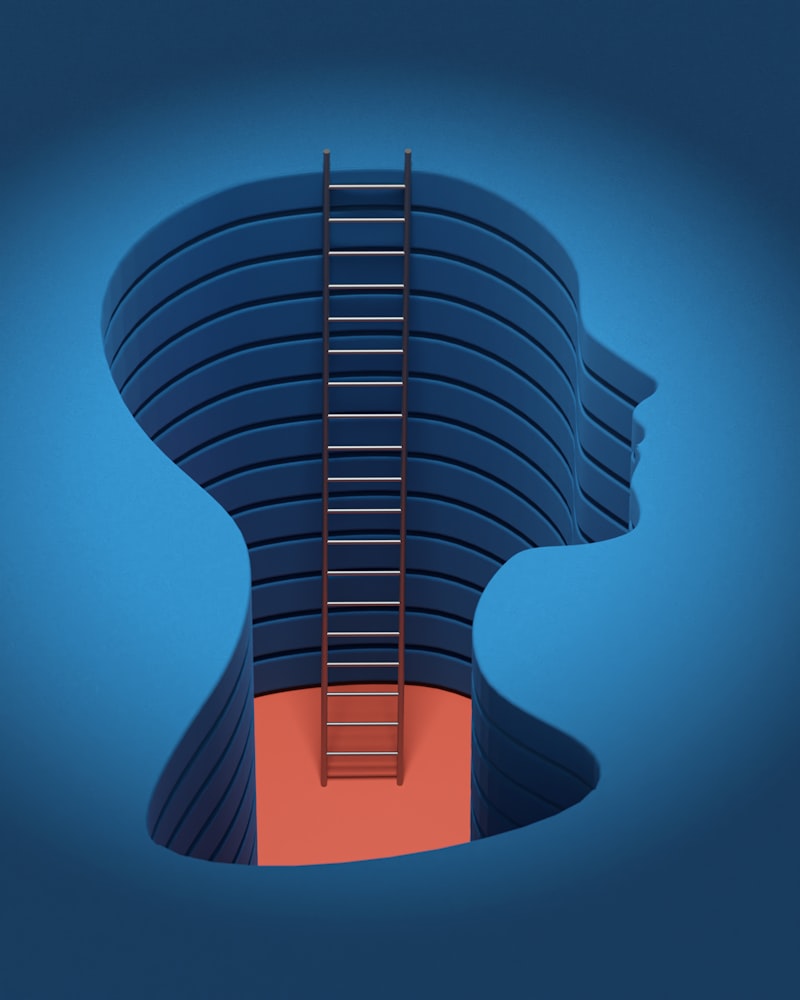
The term Accommodation, often referenced in psychological and sociological contexts by the abbreviation ACCLI, represents a critical concept denoting adjustment, modification, or alteration in response to external stimuli or environmental demands. This term is inherently polysemous, encompassing processes ranging from involuntary biological adjustments within the human visual system to profound structural changes in cognitive frameworks, and extending further to deliberate modifications of physical surroundings necessary for universal access. Fundamentally, accommodation involves an active change within the internal system—be it physical, biological, or conceptual—to create a more harmonious or functional relationship with the external reality. Understanding this breadth is crucial, as the mechanism of accommodation serves as a cornerstone for theories concerning learning, perception, accessibility, and conflict resolution, illustrating the dynamic interplay between the organism or system and its environment. The high level of detail required for a comprehensive definition necessitates exploring its manifestations across distinct domains, including architecture, biology, developmental psychology, and social negotiation.
While often confused with acclimation, which typically refers to passive, gradual adjustment to climate or environment, accommodation implies a more active, immediate, or structural alteration. In psychological literature, especially that derived from developmental theories, accommodation is defined specifically as the modification of existing mental structures rather than merely adapting behavior. This deliberate, sometimes effortful, process of internal restructuring differentiates it from simple habituation or superficial acceptance. Across all its applications, the core theme remains the same: a necessary adjustment of the self or the setting to meet the requirements imposed by novel data or a restrictive environment, ensuring optimal functioning or achieving parity among disparate parties. This comprehensive encyclopedia entry will delineate the four primary domains in which the principle of accommodation operates, providing specialized detail for each definition derived from the original source material.
Architectural and Environmental Accommodation for Accessibility
The first crucial definition of accommodation pertains directly to the alteration of surroundings or assignment for the purpose of accommodating disabled persons. This domain addresses the physical and systemic changes required to ensure equal access and participation for individuals with physical, sensory, or cognitive disabilities, moving beyond mere compliance to foster genuine inclusion. This type of accommodation is not voluntary charity but rather a necessary modification rooted in principles of universal design and enforced through legislation such as the Americans with Disabilities Act (ADA) in the United States, or similar mandates globally. The scope of these alterations is vast, ranging from macro-level structural changes to micro-level modifications of tasks or equipment. Examples include the installation of ramps and elevators to replace stairs, ensuring all restrooms are handicap accessible, or modifying workstations to support specialized equipment. These changes are fundamentally about removing barriers that prevent participation, thereby accommodating the individual’s needs rather than demanding the individual conform to an exclusionary environment.
Effective environmental accommodation requires proactive planning and a deep understanding of diverse needs. It involves not only physical modifications, such as widening doorways, installing tactile paving, or providing auditory signals, but also changes to policy and procedure, such as providing extended time for assignments or offering materials in alternative formats (e.g., Braille or large print). The focus is always on creating an accessible interface between the individual and the environment. When repairs or upgrades are performed on a building, the concept of “acclimation-accommodation repairs” dictates that accessibility standards must be integrated into the maintenance schedule. For instance, the original content notes the installation of handicap accessible restroom facilities and ramps at the building’s entrance; these actions exemplify the practical application of this definition, ensuring the physical structure itself aligns with the principle of equitable access. Failure to provide reasonable accommodations constitutes discrimination, underscoring the ethical and legal weight of this form of structural adjustment.
Ocular Accommodation: The Mechanics of Visual Focus
In the biological domain, accommodation refers specifically to the act of altering the distance between the eye and target objects in accordance with sharp visualizations projected onto the retina. This is a rapid, automatic, and involuntary process vital for clear vision, particularly when shifting gaze between near and distant objects. The eye’s lens, which is naturally elastic, must change its curvature to alter the refractive power of the optical system, ensuring that light rays converge precisely onto the light-sensitive layer of the retina. This complex mechanism is mediated by the ciliary muscle, a ring of smooth muscle within the eye’s middle layer. When viewing a near object, the ciliary muscle contracts, which in turn releases tension on the zonular fibers holding the lens. This release allows the lens, due to its inherent elasticity, to thicken and become more spherical, increasing its dioptric power and shortening the focal length. Conversely, when focusing on a distant object, the ciliary muscle relaxes, increasing tension on the zonular fibers, flattening the lens, decreasing its power, and lengthening the focal distance.
The efficiency of ocular accommodation is paramount for visual acuity. A failure in this mechanism results in blurred vision, as the focal point falls either in front of or behind the retina. For example, individuals with presbyopia, a common age-related condition, experience a hardening of the lens and weakening of the ciliary muscle, reducing the eye’s ability to accommodate for near vision tasks like reading. The amplitude of accommodation—the maximum change in refractive power the eye can achieve—decreases predictably throughout life, illustrating the biological constraints on this accommodative process. This biological definition serves as a compelling parallel to its cognitive counterpart, as both require the active, structural modification of an internal mechanism (the lens or the schema) to achieve optimal alignment with external informational input (light rays or new data). Without precise and effective ocular accommodation, the brain receives inadequate sensory input, highlighting its role as a fundamental mechanism of accurate perception.
Piagetian Accommodation in Schema Development
Perhaps the most influential psychological application of the term accommodation stems from the work of Swiss developmental psychologist Jean Piaget. In his theory of cognitive development, accommodation is defined as the reverse operation to assimilation—the changing of cognitive plans (schemata) to suit data gained through experience. Cognitive schemata are the fundamental mental structures or templates that individuals use to organize knowledge and interpret the world. When a person encounters new information that cannot be readily integrated into existing schemata, a state of cognitive disequilibrium occurs. It is this dissonance that necessitates accommodation, compelling the individual to alter or create entirely new structures to make sense of the novel experience. This process is inherently reconstructive, representing a profound shift in understanding rather than a superficial addition of facts.
For instance, a young child may possess a schema for “dog” that includes four legs and a tail. If the child then encounters a cow, they may initially try to assimilate this new animal into the existing “dog” schema. However, the sheer size, sound, and other distinct characteristics of the cow eventually prove that the existing schema is inadequate. The child must then accommodate by modifying the schema—perhaps creating a new, separate schema for “large farm animal” or refining the “dog” schema to include specific, smaller parameters. This act of accommodation is critical for advancing through Piaget’s stages of development, as it represents genuine learning and cognitive growth. The process ensures that mental structures accurately reflect the complexities of the environment, confirming that the change originates internally in response to external demands. Without accommodation, learning ceases, as the individual would simply force all new experiences into old, inaccurate molds, leading to a perpetually distorted understanding of reality.
Distinction from Assimilation and Its Role in Learning
To fully appreciate the significance of cognitive accommodation, it must be understood in direct contrast to its complementary process, assimilation. Assimilation is the cognitive operation where new information or experiences are incorporated into existing mental structures (schemata) without requiring any fundamental change to those structures. If a child sees a new breed of dog, they can easily assimilate it into their existing “dog” schema. Accommodation, however, is triggered only when assimilation fails—when the new data is so contradictory or novel that the current cognitive framework breaks down. The dynamic interplay between these two processes—assimilation and accommodation—is known as equilibration, which Piaget posited as the main driving force behind intellectual development. The goal of equilibration is to constantly balance the relationship between what is known (schemata) and what is experienced (new data).
The distinction highlights the qualitative difference between simple informational intake and deep conceptual change. Assimilation allows for efficient processing of familiar information, maintaining cognitive stability. Accommodation, conversely, forces cognitive instability and requires mental effort to restructure knowledge, but it is precisely this instability that leads to intellectual maturation. When a student learns a complex scientific theory that overturns previous assumptions, they are engaged in deep accommodation; they are not merely adding a fact but fundamentally altering how they understand a set of phenomena. Therefore, accommodation represents the mechanism of true conceptual learning, demanding that the individual’s mental structures bend, stretch, and sometimes shatter to align with external truths. This active, effortful restructuring emphasizes the transformative power inherent in the accommodative process within the realm of educational psychology and human development.
Social Accommodation and Negotiation Strategies
In the realm of social psychology and conflict resolution, accommodation takes on a definition related to compromise and group dynamics. This definition involves modification of groups of person’s requirements in order to facilitate a compromise that will provide advantages for all interested parties. Unlike the biological or cognitive definitions, this form of accommodation is entirely voluntary and strategic, often occurring in contexts of negotiation, bartering, or political deliberation. When multiple parties hold conflicting requirements or goals, achieving a mutually beneficial outcome necessitates that each party makes concessions—an accommodative adjustment of their initial demands. This process moves beyond mere collaboration and requires a structural shift in stated requirements or expectations to find a common ground that optimizes collective utility.
Social accommodation is a crucial aspect of maintaining group cohesion and achieving stable outcomes in complex, multi-stakeholder environments. In a business negotiation, for example, Party A might accommodate Party B’s timeline requirement if Party B accommodates Party A’s pricing structure. Neither party achieves its initial, maximal requirement, but both achieve a satisfactory, advantageous outcome that would have been impossible without the willingness to structurally modify their demands. This strategic modification often involves prioritizing needs over wants, distinguishing non-negotiable requirements from flexible ones, and communicating those changes clearly. The success of social accommodation hinges on mutual recognition that a partial gain achieved through compromise is superior to the total loss resulting from rigid adherence to unaccommodated demands. Thus, accommodation in this context is a sophisticated social skill essential for democratic processes, international relations, and effective organizational management, ensuring that collective action is sustainable and equitable.
Synthesis of Accommodation Across Disciplines
Across the diverse fields of architecture, biology, cognition, and sociology, the unifying theme of accommodation is the necessity of structural change in response to external reality. Whether it is the ciliary muscle altering the eye lens, the engineer installing a ramp, the child reforming a schema, or the negotiator altering a demand, accommodation always involves an active modification of the system (internal or surrounding) to better align with the environment or the data presented. This principle emphasizes the dynamic, non-static nature of functional systems, highlighting that adaptation often requires the system itself to bend rather than demanding the world conform to a fixed state. The complexity of the term ACCLI arises precisely because this fundamental mechanism of adjustment is so universally critical to survival, learning, and cooperation.
The core takeaway is that accommodation is the mechanism of necessary change. It is the acknowledgement that existing structures—physical, mental, or social—are insufficient for handling current demands and must therefore be fundamentally altered. This powerful concept underscores the transformative nature of experience and the continuous requirement for adaptive restructuring throughout the lifespan and across societal organization. The ability to accommodate, in all its forms, is therefore synonymous with resilience, intellectual growth, and inclusive design. The successful integration of new data or the resolution of conflict depends entirely on the capacity for the individual or the group to move beyond assimilation and engage in the profound act of accommodation.