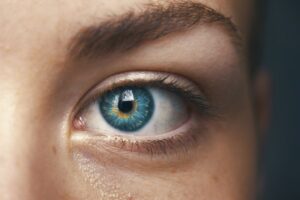
Achromatopsia: Living Life in Shades of Gray
Scientifically Reviewed · Dr. Marwa Abd-Alazim · October 23, 2026
Review Criteria & Clinical Standards
This content undergoes rigorous scientific peer-review and medical editorial standards at Arab Psychology Network to ensure clinical accuracy, validity, and compliance with evidence-based guidelines from leading psychological and healthcare authorities (APA / WHO).

The Core Definition of Achromatism
Achromatism, clinically known as Achromatopsia, is a rare, severe visual disorder characterized by the inability to perceive color. It is often described as complete color blindness, where the world is exclusively viewed in varying shades of gray, black, and white. This condition is fundamentally different from the more common forms of color deficiency, such as Deuteranopia or Protanopia, which involve difficulties distinguishing specific colors but usually retain some degree of color perception. Achromatopsia, by contrast, renders the individual completely reliant on luminance differences rather than spectral differences to interpret their visual environment, leading to profound impacts on daily life.
The fundamental mechanism driving this condition lies within the retina, specifically involving the photoreceptor cells responsible for detecting light and color. Humans typically possess two main types of photoreceptors: rods and cones. While rods are highly sensitive to low light levels and crucial for night vision, they are monochromatic, meaning they do not process color. Cones, however, are responsible for high-acuity daytime vision and the perception of color vision. Achromatopsia results from the complete or near-complete dysfunction of these cone photoreceptor cells.
This inability to utilize cones leads to a triad of severe symptoms, the primary one being the loss of color discrimination. Furthermore, because cones are responsible for sharp, central vision, their absence results in significantly reduced visual acuity, often stabilizing at levels legally defined as low vision. The third core symptom is severe photophobia, or extreme sensitivity to light, as the residual visual system (the rods) becomes overwhelmed by normal daylight conditions. Understanding achromatism requires recognizing it not merely as a deficit of color, but as a complex visual impairment affecting clarity, light tolerance, and overall visual processing.
Underlying Physiology and Genetic Basis
Achromatism is overwhelmingly inherited, typically following an autosomal recessive pattern. This means an individual must inherit a non-functional copy of the causative gene from both parents to manifest the condition. The vast majority of congenital achromatopsia cases are linked to mutations in one of two genes: the CNGA3 gene or the CNGB3 gene. These genes provide instructions for making protein subunits that form a crucial channel within the cone photoreceptor cells. When these subunits are defective, the cone cells cannot properly respond to light, leading to their eventual degeneration or non-functionality from birth.
To appreciate the severity of the cone failure, it is essential to review normal vision physiology. The human retina houses approximately six million cones, divided into three types—short-wavelength (blue), medium-wavelength (green), and long-wavelength (red) sensitive cones. Normal color vision relies on the brain comparing the signals received from these three different cone types. In complete achromatopsia, all three types of cones are dysfunctional. Consequently, the visual input is processed solely by the highly numerous rods, which are all sensitive to the same range of light intensity, thereby eliminating any possibility of spectral differentiation and resulting in the grayscale perception.
The genetic testing available today allows for precise identification of the responsible mutation, which is critical for future therapeutic interventions, particularly those involving gene therapy. While CNGA3 and CNGB3 mutations account for about 70 to 80 percent of cases, rarer forms are associated with mutations in genes like GNAT2, PDE6C, and PDE6H. The consistent feature across all these genetic variations is the targeted and profound impact on the function or survival of the cone photoreceptors, ensuring that the visual system operates exclusively in a monochromatic, low-acuity, and light-sensitive state.
Historical Discovery and Early Research
The recognition of complete color blindness as a distinct neurological or ocular condition dates back to early medical observations, although the term “achromatopsia” became formalized much later. Early reports in the 18th century often described individuals who saw the world only in black and white, but these accounts were sometimes met with skepticism because the inability to imagine color was difficult for normally sighted individuals to comprehend. These early cases helped establish that the condition was not merely a psychological refusal to name colors, but a physiological reality.
A pivotal moment in understanding color deficiencies came with the work of English chemist and physicist John Dalton in the late 18th century. Although Dalton himself suffered from a form of red-green color blindness (Protanopia), his detailed self-examination and subsequent published work brought attention to the biological basis of color perception deficits. While Dalton’s condition was not Achromatopsia, his pioneering efforts in documenting the inheritance and subjective experience of impaired color vision paved the way for future researchers to distinguish between partial and total color blindness.
It was not until the 20th century, with advances in molecular biology and ophthalmology, that researchers definitively linked achromatopsia to the specific dysfunction of the cones in the central retina, the macula. The ability to visualize and test the electrophysiological response of the retina using tools like the electroretinogram (ERG) allowed scientists to confirm that in individuals with achromatopsia, the cone response was absent or severely diminished, even when the rod response remained relatively intact. This physiological proof transitioned the condition from a descriptive curiosity to a defined genetic and cellular disorder.
Types and Variations of Achromatopsia
Achromatopsia is broadly categorized into two primary forms: congenital (inherited) and acquired. Congenital achromatopsia, which is the most common form discussed in relation to genetic mutations, is typically present from birth and is stable throughout life, though the associated symptoms like low vision and photophobia may become more pronounced as the child attempts to navigate increasingly complex visual environments. This form is often synonymous with Rod Monochromatism, reflecting the exclusive use of rod photoreceptors for vision.
The distinction between complete and incomplete congenital achromatopsia is also clinically relevant. In Complete Achromatopsia, there is a total loss of cone function, leading to the full spectrum of symptoms: total color blindness, extremely low visual acuity (often 20/200 or worse), nystagmus (involuntary eye movements), and severe photophobia. Individuals with Incomplete Achromatopsia, while still suffering from significantly impaired color perception and reduced acuity, retain some residual cone function. They may be able to perceive certain colors under optimal lighting conditions, and their visual acuity and light sensitivity are generally less severe than those with the complete form.
A separate, distinct category is Cortical Achromatopsia, which is an acquired condition resulting from damage to the visual processing centers of the brain, typically the ventral occipital cortex (area V4). Unlike the inherited form, where the rods and cones in the eye are dysfunctional, the eyes themselves are generally healthy in cortical achromatopsia. The damage is neurological, resulting from stroke, head trauma, or certain neurodegenerative diseases. While the experience of viewing the world in grayscale is shared, the patient with cortical achromatopsia typically does not suffer from the severe photophobia or nystagmus associated with the retinal forms, highlighting the difference between a peripheral (eye-based) and central (brain-based) disorder.
Real-World Impact and Symptomology
The impact of Achromatopsia extends far beyond simply not seeing color; it fundamentally alters how an individual interacts with and navigates the world. The combination of low visual acuity and extreme photophobia creates significant functional challenges, particularly in educational and occupational settings that rely on fine visual detail or outdoor activities. Tasks that are simple for sighted individuals, such as reading standard print, driving, or recognizing facial expressions from a distance, become complex obstacles requiring specialized aids and accommodations.
Consider, for example, the necessity of differentiating crucial environmental cues. In everyday life, color provides essential, redundant information: traffic signals rely on red, yellow, and green; medical indicators use color coding; and food quality is often judged by hue (e.g., ripe vs. unripe fruit). For an achromat, these cues are reduced to varying shades of gray, making quick, accurate differentiation nearly impossible without reliance on positional cues or tactile inspection. Furthermore, the accompanying photophobia means bright sunlight is physically painful, necessitating the use of specialized dark filters or opaque contact lenses, which further darken the environment and reduce overall light input, adding another layer of visual complexity.
The most common symptoms observed in young children with congenital achromatopsia are involuntary, rapid eye movements (nystagmus) and an observable aversion to bright light. As the child ages, it becomes clear that their visual development is impaired, leading to diagnoses of low vision. Managing the condition involves extensive use of visual aids, including high-magnification devices, specialized telescopes, and computer interfaces designed for the visually impaired. The psychological impact can also be substantial, requiring adaptation to a world built for trichromats (those with normal color vision) and often requiring support to maintain independence and pursue careers that do not rely heavily on acute visual detail.
Diagnosis and Clinical Assessment
The diagnosis of achromatopsia typically begins in early childhood when parents or pediatricians notice the child’s unusual light sensitivity and nystagmus. A comprehensive ophthalmological examination is crucial to confirm the diagnosis and rule out other causes of low vision. The assessment generally involves a structured approach utilizing specialized electrophysiological and genetic tools.
The gold standard for physiological diagnosis is the Electroretinogram (ERG). The ERG measures the electrical responses of the retina’s photoreceptors to light stimulation. In an individual with complete achromatopsia, the photopic (cone-driven) response is absent or severely attenuated, while the scotopic (rod-driven) response is preserved. This clear disparity between the two responses provides definitive proof of cone dysfunction. Furthermore, specialized color vision tests, though ineffective for identifying specific colors (as none are seen), can confirm the total lack of color discrimination. Standard Ishihara plates, for instance, will be consistently failed by the patient.
Following the physiological diagnosis, genetic testing is often recommended to identify the specific mutation (e.g., CNGA3 or CNGB3). This genetic confirmation not only provides certainty for the patient and family but is becoming increasingly vital for enrollment in clinical trials for emerging treatments, such as gene therapy. Understanding the exact genetic locus allows researchers to tailor future therapies specifically to the mechanisms of the mutation, providing hope for restoring some degree of cone function in the future.
Therapeutic Approaches and Management
Currently, there is no conventional cure for inherited achromatopsia; however, management strategies are highly effective in mitigating the most debilitating symptoms, especially photophobia and low visual acuity. Management focuses heavily on environmental modifications and the use of sophisticated visual aids.
The primary therapeutic approach involves the use of highly tinted filters, often deep red or brown, which significantly reduce the amount of light entering the eye. These specialized lenses help to manage the severe photophobia by filtering out the bright light that overwhelms the rod system, allowing the patient to function more comfortably in daylight. While these filters can slightly improve visual acuity outdoors by reducing glare, they do not restore color perception. Inside, high-powered magnification devices, large-print materials, and screen readers are employed to compensate for the central low vision caused by the non-functioning macular cones.
The most promising development in the field of achromatopsia treatment is the advancement of gene therapy. Since achromatopsia is a monogenic disorder (caused by a mutation in a single gene), it is an ideal candidate for gene replacement therapy. Clinical trials are underway where researchers use harmless viral vectors (such as AAVs) to deliver healthy copies of the mutated genes (like CNGA3 or CNGB3) directly into the retina. The goal is to restore function to the remaining dormant cone cells, potentially improving light sensitivity and visual acuity, and possibly even granting some limited form of color perception, representing a monumental step toward a curative treatment.
Connections to Broader Sensory Psychology
Achromatism holds significant importance within the broader fields of sensory psychology and neuro-ophthalmology, serving as a critical model for understanding the biological basis of color vision. The condition underscores the necessary, specific role of rods and cones in processing light quality versus quantity. By studying individuals who rely exclusively on their rod system, researchers gain invaluable insights into the limits and capabilities of scotopic vision.
Achromatopsia is often contrasted with other forms of color vision deficiency, collectively termed dyschromatopsia. While dichromacy (missing one cone type) or anomalous trichromacy (having three cone types but one is defective) are common, achromatopsia represents the most extreme end of the spectrum. Another key related concept is cortical achromatopsia, as mentioned previously. Comparing retinal achromatopsia (a peripheral sensory failure) with cortical achromatopsia (a central processing failure) helps map the hierarchical structure of the visual system, confirming that color perception is not a single event but a complex process requiring both functioning photoreceptors and intact cortical areas (like V4) to interpret their signals.
Ultimately, achromatopsia belongs firmly to the subfield of Visual and Perception Psychology, specifically dealing with the mechanisms of transduction and signal processing within the eye. The ongoing research into its genetic basis provides foundational knowledge that benefits the study of other retinal degenerative diseases, such as retinitis pigmentosa. The hope is that successful gene therapy protocols developed for achromatopsia will establish blueprints for treating a wide array of inherited conditions that currently lead to blindness or severe visual impairment.