Animal Play: Why Fun is Vital for Survival
Scientifically Reviewed · Dr. Marwa Abd-Alazim · October 9, 2026
Review Criteria & Clinical Standards
This content undergoes rigorous scientific peer-review and medical editorial standards at Arab Psychology Network to ensure clinical accuracy, validity, and compliance with evidence-based guidelines from leading psychological and healthcare authorities (APA / WHO).
Introduction: Defining Animal Play
Animal play represents a fundamental and complex behavior observed across a vast array of species, captivating researchers and prompting extensive study in recent decades. At its core, animal play is defined as a repetitive activity that is voluntary, inherently pleasurable, and distinct from the more serious, immediate survival-driven actions an animal undertakes. It often manifests through exaggerated movements, seemingly without any obvious, immediate goal, such as acquiring food or escaping a predator. This seemingly aimless characteristic is what initially puzzled scientists, leading to deeper investigations into its underlying functions and evolutionary significance for individuals and populations.
The key idea underpinning the study of animal play is that despite its apparent lack of immediate utility, it serves a multitude of crucial developmental and adaptive functions. These functions span various domains, including the enhancement of physical and cognitive skills, providing an essential outlet for social interaction, and actively promoting the exploration of the environment. For instance, rough-and-tumble play might refine motor skills and spatial awareness, while cooperative play fosters communication and strengthens social bonds within a group. This multifaceted role suggests that play is not merely a byproduct of surplus energy but an integral component of healthy development and adaptation for many creatures, contributing significantly to their long-term survival and reproductive success.
While commonly associated with mammals, particularly young ones, play behavior is far more widespread, having been documented in birds, fish, reptiles, and even amphibians. This broad distribution across diverse taxa underscores its deep evolutionary roots and adaptive value. The presence of play in such a wide range of animals suggests that the benefits derived from this behavior are fundamental enough to have been selected for repeatedly throughout evolutionary history. Understanding animal play therefore offers profound insights not only into animal psychology but also into the broader principles of behavior, learning, and adaptation that govern life on Earth.
Historical Perspective and Early Research
The systematic study of animal play gained significant traction in the latter half of the 20th century, largely propelled by pioneering ethologists and behavioral biologists. Researchers like Marc Bekoff, John A. Byers, Gordon M. Burghardt, and M.D. Hauser are among the prominent figures who have dedicated extensive efforts to understanding the intricacies of this behavior. Prior to their work, play was often dismissed as a trivial activity, a mere expenditure of excess energy, or simply a non-essential part of an animal’s life, unworthy of serious scientific inquiry. This dismissive view began to shift as observational studies revealed the consistent patterns and seemingly purposeful nature of play behaviors across numerous species, suggesting a deeper functional significance.
The turning point in the scientific perception of play occurred as researchers started to meticulously document and analyze its various forms and contexts. Early investigations focused on compiling comprehensive ethograms of play behaviors, carefully noting when, where, and with whom animals engaged in play. This descriptive phase laid the groundwork for more analytical questions, moving beyond “what is play?” to “why do animals play?” and “what are the consequences of play?” The emergence of fields such as behavioral ecology and evolutionary psychology provided conceptual frameworks within which the adaptive value of seemingly non-utilitarian behaviors like play could be rigorously examined, elevating its status from curiosity to a vital subject of scientific inquiry.
This historical shift was characterized by a growing recognition that complex behaviors are rarely without purpose, especially if they consume significant energy and time, potentially exposing the animal to risks. The work of these key researchers, often involving detailed long-term observations in both natural and captive environments, provided compelling evidence that play is deeply integrated into an animal’s developmental trajectory and social fabric. Their contributions moved the field towards understanding play as a sophisticated, evolutionarily shaped behavior critical for acquiring and refining skills necessary for survival and reproduction, challenging previous assumptions and opening new avenues for research into its physiological, cognitive, and social underpinnings.
Characteristics and Diverse Forms of Play
Animal play is distinguished by several key characteristics that differentiate it from other behaviors. It is typically voluntary, meaning animals choose to engage in it, and often appears pleasurable, indicated by positive emotional expressions or a lack of distress during the activity. A defining feature is its non-literal nature; playful actions often mimic serious behaviors like predation, fighting, or courtship, but they are performed in an exaggerated, incomplete, or out-of-context manner. For example, a playful bite from a puppy is inhibited compared to a real aggressive bite, and a mock chase ends without actual capture or harm. This “as if” quality allows animals to practice dangerous behaviors in a safe, low-stakes environment, crucial for skill development without the immediate consequences of real-life scenarios.
The forms of animal play are incredibly diverse, reflecting the unique adaptations and ecological niches of different species. One common form is chasing play, where animals pursue each other or an object, often in repetitive patterns like circles or back-and-forth movements. This type of play is particularly prevalent in species that rely on speed and agility for hunting or escaping predators, such as many carnivores and ungulates. Chasing helps refine speed, agility, endurance, and spatial awareness, all critical for survival. The roles of ‘chaser’ and ‘chased’ often alternate, indicating a cooperative element that further distinguishes it from genuine predatory or escape behaviors.
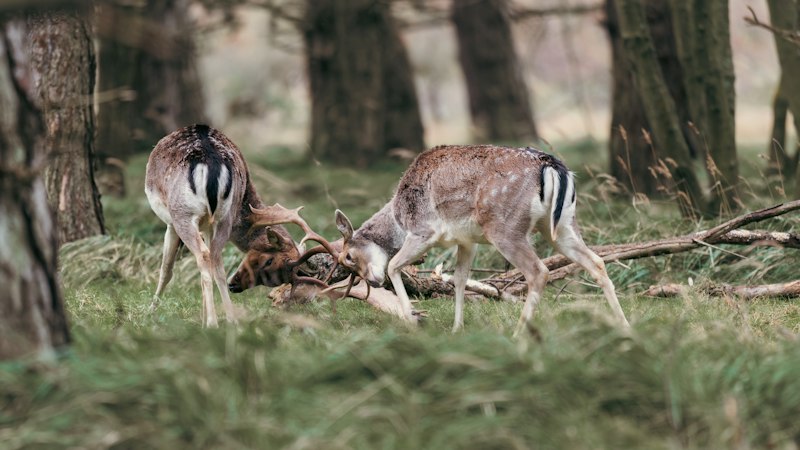
Another widespread form is wrestling play, involving direct physical contact where animals push, bite (inhibitedly), tumble, and grapple with one another. This is especially common among social mammals, including canids, felines, and primates. Wrestling not only builds strength and coordination but also teaches animals about their own physical limits and the social signals of their play partners. It is a critical component for developing social competence, understanding dominance hierarchies, and learning to interpret non-verbal cues. Similarly, object play involves the manipulation of inanimate items like sticks, stones, leaves, or human-provided toys. This can include biting, tossing, rolling, or pouncing on objects, serving to develop fine motor skills, problem-solving abilities, and an understanding of the physical properties of their environment. Each of these play types, while distinct, contributes synergistically to the animal’s overall behavioral repertoire and adaptive fitness.
Theories Explaining the Evolution of Play Behavior
The existence of play behavior, despite its energy expenditure and potential risks, strongly suggests an evolutionary advantage. Several prominent theories attempt to explain the evolutionary origins of play. One of the most widely accepted is the “preparation for adulthood” hypothesis, sometimes referred to as the practice theory. This hypothesis posits that play serves as a vital training ground for behaviors that will be essential for survival and reproduction in adulthood. Through play, young animals practice and refine motor skills, hunting techniques, escape maneuvers, and social strategies without the severe consequences that would accompany real-life errors. For instance, a kitten pouncing on a toy is practicing the complex sequence of movements it will later use to hunt prey, building muscle memory and refining coordination in a safe context.
Another significant framework is the “social bond” hypothesis. This theory suggests that play is crucial for developing and maintaining strong social bonds within a group. Engaging in playful interactions helps animals learn to communicate effectively, interpret social cues, and establish cooperative relationships. This is particularly important for species that live in complex social structures where cooperation, mutual support, and conflict resolution are paramount. For example, rough-and-tumble play can establish trust and tolerance among individuals, reducing aggression and fostering group cohesion. These social skills, honed through play, are invaluable for navigating complex group dynamics, collaborative hunting, or collective defense, ultimately enhancing the individual’s and the group’s chances of survival.
Finally, the “cognitive development” hypothesis emphasizes the role of play in fostering mental abilities. This theory proposes that play helps animals develop crucial cognitive skills such as problem solving, decision making, creativity, and the ability to adapt to novel situations. By experimenting with different actions and outcomes in a playful context, animals learn about cause and effect, develop flexible responses, and enhance their capacity for learning. Object manipulation play, for instance, can improve spatial reasoning and understanding of physical properties. The challenges presented during play stimulate neural development and cognitive flexibility, equipping animals with the mental tools necessary to navigate an unpredictable environment. All three hypotheses are not mutually exclusive; rather, they often work in conjunction, highlighting the multifaceted adaptive benefits of play behavior.
A Practical Example: Play in Canine Development
To illustrate the practical application of these concepts, consider the developmental stages of a young domestic dog, specifically a puppy. From a very early age, puppies engage in a rich repertoire of play behaviors that are critical for their physical, social, and cognitive maturation. This often begins with solitary exploration and object play, where a puppy might bat at a dangling toy or chew on a rope. This seemingly simple action is an early form of object play, helping the puppy develop jaw strength, learn about different textures, and understand the consequences of its actions on its environment. It also serves as a precursor to more complex problem-solving skills, as the puppy learns to manipulate objects to achieve a desired outcome, such as retrieving a hidden treat.
As puppies grow, social play becomes increasingly dominant and sophisticated. They engage in frequent bouts of chasing, wrestling, and mock fighting with littermates or other dogs. During chasing play, one puppy might nip at the heels of another, initiating a chase sequence where roles are often reversed. This activity hones their speed, agility, and coordination, practicing the mechanics of pursuit and evasion that are ancestrally vital for hunting and escaping danger. More importantly, it teaches them to gauge speeds and movements, developing crucial spatial awareness. The exaggerated movements and inhibited bites during wrestling teach puppies about their bite inhibition, the appropriate force to use, and how to respond to social signals from their play partners, such as a yelp indicating pain or a change in body posture signifying a desire to disengage.
The “how-to” of these interactions demonstrates the principles of play in action. When puppies engage in wrestling, they learn to interpret subtle body language, such as a play bow indicating an invitation to play, or a rolled-over posture signaling submission or a desire to pause. They develop a nuanced understanding of social boundaries and communication, which are vital for integrating into a pack or household successfully. A puppy that learns to play appropriately with its littermates and other dogs is more likely to be well-adjusted and exhibit fewer behavioral issues later in life. This practical example showcases how various forms of play contribute to a holistic developmental process, integrating physical skill acquisition, social learning, and cognitive development in a real-world, highly relatable context.
Significance for Understanding Behavior and Development
The study of animal play holds profound significance for the broader field of psychology and biology, extending far beyond mere academic curiosity. It provides critical insights into the fundamental mechanisms of development, learning, and adaptation across the animal kingdom. By observing how play unfolds and changes across an animal’s lifespan, researchers can better understand the sensitive periods for skill acquisition, the impact of environmental enrichment, and the long-term consequences of play deprivation. This understanding is not only crucial for comprehending natural behavior but also for drawing parallels and distinctions in human child development, where play is similarly recognized as essential for cognitive, social, and emotional growth.
Furthermore, the concept of animal play has significant practical applications in several contemporary domains. In the realm of animal welfare, understanding play behaviors is paramount. The presence and quality of play in captive animals often serve as a robust indicator of their psychological and physical well-being. Environments that facilitate natural play behaviors, such as providing appropriate enrichment objects or opportunities for social interaction, are increasingly recognized as essential for maintaining healthy and mentally stimulated animals in zoos, sanctuaries, and domestic settings. Conversely, a lack of play or the manifestation of abnormal play patterns can signal stress, illness, or an inadequate environment, prompting interventions to improve living conditions.
The principles derived from animal play research also extend to fields like conservation and even human-animal interaction. For instance, understanding the specific types of play critical for developing predatory skills in endangered carnivores can inform reintroduction programs, ensuring that animals released into the wild are adequately prepared for the challenges of survival. In human-animal bonds, engaging in play with pets strengthens the relationship, provides mental and physical exercise for the animal, and contributes positively to the owner’s well-being. Thus, the study of animal play is not an isolated academic pursuit but a cornerstone for informed practices in animal care, research, and our understanding of the fundamental processes that shape living organisms.
Interconnections with Other Psychological Concepts
Animal play does not exist in isolation; it is deeply interwoven with a variety of other key psychological terms and theories, forming a complex tapestry of behavioral science. For instance, play is intimately connected with learning theory. Through play, animals engage in a form of experiential learning, where they discover new behaviors, test boundaries, and adapt their strategies based on immediate feedback. This often involves elements of operant and classical conditioning, as positive outcomes (e.g., successful capture in mock predation) reinforce certain actions, while negative outcomes (e.g., an overly aggressive bite resulting in a play partner disengaging) lead to behavioral adjustments. Play therefore serves as a crucial natural laboratory for skill acquisition and behavioral refinement.
Its relationship to instinctive behaviors is also profound. While play itself is voluntary, it often involves the playful execution of behaviors that are fundamentally instinctive, such as hunting, fighting, or mating rituals. Play allows animals to practice these hardwired behaviors, transforming raw instinct into refined, context-appropriate actions. For example, the innate predatory drive of a cat is channeled and polished through play-pouncing on toys, developing precision and timing that would be critical in actual hunting. This interplay between instinct and learned refinement highlights play’s role as a bridge between innate predispositions and flexible, adaptive behavior.
Moreover, animal play is closely tied to the broader category of developmental psychology, particularly focusing on the processes of maturation and behavioral change over an animal’s lifespan. It is also a central topic within behavioral psychology and ethology, which are dedicated to the scientific study of animal behavior in natural environments. The field of evolutionary psychology leverages insights from animal play to understand the adaptive benefits of such behaviors, not only in animals but also in humans, recognizing that our own playful tendencies likely share deep evolutionary roots with those observed in other species. This rich web of connections underscores play’s fundamental importance as a phenomenon that sheds light on numerous facets of animal and human psychology.