Neuroanatomy: How Tiny Arteries Power Your Mind
Scientifically Reviewed · Dr. Marwa Abd-Alazim · October 12, 2026
Review Criteria & Clinical Standards
This content undergoes rigorous scientific peer-review and medical editorial standards at Arab Psychology Network to ensure clinical accuracy, validity, and compliance with evidence-based guidelines from leading psychological and healthcare authorities (APA / WHO).
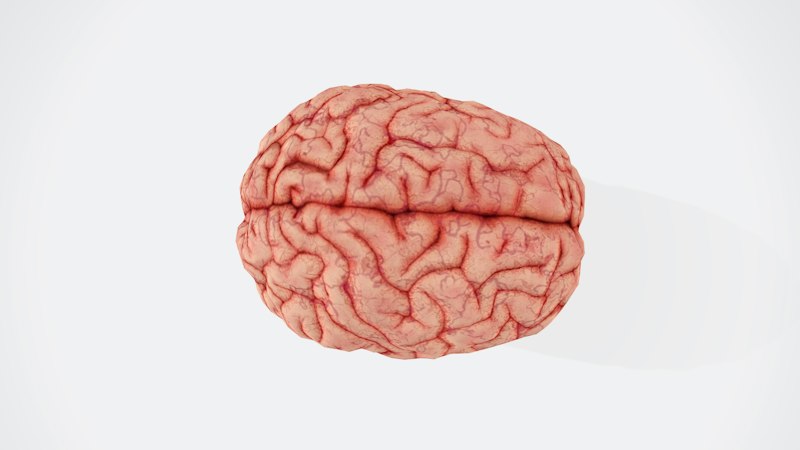
The Core Definition of the Anterior Choroidal Artery
The anterior choroidal artery (AChA) is a vital, albeit relatively small, branch of the internal carotid artery, playing a disproportionately significant role in supplying blood to several deep and critical structures within the brain. It is one of three major choroidal arteries, along with the posterior and lateral choroidal arteries, distinguished by its anterior origin and specific vascular territory. Essentially, the AChA is a crucial conduit for oxygenated blood and nutrients to brain regions indispensable for a wide array of neurological and psychological functions, including aspects of memory, emotion, sensory processing, and motor control.
The fundamental mechanism behind the importance of the AChA lies in its strategic position within the cerebral circulation. It acts as a critical link, ensuring the perfusion of deep gray matter and white matter structures that are often less accessible to other larger cerebral arteries. Its blood supply is particularly vital for the integrity of the limbic system components, parts of the basal ganglia, and key sensory pathways. Dysfunction or occlusion of this artery, therefore, can lead to profound and often devastating neurological deficits, underscoring its pivotal role in maintaining normal brain function and, by extension, human behavior and cognition.
While often overshadowed by the larger cerebral arteries, the AChA’s unique vascular territory means that it is frequently implicated in specific patterns of ischemic stroke and hemorrhagic events. Its relatively narrow caliber and convoluted course make it susceptible to various pathologies, from atherosclerotic disease to aneurysms. Understanding its precise anatomy and the specific brain regions it irrigates is paramount for clinicians, neuroscientists, and those studying the intricate relationship between brain structure and psychological processes.
Anatomical Origins and Course
Anatomically, the anterior choroidal artery typically originates from the distal segment of the internal carotid artery, specifically from its supraclinoid portion, often near the origin of the posterior communicating artery. In some anatomical variations, it may arise directly from the posterior communicating artery itself. From its origin, the AChA embarks on a complex and intricate course, initially traveling inferiorly and laterally. Its trajectory is largely parallel to the optic tract, traversing the ventral and lateral aspects of the temporal lobe. This close anatomical relationship with the optic tract has significant clinical implications, as pathology affecting the AChA can directly impact visual pathways.
As it progresses, the AChA enters the choroidal fissure, where it gives off numerous small branches that penetrate deep into the brain parenchyma. This segment of the artery is particularly critical as it lies in close proximity to a multitude of vital structures. Along the temporal pole, it maintains an intimate relationship not only with the optic radiation but also with the medial orbital gyrus and other adjacent arteries such as the posterior temporal artery and the middle temporal artery. This dense network of connections highlights the vulnerability of surrounding tissues to vascular insult originating from the AChA.
The termination of the AChA is typically within the lateral ventricle, where it contributes to the choroid plexus. Throughout its course, it is divided into two segments: the cisternal segment, which courses through the subarachnoid space, and the plexal segment, which enters the temporal horn of the lateral ventricle. The precise branching pattern and vascular territory can exhibit some individual variability, but the core structures it supplies remain consistent across most individuals, underlining its fundamental importance in neurovascular anatomy.
Structures Supplied by the Anterior Choroidal Artery
The anterior choroidal artery is renowned for its extensive and critical vascular territory, supplying a diverse array of deep brain structures that are indispensable for complex neurological and psychological functions. Among the most prominent structures it irrigates are the optic tract, which relays visual information from the optic chiasm to the lateral geniculate body, and the temporal pole, a region implicated in socio-emotional processing, memory retrieval, and language comprehension. Furthermore, it provides blood to the parahippocampal gyrus and the hippocampus, both integral components of the limbic system crucial for memory formation and spatial navigation.
Beyond these, the AChA is the primary blood supply for the amygdala, a key structure for processing emotions, particularly fear and aggression, and for memory consolidation related to emotional events. It also extends its reach to a significant portion of the thalamus, the brain’s primary relay station for sensory and motor signals, and the subthalamic nucleus, a crucial component of the basal ganglia involved in motor control. The tegmentum of the midbrain, which contains various nuclei involved in motor control, sleep, arousal, and other vital functions, also receives significant contributions from the AChA.
Additional structures within its extensive territory include the anterior perforated substance, a region important for the passage of blood vessels and the origin of some basal forebrain nuclei, and the choroid plexus of the third ventricle, which produces cerebrospinal fluid. The lateral geniculate body, a primary processing center for visual information within the thalamus, also relies on the AChA for its blood supply. This intricate and widespread vascularization underscores the artery’s critical role in maintaining the functional integrity of circuits underlying perception, cognition, emotion, and movement.
Historical Understanding and Discovery
The detailed understanding of the anterior choroidal artery, like much of neuroanatomy, evolved gradually through centuries of anatomical dissection and observation. Early anatomists, such as Galen and Andreas Vesalius, laid the groundwork by meticulously mapping the larger cerebral vessels. However, the precise identification and specific vascular territory of smaller, deeper arteries like the AChA required more refined techniques and a deeper appreciation of microanatomy. The 17th century saw significant advancements with figures like Thomas Willis, who provided detailed descriptions of the arterial circle at the base of the brain, now known as the Circle of Willis, from which many of the carotid branches originate or connect.
The 19th and early 20th centuries were particularly pivotal for the detailed mapping of individual cerebral arteries and their clinical correlates. Neurologists and anatomists began to correlate specific neurological deficits observed in stroke patients with post-mortem examination findings of vascular occlusion in particular territories. It was during this period that the specific contributions of the anterior choroidal artery to structures like the hippocampus, thalamus, and basal ganglia became increasingly clear. The advent of cerebral angiography in the mid-20th century further revolutionized the ability to visualize these vessels in living patients, allowing for a dynamic understanding of blood flow and the identification of vascular pathologies.
While no single individual is credited with the “discovery” of the AChA in isolation, its understanding emerged from the collective efforts of generations of anatomists, neurologists, and pathologists. Their work, based on careful observation of human and animal brains, along with clinical-pathological correlation, gradually elucidated the unique significance of this artery. This historical context demonstrates how the detailed anatomical mapping of the brain’s vascular supply became an indispensable foundation for modern neurology, neurosurgery, and neuropsychology, providing insights into the physical substrates of mental and behavioral functions.
Clinical Significance: Stroke, Aneurysms, and Pathology
The clinical significance of the anterior choroidal artery cannot be overstated, particularly in the context of cerebrovascular diseases such as stroke, aneurysms, and carotid artery disease. Due to its unique and critical vascular territory, any compromise to the AChA’s blood flow can result in severe and specific neurological deficits. Occlusion of the AChA, commonly leading to an ischemic stroke, can manifest with a constellation of symptoms including contralateral hemiparesis (weakness on the opposite side of the body), hemianesthesia (sensory loss), and homonymous hemianopsia (visual field deficit affecting the same side of vision in both eyes), reflecting damage to the internal capsule, thalamus, and optic tract, respectively.
Furthermore, the AChA is a recognized site for the formation of cerebral aneurysms, which are localized dilations of the arterial wall. These aneurysms can be saccular, resembling a berry, and often occur at arterial branch points. While relatively less common than aneurysms of the anterior communicating artery, AChA aneurysms pose a significant risk of rupture, leading to subarachnoid hemorrhage, a life-threatening condition. Even unruptured aneurysms can cause symptoms by compressing adjacent neural structures. For instance, an aneurysm compressing the optic tract could lead to visual field deficits or even blindness, highlighting the critical anatomical proximity of these structures.
Pathologies affecting the AChA are diverse, encompassing atherosclerotic vascular disease, which can lead to narrowing and occlusion, as well as trauma or congenital abnormalities predisposing to aneurysm formation. The diagnosis and management of AChA pathologies rely heavily on advanced neuroimaging techniques such as Magnetic Resonance Imaging (MRI) and Computed Tomography Angiography (CTA). These modalities allow clinicians to visualize the artery, assess its patency, detect aneurysms, and characterize ischemic lesions. Prompt and accurate diagnosis is crucial for guiding therapeutic interventions, which may range from medical management of risk factors to endovascular coiling or surgical clipping of aneurysms, or thrombolysis for acute ischemic stroke.
A Practical Clinical Example
Consider a 65-year-old patient, Mr. Davies, who suddenly experiences weakness on the left side of his body, numbness in his left arm and leg, and difficulty seeing objects in his left visual field. He also reports feeling unusually agitated and confused, struggling to recall recent events. Upon presentation to the emergency department, a rapid neurological assessment is performed, and based on the constellation of symptoms, a cerebrovascular event, specifically a stroke, is highly suspected. The acute onset of these multi-modal deficits strongly points towards an occlusion in a critical cerebral artery.
An immediate CT scan of the brain is performed to rule out hemorrhagic stroke, followed by a CT angiography to visualize the cerebral arteries. The imaging reveals an acute occlusion of the right anterior choroidal artery. This finding directly explains Mr. Davies’ symptoms: the weakness and numbness are attributed to ischemia in the right internal capsule, which carries motor and sensory fibers to and from the contralateral side of the body. The visual field deficit (left homonymous hemianopsia) results from damage to the right optic tract, which processes visual information from the left visual field.
Furthermore, Mr. Davies’ cognitive and emotional disturbances, such as his confusion, agitation, and memory difficulties, can be directly linked to the AChA’s supply to the right hippocampus, amygdala, and thalamus. The loss of blood flow to these structures disrupts their function, leading to impaired memory consolidation, emotional dysregulation, and altered sensory processing. This practical example vividly illustrates how the precise anatomical knowledge of the AChA’s vascular territory allows clinicians to accurately localize a stroke, predict the specific neurological and neuropsychological deficits, and subsequently guide targeted therapeutic interventions and rehabilitation strategies to manage the patient’s condition effectively.
Significance, Impact, and Broader Implications
The significance of understanding the anterior choroidal artery extends far beyond its anatomical description; it is fundamental to numerous aspects of modern neuroscience and clinical practice. Its meticulous mapping has profoundly impacted the field of neurosurgery, where precise knowledge of its location and branches is critical for procedures involving deep brain structures, such as the clipping of aneurysms or the resection of tumors, minimizing iatrogenic damage to vital neural pathways. In neurology, the AChA serves as a key reference point for diagnosing and localizing stroke syndromes, allowing for more accurate prognostication and selection of acute treatments.
From a broader scientific perspective, the study of the AChA and its vascular territory has significantly contributed to our understanding of brain-behavior relationships. By observing the specific cognitive, emotional, and motor deficits that arise from AChA infarctions, researchers have gained invaluable insights into the functions of the hippocampus, amygdala, and thalamus in humans. This clinical-pathological correlation has been instrumental in refining models of memory, emotion regulation, and sensory processing, thereby enriching the fields of neuropsychology and cognitive neuroscience.
Moreover, the AChA’s role in supplying deep brain structures makes it relevant to understanding neurodegenerative diseases and psychiatric conditions that affect these regions. While not a direct cause, vascular health, including the integrity of arteries like the AChA, is increasingly recognized as a factor influencing brain resilience and susceptibility to various disorders. Therefore, the continuous research into the AChA’s anatomy, physiology, and pathology continues to inform advancements in preventative medicine, neurorehabilitation, and the development of targeted therapies for a wide spectrum of neurological and psychological conditions.
Connections to Related Concepts and Fields
The anterior choroidal artery is intimately connected to a rich tapestry of related concepts and psychological subfields, underscoring its multifaceted importance within neuroscience. Within the broader category of Neuroanatomy, it is a crucial component of the cerebral circulation, directly linking to the internal carotid artery system and contributing to the intricate network that ensures continuous blood supply to the brain. Its relationships with the posterior communicating artery and the other choroidal arteries (posterior and lateral) highlight the distributed nature of deep brain vascularization and the potential for collateral circulation in certain scenarios.
In Clinical Neurology, the AChA is a focal point for understanding specific stroke syndromes. Its involvement in supplying the internal capsule, thalamus, and optic tract means that its occlusion often leads to a distinct clinical presentation that aids in diagnosis and management. The study of cerebral aneurysms also frequently involves the AChA, given its propensity for aneurysm formation, thereby linking it to neurosurgical interventions and advanced neuroimaging techniques.
From a Neuropsychology perspective, the AChA’s supply to structures like the hippocampus, amygdala, and basal ganglia establishes a direct link to cognitive and emotional functions. Damage to these areas due to AChA pathology can result in significant impairments in memory (e.g., anterograde amnesia), emotional processing (e.g., apathy, disinhibition), and motor control (e.g., movement disorders). Thus, the AChA serves as a critical bridge between the intricate vascular anatomy of the brain and the complex psychological functions it supports, offering vital insights into the neural basis of human experience and behavior.