Anticipatory Imagery: How Your Brain Predicts Tomorrow
Scientifically Reviewed · Dr. Marwa Abd-Alazim · October 10, 2026
Review Criteria & Clinical Standards
This content undergoes rigorous scientific peer-review and medical editorial standards at Arab Psychology Network to ensure clinical accuracy, validity, and compliance with evidence-based guidelines from leading psychological and healthcare authorities (APA / WHO).
Introduction: Bridging Perception and Prediction
In the rapidly evolving landscape of computer vision and artificial intelligence, the ability to merely recognize static objects or scenes has proven insufficient for truly understanding and interacting with dynamic real-world environments. Traditional image-based representations, while foundational, inherently struggle to encapsulate the fluidity of change—be it the movement of objects, the evolution of environmental conditions, or the unfolding of complex events over time. This limitation has spurred significant research into more advanced representational paradigms, leading to the conceptualization of the anticipatory image. This innovative approach moves beyond passive observation, instead aiming to capture the inherent dynamic nature of the world by actively predicting future events or actions, thereby offering a more robust and intelligent framework for machine perception and decision-making. Such a concept holds profound implications, not only for technological advancement but also for deepening our understanding of how intelligence, both artificial and biological, processes and predicts its surroundings.
The concept of an anticipatory image represents a significant paradigm shift from reactive to proactive processing within artificial systems. Rather than simply interpreting what has already occurred or what is currently present in a visual input, an anticipatory image provides a forward-looking representation. This predictive capability is crucial for systems that need to operate autonomously in complex, unpredictable environments, such as self-driving cars, industrial robots, or advanced surveillance systems. By enabling a system to foresee potential future states or outcomes, the anticipatory image facilitates more informed decision-making, allowing for preemptive actions and more adaptive responses to changing circumstances. This detailed entry will delve into the core definition, historical context, practical applications, and broader implications of anticipatory images, particularly their connections to cognitive processes and their transformative impact on various fields.
The Core Definition of Anticipatory Image
At its heart, an anticipatory image is an advanced image-based representation designed to encapsulate the dynamic characteristics of a given environment by explicitly modeling and predicting future events or actions. Unlike conventional images that offer a snapshot of a specific moment in time, an anticipatory image incorporates a temporal dimension, effectively projecting the current scene into probable future states. This sophisticated representation captures the “expected outcomes” of a particular situation or scene, synthesizing information from the current environmental state with the system’s accumulated knowledge and predictive models. For instance, in a scenario involving a pedestrian crossing a street, an anticipatory image would not just depict the pedestrian’s current location, but would also dynamically anticipate their future movements, potential changes in gait, and even the evolving conditions of the road ahead, such as approaching vehicles or traffic signal changes. This forward-looking capacity is fundamental to enabling intelligent systems to engage with the world in a more sophisticated and proactive manner.
The fundamental mechanism underpinning the anticipatory image involves complex computational models that learn patterns and causal relationships from vast datasets of temporal visual information. These models are trained to infer the likely progression of events, the trajectories of moving objects, and the transformations of scenes based on current observations. This predictive capability is not merely a statistical extrapolation but often involves an understanding of physical laws, agent intentions (in the case of human or animal subjects), and environmental constraints. The representation is therefore rich with inferred future possibilities, allowing a system to “see” beyond the immediate visual input. This ability to generate internal models of future states resonates with concepts in cognitive science, where biological brains are theorized to constantly predict sensory input, suggesting a deep-seated connection between the computational approach of anticipatory images and the fundamental predictive nature of biological perception and cognition.
Historical Context and Emergence in Dynamic Systems
The conceptualization of the anticipatory image emerged from the pressing need to overcome inherent limitations within traditional image-based representations in the context of computer vision. As computational power increased and the ambition for intelligent systems grew, it became clear that merely processing static images was insufficient for applications demanding a nuanced understanding of real-world dynamics. The seminal work by Huang et al. (2019) is widely recognized as pioneering the formal proposal of the anticipatory image concept. Their research highlighted the critical gap in existing methodologies, which struggled to capture the continuous flow of events, the subtle nuances of motion, and the probabilistic nature of future occurrences. This foundational work provided a robust theoretical and experimental framework for how an image representation could encode predictive information, thereby paving the way for systems capable of anticipating rather than merely reacting.
The development of anticipatory images can be situated within a broader historical trajectory in artificial intelligence and cognitive science, where the importance of predictive processing has gained increasing recognition. From early cybernetics to more recent theories of predictive coding in neuroscience, the idea that intelligent agents constantly predict their environment to minimize surprise has been a recurring theme. Huang et al.’s contribution specifically brought this predictive paradigm to the domain of visual representations, offering a concrete computational method for generating such forward-looking visual data. This historical moment marked a significant shift towards designing visual systems that are not just passive observers but active predictors, fundamentally altering the approach to problems in scene understanding, autonomous navigation, and human-computer interaction by equipping machines with a rudimentary form of foresight.
A Practical Example: Navigating Dynamic Environments
To illustrate the profound utility of the anticipatory image, consider the complex yet commonplace scenario of an autonomous vehicle navigating a bustling urban intersection. A traditional computer vision system would process static frames, identifying pedestrians, other vehicles, and traffic signals at each given moment. However, this reactive approach is inherently limited when dealing with the rapid and often unpredictable movements typical of such an environment. An anticipatory image system, on the other hand, fundamentally transforms this process. When the vehicle approaches the intersection, its sensors capture the current visual data. This data is then fed into models that generate an anticipatory image, which extends beyond the immediate frame to predict the likely trajectories of pedestrians stepping off curbs, the acceleration or braking patterns of nearby cars, and the impending changes in traffic light signals.
The “how-to” of this application unfolds through several intricate steps. First, the system analyzes the current state, recognizing all dynamic agents and their immediate velocities and directions. Then, leveraging extensive training data and sophisticated machine learning algorithms, it projects these agents’ movements into the near future. For a pedestrian, this might involve anticipating their path across the crosswalk, their speed, and even subtle body language cues that suggest an imminent change in direction. For other vehicles, it would predict their acceleration, braking, and turning intentions. The anticipatory image consolidates all these predicted future states into a single, dynamic representation. This allows the autonomous vehicle to make proactive decisions, such as smoothly adjusting its speed to allow a pedestrian to cross safely, rather than abruptly braking only after the pedestrian has already entered its immediate path, or anticipating a yellow light turning red and beginning to slow down before the actual color change. This predictive capability is crucial for enhancing both the safety and efficiency of autonomous navigation, moving systems from mere observation to intelligent, foresightful action.
Significance and Impact on Machine Perception and Intelligence
The advent of the anticipatory image marks a pivotal advancement in the field of computer vision, offering a robust solution to the long-standing challenge of understanding and interacting with dynamic environments. Its significance lies in its ability to equip artificial systems with a form of predictive intelligence, moving them beyond purely reactive operations. This capability is paramount for developing truly autonomous agents that can not only perceive their surroundings but also anticipate future events, enabling them to make more informed, timely, and safer decisions. By providing a rich representation of expected outcomes, anticipatory images significantly improve the accuracy and robustness of visual recognition systems, allowing them to better handle occlusions, sudden changes, and complex interactions that are common in real-world scenarios. This proactive understanding of future states drastically reduces ambiguity and enhances the reliability of machine perception, which is critical for applications where errors can have severe consequences.
The practical applications of anticipatory images span a wide array of domains, profoundly impacting areas such as visual recognition and robotic systems. Huang et al. (2019) notably demonstrated that recognition systems powered by anticipatory images could outperform traditional, static-image-based systems by anticipating future events, leading to more accurate and resilient object detection and scene understanding. Beyond recognition, this concept has been instrumental in enhancing the performance of robotic systems. For instance, research by Ganapathi et al. (2020) showcased how anticipatory image-based representations could improve autonomous navigation for robots by enabling them to predict their own movements and actions within an environment, as well as the movements of other agents or obstacles. This predictive foresight allows robots to plan more efficient paths, avoid collisions proactively, and perform complex manipulation tasks with greater precision and safety, fundamentally transforming their capacity to operate intelligently and autonomously in unstructured and unpredictable settings.
Broader Implications and Connections to Cognitive Psychology
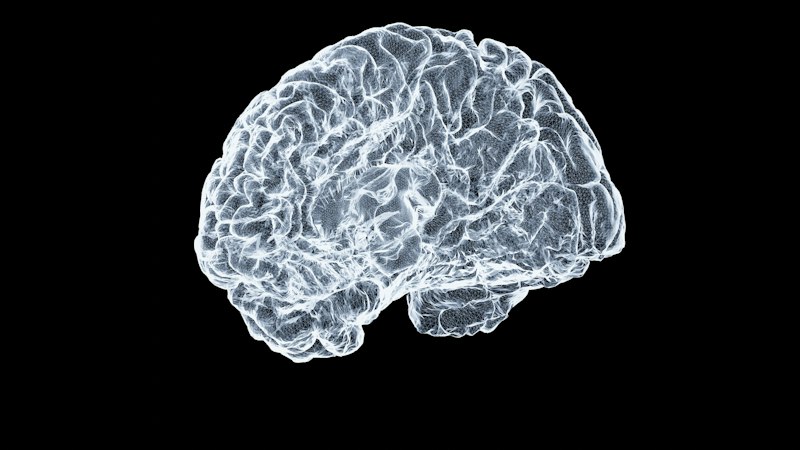
The concept of the anticipatory image, while originating in computer vision, carries profound implications that resonate deeply with theories in cognitive psychology and neuroscience, particularly the prominent framework of predictive coding. Predictive coding posits that the brain is a prediction machine, constantly generating hypotheses about incoming sensory information and then updating these predictions based on any mismatch or “prediction error.” In essence, our brains do not passively receive sensory data; they actively anticipate it. The anticipatory image computationally mirrors this biological mechanism, providing an artificial system with an internal model of future states, allowing it to “anticipate” its visual input. This parallel suggests that the computational efficiency and robustness offered by anticipatory images in AI might reflect fundamental principles of intelligent perception and action observed in biological systems, offering a reciprocal relationship where AI concepts can inform our understanding of human cognition.
Furthermore, anticipatory images connect to other key psychological and computational concepts. For instance, they relate to temporal reasoning, which is the ability to understand and reason about time-dependent events and their causal relationships—a critical component of human intelligence and decision-making. In artificial intelligence, this involves developing models that can infer sequences of events and their likely progression, directly contributing to the formation of anticipatory images. The concept also aligns with the broader field of cognitive robotics, which seeks to endow robots with human-like cognitive capabilities, including the ability to predict and understand the intentions of others. By equipping machines with anticipatory visual representations, we are essentially building systems that can engage in a more sophisticated form of “theory of mind” concerning their environment, inferring not just what is happening, but what is about to happen, and adjusting their behavior accordingly.
The broader category to which anticipatory images belong is primarily Computer Vision and Artificial Intelligence, specifically within the subfields of dynamic scene understanding, predictive modeling, and autonomous systems. However, its conceptual underpinnings and practical benefits extend into Cognitive Science by offering computational models that can test and explore theories of perception, attention, and decision-making that rely heavily on predictive processes. As such, anticipatory images serve as a crucial interdisciplinary bridge, enabling breakthroughs not only in technological capabilities but also in our fundamental understanding of intelligence itself, whether manifested in machines or biological organisms. Their development represents a significant step towards creating artificial intelligences that can truly comprehend and interact with the complex, ever-changing nature of our world with a degree of foresight previously confined to biological agents.
Conclusion: The Future of Anticipatory Processing
In summary, the anticipatory image represents a transformative advancement in computer vision and artificial intelligence, moving beyond static representations to capture the inherent dynamic nature of the world through predictive modeling. Pioneered by researchers like Huang et al. (2019) and further developed for applications such as robotic systems by Ganapathi et al. (2020), this innovative concept has demonstrably improved the accuracy and robustness of visual recognition systems and facilitated more intelligent autonomous navigation. By enabling artificial systems to anticipate future events and actions, anticipatory images provide a crucial layer of foresight that is essential for operating safely and effectively in complex, unpredictable environments. This capacity for proactive understanding marks a significant leap towards creating more sophisticated and adaptable artificial intelligences.
As research in this domain continues to mature, the applications of anticipatory images are expected to expand dramatically. Future developments may involve integrating anticipatory images with multimodal sensor data, such as audio and haptic feedback, to create even richer and more comprehensive predictive models of reality. Moreover, advancements in reinforcement learning and generative AI could lead to more nuanced and flexible anticipatory image generation, allowing systems to predict not just what is likely to happen, but also to explore multiple plausible futures. Ultimately, the anticipatory image is poised to become an indispensable tool for understanding and interacting with the world around us, not merely as it is, but as it is becoming, thereby bridging the gap between perception and genuine foresight in artificial intelligence and offering new avenues for understanding cognitive processes.