Associative Play: How Social Bonds Shape Young Minds
Scientifically Reviewed · Dr. Marwa Abd-Alazim · October 19, 2026
Review Criteria & Clinical Standards
This content undergoes rigorous scientific peer-review and medical editorial standards at Arab Psychology Network to ensure clinical accuracy, validity, and compliance with evidence-based guidelines from leading psychological and healthcare authorities (APA / WHO).
The Core Definition of Associative Play
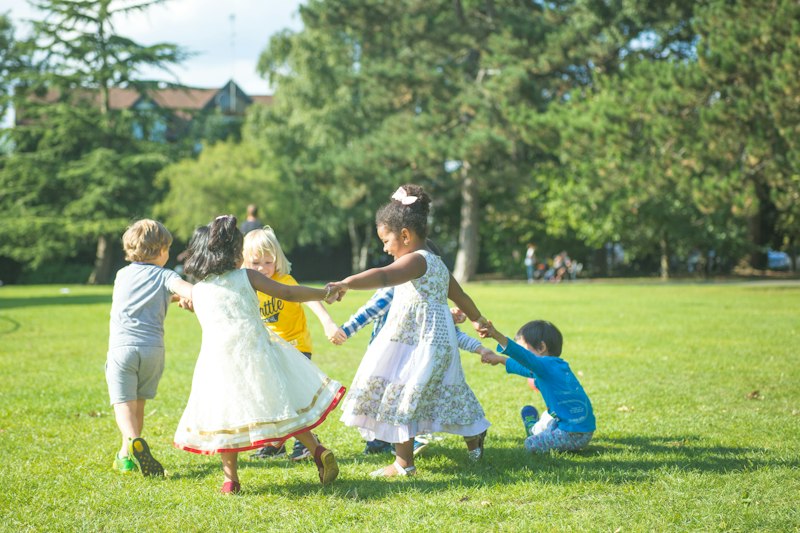
Associative play is a crucial stage within the developmental continuum of social engagement, typically observed in children between the ages of three and five years old. It is defined fundamentally as a form of group activity where children interact, share materials, and discuss their respective activities, yet they do not coordinate their efforts toward a single, unified goal. Unlike solitary or parallel play, the defining characteristic of the associative stage is the conscious inclusion of other participants in the immediate environment, involving the exchange of dialogue, toys, or tools, thereby establishing a shared presence without requiring formal structural cooperation.
The mechanism underpinning this concept rests on the child’s increasing awareness of their peers as active agents who can contribute to the play experience. While children engaged in this behavior may sit together, talk about their separate drawings, or even borrow each other’s crayons, the individual objectives remain paramount. For instance, one child might be building a tower while another is constructing a fence; they exchange bricks and comment on each other’s work, but the successful completion of the tower is still the first child’s goal, and the fence is the second child’s exclusive goal. This shared, yet individualistic, approach serves as an essential bridge toward fully integrated social interactions, playing a vital role in early cognitive development and socialization.
This stage emphasizes open-ended exploration and creativity, often utilizing objects available in the play environment to create imaginary worlds and stories, as noted by researchers like Rothbart. The lack of stringent rules or predetermined outcomes allows children the freedom to experiment with communication styles and negotiation tactics in a low-stakes setting. It is the first stage where true verbal interaction and shared emotional responses become consistent components of the play experience, distinguishing it sharply from the independent focus seen in earlier play phases.
Distinguishing Associative Play from Other Play Types
To fully appreciate the significance of associative play, it must be contextualized within the broader framework of social play stages, most famously categorized by developmental psychologist Mildred Parten. Parten identified six ascending categories of social participation, ranging from the least social (unoccupied behavior) to the most social (cooperative play). Associative play occupies the fourth position in this hierarchy, representing a transitional phase between parallel play and true cooperative interaction.
In contrast, parallel play, which usually precedes the associative stage, involves children playing alongside one another with similar materials, but without any meaningful interaction or attempt to influence the other’s activity. The children are physically proximate but psychologically independent. Associative play elevates this interaction by introducing communication; the children are now aware of, and responsive to, the actions and narratives of their peers. This responsiveness, however, is still limited. The key difference between associative play and the final stage, cooperative play, lies in the presence of an organized, common goal.
Cooperative play demands that children assign roles, follow shared rules, and work together to achieve a single outcome, such as completing a board game, constructing a complex fort, or executing a detailed dramatic script. Associative play lacks this structured organization and shared objective. The shift from associative to cooperative play signals a significant leap in a child’s capacity for complex social coordination, planning, and sophisticated perspective-taking, skills that are foundational for later academic and social success.
Historical and Theoretical Context
The systematic study and categorization of associative play owes its existence primarily to the foundational research conducted by Mildred Parten in the early 1930s. Parten’s landmark 1932 study, “Social Participation Among Preschool Children,” established the now widely accepted developmental sequence of social interaction observed in nursery school settings. By meticulously observing and recording the behavior of children during free play, Parten provided an empirical basis for understanding how social skills evolve over time, moving from isolation toward highly integrated group dynamics.
Parten’s model provided a crucial theoretical framework that moved beyond simple age-based descriptions of childhood behavior. Her work emphasized that play is not merely a leisure activity but a critical mechanism for practicing and mastering social competencies. The identification of associative play as a distinct and necessary step underscored the idea that children must first learn to interact and share space (associative phase) before they can successfully negotiate and collaborate on complex tasks (cooperative phase). This research helped solidify the field of developmental psychology’s focus on the qualitative stages of social learning.
Subsequent developmental theorists, including those focused on socio-cultural perspectives, have built upon Parten’s framework. The concept of associative play aligns well with theories emphasizing the role of peer interaction in scaffolding new skills. The verbal exchanges and mutual observation inherent in associative play provide children with models for behavior and opportunities to practice language in a dynamic social setting, reinforcing the importance of this stage in the transition from egocentric thought patterns to a more socially aware consciousness.
The Fundamental Mechanisms and Cognitive Benefits
The participation in associative play yields substantial cognitive and social developmental benefits, making it an essential component of a healthy childhood environment. One of the most significant advantages is the fostering of communication skills. Since children are simultaneously pursuing their own narrative while interacting with others, they must articulate their intentions clearly, negotiate access to shared resources, and respond appropriately to their peers’ verbal cues. This constant, informal requirement for communication helps children refine their vocabulary, practice conversational turn-taking, and develop pragmatic language skills far more effectively than isolated activities.
Furthermore, associative play is a powerful catalyst for developing problem-solving abilities and imagination. When children share a space and resources, conflicts inevitably arise—whether over the use of a specific toy or a disagreement about an imaginary scenario. Resolving these minor disputes requires compromise, negotiation, and the ability to view a situation from another child’s perspective. This enhances crucial executive functions, allowing children to practice flexible thinking and emotional regulation in real time. The shared imaginative context also pushes the boundaries of individual creativity, as children often incorporate elements from their peers’ imaginary worlds into their own.
The development of social skills during this stage is incremental but profound. While goals are not shared, the interaction itself builds a foundation for reciprocity. Children learn about the boundaries of personal space and property, the value of sharing, and the basic etiquette required for group participation. They are practicing citizenship in miniature, absorbing the informal rules of group dynamics necessary for successful integration into school and later social settings. This foundational practice is vital for ensuring smooth transitions into more demanding cooperative environments.
Practical Illustration: A Real-World Scenario
Consider a common scene in a preschool classroom during free play time: two children, Leo and Maya, are playing in the block area. Leo is intent on building a complex space station, complete with landing pads and antennae. Maya is across the small rug, constructing a zoo enclosure for her plastic animals. They are physically close, using blocks from the same bin, and occasionally talking to each other.
This situation perfectly exemplifies associative play because while their physical actions are linked (sharing the block supply), their ultimate imaginative goals are entirely independent. The process unfolds in a structured sequence of interaction that defines this stage:
-
Shared Resource Utilization: Leo needs a long blue block for his antenna. He sees Maya using one nearby. He asks, “Can I borrow that blue block when you’re done with it?” Maya replies, “Wait, this is my snake fence. After I finish the fence, okay?” They are engaging in shared resource management without having a common project.
-
Mutual Commentary: Maya finishes her fence and hands Leo the block. She then comments on Leo’s structure: “Wow, your spaceship is tall! Is it going to the moon?” Leo responds, “No, it’s going to Mars, to find aliens!” They are sharing narratives and enriching the imaginative atmosphere, but their respective constructions remain separate.
-
Independent Goal Pursuit: Despite the communication, Leo remains focused on optimizing his space station design, and Maya continues to arrange her zoo animals within her enclosure. They are not collaborating to build a single space station zoo, nor are they defining roles within a unified narrative. Their parallel efforts are associated through dialogue and sharing, but not coordinated by a single purpose.
This step-by-step engagement demonstrates how associative play (2/5) allows children to bridge the gap between self-focused play and true collaboration. They practice the mechanics of social interaction—asking, waiting, commenting, and responding—without the added complexity of adhering to strict group rules or shared strategic planning required in later stages.
Developmental Significance and Clinical Impact
The emergence of associative play is a critical milestone in early childhood development, serving as a robust indicator of a child’s readiness for formal schooling and complex peer relationships. The ability to engage in shared dialogue while maintaining individual focus demonstrates an important shift in cognitive development (2/5) known as decentration—the capacity to consider multiple perspectives simultaneously. A child must decentrate to both concentrate on their own building project and attend to their peer’s request or commentary.
In educational settings, recognizing and fostering associative play is paramount for early childhood educators. Providing an environment rich with open-ended materials (e.g., blocks, art supplies, dress-up clothes) that encourage flexible interaction is key. Teachers often use associative play as a diagnostic tool. If a child remains stuck in parallel play long past the expected age, it may signal developmental lags in social awareness, language processing, or emotional regulation, warranting further observation or intervention. For children with certain developmental disorders, such as those on the autism spectrum, activities designed to encourage associative interaction are often integrated into therapy to facilitate comfort with shared space and reciprocal dialogue.
The successful navigation of the associative play stage provides the necessary scaffolding for mature peer relationships. Children who master the art of social play (2/5) at this level are better equipped to handle the complexities of group dynamics in elementary school, including navigating team projects, understanding classroom rules, and forming friendships based on mutual interests and reciprocity. It is the proving ground where children transition from viewing playmates as mere objects in the environment to recognizing them as partners in interaction.
Connections to Broader Psychological Theories
Associative play is intrinsically linked to several overarching psychological frameworks, most notably those centered on constructivism and socio-cultural learning. Jean Piaget’s stages of cognitive development find relevance here, as associative play typically peaks during the preoperational stage (ages 2-7). During this time, children are still developing the capacity for logical reasoning and complex symbolic thought, and associative play provides a crucial outlet for refining those symbolic representations through interaction. The shared imaginative scenarios, even if independent, help solidify the understanding of symbols and roles.
Furthermore, the work of Lev Vygotsky strongly supports the importance of this stage. Vygotsky’s concept of the Zone of Proximal Development (ZPD) posits that children learn most effectively when interacting with peers or adults who are slightly more skilled. In associative play, children often model behavior, language, or creative ideas they observe in their playmates. This mutual modeling pushes each child slightly beyond their current level of independent functioning, illustrating how the shared social context facilitates individual learning and growth. The subtle, non-demanding interaction structure of associative play makes it an ideal environment for low-stress ZPD activation.
The concept falls squarely within the subfield of Developmental Psychology, which focuses on the systematic study of psychological changes that occur throughout the lifespan. More specifically, it is a key component of the study of social and emotional development within early childhood. By examining how children transition through the various play stages, developmental psychologists gain essential insight into normative pathways for socialization and identify potential developmental deviations that require support, reinforcing the centrality of play research to the understanding of human growth.
The Role of Culture and Environment in Associative Play
While the sequence of play stages identified by Parten is generally considered universal, the specific expression, duration, and content of associative play (3/5) are significantly influenced by cultural norms and environmental affordances. In cultures that prioritize highly structured, large group cooperation from an early age, the transition from parallel to cooperative play might appear accelerated, potentially minimizing the observable duration of the purely associative stage. Conversely, cultures that emphasize highly individualized achievement might see prolonged periods of associative or parallel engagement.
The physical environment is equally critical. Environments that offer a wide variety of “loose parts” or open-ended materials—such as sand, water, building blocks, and natural elements—encourage associative engagement because these materials allow for multiple, independent uses within a shared space. A restricted environment with only one type of activity (e.g., solely individual puzzles) limits the opportunities for children to engage in the spontaneous dialogue and sharing that defines associative play, thereby potentially hindering the development of related social skills (2/5).
The role of adults, whether parents or teachers, also shapes the quality of associative play. Supportive adults who model positive conflict resolution, encourage verbalization, and respect the children’s self-directed play narratives create a safe context for practice. By understanding that children in this stage need proximity and interaction without rigid structure, adults can optimize settings to facilitate this crucial developmental behavior, ensuring that children gain the necessary experience to successfully transition into the more socially demanding cooperative phases of later childhood.