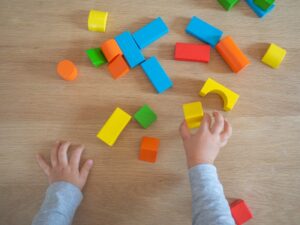
Constructive Play: Building Minds Through Creative Action
Constructive Play: Definition, Development, and Significance The Core Definition of Constructive Play Constructive play is formally defined as any form of play characterized by the manipulation of objects or materials to create a product, structure, or outcome. Unlike functional play, which focuses purely on the movement or use of objects for their immediate properties (like […]
Rough-and-Tumble Play: Why Playful Wrestling Matters
ROUGH-AND-TUMBLE PLAY (R T PLAY) The Core Definition of Rough-and-Tumble Play Rough-and-Tumble Play, frequently abbreviated as R&T Play, is a universal form of physical interaction characterized by chasing, wrestling, tumbling, and mock fighting, which is fundamentally distinct from genuine aggression. The core definition centers on the playful, reciprocal nature of the activity, where participants engage […]
Associative Play: How Social Bonds Shape Early Minds
Associative Play: An Encyclopedia Entry The Core Definition of Associative Play Associative play is a crucial stage within the developmental continuum of social engagement, typically observed in children between the ages of three and five years old. It is defined fundamentally as a form of group activity where children interact, share materials, and discuss their […]
Exercise Play: Why Movement is Your Mind’s Best Friend
Exercise Play The Core Definition of Exercise Play Exercise play is a comprehensive concept that intentionally integrates the principles of physical activity with the inherently enjoyable, intrinsically motivating, and often social elements of play. It transcends the traditional, often structured and goal-oriented view of exercise by emphasizing engagement, creativity, and pleasure in movement. At its […]
FREE PLAY
Introduction and Definitional Framework Free play, in the context of developmental psychology and educational theory, is defined precisely as any form of playful activity that is not controlled or directed by an external authority figure, such as a group leader, teacher, coach, or play therapist. This fundamental lack of external prescription distinguishes it sharply from […]
PARALLEL PLAY
Definition and Developmental Context Parallel play represents a critical, transitional phase in early childhood development, typically observed in children ranging from 18 months to approximately three years of age. It is defined as a form of social engagement wherein children play alongside, but not directly with, one another. Unlike solitary play, where a child is […]
SYMBOLIC PLAY
Definition and Core Characteristics Symbolic play, often referred to as pretend play, is a sophisticated type of children’s activity characterized by the child’s ability to use objects, actions, or ideas to represent other objects, actions, or ideas that are not physically present. This fundamental cognitive achievement marks a significant transition in neural development, moving the […]
COOPERATIVE PLAY
Introduction and Definitional Scope of Cooperative Play Cooperative play represents the most advanced stage of social participation observed in childhood development, fundamentally distinguishing itself from earlier stages such as solitary, parallel, and associative play. Defined formally, cooperative play involves youths engaging with one another in structured, joint operations oriented toward a shared, mutually agreed-upon goal. […]