Parallel Play: Why Kids Play Alone Together
Scientifically Reviewed · Dr. Marwa Abd-Alazim · August 29, 2026
Review Criteria & Clinical Standards
This content undergoes rigorous scientific peer-review and medical editorial standards at Arab Psychology Network to ensure clinical accuracy, validity, and compliance with evidence-based guidelines from leading psychological and healthcare authorities (APA / WHO).
Definition and Developmental Context
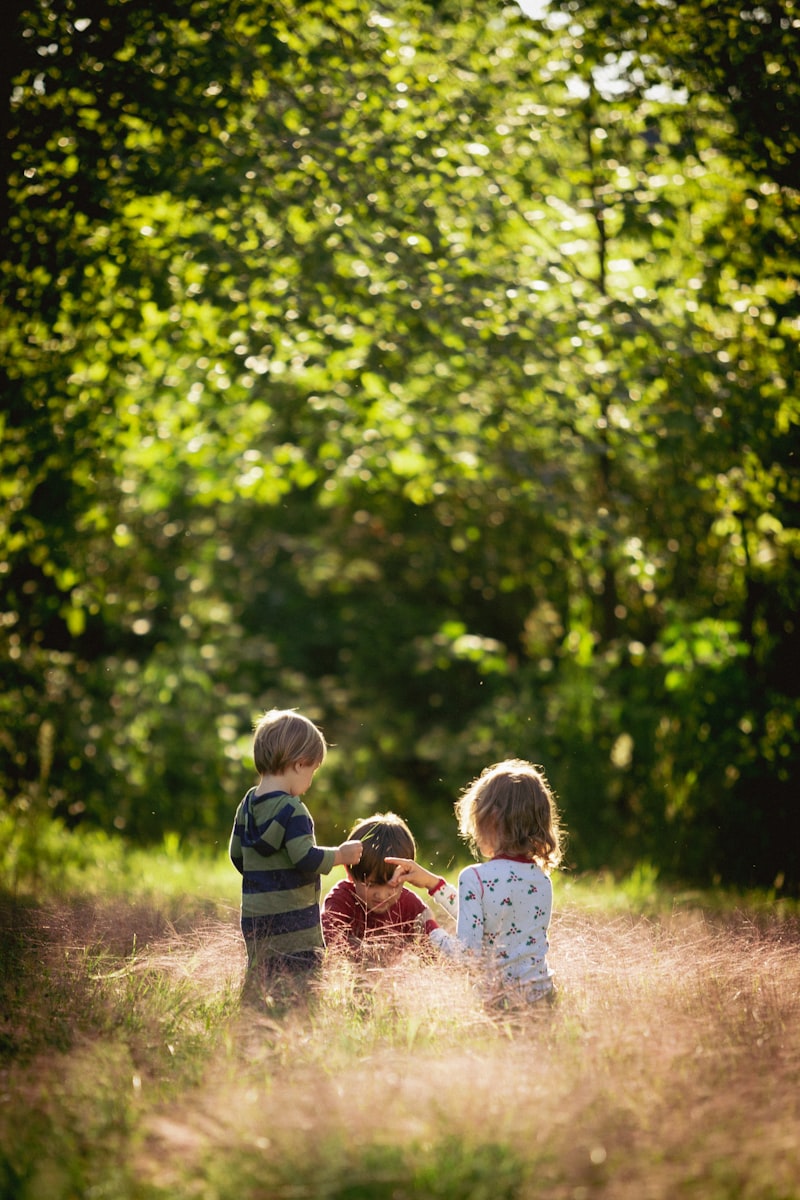
Parallel play represents a critical, transitional phase in early childhood development, typically observed in children ranging from 18 months to approximately three years of age. It is defined as a form of social engagement wherein children play alongside, but not directly with, one another. Unlike solitary play, where a child is engrossed in independent activity without regard for nearby peers, parallel play requires an awareness of the presence and activities of others. This stage signifies a burgeoning interest in the peer group and the social world, even if the primary mode of interaction remains independent action. The essential characteristic is physical proximity and engagement with similar materials or activities, without the coordination of goals or shared narrative that defines more advanced forms of cooperative play. Researchers emphasize that achieving high levels of participation in parallel play is an expected developmental milestone, generally sought and observed reliably in children around the age of one year and onward, serving as a reliable indicator of healthy social and cognitive progression.
The psychological significance of parallel play lies in its function as a low-stakes environment for social learning. Children in this phase are beginning to navigate the complexities of sharing space, observing peer behavior, and managing resources, all without the pressure of direct collaboration or conflict resolution inherent in group tasks. This observation period allows the child to assimilate social norms, understand the functionality of different toys, and practice motor and cognitive skills while maintaining a secure distance from intense interaction. It is a bridge between the highly egocentric focus of infancy and the emerging capacity for shared understanding necessary for friendship. The ability to maintain independent focus while acknowledging the periphery marks a crucial developmental shift away from purely self-directed behavior toward the preliminary stages of social cognition.
This developmental stage is fundamentally rooted in the child’s expanding sense of self and their environment. As toddlers gain mobility and linguistic skills, their world expands beyond the primary caregiver, leading them to seek out spaces populated by peers. Parallel play fulfills this need by providing social stimulation without demanding the complex social skills the toddler has not yet mastered, such as perspective-taking or advanced verbal negotiation. The simultaneous, yet separate, nature of the activity allows the child to feel connected to a group dynamic while still retaining full control over their own play trajectory and materials. Therefore, parallel play is not merely an accidental co-location of children; rather, it is a purposeful, though often subconscious, engagement strategy that facilitates the gradual acquisition of necessary social competencies required for later associative and cooperative relationships.
Historical Context and Parten’s Taxonomy
The systematic study and classification of play forms, including parallel play, owes much to the pioneering work of developmental psychologist Mildred Parten. In her seminal 1932 study, Parten meticulously observed and categorized the social participation of preschool children, establishing a widely accepted taxonomy that outlined six distinct stages of social play progression. Her framework provided the necessary vocabulary for researchers to understand the qualitative differences in how children interact with one another, moving beyond simple descriptions of activity to deeper analysis of social engagement levels. Parten’s model posits that social play development is largely sequential, meaning children typically proceed through these stages in a predictable order, reflecting increasing levels of social complexity and cooperation required for participation.
Parten’s six stages of social participation, ranging from the least social to the most complex, clearly situate parallel play as a crucial middle stage, demonstrating a clear progression from isolation to partnership. The initial stages include Unoccupied Behavior (the child is observing or wandering without apparent goal), Solitary Play (the child plays independently and ignores others), and Onlooker Behavior (the child watches others play but does not join in). Parallel play is the fourth stage, followed by Associative Play, where children interact, share materials, and converse, but lack a unified goal or structure. The progression culminates in Cooperative Play, the most advanced form, characterized by shared goals, assigned roles, and structured organization, such as building a complex structure together or playing a formal game with rules.
The formal placement of parallel play within this hierarchy underscores its functional importance. It is a measurable, behavioral indicator that the child has successfully transitioned out of the purely independent phase of solitary play and is actively seeking out contexts for peer presence. Parten’s classification remains highly influential because it provides a clear metric for assessing social maturity. Observation of a child consistently engaging in parallel play beyond the typical age range, or conversely, failing to transition into this stage, can offer early insights into potential areas requiring developmental support. The strength of Parten’s model lies in its ability to standardize the observation of social behavior, allowing developmental psychologists to track normative pathways and identify deviations efficiently.
Characteristics of Parallel Play
Understanding parallel play requires a detailed examination of its defining behavioral characteristics, which differentiate it clearly from both solitary and truly cooperative activities. The most salient feature is the close physical proximity between the children involved; they are typically within a few feet of each other, often sharing the same play area, such as a sandbox, block corner, or art table. Crucially, while they may utilize similar or identical materials—for instance, two children building separate towers with the same set of blocks—their respective activities remain entirely independent. There is no shared plan, no division of labor, and typically, minimal direct verbal exchange regarding the ongoing activity.
Furthermore, the orientation of attention during parallel play is revealing. Although the child is aware of the peer’s presence, the focus remains strongly centered on the individual activity. A child engaged in parallel play might occasionally glance at the peer’s activity, potentially incorporating an observed technique into their own work, which is a form of social modeling. However, they are not collaborating or commenting on the peer’s progress in a way that suggests a joint endeavor. For example, if one child is coloring a picture of a cat and the other is coloring a picture of a dog, they might be sitting side-by-side, but the completion of one child’s task is entirely irrelevant to the completion of the other’s. The primary goal is the individual mastery of the materials and the execution of the self-assigned task.
The use of materials in parallel play is often characterized by duplication rather than sharing in the associative sense. While children may both be using the same type of toy (e.g., trucks or dolls), they typically possess their own set, or they interact with the materials in a way that avoids the necessity of negotiation or turn-taking. This minimizes friction and allows the young child to practice essential skills—such as fine motor manipulation, problem-solving, and imaginative role-taking—in a socially comfortable setting. The limited interaction acts as a protective shield against the potential frustration of coordinating wills, which is a common hurdle in the transition to associative play. This stage effectively grants the child the benefits of a social atmosphere—the stimulation and learning potential offered by peers—without demanding the emotional maturity required for true co-regulation.
The Role of Observation and Learning
A fundamental, though often invisible, function of parallel play is its profound contribution to observational learning and the development of social cognition. When children are playing alongside one another, even without direct interaction, they are engaged in continuous, often subconscious, observation of their peers. This observational learning is critical because it provides models for behavior, skill usage, and emotional expression that the child can then test and internalize within the safety of their own independent play space. They are learning about the functionality of objects, discovering novel ways to manipulate materials, and absorbing the social rules governing play environments simply by watching what others do. This informal apprenticeship allows skills to diffuse rapidly through a peer group.
The cognitive mechanisms at work during parallel play are directly related to the child’s developing Theory of Mind (ToM), which is the ability to attribute mental states—beliefs, intents, desires, and emotions—to oneself and others. By watching a peer’s reaction to a challenge, such as successfully fitting a difficult puzzle piece or reacting with frustration when a tower falls, the parallel player begins to form rudimentary hypotheses about the peer’s internal experience. This process of external observation leading to internal interpretation is a necessary precursor to empathic understanding and true social perspective-taking. While the parallel player is not yet capable of fully understanding the peer’s perspective, the constant exposure to and modeling of various behaviors primes the cognitive system for this later, more complex stage of social development.
Furthermore, the observational aspect of parallel play is crucial for language acquisition and the expansion of the child’s behavioral repertoire. Children frequently mimic the verbalizations, sound effects, and imaginative narratives of their nearby peers, even if they do not directly engage in conversation. If a child hears a peer assigning a specific role or using descriptive vocabulary while playing with dolls, the observing child may integrate those new words or role-playing concepts into their own separate play scenario moments later. This form of low-pressure modeling allows for the rehearsal and refinement of emerging skills, ensuring that when the child does transition into associative or cooperative play, they possess a more robust set of verbal and behavioral tools to draw upon, having learned successfully through imitation during the parallel stage.
Transition to Associative and Cooperative Play
The developmental trajectory of social play is characterized by a gradual increase in complexity, with parallel play serving as the pivotal stepping stone toward more integrated group activities. The transition from parallel to associative play is marked by the introduction of shared communication and the rudimentary coordination of activities, even if a unified, long-term goal is still absent. In associative play, children begin to talk about their activities, offer suggestions, and share materials, but they still operate largely independently on their own sub-tasks. For instance, two children might be building separate sandcastles (parallel play), but if they begin exchanging buckets or discussing whose castle is taller (associative play), the level of engagement has deepened significantly.
The successful negotiation of this transition relies heavily on the maturation of several key skills, including improved verbal communication, the ability to manage emotional regulation in the face of resource competition, and basic skills in conflict resolution. Moving beyond the independence of parallel play demands that the child acknowledge the desires and intentions of others and adjust their own behavior accordingly. The shift is often catalyzed by a shared interest that necessitates interaction, such as a game requiring more than one participant or a construction project too large for a single child to manage. This necessity forces the child to employ the observational learning gained during the parallel phase and apply it actively in a social setting, integrating their individual goals with the emerging group dynamic.
The eventual attainment of cooperative play represents the zenith of Parten’s hierarchy and involves the capacity for sophisticated social engagement that requires advanced cognitive skills. Cooperative play is characterized by a unified theme, a structured organization of roles (e.g., “You be the doctor, and I will be the patient”), and a shared, overarching goal that drives the activity. This stage demands genuine perspective-taking, effective negotiation, and sustained attention to the group’s objective. While parallel play provided the foundational observational data, the cooperative stage requires the child to utilize this knowledge to actively modify their behavior for the collective good. The smooth transition through parallel and associative stages ensures that the child enters cooperative play equipped with the fundamental understanding of peer dynamics necessary to sustain complex group interactions over time.
Environmental and Cultural Influences
While the sequence of social play described by Parten is largely considered universal, the specific frequency, duration, and context of parallel play can be significantly shaped by environmental factors and broader cultural norms. The physical environment, particularly the design and density of the play space, plays a crucial role. For example, a setting rich in easily duplicable materials (e.g., multiple sets of building blocks, numerous crayons, and ample art paper) encourages parallel play by reducing resource conflict and enabling simultaneous independent activity. Conversely, limited space or a scarcity of materials may prematurely force children into associative play (due to necessary sharing) or lead to conflict, potentially bypassing the productive learning phase of parallel engagement.
Cultural differences also influence the perception and duration of this developmental stage. In societies that emphasize collectivism and early integration into group structures, the period spent in purely parallel play might be shorter, as social pressure or expectation encourages children to move quickly into associative or cooperative activities. Conversely, in highly individualistic cultures, or settings where early independence is prioritized, the parallel play phase might be more extended and highly valued as a period of self-directed skill mastery. Research suggests that the cultural context dictates not only when children play alongside each other, but also how much interaction is deemed appropriate during that time, affecting whether the parallel activity is silent observation or punctuated by brief, functional exchanges.
Furthermore, the style of adult scaffolding provided by caregivers and educators influences the nature of parallel engagement. In environments where adults actively encourage shared focus and verbal mediation, children may experience a quicker shift toward coordinated play. However, skilled educators recognize the value of parallel play and often intentionally structure environments to facilitate it, ensuring that children who are not yet ready for deep social engagement still benefit from the stimulating presence of peers. The provision of age-appropriate materials and the subtle encouragement of proximity, without requiring interaction, ensures that this crucial stage is fully utilized for observational and independent skill development before demanding the cognitive load of full cooperation.
Significance for Social-Emotional Development
The contribution of parallel play to a child’s overall social-emotional development is profound and multifaceted. It provides a vital context for practicing emotional regulation. When a child is playing independently but near others, they are exposed to the emotional outbursts, frustrations, and joys of their peers. Observing how others manage these emotions—and how adults or other peers respond to them—offers lessons in emotional mirroring and control. The child learns to tolerate the presence of others’ distress or excitement without necessarily becoming overwhelmed or required to intervene, thereby strengthening their own capacity for self-calmness in a social setting.
Moreover, parallel play is crucial for developing a sense of belonging and community without the prerequisite of full social integration. The simple act of playing alongside others establishes the child as a member of the peer group. This passive form of inclusion fosters a foundational sense of social comfort and security, mitigating potential anxieties associated with peer interaction. By maintaining independent activity within a shared space, the child can gradually accustom themselves to the social dynamic of the group, increasing their confidence before attempting direct entry into more complex, interactive games. This gentle acclimatization is essential for building social competence.
In addition to emotional benefits, parallel play aids in refining motor and cognitive skills in a socially motivated context. The desire to mimic a peer’s successful construction or technique often drives the child to persist longer at a task, improving their physical dexterity and problem-solving abilities. The focus on individual mastery, combined with the social input from observation, creates a powerful drive for skill enhancement. Ultimately, the successful navigation of the parallel play stage ensures that when the child moves on to cooperative activities, they possess not only the necessary social awareness but also the confidence in their own physical and cognitive capabilities derived from successful, self-directed play.
Assessment and Clinical Implications
For developmental psychologists and pediatric specialists, the observation and assessment of a child’s engagement in parallel play serve as a critical diagnostic tool. Consistent and age-appropriate engagement in parallel play confirms that the child is moving successfully through the normative sequence of social development, demonstrating an emerging interest in peers and the capacity for sustained, goal-directed activity. Developmental checklists often use the onset of parallel play as an indicator of maturing social skills, usually expected between 18 and 24 months.
Conversely, deviations from the expected pattern of parallel play can signal potential developmental concerns. If a child significantly older than three years continues to predominantly engage in solitary play, showing little interest in the activities of peers even when in close proximity, it may warrant further investigation. While not a definitive marker on its own, a persistent avoidance of or inability to engage in parallel play—or a failure to progress to associative play—can be an early red flag for conditions that affect social communication and interaction, such as Autism Spectrum Disorder (ASD) or other pervasive developmental delays. In these cases, the child may struggle to integrate the sensory and cognitive information necessary to engage even passively with the peer environment.
Clinical interventions and early childhood curricula frequently utilize the principles of parallel play to facilitate social integration in children who require support. For instance, therapeutic play sessions might involve setting up an environment rich in parallel opportunities, encouraging proximity and shared materials without demanding communication. This structured approach helps children practice observational skills and feel comfortable in the presence of peers, serving as a foundational step before introducing more complex social demands. The goal is to gently scaffold the child’s readiness for interaction by first ensuring they are proficient and comfortable in the independent yet social context of parallel play.
Criticisms and Modern Interpretations
While Parten’s taxonomy remains a cornerstone of developmental psychology, modern research has introduced important critiques and nuances to the strict, linear interpretation of the play stages. The primary criticism centers on the rigidity of the sequential model. Contemporary developmentalists recognize that play is often more fluid and context-dependent than Parten initially suggested. It is now widely accepted that children, particularly those over the age of three, do not strictly abandon earlier forms of play upon mastering a later stage. Instead, play types are often concurrent, and children may regress to parallel play or solitary play when tired, stressed, or entering a new social environment.
Modern interpretations emphasize the functional adaptability of play behaviors. For example, a six-year-old engaging in parallel play might be doing so intentionally to focus intensely on a complex task (like drawing a detailed map) while still enjoying the passive social comfort of a friend’s presence. In this context, parallel play is not a sign of developmental immaturity but rather a choice of strategy to manage cognitive load. Therefore, the frequency of different play types is now often viewed in terms of the child’s social preference and the complexity of the task, rather than solely as an indicator of developmental level.
Furthermore, the distinction between parallel play and associative play can sometimes be blurred, particularly when non-verbal communication is considered. Children playing parallelly may exchange subtle cues, glances, or gestures that suggest a rudimentary shared awareness or influence, even if no formal verbal interaction occurs. This subtle, non-verbal coordination complicates the clear separation of the stages, prompting researchers to utilize more nuanced observational scales that account for the quality and depth of interaction, rather than simply categorizing the activity based on proximity and material usage. The modern understanding treats parallel play not as a stage to be quickly surpassed, but as a valuable and recurrent social strategy available throughout childhood.