Symbolic Play: How Pretend Games Shape Young Minds
Scientifically Reviewed · Dr. Marwa Abd-Alazim · August 28, 2026
Review Criteria & Clinical Standards
This content undergoes rigorous scientific peer-review and medical editorial standards at Arab Psychology Network to ensure clinical accuracy, validity, and compliance with evidence-based guidelines from leading psychological and healthcare authorities (APA / WHO).
Definition and Core Characteristics
Symbolic play, often referred to as pretend play, is a sophisticated type of children’s activity characterized by the child’s ability to use objects, actions, or ideas to represent other objects, actions, or ideas that are not physically present. This fundamental cognitive achievement marks a significant transition in neural development, moving the child from purely sensorimotor interactions toward representational thought. At its essence, symbolic play involves the creation of an internal mental framework—a temporary reality—where meanings are decoupled from their literal, physical counterparts. The classic manifestation of this behavior involves the child pretending that he or she is someone else, such as a doctor, an astronaut, or a parent, and then engaging in the specific activities and scripts that define that assumed role. This complex substitution of identity and function is central to early childhood psychological development.
The core mechanism underlying symbolic play is decontextualization, where an object or action is removed from its usual setting and assigned a new, arbitrary meaning. For instance, a child might use a banana as a telephone, or a cardboard box as a spaceship. This requires not only imagination but also the cognitive capacity to hold two simultaneous realities: the actual reality (it is a banana) and the symbolic reality (it is a phone). Furthermore, symbolic play relies heavily on mental substitution and the internalization of social scripts. The child’s neural system processes the observed behaviors of others—whether they are real people or fictional characters—and assimilates them into playable schemas. The complexity of the play often correlates directly with the child’s level of cognitive maturity and their developing understanding of the world’s social rules and hierarchies.
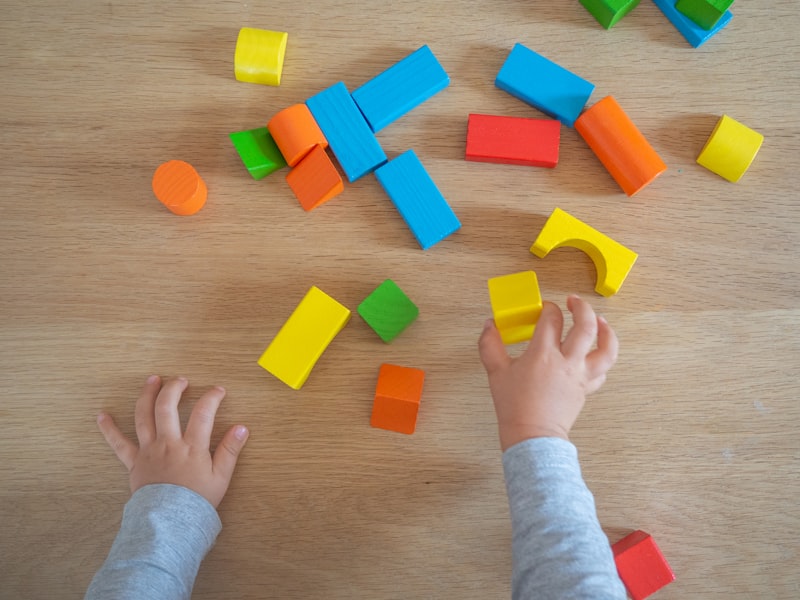
Symbolic play differs significantly from other forms of play, such as functional play (simple repetitive actions like pushing a car back and forth) or constructive play (building a tower). While functional play focuses on mastering the physical properties of an object, symbolic play focuses on manipulating meaning and representation. Key characteristics include the use of imaginary scenarios, the assignment of roles, the sequencing of events in a narrative format, and the ability to negotiate the terms of the shared fantasy with peers. This ability to manipulate abstract symbols through play serves as a critical precursor to later abilities such as reading comprehension, mathematical reasoning, and advanced problem-solving, all of which depend on the flexible manipulation of symbols.
Theoretical Foundations
The study of symbolic play is deeply rooted in the foundational theories of developmental psychology, primarily those put forth by Jean Piaget and Lev Vygotsky, who offered complementary yet distinct perspectives on its function. Piaget viewed symbolic play as a critical characteristic of the preoperational stage (roughly ages two to seven). For Piaget, play is primarily an exercise in assimilation, where the child attempts to fit new environmental information into existing cognitive schemas. Symbolic play allows the child to practice recently acquired skills and concepts without the pressure of external reality or the necessity of accommodation (changing the schema). The act of pretending reinforces mental representations, solidifying the child’s understanding that objects can stand for something else, thus bridging the gap between sensorimotor intelligence and logical thought.
In contrast, Lev Vygotsky emphasized the social and cultural origins of symbolic play, positioning it as the “leading source of development” during the preschool years. Vygotsky argued that play is essential because it allows the child to operate in the Zone of Proximal Development (ZPD)—the space between what a child can do independently and what they can achieve with guidance. When children engage in symbolic play, they voluntarily adhere to implicit rules defined by the roles they assume (e.g., a “doctor” must act professionally). This adherence to self-imposed rules teaches the child crucial self-regulation and inhibitory control, skills that are difficult to practice in everyday, spontaneous activity. For Vygotsky, symbolic play fundamentally aids in the separation of thought from action, enabling abstract reasoning.
Synthesizing these two major viewpoints reveals the multifaceted nature of symbolic play. Piaget highlighted the individual, internal cognitive gains—the development of mental representation and decentration. Vygotsky underscored the external, social scaffolding provided by play—the internalization of cultural tools, language, and social rules. Modern research tends to integrate both perspectives, viewing symbolic play as a powerful engine fueled by both internal cognitive maturation and external sociocultural interaction. The complexity and richness of a child’s symbolic play environment, therefore, directly influence the trajectory of their cognitive and social development, making it an invaluable index of psychological health and intellectual potential.
Developmental Stages of Symbolic Play
Symbolic play does not emerge fully formed; rather, it follows a predictable, hierarchical progression that typically begins around twelve to eighteen months and becomes highly elaborated by age four or five. The earliest forms, often termed pre-symbolic play, involve simple, non-decontextualized actions, such as pretending to drink from an empty cup or rocking a doll, where the object retains its conventional use but the action is performed “as if.” These early actions are usually directed toward the self, focusing on self-comfort or self-imitation, and lack complex sequencing or planning.
As the child approaches two years of age, play transitions to involve others (e.g., feeding a parent or a doll) and includes basic object substitution, though often still relying on realistic props. This stage is characterized by decontextualized actions, where the child can perform familiar routines outside of their normal context, such as pretending to cook dinner in the middle of the living room. The ability to sequence multiple related actions begins to appear, such as preparing food, serving it, and then cleaning up, indicating a nascent understanding of narrative structure and temporal continuity.
The pinnacle of symbolic play development is reached with the emergence of sociodramatic play, typically seen between three and five years old. This involves collaborative fantasy scenarios where multiple children negotiate roles, plot lines, and rules, often without reliance on realistic props (e.g., using nothing but verbal declarations to establish that a chair is a mountain). This highly advanced stage demands sophisticated cognitive skills, including sustained attention, memory, negotiation, and the ability to maintain a collective fantasy narrative. Researchers often use the level of complexity and organization found in sociodramatic play as a key indicator of a child’s overall developmental status, particularly their social and executive functions.
- Single Scheme Symbolic Play: Simple, self-directed actions (e.g., pretending to sleep).
- Decentered Symbolic Play: Actions directed toward others or objects (e.g., feeding a teddy bear).
- Combinatorial Symbolic Play: Sequencing related actions into a short script (e.g., stirring a pot and then pouring into a cup).
- Sociodramatic Play: Collaborative play involving assigned roles, negotiation, and sustained shared fantasy narratives (e.g., playing house, hospital, or school).
The Cognitive Functions of Pretending
Symbolic play is not merely a pastime; it is a critical training ground for advanced cognitive abilities, particularly those categorized under executive functions (EF). EF skills—which include working memory, cognitive flexibility, and inhibitory control—are heavily utilized and refined during pretend play. When a child engages in a role, they must inhibit their spontaneous, everyday behaviors and adhere instead to the behavioral scripts of the adopted role. For example, a child pretending to be a firefighter must inhibit the impulse to simply run around and must instead follow the established narrative sequence of rescuing a victim or putting out a fire. This sustained inhibitory practice strengthens the prefrontal cortex functions crucial for academic success and life management.
Furthermore, symbolic play fosters metacognition—the ability to think about thinking. The very nature of symbolic representation requires the child to understand the distinction between reality and fantasy, recognizing that the banana is “pretend” a phone, but is not “really” a phone. This understanding of “as if” reality is foundational for developing self-awareness and reflective thought. By stepping into a fictional world, the child practices manipulating mental states and hypothetical scenarios, a skill essential for later scientific reasoning and abstract problem-solving. It allows for the safe exploration of complex emotions and situations before confronting them in the real world.
The relationship between symbolic play and language development is also profound. Sociodramatic play requires extensive verbal communication for establishing roles, negotiating plot twists, and maintaining the shared imaginary context. Children engaged in complex symbolic play often use more sophisticated and complex language structures, including conditional clauses, future tense verbs, and narrative connectors, than they use in non-play contexts. The capacity to create and follow a narrative arc within play directly supports the development of narrative competence, which is essential for literacy acquisition and effective communication. The rehearsal of social scripts through dialogue during play expands the child’s vocabulary related to social roles, emotions, and specific occupational activities.
Social and Emotional Development through Play
One of the most powerful contributions of symbolic play is its role in developing Theory of Mind (ToM), the ability to attribute mental states—beliefs, desires, intentions, and emotions—to oneself and others. When children assume roles in sociodramatic play, they must explicitly take on the perspective of another person. Playing the role of a worried parent, a grumpy shop owner, or a demanding customer forces the child to think about what that character knows, feels, and wants, even if it differs from their own current state. This consistent practice in perspective-taking accelerates the child’s understanding of false beliefs and promotes empathy, skills critical for successful social integration.
Symbolic play serves as an essential mechanism for emotional regulation and rehearsal. Children often use play to process difficult or confusing real-life experiences, such as a trip to the doctor, a parental conflict, or the starting of a new school. By enacting these scenarios in a safe, controlled environment, the child gains mastery over the experience, transforming a passive, potentially overwhelming event into an active, manageable narrative. This process allows them to express and understand complex emotions like fear, anger, or sadness in a context where consequences are purely symbolic, thereby developing coping strategies and improving emotional resilience.
Collaborative symbolic play also acts as a primary laboratory for developing social competence and negotiation skills. When children play together, they inevitably encounter disagreements over plot, rules, and role assignments. Successfully navigating these conflicts requires sophisticated social skills: verbal persuasion, compromise, assertiveness, and active listening. They must learn to articulate their imaginative vision while simultaneously accommodating the needs and ideas of their playmates to ensure the fantasy continues. This collective effort results in enhanced peer relationships and a refined understanding of democratic social interactions, laying the groundwork for effective collaboration in later life.
Types and Examples of Symbolic Play
Symbolic play is broadly categorized based on the degree of social interaction involved, ranging from solitary and parallel play to highly organized group activities. Solitary symbolic play, where a child acts out a scenario alone, is essential for internalizing schemas and practicing narrative construction. However, sociodramatic play, which involves two or more children interacting and coordinating their roles within a shared fantasy, is the most complex and developmentally beneficial form. Sociodramatic play typically involves elaborate planning, sustained role maintenance, and the creation of highly detailed imaginary environments.
Examples of symbolic play frequently reflect the child’s cultural environment and the roles they observe in their immediate society. A classic example of symbolic play is the game of Indians and Cowboys (or other culturally relevant role oppositions, such as police and robbers, or superheroes and villains). In such a game, children assume defined roles, adhere to implied rules governing those roles (e.g., the “bad guy” must lose; the “hero” must be brave), and use object substitution (a stick becomes a weapon, a fence post becomes a horse). This type of role-playing allows children to safely explore power dynamics, moral boundaries, and social expectations, preparing them for the complexities of adult social roles.
Other ubiquitous examples include playing house, hospital, or school. These activities are rich in symbolic content because they require the child to draw upon internalized scripts for highly structured social settings. During “playing house,” children rehearse familial roles, responsibilities, and emotional interactions, utilizing props (realistic or substituted) to anchor the fantasy. In hospital play, they explore concepts of health, illness, caregiving, and authority. The richness of symbolic play is directly correlated with the child’s ability to manipulate various forms of representation, including both material substitution (using a sock puppet as a character) and verbal declaration (simply stating, “This is the king’s castle”).
Measurement and Assessment
Given its strong predictive correlation with cognitive and social outcomes, the assessment of symbolic play is a valuable tool in developmental and clinical psychology. Measuring play complexity helps clinicians and educators gauge a child’s representational capacity, executive functions, and social understanding. Assessment techniques usually focus on two main aspects: the structural features of the play (e.g., sequencing, decontextualization, object use) and the social features (e.g., role negotiation, duration of shared fantasy).
Common methods for assessing symbolic play include the use of standardized Play Observation Scales or structured play tasks, such as the Child-Initiated Pretend Play Assessment (ChIPPA). In structured assessments, the child is often provided with ambiguous or limited materials and asked to “show what they would do,” allowing the observer to measure the child’s reliance on verbal versus material prompts. High scores typically indicate a greater capacity for imagination and abstract thought, demonstrated by the ability to use highly decontextualized objects (e.g., using a small block to represent a complex item like an airplane) and to maintain complex, organized sequences of actions.
However, measuring play presents specific challenges, primarily related to context dependency and reliability. A child’s play performance may vary dramatically depending on the setting, the specific toys provided, and the familiarity of the play partner. Therefore, researchers emphasize the importance of observing play across multiple settings and considering qualitative aspects—such as the child’s narrative richness and emotional engagement—in addition to quantitative measures of complexity. Consistent deficits in the quality or quantity of symbolic play are often red flags for potential developmental delays or atypical neurological processing.
Clinical Significance and Atypical Development
The capacity for rich, spontaneous symbolic play is often seen as a hallmark of typical neurodevelopment. Conversely, a noticeable absence or significant restriction of symbolic play is a clinically important indicator associated with several developmental disorders. The most studied link is between symbolic play deficits and Autism Spectrum Disorder (ASD). Children with ASD frequently exhibit impairments in the initiation and complexity of pretend play, often favoring repetitive, functional play (e.g., spinning a wheel repeatedly) over imaginative role-taking. This deficiency is believed to stem, in part, from difficulties in Theory of Mind and challenges with flexible representational thought, hindering their ability to decouple meaning from literal objects.
Symbolic play is not just diagnostic; it is also highly therapeutic. Play Therapy, particularly forms focusing on facilitating symbolic expression, is a major intervention strategy used to address emotional and behavioral difficulties in children. By engaging in symbolic play with a therapist, children can project internal conflicts, fears, and anxieties onto toys or characters, allowing them to safely explore and process these issues. This therapeutic use of symbolism provides a non-verbal means for communication and emotional restructuring, especially beneficial for children who lack the verbal skills to articulate their distress.
Longitudinal studies consistently demonstrate that the level of symbolic play achieved in the preschool years is a significant prognostic factor. Children who demonstrate complex, organized, and collaborative symbolic play tend to show better long-term outcomes in areas such as academic achievement, social problem-solving, and emotional adjustment. Consequently, interventions designed to stimulate and enhance symbolic play—such as encouraging the use of ambiguous props, modeling imaginative scenarios, and providing opportunities for peer interaction—are considered crucial components of high-quality early childhood education. The ability to engage in “make-believe” remains one of the strongest predictors of a child’s future capacity for flexible, creative, and well-regulated thought.