Neurological Assessment: Precision Tracking for Balance
Scientifically Reviewed · Dr. Marwa Abd-Alazim · October 19, 2026
Review Criteria & Clinical Standards
This content undergoes rigorous scientific peer-review and medical editorial standards at Arab Psychology Network to ensure clinical accuracy, validity, and compliance with evidence-based guidelines from leading psychological and healthcare authorities (APA / WHO).
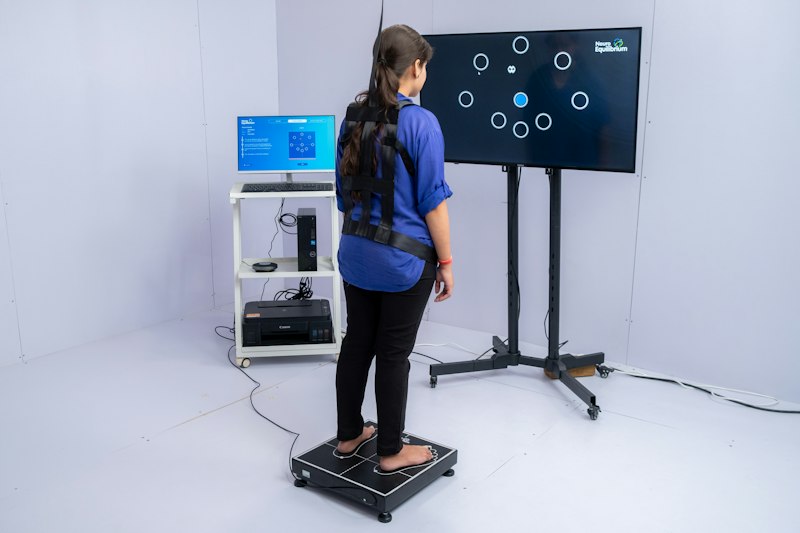
The Core Definition of the Ataxiagraph
The Ataxiagraph is a highly specialized, novel psychometric tool designed specifically for the quantitative and objective assessment of Ataxia severity in patients suffering from various neurological disorders. Ataxia, fundamentally, is a pervasive lack of voluntary coordination of motor skills, which can manifest in gait abnormalities, speech difficulties (dysarthria), and impaired fine motor control. Historically, the assessment of this condition relied heavily on subjective clinical scales, which, while useful, often lacked the precision necessary for subtle change detection or detailed outcome measurement. The Ataxiagraph addresses this critical gap by providing a standardized, multidimensional evaluation that captures the intricacies of movement impairment associated with cerebellar or associated pathway damage. Its primary function is to transform subjective observations of movement quality into reliable, numerical data points that clinicians and researchers can utilize for diagnosis, prognosis, and treatment monitoring.
The fundamental mechanism underpinning the Ataxiagraph is the decomposition of complex motor tasks into measurable components related to execution, consistency, and temporal efficiency. By requiring the patient to perform specific, repetitive tasks, the system meticulously tracks deviations from normative performance metrics. This approach moves beyond simple pass/fail criteria, focusing instead on the characteristics of the deficit itself—for instance, quantifying the degree of oscillation or tremor during a targeted movement. The system utilizes advanced sensors and proprietary algorithms to capture kinematic data, offering a level of detail far exceeding traditional bedside examinations. This objective assessment is crucial because the manifestations of Ataxia are highly variable, depending on the specific location and extent of damage within the central nervous system, particularly involving the cerebellum or its connections to the brainstem and spinal cord.
In essence, the Ataxiagraph acts as a standardized biomechanical laboratory in a clinical setting. It provides a composite score derived from several distinct subtests, ensuring a comprehensive view of the patient’s motor deficits across different domains. This holistic measurement approach is essential because Ataxia often affects multiple systems simultaneously, including balance (vestibular system involvement), limb control (appendicular Ataxia), and ocular movements. Therefore, the core principle is not merely to detect the presence of Ataxia, which is usually apparent, but to accurately measure its severity and character in a way that allows for longitudinal tracking of disease progression or treatment response.
The Underlying Mechanism: Components and Measurement
The comprehensive nature of the Ataxiagraph stems from its reliance on three distinct, yet interrelated, psychometric tests, designed to isolate different aspects of motor dysfunction. These components—the Ataxia Test Repetition (ATR), the Ataxia Test Quality (ATQ), and the Ataxia Test Timing (ATT)—collectively generate the full profile of the patient’s impairment. Each test is designed to probe a specific vulnerability inherent in cerebellar dysfunction, ensuring that the final assessment is robust and highly specific to the underlying neurological impairment. The integration of these three domains provides a powerful tool for differentiating Ataxia from other movement disorders that may present superficially similar symptoms, such as Parkinsonian tremors or peripheral neuropathy.
The first component, the Ataxia Test Repetition (ATR), focuses squarely on the consistency and accuracy of performing a motor task repeatedly over a set duration. In Ataxia, the ability to maintain a consistent trajectory or endpoint accuracy diminishes rapidly with repetition, a phenomenon known as fatigability or impaired motor memory consolidation. The ATR quantitatively measures this degradation, specifically analyzing the variance in movement trajectory, amplitude, and endpoint error across multiple attempts. A patient with severe Ataxia will exhibit a significant increase in error variability as the task is repeated, reflecting the difficulty the damaged cerebellum has in modulating ongoing motor commands and predicting the necessary adjustments for subsequent movements. The resulting data is crucial for understanding the sustainability of motor function.
The second component is the Ataxia Test Quality (ATQ), which assesses the inherent smoothness and precision of the motor action, independent of temporal constraints. Quality measurements often involve analyzing kinematic parameters such as jerk (the rate of change of acceleration), trajectory curvature, and overshoot/undershoot errors during targeted movements. For example, during a finger-to-nose test, the ATQ measures the number and magnitude of corrective movements—the typical oscillatory or “intention tremor” that characterizes Ataxia. High-quality movement is smooth and efficient, whereas Ataxic movement is characterized by a fragmented, clumsy, and energy-inefficient trajectory. The ATQ converts these qualitative observations into a quantifiable score, reflecting the degree of dysmetria (inaccurate movement distance) and dyssynergia (decomposition of movement).
Finally, the Ataxia Test Timing (ATT) evaluates the temporal aspects of motor execution, focusing on the speed, rhythm, and initiation time of the required task. Patients with Ataxia often exhibit bradykinesia (slowness of movement) or, conversely, dysdiadochokinesia (the inability to perform rapid alternating movements). The ATT measures parameters like reaction time, movement time, and the regularity of rhythmic movements. Impaired timing is a hallmark of cerebellar damage, as this brain structure plays a vital role in pacing and sequencing motor actions. By quantifying the delay in movement initiation and the irregularity of alternating motion, the ATT provides a unique insight into the patient’s central processing speed and motor planning capabilities, complementing the spatial measurements provided by the ATR and ATQ.
Historical Development and Rationale
The necessity for the Ataxiagraph arose from long-standing methodological limitations in assessing Ataxia. For decades, clinicians relied on standardized but subjective rating scales, such as the Scale for the Assessment and Rating of Ataxia (SARA) or the International Cooperative Ataxia Rating Scale (ICARS). While these scales provided a common language for symptom description, they suffered from significant inter-rater variability and often lacked the sensitivity required to detect subtle disease progression or the marginal, but clinically meaningful, benefits of therapeutic interventions. The inherent subjectivity made comparing outcomes across different clinical centers or tracking the efficacy of pharmaceutical trials immensely challenging.
The development of the Ataxiagraph, pioneered by researchers like Gauthier, Bouchard, Desrosiers, and Faubert around 2020, marked a significant shift toward quantitative motor assessment in neurology. The rationale was simple: to replace the human eye and subjective scoring with precise, sensor-based measurements. Advances in sensor technology, coupled with sophisticated computational analysis, finally made it feasible to objectively capture the kinematics of movement. The researchers recognized that for a clinical tool to be adopted widely, it needed to be comprehensive yet efficient, addressing the three core deficits of Ataxia—spatial accuracy, temporal control, and consistency—simultaneously, which led to the creation of the ATR, ATQ, and ATT composite structure.
The historical context of its creation is rooted in the drive towards evidence-based medicine and the rising need for sensitive outcome measures in neurodegenerative disease research. As treatments for conditions like spinocerebellar ataxias (SCAs) began to emerge, the field required tools capable of validating whether a drug was truly slowing the rate of decline or improving function, even marginally. The Ataxiagraph, by providing high-resolution data on movement execution, offered the required sensitivity. Its novelty lay not just in the technology, but in the specific integration of psychometric properties designed to isolate and quantify the specific deficits caused by cerebellar pathology, thus improving the overall rigor of clinical trials and everyday patient management.
Clinical Application and Practical Illustration
The utility of the Ataxiagraph is best understood through its application in a real-world clinical scenario, such as monitoring a patient diagnosed with progressive cerebellar atrophy. Consider a 55-year-old patient, Mr. Smith, who is enrolled in a clinical trial testing a new intervention aimed at slowing the progression of his Ataxia. Before the trial begins, the Ataxiagraph establishes a baseline assessment, providing objective numerical metrics for his motor function. The physician instructs Mr. Smith to perform a series of standard tasks, such as repeatedly touching targets on a screen or maintaining a steady posture while standing.
The assessment proceeds systematically, illustrating the “how-to” of the tool. First, the Ataxia Test Repetition (ATR) might involve Mr. Smith quickly moving his arm between two fixed points ten times. The Ataxiagraph measures how much the final target position deviates with each successive attempt. If the baseline score shows a high degree of variability (a large increase in error variance from trial 1 to trial 10), this indicates significant motor fatigability and impaired internal models of movement. This score becomes the benchmark for consistency.
Next, the Ataxia Test Quality (ATQ) assesses the smoothness of a single, slow, targeted movement, such as tracing a predefined shape. The system captures the high-frequency, oscillatory movements (intention tremor) that interrupt the trajectory. A high ATQ score (indicating poor quality) reflects pronounced dysmetria and lack of fine motor control. Finally, the Ataxia Test Timing (ATT) might involve Mr. Smith tapping his foot rhythmically to a metronome. The system measures the degree of rhythmic irregularity and the time lag between the metronome beat and the foot tap. If Mr. Smith’s tapping rhythm is highly erratic, the resulting ATT score quantifies the severity of his dysdiadochokinesia. After six months of the clinical trial intervention, the physician re-administers the Ataxiagraph. If the scores—especially the ATR variability and ATQ smoothness index—show a quantifiable improvement or even stability compared to the baseline, this provides compelling, objective evidence that the treatment is effective, which is a far more robust conclusion than relying solely on the patient’s self-report or a generalized clinical impression.
Reliability, Validity, and Empirical Support
For any diagnostic tool to gain acceptance in clinical neurology, its psychometric properties—specifically its reliability and validity—must be rigorously established through empirical research. The Ataxiagraph has demonstrated strong support in these areas, confirming its utility as a stable and accurate measurement instrument. The foundational studies, such as the 2020 research by Gauthier and colleagues, utilized cohorts of adults with confirmed diagnoses of Ataxia, often involving diverse neurological etiologies, to test the tool’s effectiveness across the spectrum of the disorder.
The initial empirical findings confirmed the tool’s reliability, meaning it provides consistent results when the same patient is tested multiple times, assuming the underlying condition has not changed. This test-retest reliability is paramount for longitudinal monitoring, ensuring that any changes observed in the patient’s scores are genuinely reflective of disease progression or treatment response, rather than measurement error. Furthermore, studies showed that the Ataxiagraph was capable of accurately measuring the severity of Ataxia in individuals regardless of the specific underlying neurological disorder. The fact that the scores did not significantly differ across various neurological causes (e.g., hereditary versus acquired Ataxia) suggests that the tool is highly focused on quantifying the motor impairment itself, making it broadly applicable in a general neurology clinic.
Regarding validity, the Ataxiagraph scores have been shown to correlate strongly with established subjective clinical rating scales (like SARA), confirming that the numerical data accurately reflects the severity perceived by expert clinicians. Crucially, the Ataxiagraph has proven valuable in measuring the long-term effects of Ataxia. In studies involving follow-up periods exceeding 12 months, the tool accurately tracked the typical slow, degenerative trajectory of the condition. This ability to measure stable severity over time, as well as subtle decline, solidifies its role not just as a diagnostic aid, but as an indispensable outcome measure for chronic disease management and research. The high degree of differentiation provided by the ATR, ATQ, and ATT sub-scores also aids in establishing construct validity, showing that the system is indeed measuring three distinct components of motor skills deficits.
Significance in Diagnostics and Treatment Monitoring
The introduction of the Ataxiagraph represents a profound significance for the field of movement disorders, primarily by shifting the clinical paradigm from qualitative description to quantitative measurement. Its immediate impact lies in enhancing diagnostic precision. While a physician can diagnose Ataxia based on clinical signs, the Ataxiagraph provides a detailed, objective profile of the deficit magnitude. This helps to establish a firmer baseline severity, which is essential for determining prognosis and tailoring physical therapy interventions. For instance, a patient scoring poorly on the ATR might benefit more from exercises emphasizing consistent rhythm and repetition, while a patient scoring poorly on the ATQ might require greater focus on stabilizing proximal joints to improve distal accuracy.
Perhaps the most critical application of the Ataxiagraph is in the realm of clinical research and drug development. Historically, the high variability inherent in subjective scales necessitated extremely large patient cohorts and long observation periods to detect statistically significant treatment effects. The high sensitivity and reliability of the Ataxiagraph, however, allow researchers to utilize smaller sample sizes and potentially shorter trial durations. By providing indisputable, numerical evidence of changes in motor function, the tool significantly reduces the noise in data, making it easier to determine if a novel therapeutic agent—be it a drug, gene therapy, or rehabilitation technique—is genuinely having a beneficial impact on the progression of the cerebellum-related deficit.
Furthermore, the Ataxiagraph is vital for improving patient communication and adherence to treatment. Patients often find objective metrics more compelling than subjective clinical impressions. When a patient sees a measurable improvement in their Ataxia Test Quality score following a period of intense physiotherapy, it reinforces their commitment to the rehabilitation plan. In the context of chronic disease management, the tool allows clinicians to monitor the disease trajectory precisely, enabling timely adjustments to medication dosages or intervention strategies long before those changes become grossly apparent during a standard, intermittent physical exam. This ability to capture subtle yet meaningful changes solidifies the Ataxiagraph’s role as a cornerstone of modern, personalized neurology care.
Connections to Related Neurological Assessments
The Ataxiagraph belongs primarily to the subfield of Clinical Neuropsychology and Movement Disorders within Neurology. Its function places it alongside other technological and scale-based assessments used to quantify motor and cognitive function, but it distinguishes itself by its specific focus on the tripartite deficits of cerebellar dysfunction (timing, quality, repetition). It is intrinsically related to established tools and theories within the study of motor skills and neural plasticity.
One major related concept is Gait Analysis Systems. While the Ataxiagraph focuses on both appendicular (limb) and potentially axial (trunk) Ataxia through task-specific testing, gait analysis systems (such as instrumented walkways or wearable sensors) focus exclusively on quantifying walking patterns, including stride length, cadence, and stability during locomotion. The two systems are highly complementary; a patient’s Ataxiagraph score may explain the underlying motor control deficits that manifest as poor stability measured by a gait analysis system. Both fall under the broader category of kinematic assessment, using technology to track movement in space and time.
Another key connection is to the theory of Motor Learning. The ATR component, in particular, probes the patient’s capacity for consistent performance, which is central to motor learning theories that posit the cerebellum as a critical structure for error correction and adaptation. The Ataxiagraph provides empirical data on the failure of the motor system to adapt and learn, which is a core feature of Ataxia. Furthermore, its measurements relate to traditional, non-technological assessments like the Finger-to-Nose Test and Heel-to-Shin Test, but the Ataxiagraph provides the enhanced sensitivity to quantify the dysmetria and intention tremor inherent in these classic neurological maneuvers, converting a subjective observation into a precise numerical value, thereby acting as the technological evolution of these standard clinical procedures.