Psychological Atrophy: Why Your Mind Withers Without Use
Scientifically Reviewed · Dr. Marwa Abd-Alazim · October 23, 2026
Review Criteria & Clinical Standards
This content undergoes rigorous scientific peer-review and medical editorial standards at Arab Psychology Network to ensure clinical accuracy, validity, and compliance with evidence-based guidelines from leading psychological and healthcare authorities (APA / WHO).
The Core Definition of Atrophy
The term atrophy, derived from the Greek meaning “lack of nourishment,” refers fundamentally to the wasting away or diminution in size of a cell, tissue, organ, or body part after it has reached its full development. This biological process results in a decrease in mass and often a loss of function. While frequently discussed in a physiological or medical context—such as muscle atrophy following prolonged immobilization—the concept holds significant relevance in psychological and neurological sciences, particularly when considering the degeneration of neural pathways and cognitive capacity due to disuse, lack of stimulation, or pathology.
Atrophy is not merely a reduction in size but represents a complex cellular response to adverse environmental conditions or internal signaling failures. It can be triggered by a variety of factors, including insufficient blood supply, nutritional deficiency, loss of nerve supply (denervation), hormonal imbalances, prolonged inactivity, or the natural processes of aging. The resultant state is one where the structure, previously functional, becomes compromised. For instance, a person experiencing muscle atrophy had less muscle mass than before, directly resulting from inactivity and a lack of necessary stimulus or nourishment required for maintenance.
The key idea underpinning atrophy, whether muscular or cognitive, is the principle of maintenance through use. Biological systems operate under a constant demand for homeostasis, balancing anabolic (building up) and catabolic (breaking down) processes. When the demands placed upon a system—be it a limb, a specific brain region, or a learned skill—are significantly reduced or eliminated, the body ceases to invest energy in maintaining that capacity. This general degeneration from disuse illustrates a fundamental biological efficiency: resources are diverted away from underutilized structures, leading to their gradual regression and functional impairment.
Physiological Mechanisms and Types
Physiologically, atrophy is categorized into two main types: pathological and physiological. Pathological atrophy results from disease or injury, such as ischemic atrophy caused by reduced blood flow or atrophy induced by specific degenerative disease processes like Multiple Sclerosis. Physiological atrophy, conversely, occurs as a normal part of the life cycle, such as the involution of the thymus gland during childhood or the decrease in bone density that often accompanies advanced aging. Understanding these underlying mechanisms is crucial when diagnosing and addressing the psychological ramifications associated with physical or neurological decline.
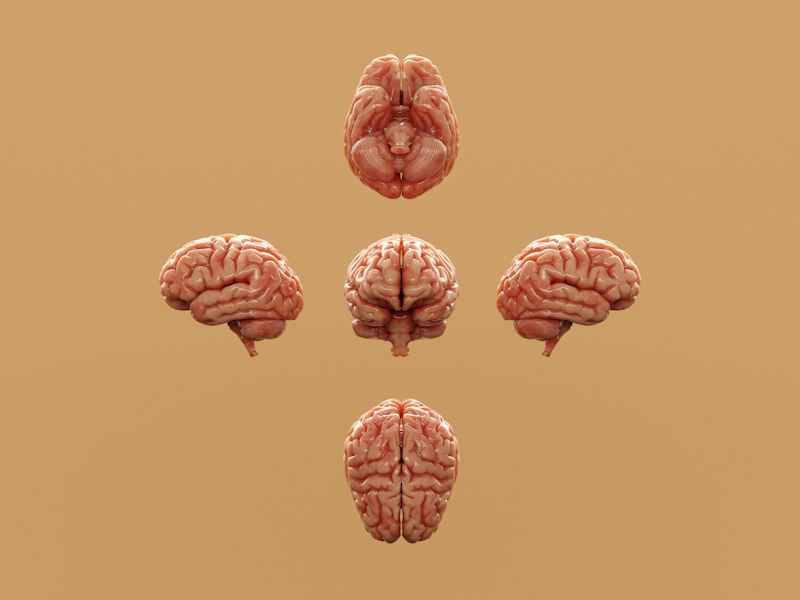
The most significant intersection of atrophy with psychology is cerebral atrophy, which involves the loss of neurons and the connections between them within the brain, leading to a measurable reduction in brain volume. This condition is a hallmark of many neurodegenerative disorders, including Alzheimer’s disease and various forms of dementia, profoundly impacting cognitive function, memory, and personality. The extent and location of cerebral atrophy often correlate directly with the severity and specific symptoms of cognitive impairment experienced by the individual.
When examining cerebral atrophy, researchers distinguish between generalized atrophy (affecting the entire brain) and focal atrophy (affecting specific regions, such as the hippocampus or the frontal lobes). The loss of these specialized neural structures results in highly specific psychological deficits. For example, severe atrophy in the prefrontal cortex can manifest as pronounced changes in executive function, planning, and emotional regulation, leading to significant challenges in social and personal functioning that require intensive psychological and rehabilitative intervention.
Historical Context and Scientific Origin
While the term Atrophy itself has ancient roots in describing physical wasting, its application to systematic scientific study gained prominence alongside the rise of modern anatomy and pathology in the 18th and 19th centuries. Early investigations focused almost exclusively on the visible wasting of muscles and organs following injury or systemic illness. The understanding that disuse was a primary driver for muscular wasting paved the way for later hypotheses suggesting that the principle of “use it or lose it” might apply equally to mental and nervous structures.
The integration of atrophy into psychological thought accelerated dramatically with advances in neuroscience imaging technology in the late 20th century. Techniques like MRI and CT scans allowed researchers to visualize the living brain, confirming the morphological changes associated with aging and disease. This shift from purely behavioral observation to observable neurological structures solidified the link between physical brain health and psychological outcomes. Key researchers in geriatric psychology and cognitive neuroscience began to quantify the rate of cerebral atrophy, linking volumetric loss to specific declines in processing speed and memory retrieval.
Furthermore, the concept of psychological atrophy—the metaphorical degeneration of skills or cognitive capacities due to neglect—became a point of interest, particularly within educational and developmental psychology. While not true cellular atrophy, the functional decline mirrors the physical process. Early behaviorists observed that conditioned responses or complex skills, if not reinforced or utilized, would weaken or extinguish, a behavioral parallel to the physical wasting seen in muscles. This historical trajectory showcases how a core concept from medicine was adapted to explain both the structure (neurology) and the function (behavior) of the human mind.
Illustrative Example: Cognitive Atrophy of Disuse
A powerful real-world example illustrating the psychological principle of atrophy through disuse is the deterioration of complex cognitive skills, such as fluency in a second language, after a prolonged period without practice. Imagine a student who achieved complete fluency in Spanish during college but then, upon entering a career where Spanish is never required, completely stops using the language for twenty years. This scenario demonstrates how complex neural networks, though initially robust, can undergo functional atrophy.
The application of the atrophy principle in this scenario can be broken down step-by-step.
-
Initial Acquisition and Maintenance: During the college years, the student consistently used Spanish, reinforcing the specific neural pathways responsible for vocabulary retrieval, grammatical construction, and rapid auditory processing. This continuous use maintained the strength and efficiency of the connections, demanding significant metabolic resources.
-
Cessation of Use (Lack of Nourishment/Stimulus): Once the student stops using Spanish, the neural networks dedicated to the language cease to be actively stimulated. The brain, prioritizing efficiency, interprets this lack of demand as a signal that the pathways are unnecessary.
-
Functional Atrophy: Over time, the strength of the synaptic connections within the language centers weakens. While the neurons themselves may remain, the efficiency of signal transmission decreases. The speed of vocabulary retrieval slows, and grammatical structures become inaccessible or confused with the native language. This is functional atrophy—a decline in performance due to the metabolic reallocation of resources away from the unused skill.
-
Rehabilitation/Reactivation: If the student later attempts to relearn Spanish, they often find the process easier than initial learning because the underlying structures are still present, though dormant. Consistent practice acts as the “nourishment” needed to reactivate the pathways, demonstrating the reversibility of disuse atrophy.
The Role of Neuroplasticity in Preventing Atrophy
The psychological implications of atrophy are intimately linked with the concept of neuroplasticity—the brain’s ability to reorganize itself by forming new neural connections throughout life. While atrophy represents the negative consequence of biological neglect or disease, neuroplasticity offers a mechanism for resilience and recovery. In cases of focal atrophy due to stroke or localized injury, the brain can often recruit adjacent, healthy regions to take over the functions of the damaged area, minimizing the resulting psychological deficit.
Maintaining cognitive function and combating the inevitable age-related cerebral atrophy is one of the major goals of cognitive rehabilitation and healthy aging research. Psychologists and neuroscientists advocate for continuous mental engagement, learning new skills, and maintaining complex social interactions as forms of cognitive exercise. This continuous stimulation demands that neural pathways remain active, thus preventing the brain from downregulating its resources in those areas and mitigating functional decline.
This principle is particularly visible in the study of expert populations. Individuals who maintain high levels of cognitive load—such as professional musicians, mathematicians, or multilingual individuals—often demonstrate greater resilience against age-related decline, suggesting that their specialized neural networks have been hyper-maintained through consistent, high-demand usage. The psychological insight here is profound: active engagement is a crucial preventative measure against the natural tendency toward biological and cognitive regression caused by the lack of necessary stimulus.
Significance in Clinical and Behavioral Psychology
The concept of atrophy is profoundly important in clinical psychology, particularly within geriatrics and neuropsychology. Clinicians rely on identifying patterns of atrophy, often visible through neuroimaging, to differentiate between normal aging and pathological conditions. For example, the specific pattern of hippocampal atrophy is often a critical diagnostic marker for early Alzheimer’s disease, allowing for timely intervention and support for the patient and their family dealing with progressive cognitive loss.
Furthermore, the principle of disuse atrophy guides many therapeutic and rehabilitative strategies. In behavioral psychology, the concept informs interventions designed to combat learned helplessness or social withdrawal. If an individual ceases engaging in social interaction (due to depression or anxiety), the neural and behavioral pathways associated with social competence begin to atrophy functionally. Therapeutic applications, therefore, focus heavily on structured re-engagement and consistent practice—whether through exposure therapy or social skills training—to reactivate and strengthen these essential behavioral pathways.
In the realm of mental health, understanding atrophy underscores the importance of proactive care and stimulation. Chronic stress, depression, and prolonged states of emotional withdrawal have been linked to measurable reductions in brain volume in specific areas (such as the prefrontal cortex and hippocampus). Psychopharmacological and psychological treatments that successfully alleviate these conditions often coincide with the reversal of some of these structural changes, highlighting the dynamic interplay between psychological state, neural structure, and the potential for recovery from atrophy-related functional decline.
Connections to Related Psychological Concepts
Atrophy is closely related to several other core psychological concepts. It stands in direct contrast to Hypertrophy (the growth or enlargement of an organ or tissue), which occurs when a system is subjected to increased demand, such as muscle building through intense exercise or the expansion of a cortical area dedicated to a newly mastered skill. Both concepts illustrate the dynamic equilibrium, or homeostasis, of biological systems constantly adjusting to environmental demands.
Another related theory is Synaptic Pruning. While atrophy is often associated with pathology or disuse later in life, synaptic pruning is a natural, healthy developmental process occurring predominantly during childhood and adolescence. Pruning involves the elimination of weaker or unused synapses to streamline neural processing and increase efficiency. However, both processes share the fundamental mechanism of eliminating underutilized neural connections, reinforcing the notion that the brain is constantly optimizing its resources based on environmental input.
The study of atrophy firmly belongs to the broader category of Physiological Psychology and Neuroscience. These fields focus on the biological substrates of psychological processes, examining how physical changes in the nervous system—whether due to disease, aging, or environmental factors—directly influence behavior, cognition, and emotion. By understanding the causes and progression of anatomical degeneration, psychologists can better develop strategies for maintaining cognitive vitality and mitigating the profound psychological impact of physical decline. The degeneration caused by degenerative disease processes often serves as a critical model for understanding normal cognitive decline.