Human Energy Fields: Decoding Your Invisible Aura
Scientifically Reviewed · Dr. Marwa Abd-Alazim · September 15, 2026
Review Criteria & Clinical Standards
This content undergoes rigorous scientific peer-review and medical editorial standards at Arab Psychology Network to ensure clinical accuracy, validity, and compliance with evidence-based guidelines from leading psychological and healthcare authorities (APA / WHO).
Definition and Conceptual Framework
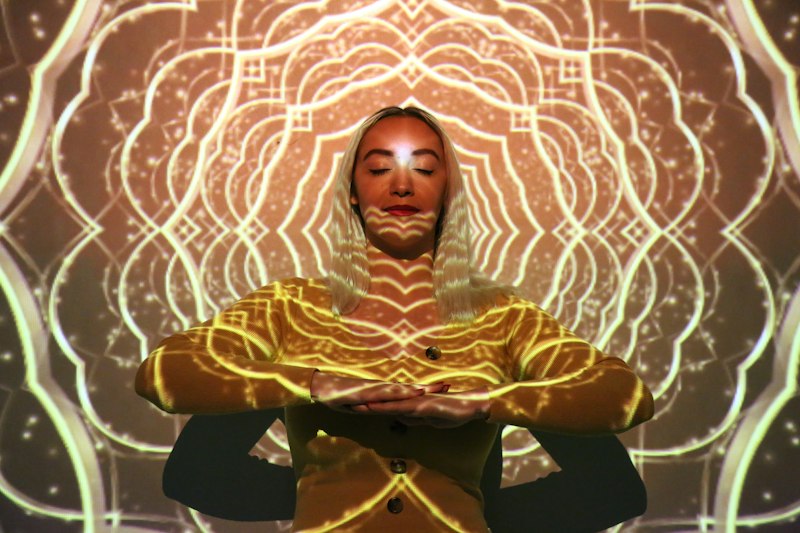
The term Aura, derived from the Latin meaning “air” or “atmosphere,” is used within metaphysical and esoteric traditions to denote the invisible energy field believed to surround the body of every living organism. Often referred to interchangeably as the psychoenergetic field or the Human Energy Field (HEF), this emanation is postulated to be a dynamic, informational matrix reflecting the comprehensive state of the individual. Unlike physiological processes that are directly observable through conventional scientific means, the aura is typically described as a subtle energy structure composed of various frequencies and vibrations that interpenetrate and extend beyond the physical form. This energy field is believed to be a direct consequence of the life force that animates the individual, acting as a measurable boundary between the internal self and the external environment.
The core proposition concerning the aura is that it serves as an externalized mirror of the internal self. Proponents suggest that the HEF contains detailed data regarding a person’s current physical health, their psychological disposition, their ongoing emotional experiences, and their spiritual development. This holistic integration of information means that changes in one aspect of the self—such as the sudden onset of stress, a significant emotional trauma, or a physical ailment—are immediately registered and reflected within the structure and color composition of the surrounding field. Therefore, the aura is not merely a static boundary but a perpetually shifting vibrational signature unique to the individual at any given moment, constantly interacting with and modulating the environment around them. Its existence posits a profound interconnectedness between matter and energy, linking the subtle body to the dense physical form.
From a theoretical perspective within energy medicine, the aura functions as a crucial interface between the inner life force and the external environment. It is considered the outermost manifestation of the energy system that includes internal structures such as chakras and meridians, which are widely accepted concepts in traditional Asian healing systems. Understanding the aura involves recognizing that every thought, feeling, and bodily function generates specific vibrational patterns, and these patterns radiate outward, forming the atmospheric envelope. This energetic envelope is theorized to play a protective role, filtering environmental influences and potentially shielding the individual from negative energies, while simultaneously acting as a broadcast mechanism, transmitting the individual’s subtle information to the surrounding world for those sensitive enough to perceive it.
Historical Origins and Ancient Understandings
The concept of a pervasive, invisible life force or energetic emanation surrounding living beings is not a modern invention; rather, it possesses deep historical roots spanning millennia across numerous ancient civilizations, including India, China, and Egypt. These cultures, though geographically dispersed, shared a remarkably similar understanding of a fundamental cosmic energy that permeates and vitalizes all existence. In the ancient Indian tradition, this life-sustaining force is known primarily as prana, often translated as “breath” or “vital air.” Prana is considered the essence that animates the body and mind, and its balanced flow is essential for optimal health and spiritual realization. Texts related to Yoga and Ayurveda describe sophisticated techniques, such as pranayama (breath control), designed specifically to manage and enhance the individual’s prana field, indicating an early and profound awareness of the individual energy field analogous to the modern concept of the aura.
Similarly, in ancient China, the concept of qi (or chi) forms the cornerstone of traditional Chinese medicine (TCM) and philosophy. Qi is described as the inherent energy that circulates through the body along specific pathways known as meridians, maintaining vital harmony between yin and yang forces. When qi is abundant and flowing freely, health is optimized; conversely, blockages or deficiencies in qi are believed to precipitate physical or psychological illness. The Chinese system postulates that this internal energy is intrinsically linked to the energy of the cosmos, and the radiating energy field surrounding the person is understood as the external manifestation of this internal circulation. Therefore, observing the quality and intensity of this external atmosphere, which functions as the aura, was integral for diagnostic and healing purposes, firmly linking the internal life force (qi) to the external energetic envelope.
The ancient Egyptians also maintained a complex system for describing the spiritual components of a human being, one of which directly parallels the concept of the aura. This component is the ka, often translated as the “spiritual essence” or “life-force double.” The Ka was believed to be generated at birth and resided within the individual, representing the sustaining vital energy necessary for life, and surviving physical death. Unlike other components of the soul, the Ka was specifically linked to the maintenance of physical vitality and was often depicted in art as an energetic double hovering near the physical body. This Egyptian understanding reinforces the cross-cultural recognition that a non-physical, vital essence defines the living being, radiating an atmosphere that signifies its existence and state of being, thereby validating the universal nature of the aura concept.
Aura in Western Esoteric and Psychological Traditions
While the concept of the life force flourished in the East, its formalized study in the Western world gained significant traction during the 19th and early 20th centuries, propelled by the rise of esoteric movements, spiritualism, and emerging fields of psychology. Early Western thinkers sought to reconcile ancient mystical knowledge with burgeoning scientific inquiry, often attempting to capture or photograph the alleged energy field. However, it was the pioneering work of Swiss psychiatrist Carl Gustav Jung that provided a crucial psychological framework for understanding the energy field in relation to the psyche. Jung, who extensively explored the boundaries between the conscious and unconscious mind, hypothesized that the aura was an observable reflection of an individual’s deeper, often hidden, psychological landscape—specifically, their unconscious mind.
Jung proposed that the aura was not merely a random energy discharge but was structured and stratified, possessing distinct layers that corresponded to different levels of psychological functioning and experience. He suggested that certain sensitive individuals, such as psychics or healers, might possess the innate capacity to perceive these subtle layers. For Jung, the interpretation of the aura provided a potential window into the individual’s psychic integrity, revealing conflicts, repressed material, or underlying potentials that were not immediately accessible through conventional verbal analysis. This perspective positioned the aura as a vital diagnostic tool within a burgeoning psychological framework that acknowledged non-material dimensions of human experience and provided a theoretical bridge between ancient spiritual beliefs and modern depth psychology, particularly concerning the interaction between the individual and the collective unconscious.
Following Jung’s theoretical contributions, the concept of the aura was enthusiastically embraced and expanded upon by various healers and energy practitioners throughout the 20th century. These practitioners moved beyond the purely theoretical and began developing sophisticated methodologies for interacting with the human energy field. The primary goal of these contemporary practices is to help individuals gain conscious awareness of their own energetic state—identifying areas of blockage, depletion, or hyperactivity—and subsequently to utilize various modalities (such as hands-on healing, crystal therapy, or color therapy) to cleanse, balance, or protect the integrity of the HEF. This widespread practical application cemented the aura’s status as a fundamental concept within holistic, self-help, and complementary medicine, providing a tangible model for addressing the spiritual and emotional dimensions of wellness.
Components and Layers of the Human Energy Field
Detailed descriptions within metaphysical literature suggest that the psychoenergetic field is not a homogenous boundary but rather a complex, multi-layered structure, often likened to concentric spheres or vibrational shells. Although specific nomenclature varies among different cultural and esoteric traditions, a general consensus describes the HEF as consisting of at least seven distinct layers, each vibrating at a progressively higher frequency as they extend outward from the physical body. These layers are hypothesized to correlate directly with the seven major energy centers, or chakras, serving as the outward projection of these internal centers. The proximity of a layer to the body often dictates its primary function, moving systematically from dense, material concerns (inner layers) towards subtle, spiritual consciousness (outer layers).
The innermost layers are typically described as being directly linked to the physical and emotional aspects of existence. For instance, the first layer, often called the Etheric Body, is a dense, web-like structure closely mirroring the physical form and reflecting immediate physical health, sensation, and pain. Just beyond this lies the Emotional Body, which is fluid and vibrant, constantly changing colors and patterns in response to transient feelings, moods, and desires. Imbalances or chronic negative emotional states often manifest as murky, grey, or dense colors within this layer, indicating where emotional energy has become stagnant or repressed. Understanding the intricate interaction between these two foundational layers is paramount for energy healing, as physical discomfort often traces its origins back to sustained or unresolved emotional stress held within the field.
The outermost layers, such as the Mental Body, the Astral Body, and the highest layers including the Causal Body and the Ketheric Template, operate at much higher frequencies and are associated with abstract thought, archetypal patterns, spiritual connection, and life purpose. The mental body specifically reflects thought processes and belief systems, often appearing as bright yellow light when intellectual activity is high. The causal body, the furthest layer, is believed to hold the blueprint of the soul and the accumulated wisdom and experiences of the individual over time. Maintaining the integrity and clarity of these outer layers is crucial for spiritual development and accessing higher states of consciousness. The detailed stratification of the aura demonstrates that the energy field simultaneously manages immediate physical survival and profound spiritual connection, thereby acting as a complete energetic record of the individual’s journey.
Interpretation and Perception of Aura
The perception of the aura is a central tenet of energy work, although the methods of perception vary significantly among practitioners. While some individuals claim to possess clairvoyant abilities, allowing them to visually perceive the aura as distinct colors, shimmering light, or specific geometric patterns (often termed “seeing the aura”), others rely on kinesthetic or intuitive sensing. This non-visual perception involves feeling the energy field through physical sensations (such as tingling, heat, density, or pressure) or through empathic intuition about the individual’s emotional and psychological state. Regardless of the sensory mechanism employed, the process of interpretation involves translating the observed energetic data—be it color, texture, intensity, movement, or shape—into meaningful, actionable information about the subject’s current state of being.
Color is arguably the most recognized element in aura interpretation, with each hue carrying specific symbolic meaning regarding psychological and emotional states. The spectrum of colors provides a rich, complex language for the practitioner. For example, a clear, vibrant red is often associated with physical vitality, courage, or groundedness; a murky red, conversely, might indicate suppressed anger or frustration. Bright blue or violet suggests high spiritual awareness, deep intuition, and peacefulness; while a clear yellow often signifies intellect, optimism, and mental clarity. However, interpretation is highly complex because the aura is rarely monochromatic; it is a constantly shifting composite of multiple colors, reflecting the individual’s complex, fluctuating physical and emotional state. A skilled practitioner must synthesize the primary colors, secondary hues, cloudiness, overall brightness, and movement of the field to arrive at an accurate and nuanced energetic assessment.
Beyond color, the overall quality, size, and shape of the aura provide crucial diagnostic information regarding the individual’s energetic boundaries and resilience. A healthy, balanced aura is generally described as oval, symmetrical, bright, and extending outward several feet from the body, indicating strong vitality, robust psychological boundaries, and emotional stability. Conversely, an aura that appears dull, patchy, asymmetrical, or too close to the body might indicate energetic blockages, chronic stress, or underlying illness. Furthermore, specific energetic patterns like tears, holes, or intrusions in the energy field are often theorized to be points of vulnerability where the individual is susceptible to negative external influences or where vital life force is leaking out. Accurate assessment of these structural features guides the subsequent healing intervention, focusing on sealing breaches, clearing blockages, and restoring symmetrical balance.
Therapeutic Applications and Energy Healing
The practical application of aura concepts is foundational to numerous complementary and alternative medicine (CAM) practices, collectively known as energy healing. These therapies operate on the fundamental premise that illness, whether physical, psychological, or emotional, is preceded or accompanied by a detectable disturbance or imbalance in the individual’s psychoenergetic field. Therefore, healing involves actively manipulating or balancing the HEF to restore vibrational harmony, allowing the body’s innate self-healing mechanisms to take over. This approach focuses on addressing the energetic root cause of the imbalance rather than merely treating the manifest physical symptoms, representing a vital paradigm shift from conventional medical models.
Specific therapeutic modalities focused on the aura include widely recognized practices like Reiki, Therapeutic Touch, and various forms of spiritual healing. In these treatments, the practitioner often uses focused intention, visualization, or the channeling of universal energy, sometimes incorporating physical touch but often working just above the body within the perceived limits of the aura. The goals of these interventions are precise: to clear accumulated stagnant energy (often corresponding to chronic negative emotions, trauma, or stress residue), to infuse depleted areas with vital energy, and to repair any disruptions or tears in the energetic layers. The efficacy of the treatment is often judged subjectively by the practitioner based on the perceived change in the aura’s appearance or texture, moving towards greater brightness, flow, and symmetrical coherence, and objectively by the client’s subsequent reduction in symptoms.
Furthermore, psychological counseling and spiritual guidance often integrate aura assessment to deepen understanding of the client’s core issues. By recognizing the energetic signature associated with deep-seated trauma, negative behavioral patterns, or limiting beliefs, practitioners can help the individual gain profound insight into the source of their distress. The emphasis here is on self-protection and self-healing; once a person understands how their thoughts and emotions generate specific energetic patterns, they are empowered to take proactive steps to maintain their own energetic hygiene and shield. This might involve adopting daily practices such as meditation, conscious breathwork (pranayama), grounding exercises, or visualization techniques specifically aimed at reinforcing the protective layers and promoting optimal energy flow, thereby consciously taking steps to heal or protect the energy field.
Conclusion
The enduring concept of the aura, defined as the invisible psychoenergetic field surrounding all living beings, represents a profound and persistent belief system spanning ancient religious practices and modern holistic psychology. From the ancient reverence for life forces such as prana and qi to the 19th-century psychological explorations of Carl Gustav Jung, the idea that a person’s inner state is broadcast through an external vibrational field has remained consistent. This field is widely understood to contain critical, dynamic information reflecting the individual’s physical, mental, emotional, and spiritual condition at any given moment, making it a comprehensive record of the self.
In contemporary practice, the systematic study and utilization of the Human Energy Field continue to be central to various healing modalities. Healers and energy practitioners rely on the interpretation of the aura’s colors, textures, and symmetry to diagnose underlying energetic imbalances that predispose a person to illness or distress. The therapeutic goal is always focused on restoration: to cleanse the field of stagnant energy, reinforce its protective boundaries, and promote the overall flow of vital energy. This proactive approach underscores the holistic perspective that true wellbeing requires attending not only to the manifest physical body but also to the subtle, radiating atmosphere that defines the individual’s interaction with the world and their inner life.
While the aura remains a subject often placed outside the purview of conventional empirical science, its significance in psychology—particularly in fields related to consciousness, spiritual experience, and complementary therapies—is undeniable. The enduring belief in and practical application of the aura reflect a deeply ingrained human desire to understand the non-material dimensions of self and consciousness, offering powerful avenues for healing and self-protection based on mastering one’s own subtle energy signature and enhancing the quality of one’s psychoenergetic atmosphere.
References
The following academic and scholarly works provide foundational context for the study of altered states of consciousness, psychological archetypes, and the therapeutic use of spiritual and energy-based healing modalities:
- Cardena, E., & Winkelman, M. (2011). Altered states of consciousness and shamanism. In M. Winkelman (Ed.), Encyclopedia of Consciousness (pp. 49–64). Waltham, MA: Academic Press.
- Jung, C. G. (1890). The concept of the collective unconscious. In C. G. Jung (Ed.), The Collected Works of C. G. Jung (Vol. 2, pp. 3–5). Princeton, NJ: Princeton University Press.
- Kornfield, J. (1993). A path with heart: A guide through the perils and promises of spiritual life. New York, NY: Bantam Books.
- Roberts, T. B. (1999). The psychology of spiritual healing. In P. L. Walco (Ed.), Pain and Behavioral Medicine (pp. 201–217). New York, NY: Oxford University Press.