Barognosis: How Your Brain Senses the Weight of Reality
Scientifically Reviewed · Dr. Marwa Abd-Alazim · October 10, 2026
Review Criteria & Clinical Standards
This content undergoes rigorous scientific peer-review and medical editorial standards at Arab Psychology Network to ensure clinical accuracy, validity, and compliance with evidence-based guidelines from leading psychological and healthcare authorities (APA / WHO).
The Core Definition of Barognosis
Barognosis is a specialized form of somesthetic perception, representing the intricate ability of the human body to accurately perceive and differentiate varying levels of pressure or weight applied to the skin. It is fundamentally a tactile sense, meaning it relies on direct physical contact and the mechanical deformation of the skin to convey sensory information. This sophisticated sensory function allows individuals to discern subtle differences in the force exerted by objects, playing a critical role in how we interact with and understand our physical environment. Without precise barognostic capabilities, many everyday tasks involving manipulation and interaction with objects would become significantly challenging, if not impossible.
The fundamental mechanism behind barognosis involves a complex interplay of specialized mechanoreceptors embedded within the skin and deeper tissues. These receptors, such as Pacinian corpuscles and Merkel cells, are exquisitely sensitive to mechanical stimuli, including pressure, vibration, and stretch. When an object exerts pressure on the skin, these receptors convert the mechanical energy into electrical signals, or action potentials, which are then transmitted along sensory nerves to the central nervous system. The brain then processes these signals, integrating information from multiple receptors across a specific area of skin to construct a comprehensive perception of the pressure’s intensity, distribution, and duration.
Expanding beyond a simple sensation of touch, barognosis specifically pertains to the quantifiable aspect of pressure, enabling the brain to interpret weight and force. This distinction is crucial, as general touch registers contact, while barognosis provides the nuanced understanding of how *much* contact or force is being applied. This capacity is particularly vital for activities requiring fine motor control and object manipulation, such as adjusting grip strength when holding fragile items, estimating the weight of a package, or discerning the difference between a light touch and a firm grasp. It underpins our capacity to calibrate our physical actions in response to the properties of objects and surfaces, thereby facilitating fluid and effective engagement with the world around us.
Historical Discovery and Early Research
The formal recognition and naming of barognosis as a distinct somesthetic sense can be attributed to the pioneering work of the eminent French physician, anatomist, and anthropologist, Paul Broca. In 1878, Broca, already renowned for his groundbreaking research on language and the brain (specifically Broca’s area), extended his investigations into the realm of sensory perception. His work during this period involved meticulous observation and analysis of patients presenting with various neurological deficits, particularly those who had sustained lesions in specific regions of the primary somatosensory cortex of the brain. These clinical cases provided invaluable insights into the functional organization of the brain and the specific roles of its various cortical areas.
During his detailed examinations, Broca made a critical observation: patients with damage to their primary somatosensory cortex often exhibited a peculiar impairment in their ability to accurately distinguish between different levels of pressure or weight. While they might still register that something was touching them, their capacity to quantify the intensity of that touch—to say whether an object felt light or heavy—was significantly compromised. This specific deficit, isolated from other tactile impairments, led Broca to postulate that the perception of pressure, or barognosis, was not merely a component of general touch but rather a specialized and independent somesthetic faculty, localized and processed within dedicated neural structures.
Broca’s findings were pivotal in advancing the understanding of sensory neuroscience. Before his work, sensory perception was often viewed more broadly, without such granular distinctions. By identifying barognosis as a unique sense, he laid important groundwork for subsequent research into the somatosensory system, prompting further investigation into the specific neural pathways and cortical regions responsible for processing different types of tactile information. His rigorous clinical approach and anatomical correlations set a precedent for linking specific brain regions to distinct sensory and cognitive functions, contributing significantly to the emerging field of neuropsychology and our understanding of how the brain constructs our perception of reality.
The Neuroanatomical Basis of Pressure Perception
The intricate process of barognosis relies on a sophisticated network of neural structures, working in concert to receive, transmit, and interpret pressure stimuli. At the forefront of this system are the mechanoreceptors located in the skin and subcutaneous tissues. These specialized sensory nerve endings transduce mechanical pressure into electrical signals. Once initiated, these signals embark on a precise journey through the peripheral nervous system, ascending the spinal cord via specific pathways, most notably the dorsal column-medial lemniscus pathway, which is responsible for conveying fine touch, vibration, and proprioception.
Upon reaching the brainstem, these sensory signals synapse and then ascend to the thalamus, often referred to as the brain’s “relay station.” The thalamus plays a crucial role in filtering and routing nearly all sensory information (with the exception of olfaction) to the appropriate cortical areas for further processing. For barognostic information, the ventral posterior lateral (VPL) nucleus of the thalamus is particularly important. Here, the signals are further processed and organized before being projected to the primary somatosensory cortex, ensuring that only relevant and refined sensory data reaches the highest levels of cortical interpretation. This thalamic gating mechanism is vital for preventing sensory overload and focusing attention on salient stimuli.
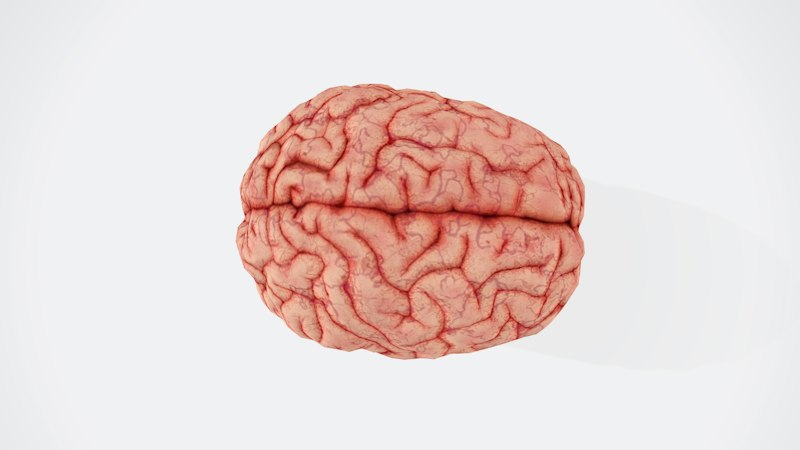
The ultimate destination for the conscious perception of pressure is the primary somatosensory cortex (S1), located in the postcentral gyrus of the parietal lobe. This cortical region is organized somatotopically, meaning that different areas of the body are represented in a specific, orderly fashion, forming a “sensory homunculus.” When pressure is applied to the skin, the corresponding area in S1 becomes activated, allowing for the conscious discrimination of pressure intensity and location. Furthermore, S1 then sends efferent signals to other cortical areas, including the primary motor cortex (M1). This connection is critical for integrating sensory feedback with motor commands, enabling a coordinated response to the perceived pressure, such as adjusting grip strength or moving away from an uncomfortable stimulus. This integrated pathway highlights the fundamental connection between sensory input and motor output, crucial for adaptive behavior.
Practical Applications: Sensing Weight in Everyday Life
Barognosis is an indispensable sensory ability that underpins countless everyday activities, often operating subconsciously but profoundly influencing our interactions with the physical world. Consider the seemingly simple act of picking up a glass of water. As your fingers make contact, your barognostic sense immediately begins to assess the pressure exerted by the glass. This allows your brain to estimate its weight, informing your motor system how much muscular force is required to lift it without crushing it or dropping it. Without this precise assessment, you might apply too little force, causing the glass to slip, or too much, potentially damaging a fragile object or wasting energy.
A more specific example that vividly illustrates the “how-to” of barognosis involves distinguishing between two identical-looking, opaque containers, one filled with feathers and the other with sand. Visually, they appear the same. However, as you lift each container, your mechanoreceptors detect the differential pressure exerted on your skin, particularly in your palms and fingertips. This pressure information is then rapidly transmitted through the neural pathways to your somatosensory cortex. Your brain processes these distinct pressure signals, allowing you to accurately perceive that one container is significantly heavier than the other, even before any visual or auditory cues. This immediate, tactile assessment of weight is a direct manifestation of barognostic function.
This sensory capability extends far beyond simple lifting. It is crucial for tasks requiring fine motor control, such as a surgeon delicately holding an instrument, a musician adjusting the pressure on their instrument, or an artist applying varying forces with a brush or pencil. In each instance, the precise perception of pressure allows for nuanced adjustments in grip and force, enabling the successful execution of complex motor sequences. Barognosis also contributes to our understanding of an object’s physical properties, indirectly informing us about its density or material composition, further enriching our haptic perception of the environment. The continuous, real-time feedback provided by barognosis is thus fundamental to our manual dexterity and our ability to perform goal-directed actions with precision and efficiency.
Clinical Significance and Impact on Quality of Life
The integrity of barognostic function is critical for maintaining an individual’s independence and quality of life, as impairments can have profound and debilitating consequences. When the neural pathways or cortical regions responsible for processing pressure sensation are compromised, individuals may experience significant difficulties in performing routine daily tasks. For instance, a person with impaired barognosis might struggle to differentiate between a light and heavy object, leading to accidental dropping of items or the application of excessive force that could cause damage or injury. This can impact everything from cooking and cleaning to writing and dressing, eroding self-sufficiency and increasing reliance on others.
Barognosis can be specifically impaired in individuals suffering from various neurological conditions. Conditions such as stroke, particularly when affecting the parietal lobe or sensory pathways, can disrupt the transmission or interpretation of pressure signals. Similarly, brain trauma, depending on the location and severity of the injury, can lead to deficits in this vital sensory capacity. Progressive neurodegenerative diseases like Parkinson’s disease can also affect barognosis, not only through motor symptoms but also through sensory processing deficits that compromise the ability to accurately gauge forces, contributing to difficulties with grasping, writing, and other fine motor skills.
Beyond these common conditions, peripheral neuropathies, spinal cord injuries, and certain autoimmune disorders can also interfere with the complex neural circuitry underlying barognosis. The impact on quality of life extends beyond mere functional limitations; it can lead to a loss of confidence, frustration, and a reduced engagement with activities that were once pleasurable or necessary. For example, a person who can no longer gauge the weight of a fishing rod or the pressure required to hold a paintbrush might withdraw from hobbies. Therefore, understanding and addressing barognostic impairments is a crucial aspect of neurological assessment and rehabilitation, aiming to restore as much sensory function as possible and improve the overall well-being of affected individuals.
Assessment Methods for Barognostic Impairments
Accurate assessment of barognostic capabilities is essential for diagnosing neurological conditions, monitoring disease progression, and evaluating the effectiveness of rehabilitation interventions. Clinicians employ a variety of standardized tests designed to quantitatively measure an individual’s ability to perceive and differentiate pressure. These tests are critical in identifying specific sensory deficits that might not be immediately apparent through casual observation, providing objective data for clinical decision-making and tailored therapeutic approaches.
One widely recognized assessment tool for tactile discrimination, which includes elements of barognosis, is the two-point discrimination test. This test involves applying two blunt points simultaneously to the skin, and the patient is asked to determine whether they feel one or two distinct points. While primarily measuring spatial resolution of touch, the pressure applied must be consistent, and the patient’s ability to perceive subtle differences in the *feel* of the points (which includes pressure) indirectly assesses aspects of barognosis. A more direct measure, however, involves placing objects of different but closely related weights on the patient’s hand or limb, asking them to identify which is heavier or lighter, often with visual occlusion to prevent any confounding visual cues.
Another crucial and more direct method for assessing barognosis and broader tactile sensitivity is the Semmes-Weinstein monofilament test. This test utilizes a series of standardized nylon monofilaments of varying diameters, each designed to bend at a specific, calibrated force (pressure). The clinician applies these monofilaments perpendicularly to the skin until they buckle, indicating a consistent level of pressure. The patient is asked to report when they feel the touch. By systematically testing different monofilaments, clinicians can map out areas of impaired sensation and determine the threshold of pressure perception. This test is particularly valuable for diagnosing conditions like diabetic neuropathy, where subtle changes in pressure sensation can indicate nerve damage long before other symptoms appear, making it an indispensable tool in both clinical practice and research.
Related Somatosensory Perceptions and Broader Context
Barognosis, while a distinct sensory modality, does not exist in isolation. It is intricately interwoven with other somatosensory perceptions, forming a rich tapestry of tactile and bodily awareness that collectively contributes to our understanding of the physical world. Understanding its connections to these related concepts provides a more holistic view of how the human sensory system functions and how different sensory inputs are integrated by the brain to create a coherent perception. This broader context is essential for both theoretical understanding and practical applications in fields like rehabilitation and prosthetics design.
Among the closely related concepts, stereognosis (the ability to recognize objects by touch alone) and graphesthesia (the ability to recognize writing on the skin) are particularly relevant. Barognosis contributes significantly to both: to recognize an object by touch, one must not only perceive its shape and texture but also its weight and density, which are barognostic aspects. Similarly, perceiving the pressure of a drawn shape is a component of graphesthesia. Another vital connection is with proprioception, the sense of the relative position of one’s own body parts and strength of effort being employed in movement. While proprioception focuses on limb position and movement, barognosis provides crucial feedback on the external forces acting on those limbs, informing the motor system about the interaction with objects.
Collectively, barognosis, stereognosis, graphesthesia, proprioception, and other tactile senses fall under the broader umbrella of haptic perception, which encompasses all aspects of sensory perception involving touch, including the sense of force, texture, and temperature, integrated with kinesthetic information. This comprehensive system allows us to actively explore and understand our environment through touch. Barognosis is a fundamental component of this complex haptic system, enabling us to gauge weights and forces, which in turn informs our motor actions and cognitive understanding of objects. This interconnectedness highlights that the brain processes sensory information in a highly integrated manner, synthesizing various inputs to construct a coherent and adaptive perception of reality, which is a core tenet of modern cognitive psychology and neuroscience.