Biological Kinship: The Roots of Human Behavior
Scientifically Reviewed · Dr. Marwa Abd-Alazim · October 4, 2026
Review Criteria & Clinical Standards
This content undergoes rigorous scientific peer-review and medical editorial standards at Arab Psychology Network to ensure clinical accuracy, validity, and compliance with evidence-based guidelines from leading psychological and healthcare authorities (APA / WHO).

Introduction to the Biological Family
The concept of `family` stands as one of the most fundamental and universally recognized `social institutions`, deeply influencing the lives of individuals and the fabric of societies across the globe. It serves as the primary unit for socialization, emotional support, and the transmission of culture, values, and traditions from one generation to the next. Within this broad understanding of family, various configurations exist, each defined by different criteria and bonds. Among these, the `biological family` holds a distinct and historically significant position, characterized by the inherent genetic and blood relationships that connect its members. This specific form of family, rooted in shared ancestry, provides a unique framework for understanding human connection, development, and societal organization.
Understanding the `biological family` goes beyond a simple genealogical chart; it delves into the profound psychological, social, and even evolutionary implications of shared genetic heritage. From the earliest moments of human existence, `kinship` based on biological ties played a crucial role in survival, cooperation, and the establishment of social hierarchies. These deep-seated connections often foster a unique sense of `belonging` and collective `identity`, shaping an individual’s self-perception and their place within a larger community. This entry aims to thoroughly explore the multifaceted nature of the `biological family`, elucidating its core definition, historical underpinnings, practical manifestations, enduring significance, and intricate connections to broader psychological theories.
The intricate dynamics within a `biological family` often lay the groundwork for an individual’s emotional landscape, shaping their early `attachment styles`, their capacity for empathy, and their strategies for navigating conflict. The shared genetic blueprint, while not solely determining behavior or personality, often contributes to a baseline of similarities and predispositions that can influence family interactions. Consequently, the study of `biological family` provides invaluable insights into human development, offering explanations for patterns of behavior, resilience, and even vulnerability that are observed across generations. This exploration will underscore why the `biological family` remains a central pillar in the study of psychology and sociology, despite the evolving definitions and structures of modern family life.
Core Definition of Biological Family
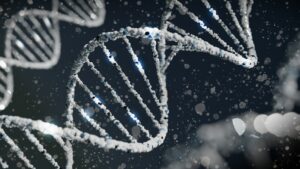
At its most fundamental level, a `biological family` is unequivocally defined as a social unit comprising individuals who are connected through direct `genetic` or blood relationships. This definition emphasizes the shared `biological lineage` that forms the bedrock of these familial bonds, distinguishing it from other forms of family that may arise from legal, social, or emotional commitments. The core components of a `biological family` traditionally include `parents` and their `children`, forming the nuclear unit, which then extends to `siblings` (brothers and sisters), and further outwards to include `grandparents`, `aunts`, `uncles`, and `cousins`, thereby encompassing the broader `extended family`. The emphasis here is on the verifiable genetic connection, a tangible link that often carries with it a powerful sense of shared history and destiny.
The `key idea` underpinning the `biological family` is the principle of `shared ancestry`. This collective heritage implies a common origin, a historical thread that binds individuals together even across vast geographical distances or significant periods of time. It is this shared genetic material that, in many cultures, has traditionally determined inheritance, social status, and the continuation of family names and legacies. While modern understandings of family have broadened considerably to include diverse structures and chosen relationships, the concept of a `biological family` remains crucial for studies in `genetics`, `heredity`, and the intergenerational transmission of both physical and certain psychological traits. The initial social roles and expectations often coalesce around these inherent biological connections, providing a framework for early life experiences.
Moreover, the definition of `biological family` inherently carries implications for health and well-being. The sharing of `genes` means that members of a `biological family` often share predispositions to certain medical conditions, physical characteristics, and even aspects of temperament. This biological commonality can foster a deep, intuitive understanding among family members, as they often observe similar traits, reactions, or life paths within their kin. This shared biological foundation, irrespective of its immediate social expression, forms a significant part of an individual’s identity and their connection to a larger human story. It is a concept that transcends cultural boundaries, even as the specific social expressions of `biological family` vary widely across societies.
Distinguishing Biological Family from Family of Choice
It is crucial to differentiate the `biological family` from the concept of a `family of choice`, as these two forms, while both profoundly impactful, are constituted on fundamentally different principles. A `biological family`, as established, is rooted in `genetic lineage` and blood ties, representing an inherited connection that is largely pre-determined. In stark contrast, a `family of choice` is a social unit intentionally formed by individuals who elect to become part of a family, irrespective of genetic relatedness. This category typically includes `adopted children`, `step-parents` and `step-siblings`, as well as close friends or mentors who are integrated into the familial fold due to deep emotional bonds, mutual support, shared values, and a conscious decision to commit to one another as family. The defining characteristic here is volition and the active construction of familial relationships, rather than a passive inheritance of such ties.
The distinction between these two family types carries significant implications for `identity formation` and `social support`. In a `biological family`, the sense of `belonging` and `identity` often stems from a shared history, a common ancestral narrative, and the recognition of inherited physical or temperamental traits. There is an inherent, often unspoken, understanding that comes from this shared genetic blueprint, which can foster a unique form of `comfort` and `support`. For instance, family members might instinctively understand each other’s quirks or predispositions because they have observed similar patterns across generations. Conversely, in a `family of choice`, `identity` and `belonging` are actively forged through shared experiences, deliberate acts of care, and the explicit affirmation of mutual commitment. While both forms provide essential psychological benefits, the pathways to achieving them differ, influencing the nature of the bonds.
Societal and legal frameworks often reflect this distinction, although modern legal systems increasingly recognize the validity and importance of diverse family structures. Traditionally, `biological family` ties have been paramount in matters of inheritance, legal guardianship, and the determination of `kinship` rights and responsibilities. However, as societies evolve, laws have adapted to grant similar rights and recognitions to `families of choice`, particularly in cases of adoption, same-sex partnerships, and blended families. Despite these legal advancements, the unique psychological and emotional resonance of `biological ties` — such as the deep-seated urge some individuals feel to connect with their biological `parents` or `children` — continues to be a powerful force. This highlights that while `family of choice` offers invaluable emotional and social connections, the particular nature of genetically inherited relationships maintains a distinct and significant role in human psychology and social organization.
Historical and Evolutionary Context of Kinship
The concept of `biological family` is not merely a modern construct but is deeply embedded in the evolutionary history of humanity, playing a pivotal role in the development of human social structures. From an `evolutionary psychology` perspective, the strong bonds observed within `biological families` can be understood through the lens of `kin selection`, a theory suggesting that individuals are more likely to exhibit altruistic behaviors towards their genetically related kin because such actions increase the likelihood of their shared `genes` being passed on to future generations. This mechanism explains why `parents` invest heavily in their `children`, and why `siblings` often offer each other profound `support` and protection, as these behaviors ultimately contribute to the survival and reproductive success of the family line. This biological imperative for kin protection laid the groundwork for complex social cooperation that extended beyond immediate offspring.
Historically, `anthropological studies` have extensively documented the universality and diversity of `kinship systems` across various cultures and time periods. While the specific rituals, marriage practices, and inheritance rules varied, the recognition of `biological lineage` as a fundamental organizing principle for social groups was a consistent theme. Early human societies relied on `biological family` for survival, resource sharing, and defense against external threats. The extended `biological family`, or clan, often formed the primary economic and social unit, dictating alliances, providing a sense of `identity`, and enforcing social norms. Thinkers like `Lewis Henry Morgan`, a pioneering `anthropologist`, meticulously studied these `kinship systems`, demonstrating how they shaped social organization and cultural evolution, highlighting the deep historical roots of biologically defined family units.
The development of human society, therefore, cannot be fully understood without acknowledging the profound and enduring influence of `biological family` bonds. These ties were crucial not only for individual survival but also for the transmission of knowledge, skills, and cultural practices across generations before formal educational institutions existed. The intergenerational transfer of wisdom and practical abilities within `biological families` ensured cultural continuity and adaptation. Furthermore, the inherent vulnerabilities of human `infancy` and `childhood` necessitated sustained care, which was most reliably provided within a biologically connected family unit. This long period of dependence fostered strong, lasting bonds that served as the foundation for the complex social and emotional architecture of human societies, illustrating the enduring evolutionary significance of the `biological family` as a bedrock of human social life.
Practical Applications and Everyday Examples
To truly grasp the concept of a `biological family`, one can observe its manifestations in countless everyday scenarios, particularly during significant life events or traditional gatherings. Consider a large family reunion, perhaps a Thanksgiving dinner or a milestone birthday celebration, where multiple generations converge. This `real-world scenario` vividly illustrates the intricate web of `biological relationships` and their practical implications. The guest list, for instance, is often primarily composed of `biological relatives` – `grandparents`, `parents`, `siblings`, `aunts`, `uncles`, and `cousins` – reflecting an unspoken but powerful acknowledgement of shared `lineage` and the societal expectation to maintain these specific connections. These gatherings are not just social events; they are reaffirmations of `biological family` bonds.
The “how-to” of applying the `psychological principle` of `biological family` in this example unfolds in several observable steps. Firstly, during the event, `intergenerational connections` are prominently displayed. `Grandparents` might share stories of their youth, passing down oral histories and family lore, thereby reinforcing a collective `identity` and a sense of continuity that is anchored in shared `ancestry`. `Parents` often guide their `children` to interact with older relatives, fostering respect for elders and cementing the child’s place within the `family lineage`. Secondly, `siblings` will frequently reminisce about shared childhood experiences, solidifying their unique bond through collective memory and mutual understanding that stems from having grown up in the same `biological family` environment, often sharing similar genes and early experiences.
Furthermore, the shared `genetic heritage` of the `biological family` often manifests in discernible ways during such gatherings. You might observe similar physical traits across different generations – a particular nose shape, an eye color, or a shared mannerism – which serve as visible reminders of the `biological connection`. Conversations might naturally gravitate towards shared `family history`, common interests that run in the family, or even discussions about inherited health predispositions, highlighting the practical relevance of genetic ties. The overall atmosphere often cultivates a deep `sense of belonging` and `comfort`, a feeling of being understood and unconditionally accepted because of these inherent, unchosen bonds. This practical example underscores how `biological family` provides a unique framework for interaction, support, and the perpetuation of `identity` that is distinct from relationships formed solely by choice.
Significance and Multifaceted Impact
The `biological family` holds immense `significance` within the field of psychology, providing a foundational context for understanding human `development`, `identity formation`, and `psychological well-being`. `Why it matters` is evident in its unparalleled role as the primary agent of `socialization` during an individual’s formative years. Within this initial unit, `children` learn fundamental social norms, cultural values, language, and emotional regulation skills. The quality of interactions within the `biological family` profoundly influences an individual’s `attachment styles`, which in turn shape their capacity for forming healthy relationships throughout life. A secure `attachment` to `biological parents` or primary caregivers is often linked to greater `resilience`, higher self-esteem, and more effective `coping mechanisms` in adulthood.
Moreover, the `biological family` typically serves as the most consistent and often unconditional source of `social support` and `emotional resilience`. In times of crisis, illness, or personal challenge, `biological family` members are frequently the first to offer practical assistance, financial aid, and psychological comfort. This deep-seated expectation of `support` from kin stems from the unique bonds of shared `lineage` and a mutual investment in each other’s welfare. This support network is critical not only for individual stability but also for societal cohesion, as strong family units contribute to the overall health and functionality of communities. The enduring presence of `biological family` provides a continuous narrative of `belonging` and a tangible connection to a personal history, which can be a powerful antidote to feelings of isolation.
The `application` of insights derived from studying `biological family` is far-reaching across various psychological and social domains. In `developmental psychology`, understanding `biological family dynamics` is crucial for tracing the origins of `personality traits`, `cognitive development`, and `emotional regulation` patterns. `Clinical psychology` frequently utilizes `family therapy` approaches, recognizing that many individual psychological issues are intertwined with, and often exacerbated by, dysfunctional `family systems`. Furthermore, in `genetics` and `medicine`, the `biological family` is the primary unit for tracking inherited predispositions to diseases, informing preventative care and treatment strategies. In `sociology`, it remains a key variable for studying social mobility, cultural transmission, and demographic trends, illustrating its multifaceted and indispensable impact on both individual lives and broader societal structures.
Connections to Broader Psychological Concepts
The concept of `biological family` is not an isolated construct within psychology but is intricately woven into the fabric of numerous broader theories and subfields, enriching our understanding of human behavior and development. Several `related concepts` illuminate its profound influence. Firstly, `Attachment Theory`, pioneered by John Bowlby, despite not being exclusive to `biological families`, finds its most common and profound expression within this context. The early `attachment bonds` formed between `infants` and their primary `biological caregivers` are critical for shaping future relationships, emotional security, and the development of a secure self-concept. These fundamental bonds often establish patterns of relating that persist throughout an individual’s life, demonstrating the enduring impact of the initial `biological family` environment.
Secondly, `Social Learning Theory`, championed by Albert Bandura, underscores how `biological family` members serve as primary models for learning. `Children` observe and imitate the behaviors, attitudes, and values of their `parents` and `siblings`, internalizing social norms and developing their own `personality` through this observational learning process. This intergenerational transmission of learned behaviors, both adaptive and maladaptive, is a hallmark of the `biological family` unit. Furthermore, the field of `Genetics and Heritability` directly explores how traits—ranging from physical attributes to predispositions for certain psychological conditions like mood disorders or temperament—are passed down through `biological lineage`. This area of study helps disentangle the complex interplay between `nature and nurture` within the `biological family` context, demonstrating that `genes` provide a foundation upon which experiences build.
Finally, the `biological family` is a central focus of `Family Systems Theory`, which views the family not merely as a collection of individuals but as an interconnected system where each member’s actions and emotional states profoundly influence the others. This perspective, often applied in `clinical psychology`, recognizes that patterns of communication, roles, and boundaries within the `biological family` significantly impact the well-being of all its members. The `broader category` to which `biological family` most directly belongs spans several key subfields of psychology, including `Developmental Psychology` (studying human growth across the lifespan), `Social Psychology` (examining how individuals influence and are influenced by others), and `Family Psychology` (a specialized area focusing on family structures, relationships, and dynamics). It also draws heavily from `Evolutionary Psychology` and `Anthropology` for its historical and cross-cultural understanding, highlighting its fundamental position in understanding the human condition.
Conclusion: The Enduring Role of Biological Family
In conclusion, the `biological family` represents a unique and profoundly influential social construct, distinguished by the inherent `genetic` and blood relationships that bind its members. While contemporary society acknowledges the validity and importance of diverse family structures, including `families of choice`, the `biological family` continues to play an indispensable role in providing a deep-seated `sense of belonging`, `identity`, and `intergenerational continuity`. The shared `lineage` offers a distinct source of `comfort`, `support`, and `strength`, often manifesting in unconditional care, mutual understanding, and a collective history that shapes individual and collective consciousness. This inherent connection, rooted in shared `ancestry`, fosters a powerful bond that influences development from `infancy` through adulthood.
The implications of having a `biological family` are far-reaching, touching upon psychological `development`, social integration, and even physical health. It serves as the primary arena for early `socialization`, instilling fundamental values and behaviors that lay the groundwork for an individual’s future interactions and worldview. The robust `social support` networks often provided by `biological kin` are critical for navigating life’s challenges, enhancing `resilience` and overall `well-being`. Furthermore, its significance extends beyond individual experience, underpinning broader societal structures, cultural traditions, and even legal frameworks concerning inheritance and `kinship`. The study of these intricate dynamics provides crucial insights for various psychological disciplines, from `developmental psychology` to `clinical psychology`.
Ultimately, the `biological family`, with its roots in evolutionary imperatives and its expressions across diverse cultures, remains a cornerstone of human experience. It is a source of both profound connection and complex challenges, continually shaping the lives of its members in myriad ways. While the definition of what constitutes a “family” may evolve, the fundamental human need for `belonging` and the unique contributions of `biological ties` to `identity` and `support` ensure that the `biological family` will continue to be a central and enduring subject of inquiry and importance in the psychological landscape. Its study offers a critical lens through which to understand the human condition, providing insights into our origins, our present relationships, and our future trajectories.