Biomechanics: How Your Physical Form Shapes Your Mind
Scientifically Reviewed · Dr. Marwa Abd-Alazim · October 21, 2026
Review Criteria & Clinical Standards
This content undergoes rigorous scientific peer-review and medical editorial standards at Arab Psychology Network to ensure clinical accuracy, validity, and compliance with evidence-based guidelines from leading psychological and healthcare authorities (APA / WHO).
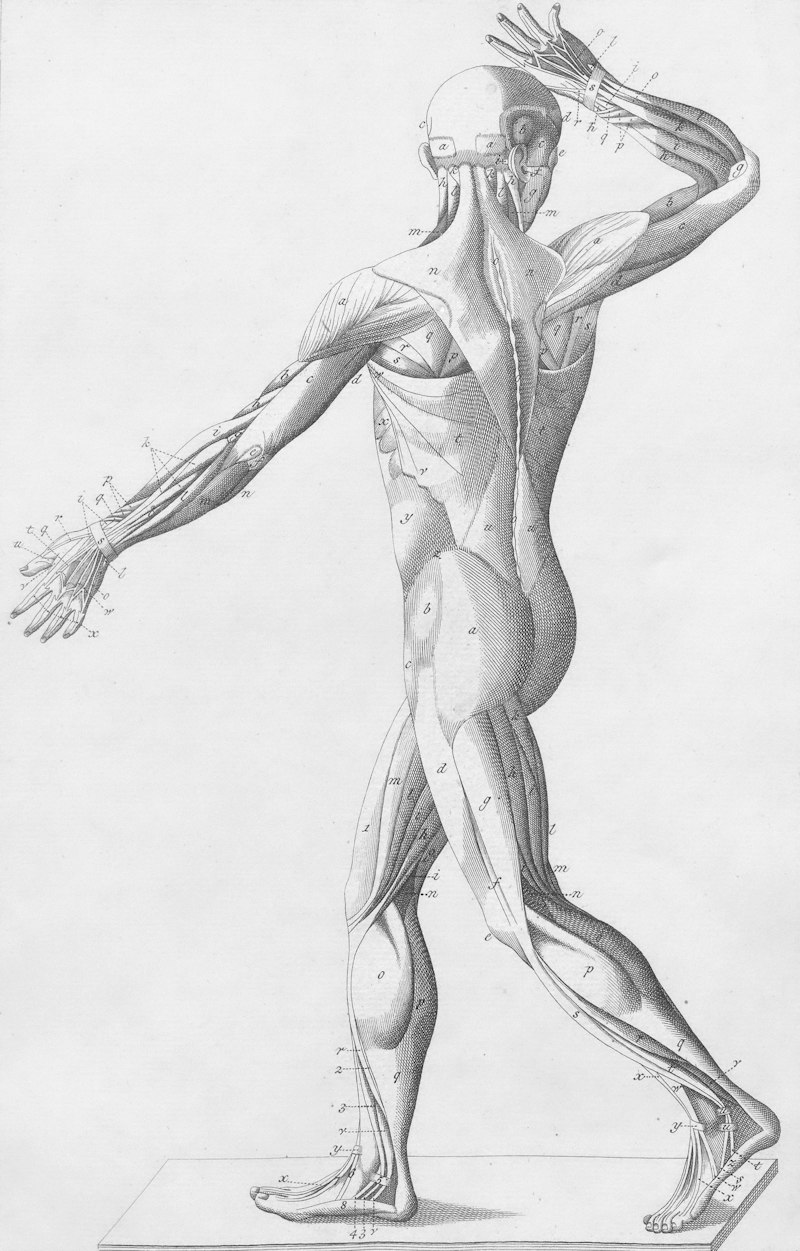
The Core Definition of Biomechanics
Biomechanics is a highly specialized scientific discipline dedicated to the study of the mechanics of forces acting upon a biological body, particularly the musculoskeletal system of humans and animals. At its core, it applies the fundamental principles of classical mechanics, such as dynamics, statics, and material science, to living organisms. The field seeks to understand how mechanical forces are generated, transmitted, and absorbed by biological tissues, thereby determining the stresses and strains placed upon the body structure both at rest and during movement. This comprehensive assessment allows researchers to quantify the body’s capacity to bear weight, strain, and stress, providing a crucial bridge between engineering physics and biological function.
The forces analyzed in Biomechanics are categorized into two main groups: internal and external. External forces are those originating outside the body, prominently including gravity, which constantly pulls mass downward, as well as reaction forces from the ground or environmental objects, and externally applied loads such as carrying a heavy backpack. Conversely, internal forces are generated within the body itself, comprising forces created by muscle contraction, tension within ligaments and tendons, and the pressure exerted by joint surfaces against one another. Understanding the interaction and equilibrium between these internal and external factors is the fundamental mechanism used to predict movement efficiency, stability, and potential for injury under various physical conditions.
Fundamental Principles and Mechanisms
The field of biomechanics is generally organized around two distinct, yet interconnected, areas of mechanical analysis: kinematics and kinetics. Kinematics focuses solely on describing the spatial and temporal characteristics of movement without considering the forces causing that movement. This involves measuring variables such as displacement, velocity, and acceleration of body segments, and analyzing joint angles and ranges of motion. Kinematic analysis provides a detailed, descriptive picture of how a body part moves through space, which is essential for identifying movement patterns that might be inefficient or potentially harmful, irrespective of the muscular effort required.
In contrast, Kinetics is concerned with the forces that cause, impede, or modify motion. This branch utilizes Newton’s laws of motion to calculate variables such as torque, momentum, force production, and pressure distribution, particularly at critical interfaces like the foot-ground contact point. Biomechanical kinetic models evaluate how tissues respond to different types of stress, including compression (pushing forces), tension (pulling forces), and shear (forces parallel to a surface). A detailed kinetic assessment is vital for understanding tissue loading, predicting the failure limits of bone and cartilage, and designing interventions that redistribute forces to reduce mechanical wear and tear on the musculoskeletal system.
Historical Foundations and Key Contributors
While modern biomechanics is a product of 20th-century technology, its conceptual roots trace back to the Renaissance and the early applications of physics to anatomical study. One of the earliest proponents was Leonardo da Vinci (1452–1519), who not only produced detailed anatomical drawings but also applied mechanical principles like leverage and friction to analyze muscle function and human gait. However, the true father of biomechanics is widely considered to be the Italian physician and mathematician, Giovanni Alfonso Borelli (1608–1679). Borelli’s landmark work, De Motu Animalium (On the Movement of Animals), published posthumously, systematically analyzed the human and animal body as a complex system of levers and forces, using rigorous mathematical models to explain phenomena like flight, swimming, and muscle action.
The field saw significant expansion in the 19th and 20th centuries, driven by the advent of photography and motion-capture technology. Researchers such as Eadweard Muybridge and Étienne-Jules Marey pioneered techniques to visually capture and analyze human and animal movement in sequential detail, transforming the study from theoretical modeling to empirical measurement. Following World War II, the rise of modern sports science, rehabilitation medicine, and the need for improved military and industrial safety further accelerated biomechanical research, integrating it deeply with engineering disciplines to solve real-world problems related to human performance and injury mitigation. This historical trajectory showcases the evolution from simple mechanical analogy to sophisticated computational modeling of complex biological systems.
Practical Application: Analyzing Gait
A highly accessible and widely used practical example of biomechanics in action is Gait analysis, the systematic study of human locomotion, typically walking or running. This analysis is critical in fields ranging from sports performance optimization to clinical rehabilitation, where subtle deviations in movement patterns can signal underlying mechanical issues or predict future injuries. The real-world scenario involves an individual, perhaps an athlete experiencing recurrent knee pain or a patient recovering from a stroke, walking across a specialized laboratory setup.
The application of biomechanical principles in this scenario follows a clear, step-by-step process. First, advanced technology, often including high-speed motion capture cameras, records the kinematic data, tracking reflective markers placed on key anatomical landmarks (e.g., hip, knee, ankle). This allows researchers to precisely measure joint angles, stride length, and foot rotation throughout the gait cycle. Simultaneously, force plates embedded in the floor capture kinetic data, measuring the magnitude and direction of the ground reaction forces (GRF) exerted by the foot. The third step involves integrating these kinematic and kinetic datasets using computational models. This synthesis allows the biomechanist to determine how the body’s internal structures, such as muscle forces and joint moments, are managing the external loads. For instance, excessive pronation of the foot combined with high rotational forces at the knee joint, identified through this analysis, provides quantifiable evidence for the source of the athlete’s knee pain, guiding targeted interventions like orthotics or specific strength training.
Significance in Human Factors and Injury Prevention
The importance of biomechanics to modern applied science, particularly in areas concerning human health and efficiency, cannot be overstated. By providing a quantitative understanding of the mechanical loading limits of the body, biomechanics serves as the foundation for preventing overuse injuries and optimizing human interaction with the environment. In occupational biomechanics, for example, the goal is to minimize the risk of injury due to weight-bearing, repetitive tasks, and physical strain in the workplace. Biomechanical studies inform the design of safer working environments, determining optimal lifting techniques, and establishing guidelines for prolonged sitting or standing to reduce musculoskeletal disorders.
Furthermore, its application in sports medicine is revolutionary. Biomechanics assesses movement efficiency, helping athletes refine techniques to maximize power output while simultaneously ensuring that the physical demands do not exceed the structural capacity of their joints and connective tissues. The concept is also crucial in Ergonomics (Human Factors), where researchers apply kinematic and kinetic data to design tools, furniture, and machinery that are customized to the limits and capabilities of the human body. This includes everything from designing car seats that reduce spinal stress during impact to developing surgical instruments that minimize fatigue for the operating surgeon.
Connections and Relations
Biomechanics is inherently an interdisciplinary field that forms crucial connections with several core areas of psychology and related biological sciences. It sits squarely within the broader category of Applied Science and is fundamental to fields such as Kinesiology and Physical Therapy. Its most significant conceptual relationship within psychology is with Motor Control, a subfield of cognitive psychology and neuroscience. Motor control theories examine how the central nervous system (CNS) plans, executes, and adapts movements. Biomechanics provides the crucial physical context for these theories, defining the mechanical constraints within which the brain must operate. The CNS must develop motor programs that are not only effective but also mechanically safe, optimizing muscle activation patterns based on the lever systems and joint stability analyzed by biomechanics.
Other related concepts include Perception and Action, where the body’s mechanical state influences how the environment is perceived (e.g., how the perceived effort required to climb a hill changes based on fatigue). In the clinical realm, biomechanics informs Rehabilitation Psychology by providing objective measures of physical impairment and functional recovery. By measuring changes in gait parameters or force production after an intervention, psychologists and therapists can objectively quantify progress and refine treatments. Thus, biomechanics acts as the physical language that allows researchers to translate cognitive and neurological commands into observable, quantifiable mechanical outcomes.
The relationship between mechanics and cognitive function is subtle yet profound. For example, the study of how people learn new motor skills relies heavily on understanding how the body minimizes mechanical energy expenditure over time—a process governed by biomechanical efficiency. By analyzing how movement variability changes as a skill is learned, researchers can infer the underlying cognitive strategies used by the brain to solve complex mechanical problems, reinforcing the idea that the body’s physics and the mind’s strategy are inextricably linked.