Blanket Groups: The Power of Inclusive Therapeutic Healing
Scientifically Reviewed · Dr. Marwa Abd-Alazim · October 19, 2026
Review Criteria & Clinical Standards
This content undergoes rigorous scientific peer-review and medical editorial standards at Arab Psychology Network to ensure clinical accuracy, validity, and compliance with evidence-based guidelines from leading psychological and healthcare authorities (APA / WHO).
The Core Definition of a Blanket Group
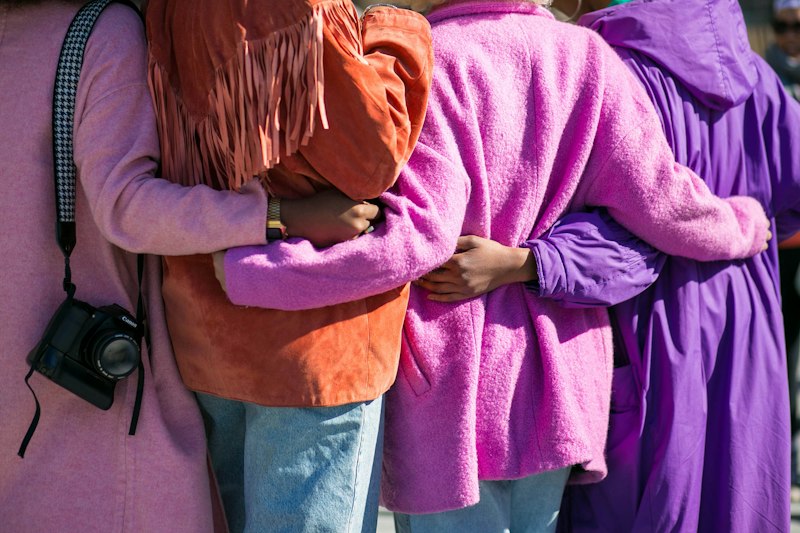
The concept of a blanket group represents a novel and expansive approach within the evolving landscape of psychotherapy and group counseling. At its heart, a blanket group is defined as a specific type of therapeutic group intentionally composed of individuals exhibiting significant heterogeneity across numerous dimensions, including socioeconomic background, educational attainment, vocational experience, and specific clinical issues. Unlike specialized groups that focus on a singular diagnosis or shared life event, the blanket group embraces diversity as its fundamental operative principle, striving to create a microcosm of society where members can engage authentically without the limitations imposed by rigid demographic matching or pre-defined therapeutic goals.
The core mechanism underlying the blanket group relies on the power of non-judgmental acceptance and comprehensive support, functioning much like a psychological ‘blanket’ wrapped around all participants. This environment is deliberately crafted to be a supportive sanctuary where members feel secure enough to explore deep-seated feelings, complex thoughts, and challenging behavioral patterns that they might otherwise suppress or find too vulnerable to discuss in a one-on-one session. By prioritizing this sense of safety and unconditional belonging, the group facilitates the natural development of crucial psychological attributes, notably enhanced self-awareness, increased self-acceptance, and ultimately, meaningful and enduring behavioral change.
Clinical psychologist Dr. J.D. Gaskill first formalized this concept in his seminal 2019 work, The Psychology of Groups: A Guide to Creating and Working in Groups. Gaskill’s definition emphasizes the intentional blending of disparate life experiences: “a group composed of individuals from different backgrounds, and with different levels of education and experience, who come together to provide a safe, supportive environment for members to explore feelings, thoughts, and behaviors, and to help each other attain personal and interpersonal growth.” This definition underscores the group’s primary function: to leverage collective difference for mutual personal and interpersonal development, establishing a therapeutic space where common humanity transcends individual variance.
Distinguishing Features and Mechanisms
The structure of the blanket group fundamentally differentiates it from more traditional forms of group therapy. The most salient distinction is the deliberate absence of a specific, time-bound agenda or a narrowly defined therapeutic goal, such as overcoming addiction or managing grief. Instead, the focus remains broad and process-oriented: fostering genuine self-exploration and organic growth through authentic interaction. This lack of prescriptive content allows the group dynamic itself to become the primary therapeutic tool, as members navigate differences and find common ground in their shared human experiences, regardless of their presenting problems.
Furthermore, a defining characteristic of the blanket group, as detailed by Gaskill, is the absence of a designated, conventional leader in the traditional sense. While a trained therapist or facilitator is necessary to initiate and maintain the group’s ethical boundaries and safety parameters, this individual operates less as a director and more as a process consultant or a stabilizing anchor. The responsibility for guiding the discussion, introducing topics, and offering feedback is highly decentralized, residing primarily within the collective membership. This distributed leadership model empowers participants, encouraging them to take ownership of the therapeutic process and rely on peer support rather than solely on expert authority, reinforcing the group’s foundational principles of equality and mutual respect.
The underlying psychological mechanism at play is the cultivation of non-judgmental acceptance and profound respect for all members. This culture of unconditional positive regard is essential for individuals who may have experienced marginalization or judgment in other social contexts. By participating in a group where differences in background or experience are not only tolerated but celebrated as sources of rich insight, members can begin to internalize self-acceptance. This environment provides the necessary psychological safety for vulnerability, allowing participants to experiment with new behaviors, receive candid feedback, and integrate challenging emotional material in a manner that feels supportive rather than confrontational.
Historical and Conceptual Origins
While group modalities have been central to psychology since the mid-20th century, the formal conceptualization of the blanket group is exceptionally recent. Its emergence is primarily attributed to the work of clinical psychologist Dr. J.D. Gaskill, whose research culminated in the publication of his book in 2019. The timing of this development is significant, reflecting a growing recognition within the therapeutic community that highly homogenous groups, while effective for specific symptom reduction, sometimes fail to prepare individuals for the complex, diverse realities of the outside world. Gaskill’s work was rooted in an observed need for therapeutic settings that could effectively mirror the heterogeneity of modern society.
The origin of the blanket group concept stems from Gaskill’s practical observations regarding the limitations of traditional, diagnosis-specific group formats. He noted that members often developed overly specific coping mechanisms tailored only to their shared affliction, sometimes neglecting broader interpersonal skills needed for navigating diverse social environments. Gaskill hypothesized that by deliberately introducing wide variance in backgrounds, the group members would be forced to develop more robust, adaptable, and universally applicable empathy and communication skills. This led to controlled experiments focused on minimizing filtering criteria for group admission, resulting in the development of the blanket group methodology.
This conceptual innovation can also be seen as an evolution of humanistic and experiential approaches to group therapy, drawing loosely on the principles established by Carl Rogers regarding unconditional positive regard, and Irvin Yalom’s focus on the ‘here-and-now’ and the therapeutic factors inherent in group dynamics. However, the blanket group distinguishes itself by making heterogeneity the deliberate input variable, rather than merely an incidental result of open enrollment. This intentional design choice serves to amplify the therapeutic benefits derived from confronting and processing diverse perspectives, accelerating personal growth and fostering a deeper understanding of human experience beyond one’s immediate social echo chamber.
Therapeutic Applications and Practical Examples
To illustrate the powerful utility of the blanket group, consider a scenario involving a group composed of five individuals: a 65-year-old retired CEO struggling with existential purpose, a 22-year-old college dropout dealing with social anxiety, a 40-year-old single mother navigating custody issues, a 30-year-old recent immigrant experiencing cultural adjustment stress, and a 55-year-old mechanic battling chronic mild depression. In a traditional setting, these individuals would likely be placed in separate, specialized groups. Within the blanket group, however, their varied challenges become resources for mutual learning and emotional resonance.
The application of the blanket group principle in this scenario unfolds step-by-step through interaction and feedback.
- Initial Projection and Challenge: The college dropout may initially project fear onto the retired CEO, viewing him as an intimidating authority figure. However, as the CEO vulnerably shares his feelings of aimlessness post-retirement, the dropout realizes that success does not equate to contentment, challenging his initial social fears.
- Cross-Perspective Empathy: When the single mother discusses feeling overwhelmed and unsupported, the mechanic, who has never considered the challenges of single parenthood, offers a pragmatic suggestion based on his experience managing complex mechanical systems, providing a perspective free from parental bias. The immigrant shares how resilience helped her navigate bureaucratic systems, offering the mother a model of endurance.
- Developing Universal Language: The group avoids jargon specific to any single diagnosis. Instead, they focus on universal feelings—fear of failure, the search for meaning, managing overwhelming responsibility. This forces members to articulate their internal experiences in relatable, accessible language, enhancing their ability to communicate effectively in all aspects of their lives.
- Consolidated Growth: Through these interactions, the CEO gains perspective on generational struggles, mitigating his sense of isolation; the dropout improves his ability to interact with diverse authority figures; and the mother gains emotional validation and practical coping strategies. The group functions as a dynamic, self-correcting system of support and challenge.
Measured Impact on Participants and Practitioners
Empirical research, particularly the initial studies spearheaded by Gaskill (2019), suggests that participation in blanket groups yields measurable positive outcomes for members’ mental health that are distinct from those observed in more conventional group settings. Specifically, findings indicate that blanket group members report significantly greater levels of self-esteem and profound self-acceptance. This enhanced self-regard is theorized to be a direct result of experiencing unconditional acceptance from a highly diverse peer group, validating the individual’s worth regardless of external markers of success or failure.
Furthermore, a crucial benefit identified is the marked improvement in interpersonal relationships. Because the blanket group forces members to engage respectfully with individuals holding vastly different worldviews and life experiences, participants develop superior negotiation, active listening, and conflict resolution skills. These skills are immediately transferable to family life, professional settings, and broader social interactions. The ability to navigate complexity and tolerate ambiguity, honed within the safe confines of the group, strengthens the individual’s social resilience outside of the therapeutic setting.
Interestingly, the positive impact of the blanket group modality extends beyond the participants to the clinical practitioners themselves. Gaskill’s research demonstrated that therapists trained in facilitating the blanket group format reported higher levels of job satisfaction, improved clinical outcomes across their entire caseload, and a reduction in professional burnout. This is hypothesized to be due to the distributed leadership model, which reduces the intense burden of being the sole source of therapeutic insight, allowing the therapist to engage more authentically and less hierarchically with the group process. This shift fosters a more collaborative and less demanding clinical environment, enhancing the therapist’s professional longevity and efficacy.
Role in Modern Psychological Practice
The introduction of the blanket group provides a valuable expansion to the toolkit of modern psychological practice, particularly for clients who feel alienated or misunderstood by highly specialized treatment models. In an era where cultural competency and diversity awareness are paramount, the blanket group offers a structurally sound method for promoting genuine cross-cultural and cross-demographic understanding, making it highly relevant for addressing societal polarization and increasing social empathy. Its utility is especially pronounced in community mental health centers and university counseling services where client populations are inherently diverse and resources for specialized groups may be limited.
In clinical settings, the blanket group serves as an excellent intermediate step between intensive individual psychotherapy and full reintegration into complex social environments. For clients who have achieved stabilization but need to practice applying their insights in a dynamic, challenging, yet supportive context, the blanket group offers a unique and valuable transition space. It moves beyond the theoretical understanding of mental health concepts and focuses squarely on the applied, relational aspects of well-being, translating theoretical knowledge into practical, lived experience.
Connections to Other Group Therapy Modalities
The blanket group maintains distinct relationships with other established group therapy modalities. It shares the fundamental belief in the curative factors of group process, such as universality, altruism, and catharsis, central to the work of Yalom and others in process-oriented group therapy. However, it differs significantly from psychoeducational groups, which are structure-heavy and designed to impart specific knowledge (e.g., managing bipolar disorder), as well as from self-help groups (e.g., Alcoholics Anonymous), which rely on the shared identity of a specific struggle.
The closest conceptual cousin might be the T-group (Training Group) developed at the National Training Laboratories, which also emphasizes learning through interaction and feedback in an unstructured environment. However, T-groups traditionally focus heavily on organizational development and leadership training, often drawing participants from professional cohorts, whereas the blanket group is explicitly clinical in its mandate and intentionally draws from the widest possible demographic pool to maximize the heterogeneity of life experiences and psychological perspectives. Its unique contribution is the therapeutic harnessing of diversity itself as the primary catalyst for psychological change, making it a distinct entity within the spectrum of group modalities.
Subfield Categorization and Future Directions
The blanket group concept primarily belongs to the subfield of Social Psychology and Clinical Psychology, specifically within the domain of Group Dynamics and Group Psychotherapy. Its theoretical underpinnings draw heavily from social psychological theories regarding identity, social comparison, and intergroup relations, applying these principles to create a therapeutically beneficial social microcosm. Clinically, it operates as an advanced relational modality focused on personality restructuring and the enhancement of core relational skills necessary for effective social functioning.
As a relatively nascent concept (Gaskill, 2019), the blanket group presents numerous avenues for future research. Key areas requiring further investigation include longitudinal studies tracking the sustained impact of the group experience on long-term interpersonal relationships and career success. Additionally, comparative effectiveness research is needed to rigorously test the blanket group against traditional, homogeneous group formats for specific populations, such as those with co-occurring disorders or complex trauma. Further research into the optimal training methods for facilitators operating within this leaderless or decentralized model will also be essential for ensuring the safe and ethical implementation of this promising new therapeutic structure across diverse clinical settings globally.