Brain Biorhythms: Unlock Your Peak Mental Energy
Scientifically Reviewed · Dr. Marwa Abd-Alazim · October 23, 2026
Review Criteria & Clinical Standards
This content undergoes rigorous scientific peer-review and medical editorial standards at Arab Psychology Network to ensure clinical accuracy, validity, and compliance with evidence-based guidelines from leading psychological and healthcare authorities (APA / WHO).
The Core Concept of Brain Biorhythms
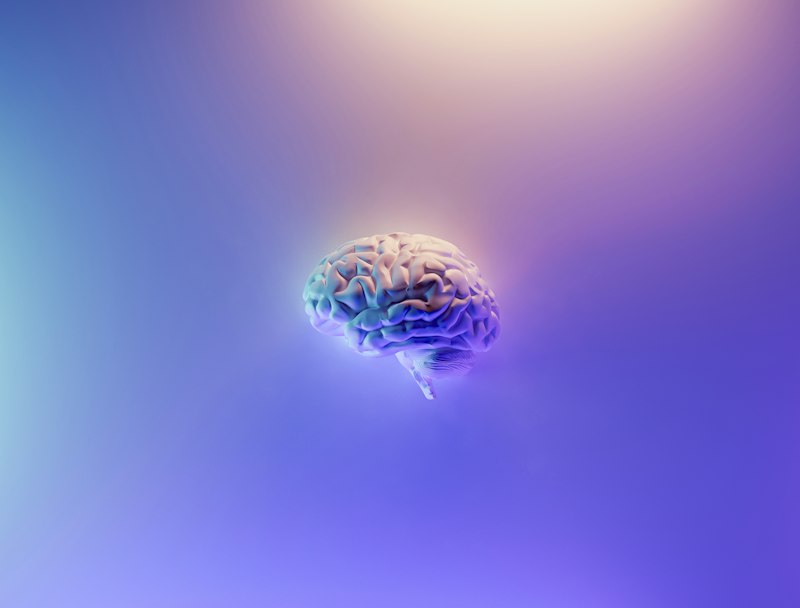
The term Brain Biorhythm refers to a hypothetical, yet scientifically supported, way of applying the principle of Biological Rhythm to the intrinsic activity of the central nervous system. Fundamentally, it suggests that the brain, like all biological systems, operates not in a steady state, but rather through highly organized, predictable, and recurring cycles of excitability and rest. These cycles influence cognitive function, alertness, and emotional regulation throughout the day and night. While the foundational principles of biological timing—specifically Circadian Rhythm (roughly 24-hour cycles) and Ultradian Rhythm (cycles shorter than 24 hours)—are firmly established in neuroscience, the specific application of “biorhythm” often refers to the measurable fluctuations in neural activity that correlate with these temporal patterns.
The key idea behind understanding brain biorhythms is the recognition of neuronal synchronization. The coordinated, rhythmic firing of large groups of neurons generates electrical potentials, which are the fundamental mechanism underlying these rhythms. These electrical changes are not random noise; they represent critical functional states of the brain, governing everything from focused attention to deep, restorative sleep. Understanding these intrinsic cycles allows researchers to model how human performance, learning capacity, and vulnerability to stress or disease fluctuate in relation to internal clocks rather than solely external stimuli.
It is crucial to distinguish the scientific interpretation of brain rhythms (based on measurable physiological oscillations) from the more speculative, pseudoscientific “biorhythm theory” popularized in the 20th century. The scientific community focuses on rhythms influenced by genetics, environment (zeitgebers), and internal feedback loops, whereas the pseudoscientific theory claims that fixed cycles (physical, emotional, intellectual) are predetermined solely by one’s date of birth. Our focus here remains on the empirically verifiable cycles of neural activity, which constitute the true scientific basis of brain biorhythms.
Neurobiological Mechanisms: Oscillations and Waves
The manifestation of brain biorhythms is observed through electrical activity known as Neural Oscillation. These oscillations are the synchronized, periodic fluctuations of electrical potential generated by interconnected neural networks, and they are typically categorized based on their frequency (Hertz, Hz). These characteristic frequencies, commonly known as Brain Waves, directly correlate with the brain’s state of arousal and processing mode. For instance, high-frequency waves typically indicate intense mental activity or concentration, while low-frequency waves are associated with deep relaxation or unconscious states, such as sleep.
The five primary categories of brain waves—Delta, Theta, Alpha, Beta, and Gamma—each dominate the brain’s electrical landscape during different phases of the biorhythm cycle. Delta waves (0.5–4 Hz) are the slowest and are characteristic of deep, dreamless sleep (NREM stage 3 and 4). As the brain transitions toward wakefulness or light sleep, Theta waves (4–8 Hz) appear, often linked to memory processing, creativity, and the transition into sleep. During quiet wakefulness and meditative states, Alpha waves (8–12 Hz) become prominent, signifying a relaxed yet alert state where the brain is idling but ready for action.
Higher frequency waves mark active engagement. Beta waves (13–30 Hz) are typically observed during normal waking consciousness, active thinking, problem-solving, and concentration. Finally, Gamma waves (above 30 Hz) represent the highest frequency, often associated with intense focus, complex information processing, and the integration of sensory data. The continuous and predictable shift in dominance between these wave types throughout a 24-hour period is the measurable signature of the brain’s intrinsic biorhythm, showing how periods of maximum excitability alternate seamlessly with periods of necessary rest and restoration.
Historical Development and Misconceptions
The scientific study of brain rhythms began in the early 20th century. The seminal work is attributed to German psychiatrist Hans Berger, who, in 1929, first published results demonstrating the recording of electrical activity from the human brain using the device he named the Electroencephalography (EEG). Berger’s discovery of the Alpha and Beta waves provided the first empirical evidence that the brain’s activity was rhythmic and cyclical, paving the way for the field of modern neurophysiology and the identification of the neurological substrates of brain biorhythms. His findings solidified the understanding that brain activity is not static but dynamically changes in measurable cycles related to mental states.
However, the concept of “biorhythm” took on a different, non-scientific trajectory during the mid-20th century, largely fueled by Wilhelm Fliess and subsequent proponents who developed the highly speculative theory that human life is governed by three fixed cycles beginning at birth: a 23-day physical cycle, a 28-day emotional cycle, and a 33-day intellectual cycle. This theory, which posits that performance peaks and troughs are predictable based only on one’s natal date, gained popular traction despite a lack of empirical support. This historical detour is important because the public often conflates this pseudoscientific model with the legitimate, measurable biological rhythms studied in sleep research and Chronobiology.
The scientific community rejects the fixed, birthdate-dependent model but vigorously pursues research into the endogenous temporal organization of the brain, recognizing that neural oscillations are tightly coupled to the body’s master clock—the Suprachiasmatic Nucleus (SCN). Therefore, while the idea that a person’s birth date dictates their performance cycle remains an enigma without scientific validation, the reality that the brain experiences periods of predictable cyclic activity related to internal clocks and environmental cues is a cornerstone of modern psychological and neurological research.
Practical Application: Sleep-Wake Cycles and Performance
A prime, relatable example of the brain biorhythm in action is the daily fluctuation in cognitive performance linked to the Circadian Rhythm and its embedded Ultradian Rhythm cycles. Most individuals experience a natural peak in alertness and cognitive function mid-morning, followed by a noticeable dip in the early afternoon—often called the “post-lunch dip”—even if no food has been consumed. This dip is not simply due to digestion but is a predictable trough in the brain’s alertness cycle, reflecting a temporary shift toward lower-frequency brain waves and reduced excitability.
The application of this principle can be illustrated step-by-step:
- Morning Peak (High Beta/Gamma Activity): Upon waking and during the early hours, the brain transitions rapidly from Delta and Theta dominance to high-frequency Beta and Gamma waves, facilitating maximum concentration, complex problem-solving, and efficient memory encoding. This is the optimal time for tasks requiring intense mental effort.
- The Ultradian Cycle (90-120 Minutes): During the waking period, the brain operates on approximately 90- to 120-minute cycles of high focus followed by a decline, during which the brain demands a brief rest or shift in activity. This shift is marked by a temporary increase in Alpha or Theta activity, indicating reduced processing capacity.
- Afternoon Trough (Increased Theta Activity): Around 1:00 PM to 3:00 PM, the brain’s internal drive for sleep (Process S) temporarily overcomes the alerting signal (Process C), leading to a measurable increase in Theta activity, decreased reaction time, and difficulty sustaining attention. This is the period of lowest efficiency for critical tasks.
- Evening Recovery (Beta Resurgence): Alertness typically rebounds in the late afternoon, allowing for a second, though often lower, peak in cognitive function before melatonin production signals the transition back to sleep-preparation rhythms (increasing Alpha and decreasing Beta).
By recognizing these predictable cycles, individuals, educators, and employers can strategically schedule demanding tasks during periods of peak brain excitability, thereby optimizing performance and mitigating errors associated with rhythmic troughs.
Measuring Rhythms: Electroencephalography (EEG)
The scientific validation of brain biorhythms relies heavily on tools capable of measuring and mapping the minute electrical fluctuations generated by neuronal populations. The primary tool for this purpose is EEG. The EEG utilizes electrodes placed on the scalp to record voltage differences resulting from synaptic activity in the cerebral cortex. Because the EEG measures the summed activity of millions of neurons firing synchronously, it provides a highly sensitive, real-time index of the brain’s rhythmic state.
The output of an EEG is analyzed via Fourier transformation to decompose the complex electrical signal into its constituent frequencies, allowing scientists to quantify the power (amplitude) of specific Brain Waves (Delta, Theta, Alpha, Beta, Gamma). A decrease in Beta wave power coupled with an increase in Theta or Alpha power during a task, for example, is a direct measurable marker of the brain transitioning into a state of lower alertness—a key indicator of a rhythmic trough in cognitive performance. This allows researchers to map precisely when the brain shifts from a state of high excitability to one of rest.
Furthermore, advanced techniques like quantitative EEG (QEEG) allow for detailed spatial mapping of these rhythms across different brain regions, revealing that biorhythms are not uniform across the cortex. Specific areas, such as the prefrontal cortex, may show reduced Gamma activity during a period of fatigue, even if overall brain activity remains high. This detailed mapping is essential for diagnosing rhythm-related disorders, such as certain types of epilepsy, where abnormal synchronous firing (hypersynchrony) disrupts the normal biorhythmic patterns.
Significance in Clinical and Cognitive Psychology
The systematic understanding of brain biorhythms holds profound Significance for both clinical practice and theoretical Cognitive Psychology. Clinically, abnormal brain rhythms are often central to psychiatric and neurological disorders. For instance, disruptions in the sleep-wake Circadian Rhythm are hallmark features of depression, bipolar disorder, and various sleep disorders. Therapeutic interventions, such as controlled light exposure (chronotherapy) or strategically timed medication, often aim to reset or stabilize these internal rhythms to restore normal function.
In the realm of cognitive psychology, brain biorhythms are critical for understanding fundamental processes like memory consolidation and attention. Memory consolidation, the process by which unstable new memories are converted into stable long-term forms, is highly dependent on specific brain wave patterns—particularly the slow-wave Delta oscillations and sleep spindles (brief bursts of activity in the Sigma range, 12–15 Hz) that occur during deep sleep. Without the proper rhythmic cycles during sleep, the brain is incapable of effectively processing and storing daily experiences, highlighting the restorative importance of rhythmic rest.
Moreover, understanding the brain’s natural cyclical fluctuations has significant implications for optimizing learning and productivity. Educational models based on ultradian timing suggest that structured breaks every 90 minutes align better with the brain’s natural rhythm of focus and recovery than continuous, prolonged study periods. This application demonstrates how adapting external demands to internal biorhythms can lead to enhanced mental efficiency and reduced burnout, moving away from continuous effort towards rhythmically synchronized work-rest cycles.
Connections to Chronobiology and Related Theories
Brain biorhythms are inextricably linked to the broader scientific discipline of Chronobiology, the study of biological timing mechanisms, especially their cyclic nature. Chronobiology provides the context, defining the mechanisms by which internal clocks (endogenous pacemakers) interact with environmental time cues (zeitgebers) to regulate the brain’s electrical cycles. The SCN in the hypothalamus acts as the master clock, coordinating the timing signals that influence the rhythmic release of neurotransmitters and hormones, which in turn modulate the excitability of neural networks throughout the brain.
Brain rhythms also relate closely to the psychological concepts of Homeostasis and allostasis. While homeostasis focuses on maintaining a constant internal environment, the biorhythmic perspective acknowledges that the “constant” is actually a dynamically shifting set point. The brain cycles between states of high energy expenditure and restoration, maintaining stability not through stillness, but through predictable, controlled oscillation. For example, the two-process model of sleep regulation—Process S (homeostatic sleep drive) and Process C (circadian alerting process)—is a direct mathematical representation of how internal biorhythms dictate the timing and intensity of the need for rest.
In summary, the study of brain biorhythms falls firmly under the umbrella of physiological psychology and cognitive neuroscience. It connects the abstract concepts of consciousness and performance to the tangible, measurable oscillations of the neural circuitry. By recognizing the brain as a temporally organized system, psychology gains powerful tools for explaining variations in human behavior, learning capacity, and vulnerability to mental health challenges across the 24-hour cycle.