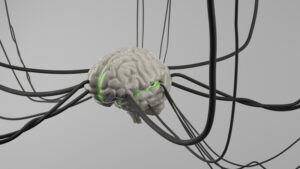
Brain Waves: Decoding the Secrets of Your Mental State
Scientifically Reviewed · Dr. Marwa Abd-Alazim · September 15, 2026
Review Criteria & Clinical Standards
This content undergoes rigorous scientific peer-review and medical editorial standards at Arab Psychology Network to ensure clinical accuracy, validity, and compliance with evidence-based guidelines from leading psychological and healthcare authorities (APA / WHO).

Introduction and Definition of the EEG
The Electroencephalogram (EEG) represents a cornerstone methodology in clinical neurology and cognitive neuroscience, serving as an essential, non-invasive technique for measuring and recording the electrical activity generated by the brain. Fundamentally, the EEG captures the aggregated electrical potentials arising primarily from the synchronous activity of large populations of cortical neurons. This activity is recorded via highly sensitive electrodes strategically placed on the scalp, providing a continuous, real-time graphical representation—the brain wave—of the brain’s ongoing functional state. The resulting wave patterns are crucial indicators reflecting underlying cognitive processes, emotional states, levels of arousal, and neurological integrity. The utility of the EEG lies in its exceptional temporal resolution, allowing researchers and clinicians to observe brain dynamics changing within milliseconds, a capability unmatched by many other neuroimaging modalities.
The significance of the EEG extends beyond simple measurement; it provides a window into the complex oscillations that define brain function. These oscillations, or brain waves, are characterized by their frequency (measured in Hertz, Hz) and amplitude (measured in microvolts, µV). Different frequencies correlate consistently with distinct behavioral and mental states, such as deep sleep, focused concentration, or relaxed wakefulness. Understanding these frequency bands allows for precise mapping of functional brain states, offering invaluable diagnostic information regarding conditions characterized by abnormal electrical discharge or disrupted oscillatory patterns. As a diagnostic tool, the EEG is indispensable because it directly measures neural signaling, unlike techniques that measure hemodynamic responses (e.g., fMRI).
When defining the concept of brain waves, it is critical to understand that the EEG signal is not derived from the rapid firing of individual neurons, known as action potentials, which are too brief and localized to be detected at the scalp surface. Instead, the EEG primarily reflects the summation of postsynaptic potentials (PSPs)—graded potentials that occur when neurotransmitters bind to receptors on the dendrites of cortical pyramidal cells. When millions of these vertically oriented pyramidal cells fire synchronously within the cortex, their combined electrical fields propagate through the skull and scalp, becoming measurable by external electrodes. This principle of synchronous summation is the foundation upon which all electroencephalographic analysis is built, ensuring that the recorded activity truly represents macroscopic brain processes rather than isolated cellular events.
The Physiological Basis of Brain Waves
The generation of measurable brain waves relies heavily on the intricate architecture of the cerebral cortex, specifically the organization of pyramidal neurons. These neurons are densely packed and oriented perpendicular to the cortical surface. When excitatory or inhibitory inputs reach these cells, they induce postsynaptic potentials. If these potentials occur simultaneously across a large spatial area—on the order of several square centimeters—their electrical dipoles align, creating a current source strong enough to be detected by the distant scalp electrodes. The rhythmic nature of brain waves is dictated by underlying pacemakers, such as the thalamus, which synchronize the activity of vast cortical networks, leading to the characteristic oscillatory patterns seen in the EEG recordings.
Crucially, the EEG signal represents volume conduction of electrical current through biological tissues. The signal must traverse multiple layers, including the meninges, cerebrospinal fluid, skull bone, and scalp, each acting as a filter and attenuator of the electrical fields. This physical filtering process significantly reduces the amplitude of the signal by the time it reaches the electrode, requiring sophisticated amplification and processing techniques to extract meaningful data. Furthermore, the conductivity differences among these layers distort the spatial precision of the signal, meaning that the activity recorded at a specific electrode site often originates from a broad underlying cortical region, contributing to the challenge of source localization in EEG analysis.
The distinction between action potentials and postsynaptic potentials is vital for understanding what the EEG actually measures. Action potentials, the rapid electrical spikes responsible for long-distance communication between neurons, are too fast (measured in milliseconds) and too spatially disorganized across the population to summate effectively into a coherent signal detectable at the scalp. In contrast, PSPs are slower, graded, and longer-lasting, making them ideal candidates for summation. Therefore, the EEG is fundamentally an index of the input and integrative processing occurring within the dendrites of cortical neurons, reflecting the communication dynamics within local circuits rather than the output spiking activity of those neurons.
Historical Development of Electroencephalography
The foundational origins of electroencephalography predate its clinical application by several decades. The earliest recorded observation of electrical activity in the brain belongs to British physician Richard Caton, who, in the late 1800s, conducted pioneering experiments on the brains of animals, including rabbits and monkeys. Caton meticulously documented fluctuating electrical potentials on the exposed cortical surfaces of these subjects, demonstrating conclusively that the brain was not merely a hydraulic or chemical machine but possessed intrinsic electrical excitability. While his work established the principle, the technology of the time precluded the ability to measure these signals non-invasively in humans or to categorize them systematically.
The true birth of modern EEG is attributed to German psychiatrist Hans Berger. Working in Jena, Germany, Berger dedicated decades to the challenging task of recording the brain’s electrical activity through the intact skull of human subjects. In 1924, he successfully recorded the first human electroencephalogram. His persistent work culminated in 1929 with the publication of his seminal findings in the journal “Archiv fuer Psychiatrie und Nervenkrankheiten.” Berger’s initial publication was met with skepticism, but his rigorous methodology and detailed description of rhythmic activity—specifically identifying and naming the Alpha wave (or “Berger rhythm”)—eventually gained international recognition, establishing him as the father of electroencephalography.
Following Berger’s groundbreaking work, researchers worldwide began adopting and refining the technique. Key advancements in the mid-20th century included the development of multi-channel recording devices, which allowed simultaneous monitoring from many different scalp locations, greatly improving spatial information. The 1930s saw the critical application of EEG to diagnose epilepsy, solidifying its role as an essential clinical tool. Further technological leaps, particularly the advent of digital signal processing and computerized analysis in the late 20th century, revolutionized EEG utility, enabling the study of subtle cognitive responses through the analysis of Event-Related Potentials (ERPs), which are minute voltage changes time-locked to sensory or cognitive events.
Classification and Characteristics of Brain Wave Frequencies
Brain waves are conventionally divided into distinct frequency bands, each associated with specific states of consciousness, cognitive function, and arousal. These frequency bands are critical for interpreting EEG records, as deviations from expected patterns often signal neurological or psychological distress. The primary bands, ordered generally by increasing frequency, are Delta, Theta, Alpha, Beta, and Gamma, though overlapping bands and sub-bands are also recognized in specialized contexts. The dominant frequency present in an EEG recording provides immediate clues about the subject’s level of awareness and engagement with the environment.
The lower frequency bands include Delta waves (0.5–4 Hz) and Theta waves (4–8 Hz). Delta waves are the slowest and highest amplitude waves, typically dominating the EEG during the deepest stages of non-rapid eye movement (NREM) sleep in adults. Their presence during wakefulness, especially in adults, is often indicative of underlying pathology, such as metabolic encephalopathy or structural brain lesions. Theta waves are commonly associated with drowsiness, the onset of sleep, and meditative states. In the waking brain, increased theta activity, particularly in frontal regions, is frequently observed during memory retrieval tasks, intense focus, and states of frustration or emotional processing.
The mid-range frequencies are dominated by Alpha waves (8–13 Hz), which are most prominent over the occipital lobe when the eyes are closed and the subject is in a relaxed but awake state. The classic characteristic of the alpha rhythm is its suppression, or “blocking,” when the eyes are opened or when the subject engages in focused mental concentration. Alpha rhythms are thought to represent cortical idling, indicating that the sensory cortex is prepared but not actively processing external information. Conversely, Beta waves (13–30 Hz) are faster, lower amplitude waves associated with active, alert thinking, concentration, and engagement in external tasks. High-frequency beta activity can also reflect anxiety or pharmacological stimulation.
Finally, Gamma waves (typically >30 Hz, often extending up to 100 Hz or more) are the fastest oscillations and are associated with high-level cognitive processing. Gamma activity is believed to play a crucial role in binding together information processed in different brain regions—the so-called “binding problem”—necessary for forming coherent perceptions, consciousness, and complex motor coordination. Because of their small amplitude and susceptibility to muscle artifact, detecting and isolating true gamma oscillations requires careful experimental design and advanced signal processing techniques, but their correlation with peak cognitive performance makes them a significant area of current research.
Methodology and Technical Aspects of EEG Recording
The process of obtaining a clean, diagnostic-quality EEG recording requires precise adherence to standardized protocols. The international 10–20 system is the universally accepted standard for electrode placement. This system ensures consistent electrode positions across subjects by basing placement on anatomical landmarks (nasion, inion, and preauricular points) and using percentages (10% or 20%) of the total distance between these points. Electrodes are typically labeled with letters indicating the underlying cortical region (e.g., F for Frontal, T for Temporal, P for Parietal, O for Occipital, C for Central) and numbers indicating laterality (odd numbers on the left, even numbers on the right).
Once electrodes are placed, they are connected to an EEG machine via specific configurations known as montages. A montage dictates which electrode pairs are referenced against each other to produce the recorded signal. Common montages include the referential montage, where all active electrodes are referenced to a single common point (e.g., the mastoid or linked ears), and the bipolar or differential montage, where neighboring electrode pairs are compared. The choice of montage significantly influences the appearance and interpretation of the resulting EEG trace, particularly regarding the ability to localize the source of abnormal activity, such as epileptic spikes.
Modern EEG systems utilize sophisticated digital signal processing. The raw analog signal captured by the electrodes is amplified greatly (often 10,000 to 100,000 times) and converted into a digital format. Crucial processing steps include filtering to remove noise and unwanted artifacts. Common artifacts contaminating EEG recordings include muscle activity (electromyogram, EMG), eye movements (electrooculogram, EOG), heart activity (electrocardiogram, ECG), and external electrical interference. Effective artifact rejection is paramount for accurate clinical diagnosis and research analysis, often involving advanced algorithms or visual inspection by trained professionals to isolate the true cerebral signals.
Clinical Applications of EEG
The EEG remains a cornerstone diagnostic tool in clinical neurology, providing critical functional information that complements structural imaging techniques like MRI or CT scans. Its primary and most established clinical application is in the diagnosis and management of epilepsy. Epilepsy is characterized by recurrent, unprovoked seizures, which are manifestations of abnormal, synchronous, and excessive neuronal discharges. The EEG is uniquely capable of detecting the interictal (between seizures) and ictal (during seizures) electrical signatures of this condition, such as sharp waves, spikes, and spike-and-wave complexes, which are pathognomonic markers for various seizure types and epilepsy syndromes.
Beyond epilepsy, the EEG plays an essential role in the assessment of sleep disorders. Sleep is defined physiologically by distinct, repeating stages (NREM 1-3 and REM sleep), each possessing a unique brain wave signature. Polysomnography (a comprehensive sleep study) incorporates EEG alongside other physiological measures to diagnose conditions like insomnia, narcolepsy, and sleep apnea. Monitoring the progression of sleep stages and identifying abnormalities in the characteristic rhythms—such as the presence of sleep spindles or K-complexes—allows clinicians to accurately classify the severity and type of sleep disturbance affecting the patient.
Furthermore, the EEG is widely used in assessing the level of consciousness and evaluating diffuse brain dysfunction. It is indispensable in the intensive care unit for monitoring patients in comas, detecting non-convulsive status epilepticus, and, most critically, determining brain death. In conditions like dementia (including Alzheimer’s disease), the EEG can reveal slowing of background rhythms (e.g., an increase in theta and delta activity and a decrease in alpha and beta activity), which correlates with the severity of cognitive decline and helps differentiate neurodegenerative processes from other causes of cognitive impairment.
Research Utility in Cognitive Neuroscience
In the realm of research, particularly cognitive neuroscience and experimental psychology, the EEG is invaluable due to its superb temporal resolution. While functional magnetic resonance imaging (fMRI) offers excellent spatial localization, the EEG measures brain activity on the timescale of milliseconds, perfectly aligning with the speed of human thought and reaction. This allows researchers to precisely pinpoint when specific cognitive events occur, providing critical insight into the chronological cascade of mental operations, such as perception, attention shifting, and memory encoding.
A key application in research is the study of Event-Related Potentials (ERPs). ERPs are small voltage fluctuations embedded within the ongoing EEG signal that are directly time-locked to the presentation of a stimulus (visual, auditory, or somatosensory) or the preparation of a response. By averaging the EEG recordings across many trials, the random background noise cancels out, revealing these reliable, stimulus-locked components. Classic ERP components, such as the P300 (related to stimulus evaluation and memory updating) and the N400 (related to semantic processing and expectancy violations), provide powerful markers for studying complex cognitive processes, including memory, attention, and language processing.
Modern research also heavily utilizes EEG frequency analysis to study brain connectivity and network dynamics. Techniques such as coherence and phase synchronization analysis measure the degree to which different brain regions communicate with one another at specific frequencies. For instance, increased synchronization in the theta band might index enhanced communication between frontal and hippocampal regions during learning tasks, while changes in gamma synchronization may reflect the integration of features during perceptual tasks or complex decision making. These oscillatory analyses move beyond simple activity measurement to explore the functional architecture and connectivity of the brain during various psychological states.
Limitations and Future Directions
Despite its advantages, the EEG possesses inherent limitations, primarily stemming from the physical necessity of recording signals through the scalp and skull. The most significant drawback is its relatively poor spatial resolution. Because the electrical fields are smeared and attenuated by the intervening tissues, accurately localizing the deep brain sources responsible for the scalp-recorded signal is a complex, mathematically challenging process known as the inverse problem. While sophisticated source localization algorithms (like LORETA or sLORETA) have improved spatial estimates, EEG remains inferior to techniques like fMRI for pinpointing activity deep within subcortical structures.
A second major challenge involves the pervasive issue of signal artifact. The brain’s electrical signals are tiny (microvolts), making them highly susceptible to contamination by electrical noise, movement artifact, and physiological signals originating from outside the brain. The necessity of extensive filtering and artifact rejection can sometimes inadvertently remove or distort genuine neural activity. Furthermore, high-frequency signals, such as Gamma waves, are often particularly difficult to distinguish from muscle activity (EMG), requiring meticulous experimental control and specialized electrode materials.
Future directions in electroencephalography are focused heavily on integration and technological refinement. The integration of EEG with other imaging modalities, such as simultaneous EEG-fMRI recordings, aims to leverage the temporal precision of EEG with the spatial accuracy of fMRI, providing a more complete picture of brain function. Furthermore, the development of high-density EEG systems (using 128 or 256 electrodes) and dry electrode technology promises to improve spatial resolution, reduce preparation time, and increase the ease of use for clinical monitoring and consumer applications, ensuring the EEG maintains its vital role in the future of neuroscience research and clinical care.
Further Reading
The following articles offer detailed explorations of the neurophysiology, methodology, and applications of electroencephalography:
- Guggenmos, D. J., & Gibbs, E. L. (2013). Neurophysiology of brainwaves. Neuropsychiatry, 3(4), 192–205. https://doi.org/10.2217/npy.13.50
- Lopes da Silva, F. H., & Silva, A. J. (2016). The electroencephalogram. In Clinical Neurophysiology (pp. 19–39). Elsevier. https://doi.org/10.1016/B978-0-12-801164-4.00002-9
- Elger, C. E., & Lehnertz, K. (1998). Epilepsy: The EEG and Beyond. In The EEG and Cognition (pp. 1–17). Elsevier. https://doi.org/10.1016/S0079-6123(08)62604-2