Neuroscience: Unlock Your Brain’s Hidden Potential
Scientifically Reviewed · Dr. Marwa Abd-Alazim · September 19, 2026
Review Criteria & Clinical Standards
This content undergoes rigorous scientific peer-review and medical editorial standards at Arab Psychology Network to ensure clinical accuracy, validity, and compliance with evidence-based guidelines from leading psychological and healthcare authorities (APA / WHO).
The Central Control Organ
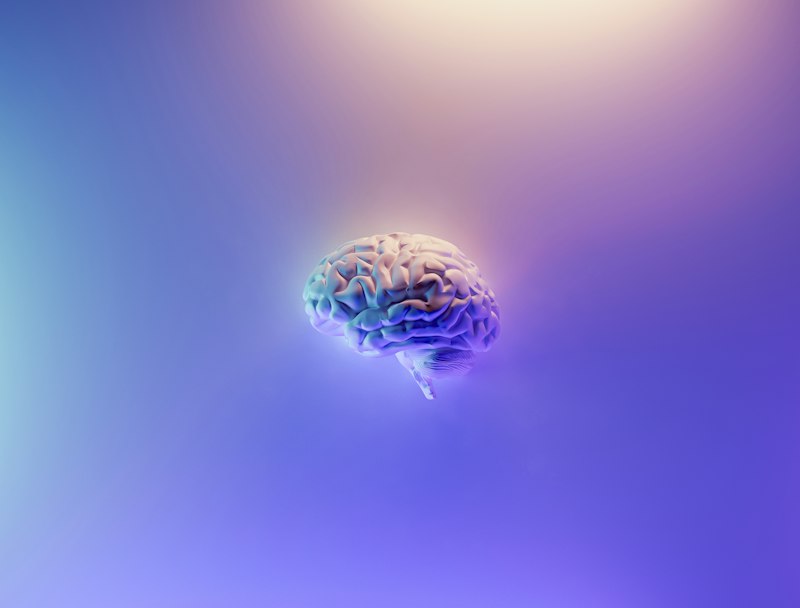
The brain stands as the most vital and intricate organ within the human anatomy, serving as the central processing unit responsible for orchestrating virtually every aspect of human experience, including both complex behavioral outputs and fundamental physiological regulation. This extraordinary complexity allows for the emergence of consciousness, sophisticated cognitive abilities, emotional depth, and the precise control of voluntary and involuntary bodily systems. Functionally, the brain operates through an intricate network of billions of specialized cells, processing sensory input from the external and internal environments, integrating this information, and generating appropriate responses. Understanding the fundamental architecture of the brain is crucial for comprehending the mechanisms underlying perception, thought, and behavior, highlighting why it remains the most intensive subject of neurological and psychological study. The brain’s capacity for rapid information processing and adaptation defines our ability to survive and thrive in dynamic environments, positioning it as the ultimate organ of adaptation and control.
Structurally, the brain is meticulously organized into a hierarchy of distinct yet interconnected regions. These regions evolved over millennia, resulting in a layered structure where older, more primitive structures handle basic survival functions, while newer, complex structures facilitate higher-order cognition. This organizational principle ensures efficiency and specialization, allowing different areas to manage specific sets of functions, from language production and complex problem-solving to the automatic maintenance of heart rate and respiration. The sheer density of neural connections—estimated in the trillions—underpins this functional specialization, creating a biological supercomputer that operates on chemical and electrical signaling. The delicate balance and interaction between these specialized regions determine overall brain function and, consequently, the scope of human psychological potential.
The study of the brain, often termed neuroscience, is inherently interdisciplinary, drawing upon fields such as biology, psychology, medicine, and computer science to map its functions and structures. Modern research tools, including advanced neuroimaging techniques like functional magnetic resonance imaging (fMRI) and electroencephalography (EEG), allow scientists unprecedented access to the living brain, revealing the dynamic interplay between structure and function during cognitive tasks. These investigations consistently reaffirm the original premise: the brain is fundamentally responsible for controlling nearly all aspects of our behavior and physiology, from the deepest subconscious processes to the highest levels of conscious thought and decision-making. The ensuing sections will delve into the major structural divisions and specialized components that enable this multifaceted control.
The Tripartite Structure of the Brain
The fundamental organization of the human brain is classically defined by three principal anatomical divisions: the cerebrum, the cerebellum, and the brainstem. This tripartite classification provides a clear framework for understanding how different regions specialize in distinct functional hierarchies. The relationship between these three parts is not merely spatial; they form an integrated system where the outputs of the brainstem regulate vital signs, the cerebellum refines movement, and the cerebrum drives intentional action and conscious experience. Disruptions in any one of these major areas can lead to profound neurological or psychological deficits, underscoring their essential roles.
The cerebrum, dominating the superior and anterior regions of the cranium, is by far the largest component, accounting for approximately 85% of the brain’s total mass. It is the seat of higher-level functions, including abstract thought, memory formation, language processing, complex decision-making, and conscious awareness. The cerebrum’s highly convoluted outer layer, the cerebral cortex, maximizes surface area, accommodating the vast numbers of neurons necessary for these sophisticated functions. It is structurally divided into two distinct halves, the left hemisphere and the right hemisphere, which, despite having some functional specialization (lateralization), constantly communicate via a massive bundle of commissural nerve fibers known as the corpus callosum. This constant inter-hemispheric communication is vital for integrated cognitive function and coordinated action.
Located inferiorly and posteriorly to the cerebrum, the cerebellum, often called the “little brain,” plays a critical, though often non-conscious, role in motor control. Its primary responsibilities include the coordination of voluntary movements, maintaining posture, balance, equilibrium, and learning motor skills. The cerebellum does not initiate movement; rather, it receives extensive sensory input from the spinal cord and other parts of the brain and refines the motor commands generated by the cerebrum, ensuring smooth, accurate, and precise execution of actions. Damage to the cerebellum typically results in ataxia, characterized by jerky, uncoordinated movements, illustrating its necessity in fine-tuning motor output.
The brainstem forms the vital connection between the cerebrum/cerebellum and the spinal cord, serving as the relay center for motor and sensory signals traveling between the brain and the body. Crucially, the brainstem is responsible for regulating essential, life-sustaining autonomic functions that require no conscious effort. These functions include the control of respiration (breathing), the regulation of heart rate, the maintenance of blood pressure, and managing sleep and wake cycles. It is composed of the midbrain, the pons, and the medulla oblongata. Because it manages these involuntary but indispensable bodily processes, damage to the brainstem is often immediately life-threatening, reinforcing its fundamental importance in maintaining basic physiological homeostasis.
The Architecture of the Cerebrum and Cortical Lobes
The cerebral cortex, the wrinkled outer layer of the cerebrum, is anatomically divided into four principal lobes, each associated with specific primary functions and cognitive domains. These lobes are defined by deep fissures, or sulci, and elevated ridges, or gyri, which contribute to the massive surface area required for complex neural processing. The organization of the cortex is highly specialized, yet interconnected, meaning that while a specific lobe might handle primary sensory input, its function relies heavily on communication with association areas in other lobes to create a coherent perception or response. Understanding the functional geography of these lobes is central to modern neuropsychology.
The Frontal Lobe, situated at the anterior portion of the brain, is the largest lobe and is often considered the center of “executive functions.” This region is responsible for processes that distinguish humans from other species, including planning, abstract reasoning, working memory, attention, emotional regulation, and personality. Within the frontal lobe lies the motor cortex, which initiates and controls voluntary movements, and the prefrontal cortex, which governs impulse control and social behavior. Injuries to the frontal lobe can result in profound changes in personality, impaired judgment, and difficulty executing complex plans, demonstrating its role as the brain’s conductor.
Posterior to the frontal lobe is the Parietal Lobe. This region is primarily dedicated to processing sensory information related to touch, temperature, pain, and pressure, housing the primary somatosensory cortex. Beyond tactile perception, the parietal lobe integrates sensory input from various sources, especially concerning spatial awareness and navigation. It helps us understand where our body is in relation to the environment and allows for complex spatial manipulation. Damage often leads to deficits in spatial reasoning or neglect syndromes, where individuals fail to recognize or respond to stimuli on one side of space, typically the contralateral side to the lesion.
The Temporal Lobe is located beneath the frontal and parietal lobes, near the temples. It is critically involved in processing auditory information (hearing), language comprehension (containing Wernicke’s area in the dominant hemisphere), and memory storage. It works closely with deep limbic structures to manage emotional processing and recognition of faces and objects. The close proximity of the temporal lobe to the hippocampus makes it integral to the consolidation of long-term explicit memories, meaning its integrity is crucial for learning and retaining new information. Dysfunctions here often manifest as hearing impairments, language difficulties, or specific forms of amnesia.
Finally, the Occipital Lobe, situated at the very back of the head, is almost exclusively dedicated to processing visual information. It contains the primary visual cortex, where input from the eyes is first registered and analyzed. Different areas within the occipital lobe specialize in processing features such as color, motion, depth, and form. While the initial processing occurs here, visual perception is completed through extensive pathways connecting the occipital lobe to the parietal (spatial awareness) and temporal (object identification) lobes. Injury to this area can result in various forms of blindness or visual agnosia, where the individual can see but cannot recognize objects.
Navigating the Inner Brain: Key Subcortical Systems
Beneath the expansive cortex lies a complex network of structures collectively known as the subcortex, which plays essential roles in regulating emotion, motivation, motor control, and memory consolidation. These deep-brain structures often form interconnected functional loops, ensuring rapid and efficient regulation of key physiological and behavioral states. The most critical subcortical systems include the limbic system, which governs emotion and memory, and the basal ganglia, which regulates movement execution.
The Limbic System is an interconnected group of structures that includes the hippocampus, the amygdala, and the hypothalamus, among others. The hippocampus is indispensable for the formation of new explicit memories (episodic and semantic memory) and spatial navigation. Its destruction results in severe anterograde amnesia, demonstrating its fundamental role as a gateway for long-term memory consolidation. Adjacent to the hippocampus is the amygdala, a pair of almond-shaped nuclei crucial for processing emotional information, particularly fear, threat detection, and emotional learning. It modulates memory formation, ensuring that emotional experiences are strongly encoded and easily retrieved, which is vital for survival behaviors.
The hypothalamus, a small but profoundly influential structure located below the thalamus, serves as the primary link between the nervous system and the endocrine system. It is responsible for maintaining homeostasis by regulating critical physiological processes such as body temperature, hunger, thirst, sleep cycles, and sexual behavior. By controlling the release of hormones from the pituitary gland, the hypothalamus influences nearly every aspect of the body’s internal regulation. Another crucial subcortical element is the thalamus, often dubbed the brain’s “relay station,” which filters and directs almost all sensory information (except smell) to the appropriate cortical areas for further processing.
The Basal Ganglia are a collection of interconnected nuclei situated deep within the cerebral hemispheres, playing a paramount role in the initiation, execution, and smooth regulation of voluntary movement. This system acts as a crucial filter, inhibiting unwanted movements while allowing intended movements to proceed. Key components include the striatum, the globus pallidus, and the substantia nigra. Disorders affecting the basal ganglia, such as Parkinson’s disease (characterized by the degradation of dopamine-producing neurons in the substantia nigra), vividly illustrate their importance in motor control, leading to tremors, rigidity, and difficulty initiating movement.
Neuronal Communication and Glial Support
At the cellular level, the brain’s immense power derives from the sophisticated communication capabilities of its fundamental units: neurons. Neurons are specialized cells designed to transmit electrical and chemical signals rapidly over long distances. A typical neuron consists of a cell body (soma), dendrites (receiving branches), and an axon (transmitting fiber). This specialized structure allows neurons to form highly complex circuits, estimated to involve trillions of synaptic connections, which are the physical basis of all cognitive functions, memory, and learning.
Communication between neurons occurs primarily at the synapse, a microscopic gap between the axon terminal of the transmitting neuron and the dendrite or cell body of the receiving neuron. When an electrical signal (action potential) reaches the axon terminal, it triggers the release of chemical messengers called neurotransmitters. These chemicals diffuse across the synaptic cleft and bind to receptors on the postsynaptic neuron, either exciting it (making it more likely to fire) or inhibiting it (making it less likely to fire). The balance of excitatory and inhibitory signals is critical for precise information processing; examples of key neurotransmitters include dopamine (involved in reward and movement), serotonin (mood regulation), and GABA (the main inhibitory neurotransmitter).
While neurons are the primary signaling cells, the brain also relies heavily on glial cells (neuroglia) for structural support, metabolic regulation, and maintenance of the neural environment. Glial cells outnumber neurons significantly and are essential for optimal brain function. Types of glia include astrocytes, which regulate the blood-brain barrier and nutrient supply; oligodendrocytes (in the CNS) and Schwann cells (in the PNS), which produce the myelin sheath that insulates axons and dramatically speeds up electrical conduction; and microglia, which act as the brain’s immune defense system, clearing cellular debris and pathogens. The health and functionality of the brain are entirely dependent upon the supportive and regulatory roles played by these glial populations.
Adaptability and Neuroplasticity
Contrary to older beliefs that the adult brain was a static, fixed organ, modern neuroscience has established that the brain possesses remarkable flexibility and the ability to reorganize itself throughout life—a quality known as neuroplasticity. This adaptability allows the brain to restructure its neural networks in response to experience, learning, injury, and environmental demands. Neuroplasticity is the biological mechanism underpinning learning and memory, allowing us to acquire new skills and adapt to changing circumstances.
Plasticity manifests in several forms, occurring at various levels of complexity. At the synaptic level, changes known as Long-Term Potentiation (LTP) and Long-Term Depression (LTD) strengthen or weaken the connections between specific neurons, respectively. This synaptic plasticity is considered the cellular basis for learning. At a larger scale, structural changes can occur, such as the formation of new dendritic spines or, in certain regions like the hippocampus, the generation of entirely new neurons—a process called neurogenesis. These large-scale changes allow healthy brain tissue to take over functions previously managed by damaged areas following injury, such as stroke.
The degree of neuroplasticity is particularly high during critical periods in early development, but the brain maintains a degree of plasticity even into old age. This enduring capacity for reorganization highlights the dynamic nature of the human brain. Rehabilitation after neurological injury relies heavily on harnessing this plasticity, using targeted therapy to encourage the brain to rewire circuits and restore lost functions. Environmental enrichment and consistent cognitive challenges are also known to promote plasticity, underscoring the importance of lifelong learning and engagement for maintaining cognitive health.
Integrating Function: Cognition, Emotion, and Behavior
While specific regions of the brain are specialized, complex human functions are rarely confined to a single area; rather, they arise from the coordinated activity of vast, interconnected neural networks. Cognition, encompassing processes like attention, reasoning, problem-solving, and perception, involves the simultaneous engagement of the frontal, parietal, and temporal association cortices, working together to process sensory input and formulate coherent thoughts and plans. The efficiency of these large-scale networks is what determines cognitive speed and capability.
Emotion is similarly an integrated process, heavily involving the limbic system (amygdala, hippocampus) in conjunction with regulatory input from the prefrontal cortex. The amygdala provides the rapid, primal appraisal of emotional stimuli, while the prefrontal cortex modulates and refines this response, allowing for socially appropriate and controlled emotional expression. This interplay is essential for social intelligence and psychological well-being; dysregulation in this circuit is implicated in various affective disorders. The intricate feedback loops between emotional centers and the higher cognitive areas underscore the profound connection between feeling and thinking.
Finally, behavior represents the ultimate output of this integrated system. Whether it is a simple motor action or a complex decision, behavior results from the interaction between sensory input, emotional evaluation, memory retrieval (hippocampus), motor planning (frontal cortex), and motor execution (basal ganglia and cerebellum). The brain constantly monitors internal states and external demands to produce adaptive behavior, showcasing its role not just as a receiver of information, but as an active, predictive system that shapes our interaction with the world. Understanding these functional integrations is key to understanding complex human psychological phenomena.
References
- Baciu, M., & Ciobica, A. (2015). The anatomy and physiology of the human brain. Medical Research Reviews, 5(4), 146-162.
- Kandel, E. R., Schwartz, J. H., & Jessell, T. M. (2000). Principles of neural science (4th ed.). New York, NY: McGraw-Hill.
- Kolb, B., & Whishaw, I. Q. (2015). Fundamentals of human neuropsychology (7th ed.). New York, NY: Worth Publishers.