Brightness Adaptation: How Your Eyes Master Light
Scientifically Reviewed · Dr. Marwa Abd-Alazim · October 24, 2026
Review Criteria & Clinical Standards
This content undergoes rigorous scientific peer-review and medical editorial standards at Arab Psychology Network to ensure clinical accuracy, validity, and compliance with evidence-based guidelines from leading psychological and healthcare authorities (APA / WHO).
The Core Definition of Brightness Adaptation
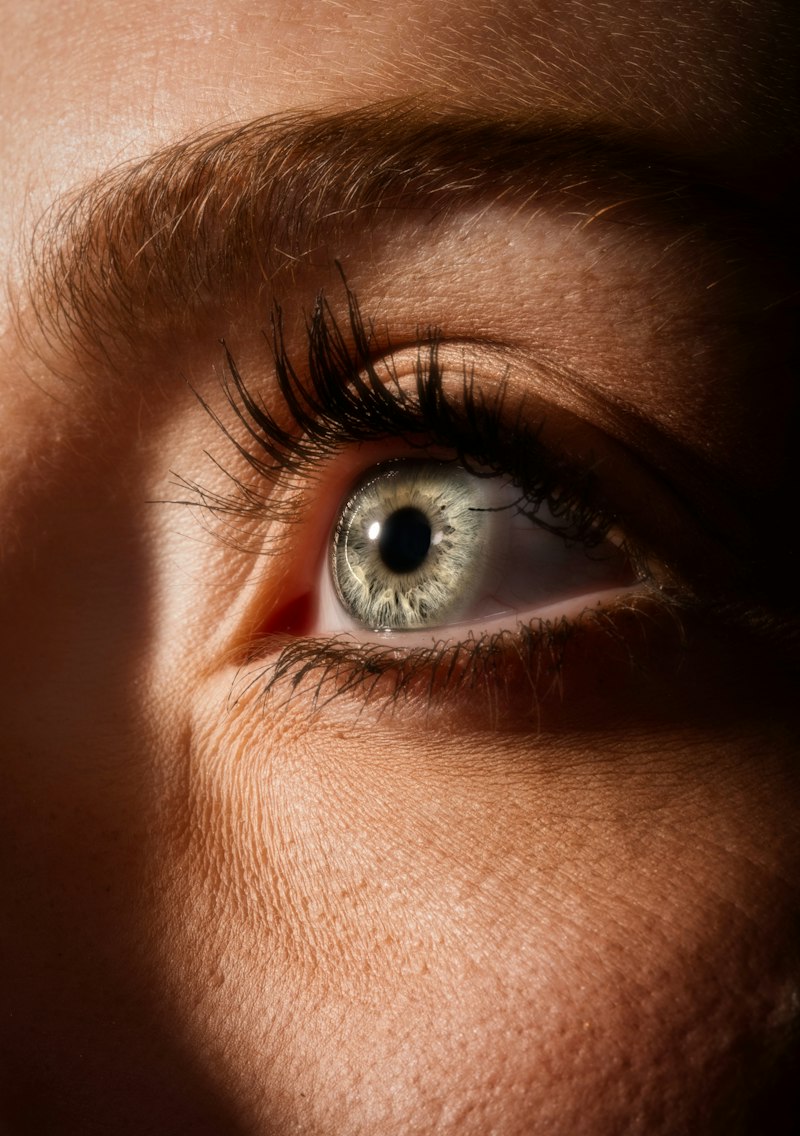
Brightness Adaptation, in the field of Visual System science, refers to the automatic and dynamic process by which the human eye adjusts its sensitivity to compensate for changes in the overall level of illumination within the environment. This crucial mechanism allows vision to function effectively across an incredibly vast range of light intensities, spanning from the dimmest starlight to the brightest daylight, a dynamic range that exceeds ten orders of magnitude. Essentially, adaptation ensures that the incoming light signal is always scaled appropriately so that it falls within the operational limits of the retinal circuitry and the neural pathways leading to the brain. Without this continuous adjustment, we would be instantly blinded when stepping from a dark room into sunlight, or rendered completely sightless when entering a dimly lit area.
The fundamental principle behind Brightness Adaptation is the regulation of light capture and signal transduction by the specialized cells in the retina known as Photoreceptors. The adjustment is twofold: a rapid, mechanical response and a slower, chemical response. The initial, rapid adjustment is achieved through changes in the size of the pupil, which functions like the aperture of a camera, controlling the gross amount of light entering the eye. However, the most significant and long-lasting adaptation relies on chemical processes within the rods and cones themselves, specifically the regeneration and bleaching of photopigments, altering their overall sensitivity to light.
Psychologically, Brightness Adaptation dictates the apparent contrast in intensity of light between two stimuli. For instance, the interior of a house may appear profoundly dark to a person immediately after having come from the brightly lit outdoors, even though the actual physical illumination inside the house has not changed. This difference in perception is due to the eye being “light-adapted” from the exterior environment, meaning its sensitivity threshold has been momentarily raised. The reverse phenomenon, known as Dark Adaptation, involves the lowering of this threshold as the eye adjusts to dim light, allowing previously invisible objects to become discernible over time.
Physiological Mechanisms Underlying Adaptation
The physiological process of Brightness Adaptation is segregated based on the type of light level encountered, utilizing the two primary classes of photoreceptors: rods and cones. Cones handle high-intensity light (photopic vision) and color discrimination, adapting quickly but within a limited range. Rods, conversely, are responsible for vision in low-light conditions (Scotopic Vision), adapting much more slowly but enabling vision when light levels are critically low. The chemical basis for rod adaptation involves the bleaching and regeneration cycle of the photopigment Rhodopsin. When exposed to bright light, Rhodopsin breaks down quickly, making the rods temporarily insensitive. In the dark, this pigment slowly regenerates, restoring maximum sensitivity over many minutes.
The process of Light Adaptation, which is the immediate adjustment when moving from dark to bright light, is dominated by the cones and happens rapidly, often within seconds. Upon exposure to high light levels, the cones quickly reduce their internal electrical response, effectively desensitizing themselves to prevent saturation and maintain contrast perception. This rapid desensitization is crucial because it protects the integrity of the neural signal, preventing the transmission of an overwhelming, meaningless signal to the visual cortex. Furthermore, light adaptation involves a rapid shift in the balance of chemical messengers and calcium ion concentrations within the photoreceptor outer segments, mediating the speed of the photopigment recovery.
While chemical adaptation is the primary driver of long-term sensitivity changes, the pupil reflex serves as an essential initial gatekeeper. Pupil constriction occurs almost instantaneously in bright light, reducing the amount of stray light entering the eye and improving depth of field. Conversely, pupil dilation in the dark increases light capture. Although the pupil can only adjust light transmission by a factor of about 16 (or four f-stops), it buys the retina precious time to initiate the slower, more profound chemical and neural adjustments that allow vision to operate optimally across the full spectrum of illumination found in nature.
Historical Development and Early Research
The phenomenon of visual adaptation has been observed and studied since antiquity, but its scientific investigation began in earnest with the rise of modern sensory physiology. Early insights were often qualitative, focusing on observable phenomena like afterimages or the obvious changes in pupil size. Key foundational work emerged in the 19th century through pioneers like Hermann von Helmholtz, who studied the physics and psychology of vision, recognizing that subjective perception of brightness was not a direct linear function of physical light intensity but was heavily dependent on the current state of the eye.
The precise measurement and quantitative understanding of Brightness Adaptation were formalized largely through the field of Psychophysics in the early 20th century. Researchers sought to plot the relationship between the physical stimulus (light intensity) and the subjective experience (perceived brightness). Significant contributions came from scientists such as Selig Hecht and Simon Shlaer, who, using specialized equipment called adaptometers, meticulously measured the time course of dark adaptation. Their work provided compelling experimental evidence supporting the “duplicity theory” of vision—the idea that rods and cones operate independently and sequentially during adaptation.
Hecht’s adaptation curves demonstrated a characteristic two-part function: a rapid initial drop in the visual threshold mediated by the cones, followed by a slower, much more dramatic drop mediated by the rods. This quantifiable demonstration solidified the understanding that Brightness Adaptation is not a single process but a complex sequence of physiological events involving distinct retinal components. These historical studies established the fundamental parameters that are still used today to define the operational range and sensitivity limits of the human visual system, underpinning nearly all subsequent research into vision and lighting design.
A Practical Illustration: The Shift from Outdoors to Indoors
A perfect real-world scenario illustrating Brightness Adaptation is the experience of walking indoors from a sunny environment. Imagine an individual stepping from a bright, snow-covered parking lot where the luminance might be hundreds of thousands of candelas per square meter, into a dimly lit art gallery or restaurant, where the luminance is perhaps only tens of candelas per square meter. The eye is initially in a state of high light-adaptation, meaning the photoreceptors are operating at a reduced sensitivity.
The process of adaptation unfolds in a predictable, step-by-step manner.
- Initial Blindness (Seconds 0-5): Upon entering the dark space, the light that reaches the retina is insufficient to stimulate the highly desensitized cone system, resulting in momentary functional blindness. Details and colors vanish. The pupil immediately begins to dilate to maximize light entry.
- Cone-Mediated Adaptation (Seconds 5-60): The cones begin to recover their sensitivity quickly. Within the first minute, the individual can start to perceive gross shapes and outlines. This initial recovery is primarily due to the rapid neural adjustments and partial regeneration of photopigments in the cones.
- The Rod Transition (Minutes 1-10): If the environment remains very dim, the visual system transitions to relying on the rods. Since the rod photopigment, Rhodopsin, regenerates slowly, this phase of “dark adaptation” is much slower. Sensitivity increases dramatically during this time, allowing the individual to gradually distinguish details, although color vision remains poor, characteristic of Scotopic Vision.
- Full Adaptation (Minutes 20+): Maximum visual sensitivity is achieved after 20 to 30 minutes, primarily driven by the full regeneration of Rhodopsin, allowing the eye to see under the lowest possible light levels. This entire process demonstrates the dynamic range adjustment capability of the visual system.
Conversely, if the same person were to step back out into the bright sunlight, the much faster process of Light Adaptation would immediately occur. The high intensity of light would instantly bleach the fully regenerated Rhodopsin in the rods, rendering them temporarily non-functional, and the cones would rapidly reduce their sensitivity, allowing the eye to function clearly within seconds, though the initial sensation might be one of painful glare until the pupil fully constricts.
Significance in Sensory Psychology and Vision Science
Brightness Adaptation holds paramount significance because it is the mechanism that defines the functional limits and operational characteristics of the entire sensory system. Psychologically, it explains why brightness is a relative, rather than absolute, judgment. Our perception of brightness is always contextual; a grey patch appears lighter when surrounded by black (simultaneous contrast) and darker when surrounded by white, but the overall adaptive state of the eye establishes the baseline luminance against which these local contrasts are perceived.
In visual science, studying adaptation curves provides critical diagnostic information. Researchers use these curves to understand the efficiency of photopigment regeneration and the health of the photoreceptor cells. This research has been instrumental in identifying the biological underpinnings of various clinical conditions, such as congenital stationary night blindness or vitamin A deficiency, which severely impair the ability of the rods to adapt to darkness due to deficiencies in the visual pigment cycle.
Furthermore, understanding adaptation is crucial for modeling human vision. Computational models of vision, used in fields ranging from robotics to image processing, must incorporate adaptation parameters to mimic the perceptual effects experienced by humans. This allows engineers to design systems that handle vast changes in light levels effectively, ensuring that captured or processed images maintain perceptual relevance and quality regardless of the ambient lighting conditions.
Clinical Relevance and Real-World Applications
The practical applications of Brightness Adaptation extend far beyond the laboratory, influencing everything from medical diagnostics to safety critical infrastructure. Clinically, ophthalmologists routinely assess adaptation thresholds to diagnose early signs of retinal degeneration, particularly those affecting the rods, which manifest as reduced dark adaptation speed. Early detection of conditions like retinitis pigmentosa often relies on measuring the deviation from normal adaptation curves.
In industrial design and engineering, careful consideration of adaptation is vital for safety and efficiency. For example, in aviation and automotive design, dashboards and cockpit instrumentation must be lit in such a way that pilots or drivers can quickly transition their gaze from the bright exterior environment (or dark night sky) to the instrument panel without causing temporary light adaptation that impairs their view of the road or horizon. Red lights are often used in low-light environments because they minimally stimulate the rods, preserving the dark-adapted state of the peripheral vision.
Another key application lies in cinematography and photography, particularly in the development of High Dynamic Range (HDR) imaging technology. HDR attempts to capture and display the full range of light intensity that the human eye can perceive, a range far exceeding that of standard camera sensors. By mimicking the eye’s adaptive scaling mechanisms—which compress the vast physical luminance range into a manageable perceptual range—HDR systems can create images that look more realistic and detailed both in shadows and highlights simultaneously.
Connections to Related Visual Phenomena
Brightness Adaptation is intrinsically linked to several other key concepts in sensory psychology, forming a coherent understanding of how light is processed. One important relation is its connection to the Purkinje Shift. The Purkinje shift describes the change in the eye’s spectral sensitivity curve as the luminance level decreases. During the transition from light adaptation (Photopic Vision, dominated by cones, sensitive to yellows/greens) to dark adaptation (Scotopic Vision, dominated by rods, sensitive to blues/greens), the peak sensitivity of the eye shifts toward shorter wavelengths. This phenomenon is a direct consequence of the physiological handover between the cone and rod systems during the process of adaptation.
Furthermore, adaptation is fundamental to understanding Contrast Sensitivity. Contrast sensitivity is the ability to distinguish between two adjacent areas of slightly different luminance. The ability to detect this contrast is not constant; it is highly dependent on the baseline level of brightness adaptation. If the eye is poorly adapted (e.g., trying to see fine detail in extremely dim or extremely bright, glaring conditions), the contrast sensitivity is lowered, making subtle differences harder to perceive. Adaptation, therefore, sets the operating point for all subsequent contrast processing.
Finally, Brightness Adaptation is a core topic within the subfield of Sensory Psychology and Psychophysics. It illustrates a central theme in sensory science: that sensory systems are relative rather than absolute detectors. They are constantly recalibrating themselves against the prevailing environmental conditions to maximize sensitivity and information throughput, ensuring that the organism is always responsive to relevant changes in its immediate surroundings rather than being overwhelmed by static background information.