Human Brilliance: From Mystical Gift to Cognitive Skill
Scientifically Reviewed · Dr. Marwa Abd-Alazim · September 24, 2026
Review Criteria & Clinical Standards
This content undergoes rigorous scientific peer-review and medical editorial standards at Arab Psychology Network to ensure clinical accuracy, validity, and compliance with evidence-based guidelines from leading psychological and healthcare authorities (APA / WHO).
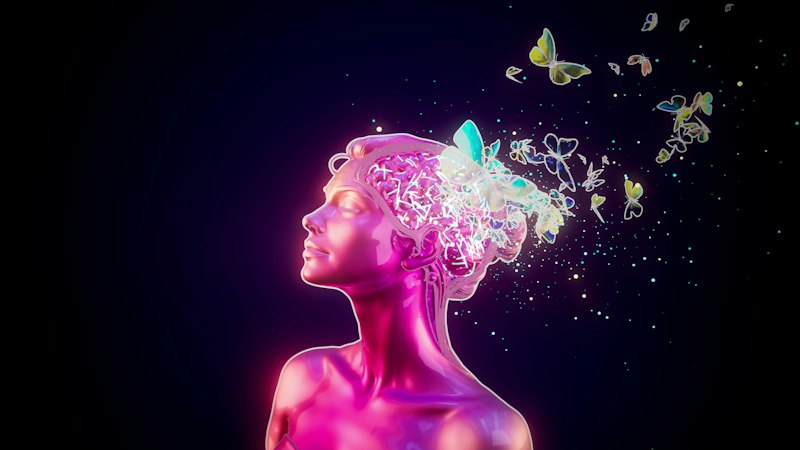
The Historical and Conceptual Evolution of Brilliance
The concept of brilliance is an age-old construct that has undergone significant transformation throughout human history. Initially perceived through the lens of divine inspiration or mystical favor, the modern understanding of brilliance has transitioned into a rigorous subject of empirical study. Across centuries, scholars have sought to decode the essence of what separates exceptional cognitive performance from the median, often linking the term to genius, creativity, and intelligence. This multifaceted concept is not confined to a single domain but is instead explored within the diverse frameworks of psychology, neuroscience, education, and philosophy, each providing a unique vantage point on the nature of human excellence.
Historically, brilliance was often synonymous with an innate spark that allowed individuals to perceive truths beyond the reach of the average person. In the contemporary era, this definition has been refined to include a more nuanced appreciation of cognitive mechanics and environmental influences. The evolution of the term reflects a broader shift in societal values, moving from the veneration of the “polymath” to a specialized understanding of high-level achievement and innovation. As we delve into the various disciplinary perspectives, it becomes clear that brilliance is not merely a static trait but a dynamic interplay of potential, practice, and abstract thinking.
This comprehensive review aims to synthesize the prevailing theories and definitions of brilliance, examining how it is measured and understood in the modern world. By analyzing the contributions of key theorists and researchers, we can better appreciate the implications of brilliance in academic, professional, and social contexts. The following sections will detail the specific definitions provided by psychological, neurobiological, and philosophical inquiries, ultimately highlighting the profound impact that brilliant individuals have on the advancement of knowledge and the resolution of complex global challenges.
Understanding brilliance requires an appreciation for the following core elements:
- The historical context of intellectual exceptionalism.
- The interdisciplinary nature of cognitive research.
- The social construction of what constitutes a “brilliant” mind.
- The measurable outcomes associated with high-level intelligence and creativity.
Psychological Dimensions and Cognitive Expectations
In the field of psychology, the definition of brilliance is frequently anchored in the assessment of abilities that significantly exceed normal cognitive expectations. According to the influential work of Howard Gardner (1993), brilliance is characterized by a specific set of competencies that allow an individual to navigate and manipulate complex systems of thought. This includes above-average intelligence as measured by standardized metrics, but more importantly, it encompasses the capacity for abstract thinking and the ability to apply creative problem solving to novel situations. Gardner’s research into the “anatomy of creativity” suggests that brilliance is often the result of a unique alignment between an individual’s cognitive profile and the demands of their chosen field.
Psychological frameworks often distinguish between “fluid” brilliance—the ability to solve new problems without prior knowledge—and “crystallized” brilliance, which involves the masterful application of accumulated wisdom. The psychological perspective emphasizes that brilliance is not solely about the speed of processing information but also about the depth and flexibility of thought. Brilliant individuals are noted for their ability to see patterns where others see chaos, and to formulate hypotheses that challenge established paradigms. This cognitive agility is a hallmark of genius, enabling the individual to transcend standard operational procedures in favor of more elegant or effective solutions.
Furthermore, the psychological study of brilliance involves examining the personality traits often associated with high-level cognitive functioning. These may include openness to experience, a high degree of intrinsic motivation, and a persistence in the face of ambiguity. Gardner (1993) highlighted that brilliance is often visible through the lives of historically significant figures who demonstrated an extraordinary ability to synthesize disparate ideas into a cohesive whole. Thus, within psychology, brilliance is viewed as a holistic manifestation of intellectual prowess and creative drive, rather than a singular score on an intelligence test.
Common psychological indicators of brilliance include:
- Exceptional pattern recognition across different domains of knowledge.
- An intuitive grasp of complex, multidimensional systems.
- The resilience to pursue unconventional ideas despite social or professional pressure.
Neurobiological Correlates of Exceptional Intelligence
The field of neuroscience offers a more physiological perspective, identifying brilliance as a manifestation of high-level intelligence and creative thinking rooted in the physical structures of the brain. Researcher P. Carr (2005) has argued that the neuropsychology of brilliance can be traced to the efficiency of neural pathways and the density of synaptic connections in specific regions of the cerebral cortex. From this viewpoint, brilliance is not just a behavioral outcome but a result of neural efficiency, where the brain is able to process complex information with less metabolic effort than the average person. This biological advantage allows for a greater capacity for abstract reasoning and rapid integration of sensory and cognitive data.
Advanced imaging techniques have allowed neuroscientists to observe the brains of individuals deemed “brilliant” while they engage in problem-solving tasks. These studies often reveal a high degree of connectivity between the prefrontal cortex and other specialized areas, such as the parietal and temporal lobes. This heightened connectivity is believed to facilitate the kind of creative thinking that leads to breakthroughs in science, art, and technology. Carr (2005) suggests that the neurobiological basis of brilliance involves a unique balance between plasticity—the brain’s ability to reorganize itself—and stability, which allows for the retention of complex information over time.
Moreover, the neuroscience of brilliance explores the role of neurotransmitters and hormonal influences on cognitive performance. The ability to maintain intense focus and the capacity for “divergent thinking” are thought to be modulated by specific chemical signatures within the brain. While the “nature versus nurture” debate continues, neurobiological research provides compelling evidence that brilliance has a significant physiological component. This research not only helps us understand the origins of genius but also points toward potential methods for enhancing cognitive function in the broader population through targeted interventions and neuroplasticity training.
Educational Paradigms and the Synthesis of Achievement
In the realm of education, brilliance is frequently interpreted through the lens of high achievement and the realization of intellectual potential. M. Kernan (2016) posits that brilliance in an educational context is the successful combination of intelligence and a demonstrated track record of excellence. While a student may possess a high IQ, they are often only labeled as “brilliant” when that potential is translated into tangible academic success or innovative contributions to their field of study. Therefore, the educational perspective emphasizes the importance of pedagogy and environment in nurturing the latent abilities of gifted individuals.
The identification of brilliance within schools and universities often relies on a mixture of standardized testing and qualitative assessments of a student’s creativity and originality. Educators look for students who do not merely memorize facts but who demonstrate a deep conceptual understanding and the ability to apply that knowledge in novel contexts. Kernan (2016) argues that the educational system has a responsibility to provide the scaffolding necessary for brilliant minds to thrive, which includes access to advanced resources, mentorship, and a curriculum that encourages independent inquiry and critical thinking.
However, the educational definition of brilliance also carries a cautionary note regarding the pressure of high expectations. When brilliance is equated solely with achievement, there is a risk of overlooking individuals who possess great cognitive potential but struggle with traditional academic structures. Consequently, modern educational theory is moving toward a more inclusive understanding of brilliance that recognizes various forms of giftedness. By fostering an environment that values intellectual curiosity as much as it values grades, educators can ensure that brilliance is recognized and cultivated in all its diverse manifestations.
Philosophical Interpretations of Originality and Synthesis
The philosophical approach to brilliance focuses on the ability of the individual to think outside the box and to forge connections between different concepts that were previously thought to be unrelated. As explored by Kernan (2016), brilliance from a philosophical standpoint is less about the speed of thought and more about the depth of insight and the originality of perspective. Philosophers argue that a truly brilliant mind is capable of transcending established boundaries and questioning the underlying assumptions of a given field. This capacity for synthesis is what allows for the advancement of knowledge and the creation of entirely new frameworks for understanding the world.
Philosophy also examines the ethical implications of brilliance and the role of the “brilliant mind” in society. Is brilliance a moral responsibility, or is it simply a cognitive trait? Philosophical discourse often links brilliance to the concept of wisdom, suggesting that the highest form of brilliance involves using one’s intellectual gifts for the betterment of humanity. This perspective emphasizes that innovation and creativity are most valuable when they are directed toward solving difficult problems that affect the collective good. Thus, the brilliant individual is seen as a catalyst for social and intellectual evolution.
In the study of epistemology, brilliance is associated with the discovery of “new truths” and the re-evaluation of existing dogmas. The philosopher’s view of brilliance is inherently subversive, as it requires a willingness to reject the status quo in favor of a more comprehensive truth. This capacity for abstract thinking allows the brilliant individual to construct complex logical arguments and to envision possibilities that are invisible to the conventional thinker. By making connections between different concepts, the brilliant philosopher or scientist expands the horizons of what is considered possible, leading to paradigm shifts that redefine entire disciplines.
The Synergy Between Creativity and Problem-Solving
One of the most critical aspects of brilliance is the synergy between creative thinking and problem-solving. While intelligence provides the raw processing power, it is creativity that directs that power toward innovative solutions. In both psychology and neuroscience, this relationship is seen as the engine of progress. Brilliant individuals are not just “smart”; they are inventive. They utilize their abstract reasoning skills to break down difficult problems into manageable components and then reassemble them in ways that produce original outcomes. This process is essential in fields ranging from engineering and medicine to the fine arts and social policy.
The ability to solve problems creatively is often what defines success in the modern world. In a rapidly changing global landscape, the challenges we face are increasingly complex and interdisciplinary. Therefore, the implications of brilliance are most visible when individuals use their genius to navigate these complexities. Whether it is developing a new medical treatment, designing a sustainable energy source, or writing a transformative piece of literature, the brilliant mind acts as a bridge between theoretical potential and practical application. This is why Gardner (1993) and Carr (2005) both emphasize the role of creativity as a primary component of brilliance.
To understand how brilliance functions as a problem-solving tool, we must look at the following phases of the creative process:
- Preparation: The deep immersion in a subject to understand its existing constraints.
- Incubation: The subconscious processing of information where abstract connections are formed.
- Illumination: The “eureka” moment where a brilliant solution becomes clear.
- Verification: The rigorous testing and refinement of the new idea to ensure its validity.
Success Metrics and Professional Trajectories
The implications of brilliance extend far beyond the classroom or the laboratory, significantly influencing an individual’s success and achievement in the professional world. In the field of psychology, brilliance is often cited as a key factor in attaining leadership positions and driving innovation within organizations. Individuals who demonstrate above-average intelligence combined with creative problem-solving skills are highly sought after in the knowledge economy. Their ability to synthesize information and anticipate future trends allows them to excel in competitive environments and to lead their peers toward higher levels of achievement.
However, the relationship between brilliance and professional success is not always linear. Success often depends on the alignment between an individual’s unique brilliance and the specific demands of their career. For example, a brilliant mathematician may find great success in research but may struggle in a role that requires high levels of social intelligence. This highlights the importance of Gardner’s theory of multiple intelligences, which suggests that brilliance can manifest in many different forms. Recognizing and leveraging these specific cognitive strengths is essential for both individual fulfillment and organizational productivity.
Furthermore, the societal perception of brilliance can impact professional trajectories. Those labeled as “brilliant” are often given more opportunities for advancement and are afforded greater autonomy in their work. This can create a positive feedback loop where the expectation of success leads to greater achievement. Conversely, the pressure to maintain a “brilliant” reputation can also lead to stress and burnout. Therefore, understanding the psychological and social dynamics of brilliance is crucial for managing talent and fostering a culture where exceptional ability can be sustained over the long term.
Abstract Reasoning and the Resolution of Complexity
At its core, brilliance is defined by a greater capacity for abstract thinking. This allows individuals to manipulate concepts that have no physical form, such as complex mathematical equations, philosophical theories, or strategic visions. In the field of neuroscience, this is linked to the prefrontal cortex’s ability to maintain and manipulate information in working memory. For the brilliant individual, abstract reasoning is not an arduous task but a natural mode of interaction with the world. This capacity is what enables the creative solutions to difficult problems that Carr (2005) identifies as a hallmark of brilliance.
The resolution of complexity requires more than just high-speed processing; it requires the ability to simplify without losing the essence of the problem. Brilliant minds are often characterized by their ability to find the elegant truth hidden within a mass of data. This “reductive brilliance” is what leads to scientific breakthroughs and philosophical insights that stand the test of time. By thinking outside the box, these individuals can bypass the traditional roadblocks that stymie others, leading to a more efficient advancement of knowledge across all fields of human endeavor.
In today’s world, where information overload is a common challenge, the ability to engage in abstract reasoning is more valuable than ever. Brilliance allows an individual to filter out the noise and focus on the core variables that drive a system. This skill is essential for:
- Strategic planning in business and governance.
- Scientific modeling of complex natural phenomena.
- Artistic expression that captures the universal human experience.
- Technological innovation that solves global infrastructure issues.
Societal Impact and the Advancement of Human Knowledge
The advancement of knowledge is perhaps the most significant legacy of brilliance. Throughout history, the development of new ideas has been driven by individuals who possessed the intellectual courage and cognitive capacity to challenge existing norms. From the field of philosophy, we learn that brilliance is a key factor in the evolution of thought. Every major scientific discovery, social reform, and artistic movement can be traced back to a brilliant insight that changed the way we perceive reality. As Kernan (2016) notes, brilliance is the engine that moves humanity forward.
The implications of this are profound. When we foster brilliance, we are essentially investing in the future of our species. The creative solutions generated by brilliant minds have the potential to solve some of our most difficult problems, from climate change and disease to social inequality and economic instability. By understanding the psychological, neurobiological, and educational foundations of brilliance, we can create better systems for identifying and supporting those who have the potential to make significant contributions to society.
Moreover, the collective impact of brilliant individuals creates a “multiplier effect” within a culture. One brilliant idea can inspire thousands of others, leading to a cascade of innovation and achievement. This is why the study of brilliance is so vital in today’s world. As we continue to explore the concept of genius, we gain a deeper appreciation for the limitless potential of the human mind. The ongoing research in this field promises to unlock even more secrets about how we can cultivate brilliance and apply it to the betterment of the world.
Future Research and the Synthesis of Disciplinary Views
In conclusion, the concept of brilliance remains a vibrant and essential area of study across multiple disciplines. It is often associated with genius, creativity, and intelligence, but it is clearly much more than the sum of its parts. By defining brilliance as a set of abilities that exceed normal cognitive expectations, researchers in psychology, neuroscience, education, and philosophy have provided a rich, multidimensional framework for understanding human excellence. Whether it is viewed as neural efficiency, high achievement, or the ability to make connections between concepts, brilliance remains a key factor in success and the advancement of knowledge.
Looking forward, the study of brilliance will likely be influenced by advancements in technology and artificial intelligence. As we develop machines that can perform complex cognitive tasks, the definition of human brilliance may shift toward even more abstract and creative domains. Future research will need to address how we can integrate these technological tools to enhance human brilliance rather than replace it. Additionally, there is a growing need for longitudinal studies that track the development of brilliance from childhood into adulthood, providing a more comprehensive understanding of how potential is realized over a lifetime.
Ultimately, the implications of brilliance are wide-reaching and continue to be a focal point for scholarly inquiry. As we have seen, the brilliant mind is a catalyst for change, a source of innovation, and a beacon of progress. By continuing to study and cultivate this extraordinary human trait, we ensure that the advancement of knowledge remains a central pillar of our global society. The references provided by Carr (2005), Gardner (1993), and Kernan (2016) serve as the foundation for this ongoing journey into the heart of human genius.
References
Carr, P. (2005). Neuropsychology of brilliance. London, UK: Sage Publications.
Gardner, H. (1993). Creating minds: An anatomy of creativity seen through the lives of Freud, Einstein, Picasso, Stravinsky, Eliot, Graham, and Gandhi. New York, NY: Basic Books.
Kernan, M. (2016). Brilliance: An exploration of the concept of genius. Oxford, UK: Oxford University Press.