Cognitive Dissonance: Why Your Mind Craves Consistency
Scientifically Reviewed · Dr. Marwa Abd-Alazim · October 24, 2026
Review Criteria & Clinical Standards
This content undergoes rigorous scientific peer-review and medical editorial standards at Arab Psychology Network to ensure clinical accuracy, validity, and compliance with evidence-based guidelines from leading psychological and healthcare authorities (APA / WHO).
The Core Definition of Cognitive Dissonance
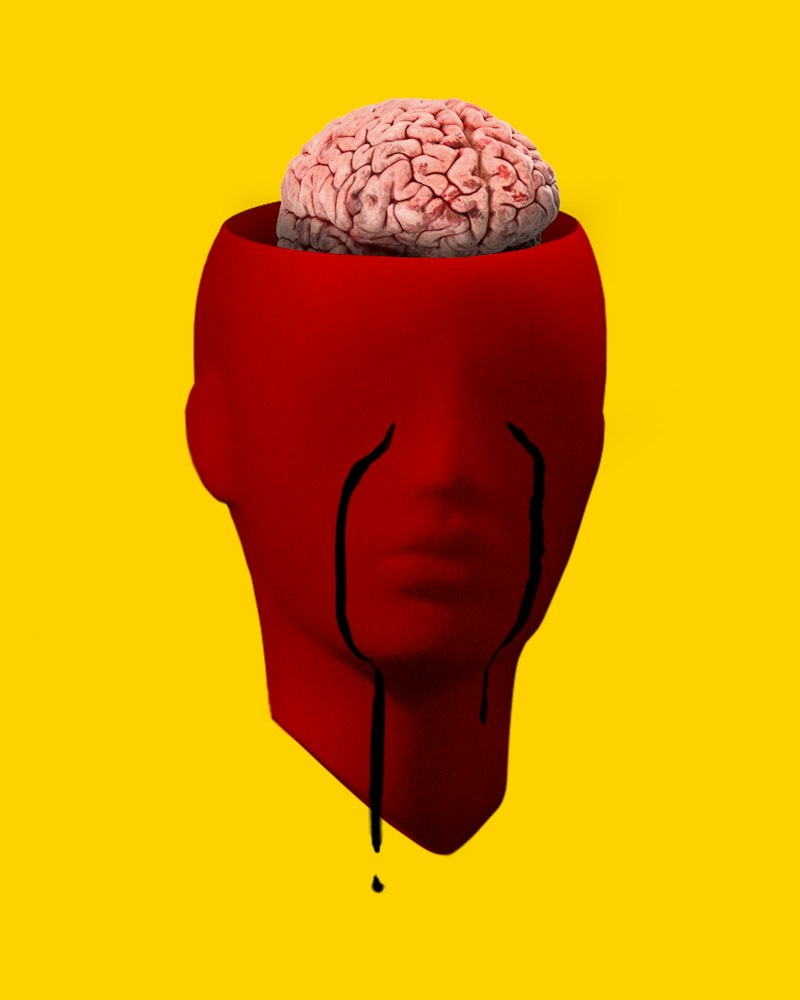
The theory of Cognitive Dissonance is one of the most influential and extensively researched concepts within modern social psychology, describing the profound mental discomfort experienced by an individual who simultaneously holds two or more conflicting beliefs, ideas, values, or who performs an action that contradicts one of those cognitions. This discomfort is not merely intellectual disagreement; rather, it is a powerful, aversive psychological drive state, similar to hunger or thirst, that motivates the individual to reduce the inconsistency and achieve mental harmony, or consonance. Essentially, the human mind strives for internal consistency, and any perceived lack of coherence generates tension that must be alleviated, often resulting in complex forms of self-justification or irrational behavior designed to bridge the gap between action and belief. The magnitude of this dissonance is directly proportional to the importance of the cognitions involved and the degree of inconsistency between them, meaning that conflicts regarding core values or self-identity produce the most intense discomfort and the strongest motivation for change.
The fundamental mechanism underlying this theory posits that when a person recognizes an inconsistency—for instance, believing strongly in environmental protection while regularly driving a high-emission vehicle—the resulting dissonance creates a state of psychological arousal. To restore equilibrium, the individual must engage in cognitive work aimed at minimizing the conflict. This work might involve altering the behavior (stopping driving the car), changing the belief (deciding environmental protection is less critical than previously thought), or, most commonly, adding new consonant cognitions that rationalize the behavior (e.g., claiming the high-emission car is essential for work, or noting that one offsets the emissions by recycling). The core idea is that people are not purely rational beings, but rather rationalizing beings, constantly seeking internal justification for their actions and beliefs, regardless of external logic.
Historical Foundations and Early Research
The theory of Cognitive Dissonance was formally introduced by American social psychologist Leon Festinger in his seminal 1957 book, “A Theory of Cognitive Dissonance.” Festinger’s work emerged during a period when psychology was still heavily influenced by **behaviorist** models, which focused primarily on observable external stimuli and responses, often neglecting complex internal mental processes. Festinger sought to provide a framework that accounted for situations where external rewards or punishments failed to explain behavioral changes, arguing that internal pressure for consistency was a far more potent motivator than simple reinforcement schedules. This focus on internal consistency marked a significant shift toward the cognitive revolution in the field of Social Psychology.
One of the foundational studies that paved the way for the theory involved Festinger’s observation of a small cult in Chicago led by Dorothy Martin, who predicted the world would end via flood on a specific date. In their famous 1956 study, “When Prophecy Fails,” Festinger and his colleagues observed that when the prediction failed, the cult members did not abandon their beliefs; instead, they engaged in spectacular levels of rationalization, claiming that their faithfulness had saved the world. This radical increase in conviction and proselytizing following disconfirmation provided strong evidence that people will often cling more fiercely to a belief when it is challenged, rather than admit they were wrong, thus reducing the immense dissonance caused by the failed prophecy.
Perhaps the most famous experimental demonstration of the theory is the “boring task” or “induced compliance” paradigm conducted by Festinger and Carlsmith in 1959. Participants performed a series of extremely monotonous tasks and were then asked to lie to a subsequent participant, telling them the task was enjoyable. Crucially, some participants were paid $1 (low incentive) to lie, while others were paid$20 (high incentive). The findings showed that those paid only $1 experienced high dissonance (I know the task was boring, but I lied for almost no money), leading them to genuinely convince themselves the task was actually fun. Conversely, those paid$20 had an external justification for lying (the large reward), experiencing minimal dissonance and maintaining their accurate belief that the task was boring. This demonstrated that insufficient justification for an undesirable action leads to internal attitude change.
Mechanisms of Dissonance Reduction
Individuals employ various cognitive strategies to reduce the discomfort associated with dissonance, and these mechanisms can be broadly categorized into three approaches, all aimed at restoring consonance among conflicting cognitions. The choice of mechanism often depends on the resistance to change of the conflicting elements, as people typically follow the path of least resistance to achieve psychological comfort. For instance, if a behavior is very difficult to change (like an addiction), the individual is far more likely to alter their beliefs or perceptions about the behavior’s harm.
- Changing the Behavior or Cognition: The most direct way to reduce dissonance is to alter one of the conflicting elements to align with the other. If a smoker knows smoking causes cancer (Cognition A) but continues to smoke (Behavior B), they could stop smoking. While theoretically simple, this is often the most difficult path because behaviors, especially habits or deeply held beliefs, are resistant to change, leading individuals to prefer mental gymnastics over physical change.
- Adding Consonant Cognitions: This involves seeking out or creating new information that supports the chosen behavior or belief, thereby outweighing the dissonant information. The individual rationalizes their actions by focusing on positive aspects or benefits. The smoker, for example, might introduce the cognition: “Smoking helps me manage my stress, and managing stress is important for my health.” These added cognitions serve as justifications that reduce the overall ratio of dissonant to consonant elements.
- Minimizing the Importance: The individual can decide that the conflicting cognitions are not actually important or relevant to their core self. In the case of the environmentally conscious driver, they might minimize the importance of climate change itself, or minimize the impact of their individual vehicle, stating, “My car’s pollution is insignificant compared to industrial pollution.” By reducing the perceived significance of the conflict, the arousal state generated by the dissonance is effectively neutralized.
Practical Application: The Effort Justification Effect
A powerful real-world manifestation of cognitive dissonance is the **Effort Justification** effect, which illustrates how people inflate the value of a goal or outcome if they have expended significant effort or suffered to achieve it. This is a common form of dissonance reduction where the cognition “I worked extremely hard for this” conflicts with the cognition “This outcome is actually disappointing or mediocre.” To resolve this high-level conflict, the individual justifies the effort by convincing themselves that the outcome was, in fact, incredibly valuable, even if objective evidence suggests otherwise.
Consider a practical scenario involving initiation rites for a university fraternity or an elite professional training program. If a student endures weeks of painful, humiliating, or exhausting tasks (high effort/suffering), and then finds that the group or program is boring, disorganized, or unfriendly (low outcome value), intense dissonance arises. They must reconcile the effort (“I spent weeks suffering for this”) with the reality (“This group is worthless”). The only path to consonance, absent quitting, is to mentally inflate the group’s attractiveness, perceiving the members as funnier, the mission as nobler, and the benefits as greater than they truly are. This cognitive restructuring ensures that the suffering was not in vain.
The “How-To” of effort justification follows a predictable pattern. First, a **voluntary commitment** to a high-cost action is made. Second, the individual experiences **high cost, effort, or pain** associated with the action. Third, the **resulting outcome is ambiguous or disappointing**. Fourth, the individual must choose between admitting the effort was wasted (very dissonant) or **mentally enhancing the value** of the outcome (consonant). They invariably choose the latter, leading to increased loyalty and commitment to the group or task, precisely because of the difficulty encountered during initiation. This principle explains why organizations that require demanding entry processes often foster the highest levels of member loyalty.
Significance and Impact in Psychological Science
The impact of Cognitive Dissonance Theory on psychology has been transformative, fundamentally altering how researchers view human motivation and rationality. Before Festinger, many behaviors were explained purely through concepts like reward, punishment, or association. Dissonance theory provided a powerful internal explanation for why people engage in self-defeating or seemingly irrational behaviors, emphasizing the drive for internal consistency over objective truth. It offered the first comprehensive framework explaining phenomena such as the enduring loyalty of cult members, the justification of unethical acts, and the strong bias shown toward one’s own chosen political party or consumer product.
Furthermore, the theory provided a critical lens through which to understand attitude change. It demonstrated that attitudes are not always precursors to behavior; rather, under conditions of induced compliance or insufficient justification, behaviors often dictate subsequent attitudes. This concept is vital for understanding how individuals internalize beliefs. If you can induce someone to perform an action that contradicts their beliefs (and give them minimal external justification for doing so), they are highly likely to change their underlying belief to match the action, ensuring psychological comfort. This insight has been pivotal in designing effective persuasive communication and education strategies that focus on behavioral commitment rather than merely providing information.
Applications in Behavior Change and Therapy
The practical applications of Cognitive Dissonance extend far beyond the laboratory, influencing areas ranging from clinical therapy to public health campaigns and marketing strategies. In the realm of health behavior, inducing minor dissonance can be highly effective in promoting change. For example, campaigns aimed at encouraging safe sex or smoking cessation often use a hypocrisy paradigm: participants are asked to publicly advocate for a healthy behavior (creating a strong consonant cognition) and are then subtly reminded of their past failures to live up to that standard (creating dissonant cognition). This induced feeling of hypocrisy motivates immediate behavioral change to align their actions with their public advocacy, thus reducing the uncomfortable state of self-inconsistency.
In marketing, the theory underpins strategies related to commitment and consistency. The “Foot-in-the-Door” technique relies on dissonance; once a consumer agrees to a small, low-cost request (e.g., signing a petition), they establish a cognition of being helpful or committed to the cause. When presented with a subsequent, much larger request (e.g., donating money), refusing would create dissonance (I am a helpful person, but I refused to help). To maintain consistency, they agree to the larger request. Similarly, post-purchase dissonance is a major focus for companies, who use follow-up advertising and positive feedback to reassure buyers that they made the correct choice, thereby reducing “buyer’s remorse” or the dissonance between the money spent and the perceived flaws of the product.
Connections to Related Theories and Broader Fields
Cognitive Dissonance Theory, while powerful, does not exist in isolation and is connected to several other key psychological concepts. It belongs primarily to the subfield of Social Psychology, specifically within the broader category of **Consistency Theories**, all of which propose that psychological discomfort arises from inconsistency among beliefs (other examples include Balance Theory and Congruity Theory). These theories collectively emphasize the human need for predictable and ordered internal mental structures.
A significant theoretical challenge to Festinger’s perspective came from Daryl Bem’s Self-Perception Theory (SPT). SPT argues that attitude change does not require the uncomfortable drive state of dissonance; rather, people simply observe their own behavior and infer their attitudes from it, particularly when their initial attitudes are weak or ambiguous. For example, in the $1/$20 experiment, Bem suggested that the $1 participant simply observed, “I said the task was fun, and I only got$1, so I must have actually enjoyed it.” While initial debates were fierce, modern research suggests that both theories may be correct, with dissonance explaining attitude change when initial attitudes are strong and the resulting behavior is highly discrepant, and SPT explaining attitude formation when initial attitudes are weak. The theory also relates closely to **Attribution Theory**, as both deal with how people assign cause and justification to their own behaviors and the behaviors of others in an attempt to maintain a coherent worldview.
Ultimately, Cognitive Dissonance remains a cornerstone of psychological understanding, providing a vital explanation for the sometimes irrational, yet fundamentally self-justifying, nature of human cognition. Its robust experimental support and broad explanatory power ensure its continued relevance across social, cognitive, and applied psychology disciplines.