Capitalist Psychology: Why We Compete to Win
Scientifically Reviewed · Dr. Marwa Abd-Alazim · October 15, 2026
Review Criteria & Clinical Standards
This content undergoes rigorous scientific peer-review and medical editorial standards at Arab Psychology Network to ensure clinical accuracy, validity, and compliance with evidence-based guidelines from leading psychological and healthcare authorities (APA / WHO).
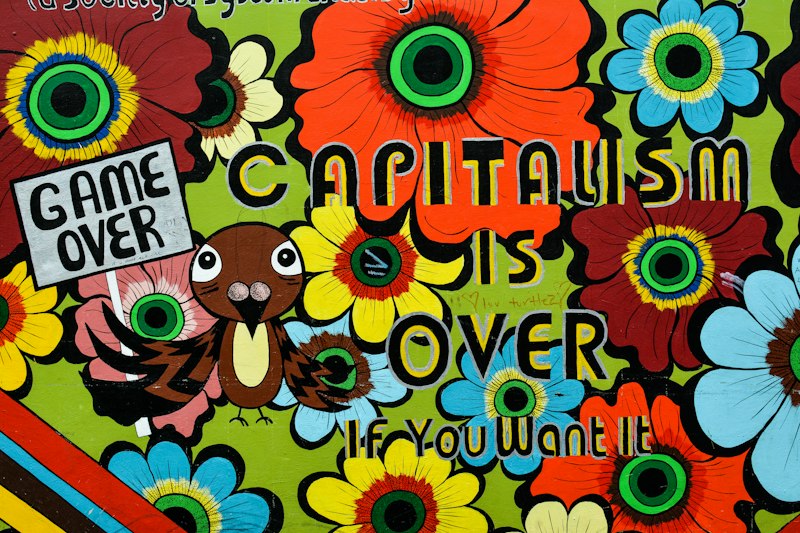
The Core Definition: Capitalism as a Behavioral System
Capitalism is fundamentally recognized as an economic system characterized by the principles of private ownership of capital, the market allocation of resources, and the relentless pursuit of profit, forming the basis of the majority of modern global economies. However, from a psychological vantage point, capitalism transcends mere financial transactions; it operates as a deeply ingrained, pervasive system of social engineering that utilizes specific psychological mechanisms to organize behavior, drive motivation, and structure interpersonal relationships. This system establishes powerful extrinsic incentive structures, rewarding behaviors that align with production and accumulation, thereby shaping individual decision-making frameworks regarding labor, consumption, and long-term financial planning. The psychological engine of capitalism relies on the consistent reinforcement—both positive and negative—of market-driven choices, creating a complex feedback loop where self-worth, identity, and success are often implicitly or explicitly tied to material productivity and measurable economic achievement, rather than solely intrinsic satisfaction or communal contribution.
The core psychological mechanism at the heart of this system involves the management of risk and reward. Individuals and businesses are encouraged to take calculated risks (innovation, investment) with the promise of high reward (profit), a dynamic that leverages the human cognitive preference for potential gain, even when balanced against significant potential loss. The effectiveness of capitalism in generating economic growth (Mankiw, 2020) is often attributed to this psychological leveraging of human ambition, competition, and efficiency, which are translated into economic outputs through organized labor and market innovation. Furthermore, the system necessitates a degree of future orientation and delayed gratification among its participants, requiring individuals to save, invest, and forego immediate consumption in anticipation of larger future returns, a crucial psychological trait that underpins capital formation and sustained economic development.
Historical Roots of Psychological Inquiry into Market Systems
While the economic framework of capitalism gained prominence with the Industrial Revolution in the 18th century, marked by the emergence of the factory system and global markets (McConnell & Brue, 2016), systematic psychological inquiry into its behavioral and societal effects did not fully materialize until the early 20th century. Initially, the focus within psychology was pragmatic and organizational, driven by the need to optimize efficiency within the burgeoning industrial complex. Early industrial and organizational psychologists, influenced by figures like Frederick Winslow Taylor, sought to understand worker motivation and minimize fatigue, effectively treating the human laborer as a variable input in the pursuit of maximum economic output. This period established the foundational understanding of how work environments, hierarchical structures, and remuneration schedules psychologically impact productivity, laying the groundwork for modern organizational behavior studies.
A more critical psychological perspective emerged later in the 20th century, particularly within critical theory and psychoanalytic thought, which began to scrutinize the systemic psychological toll of capitalist structures. Thinkers associated with the Frankfurt School, such as Herbert Marcuse and Erich Fromm, explored the concepts of consumerism, alienation, and commodification, arguing that the relentless demands of the market economy led to a psychological flattening of personality. Fromm, for example, posited that modern capitalist society fostered a “marketing orientation” where an individual’s sense of self-worth became contingent upon their perceived marketability and successful performance within competitive economic arenas. This historical shift represented a movement from viewing the worker purely as a means of production to analyzing the profound and often corrosive impact of market dynamics on individual identity and mental health, highlighting the tension between the system’s economic promises and its human costs.
The Role of Motivation and Incentives
The capitalist system is masterful in its deployment of extrinsic motivators, fundamentally structuring societal behavior around the acquisition of capital and material goods. Psychologically, this involves the careful construction of incentive mechanisms that convert complex needs into measurable, market-accessible goals. The constant promise of upward mobility and the ability to enhance one’s social status through economic success acts as a powerful, societal-level reinforcement schedule. This competitive ethos, where scarcity and rivalry are normalized, taps into deep-seated human tendencies toward social comparison and status seeking, thereby fueling both individual effort and systemic innovation, consistent with arguments that capitalism is the most effective means of providing economic growth (Stiglitz, 2018).
However, psychological research, particularly related to the study of motivation, has revealed complexities regarding the effectiveness of these incentives. While financial rewards are undeniable drivers, excessive reliance on extrinsic reward systems can, paradoxically, undermine intrinsic motivation—the desire to engage in an activity for its inherent enjoyment or challenge. This phenomenon, often described by the overjustification effect, suggests that when an activity is overly controlled by large material rewards, the individual’s internal interest may diminish, leading to a focus solely on the monetary outcome rather than quality or passion. Consequently, modern organizational psychology frequently grapples with how to structure compensation and work environments to leverage the power of capitalist incentives without extinguishing the internal drives that often lead to truly disruptive innovation and long-term job satisfaction.
Cognitive Biases in Capitalist Markets
Traditional economic models often relied on the simplifying assumption of the “rational actor”—an individual who makes decisions logically to maximize utility. The advent of Behavioral economics, however, has provided compelling evidence that human behavior in capitalist markets is systematically influenced by cognitive biases and heuristics, leading to predictable deviations from perfect rationality. These biases are critical in understanding phenomena such as market bubbles, irrational investment decisions, and inefficient resource allocation, which contribute to the creation of monopolies and external costs (Stiglitz, 2018).
A prime example is **Loss Aversion**, where the psychological pain experienced from a financial loss is significantly greater than the pleasure derived from an equivalent gain. This bias profoundly influences investor behavior, often leading to undue conservatism or the irrational holding of failing assets, behaviors that stabilize or distort market functions in ways that pure rational choice theory cannot explain. Similarly, the **Endowment Effect**—the tendency for people to value something they already own more highly than they would if they did not possess it—shapes consumer loyalty and resistance to competitive pricing, allowing established businesses to maintain market dominance even when superior alternatives exist. Understanding these systematic psychological errors is essential for market regulation and for designing consumer protection policies, recognizing that the human element is inherently flawed when processing the complex risk and reward structures dictated by the capitalist system.
Social Identity, Competition, and Inequality
The structural features of capitalism, especially its tendency to generate significant income inequality, exert a powerful psychological influence on social cohesion and individual well-being. According to social comparison theory, individuals derive much of their self-worth and identity by evaluating their status, possessions, and achievements against those of their peers. In a system that highly values material accumulation and provides vast disparities in wealth, this comparative process can lead to widespread feelings of relative deprivation, stress, and anxiety among those lower on the economic ladder. The constant visibility of success through media and consumption culture amplifies these comparisons, contributing to psychological distress even among those who are materially better off than previous generations.
Furthermore, the emphasis on intense, individual competition inherent in market allocation fosters distinct psychological dynamics regarding in-group and out-group formation. Economic success becomes a primary marker of social status and presumed competence, which can exacerbate social fragmentation and reduce generalized trust within the population. When economic outcomes are perceived as purely meritocratic, failure can lead to internalized shame and self-blame; conversely, when disparities are perceived as unjust, it leads to resentment and social conflict. The psychological effects of inequality, therefore, extend beyond mere financial metrics, impacting civic engagement, mental health outcomes, and the overall psychological health of the social fabric, challenging the notion that unfettered competition always maximizes collective utility.
Practical Application: Consumer Behavior and the Pursuit of Profit
To illustrate the psychological application of capitalist principles, consider the ubiquitous real-world scenario of modern consumer marketing and brand loyalty. A company seeking to maximize its profit must not only provide a valuable good or service but must also strategically manipulate consumer psychology to ensure predictable, repeated purchases that go beyond simple need satisfaction. This process often involves leveraging emotional responses and cognitive shortcuts rather than solely relying on rational utility calculation.
- Stimulus Association and Conditioning: Companies utilize classical conditioning principles by repeatedly associating their brand with desirable, non-material concepts such as happiness, freedom, or exclusivity through sophisticated advertising campaigns. The product itself becomes a conditioned stimulus for a positive emotional response, making the purchase feel emotionally necessary.
- Exploiting Scarcity and Social Proof: Marketing strategies often employ psychological tactics like manufactured scarcity (“limited time offer”) to trigger the fear of missing out (FOMO), which bypasses careful rational consideration. Simultaneously, the visibility of others consuming the product (social proof) validates the purchase, reinforcing the idea that the item is a prerequisite for social acceptance or status.
- The Reinforcement Loop: The act of purchase provides an immediate, albeit temporary, positive reinforcement (a “buyer’s high”). This immediate gratification is powerful enough to often override the long-term cognitive dissonance associated with financial debt or the eventual realization that the item did not fulfill its promise of lasting happiness. The entire system is built upon the continuous, profitable cycle of creating psychological desire, facilitating quick gratification, and then initiating the cycle anew.
Connections and Relations
The psychological study of capitalism is not confined to a single disciplinary silo but draws heavily from several major subfields. The primary theoretical framework linking economic structures to individual choice resides in **Behavioral economics**, which integrates findings from cognitive psychology to explain market phenomena. However, the study of labor, management, and organizational culture falls directly within the purview of Organizational Psychology, while the analysis of social stratification, inequality, and consumer identity is a central pillar of Social Psychology.
Understanding the psychological landscape shaped by capitalism requires engagement with several related psychological concepts and theories:
- Game Theory: This mathematical framework, utilized extensively in psychology, models strategic interaction in competitive environments, helping researchers understand why individuals might cooperate or defect in market situations where self-interest dictates behavior.
- Self-Determination Theory (SDT): SDT provides a framework for evaluating how the heavy reliance on extrinsic rewards (money, capital) inherent in capitalism impacts the satisfaction of fundamental psychological needs, such as autonomy, competence, and relatedness, often explaining high rates of workplace disengagement.
- Materialism: This is a psychological trait defined by the centrality of possessions and their acquisition to an individual’s life goals and sense of happiness. Capitalist societies generally foster and reinforce high levels of materialism, which psychological research often links to lower levels of overall life satisfaction and increased risk of depression.
- Scarcity Mindset: Studies on scarcity demonstrate how the perceived lack of resources, often exacerbated by economic insecurity within capitalist systems, consumes cognitive bandwidth, impairing executive function, planning abilities, and overall decision-making capacity among the economically disadvantaged.