Cardiac Psychophysiology: How Stress Breaks Your Heart
Scientifically Reviewed · Dr. Marwa Abd-Alazim · October 22, 2026
Review Criteria & Clinical Standards
This content undergoes rigorous scientific peer-review and medical editorial standards at Arab Psychology Network to ensure clinical accuracy, validity, and compliance with evidence-based guidelines from leading psychological and healthcare authorities (APA / WHO).
The Core Definition of Cardiac Function in Psychology
Cardiac muscle represents a specialized and essential tissue found exclusively within the heart, serving as the primary engine for circulating blood throughout the body. Physiologically, it is composed of involuntary, striated muscles characterized by branching fibers that interconnect extensively. This unique, interlocking structure facilitates the rapid spread of action potentials, ensuring the heart muscle contracts rhythmically and synchronously without conscious effort. From a psychological perspective, the study of cardiac muscle function is central to psychophysiology, the discipline dedicated to examining the interaction between mental processes and physiological responses. The heart’s activity—specifically its rate, rhythm, and contractility—serves as one of the most immediate and objective metrics for measuring emotional arousal, stress levels, and cognitive engagement.
The core psychological principle derived from cardiac function is the concept of involuntary mediation. Unlike skeletal muscles, cardiac muscle is not under volitional control; its activity is primarily regulated by the intricate balance of the Autonomic Nervous System (ANS). The psychological state of an individual—whether experiencing fear, excitement, relaxation, or deep concentration—translates almost instantly into changes in the ANS input to the heart, manifesting as measurable changes in heart rate variability and blood pressure. Thus, while the muscle itself performs a mechanical function, its dynamic responsiveness provides a window into the subconscious and emotional processing centers of the brain, making it a crucial component in understanding the mind-body connection.
Understanding the properties of cardiac muscle, particularly its automaticity and rhythmicity, is key to dissecting how psychological stressors impact physical health. The rapid, involuntary nature of its response means that psychological threats—even imagined or anticipated ones—can immediately trigger profound physiological mobilization. This mechanism ensures survival during acute danger but becomes detrimental when chronic psychological stress forces the cardiac system into a constant state of heightened activity, overriding the necessary periods of rest and recovery mediated by the parasympathetic branch of the ANS.
The Fundamental Mechanism: Involuntary Control and the ANS
The regulation of cardiac muscle is fundamentally controlled by the two opposing branches of the Autonomic Nervous System: the sympathetic and the parasympathetic systems. The sympathetic nervous system is responsible for the “fight-or-flight” response, releasing hormones like adrenaline and noradrenaline which increase the frequency of action potentials within the cardiac tissue, thereby increasing heart rate and contractility. This mobilization prepares the body for intense physical exertion necessitated by a perceived threat. Conversely, the parasympathetic nervous system, primarily via the vagus nerve, exerts a braking effect, promoting relaxation and energy conservation by slowing the heart rate and allowing for essential recovery.
The interplay between these two systems provides psychologists with a rich measure known as Heart Rate Variability (HRV). HRV is not merely the heart rate itself, but the fluctuation in the time intervals between successive heartbeats. High HRV generally signifies a robust and flexible autonomic nervous system, indicating good emotional regulation and resilience to stress—the parasympathetic system is active and capable of modulating sympathetic arousal. Low HRV, conversely, is often correlated with chronic stress, anxiety, depression, and poor emotional control, reflecting a dominance of the sympathetic system and a reduced capacity for physiological self-regulation.
The inherent electrical properties of the cardiac muscle facilitate this psychophysiological monitoring. The specialized conductive fibers allow for electrical signals to spread rapidly, ensuring that the heart functions as a coherent unit. When psychological factors shift the balance of the ANS, these electrical properties are immediately altered, resulting in changes in the cardiac cycle which are precise enough to be measured by standard physiological equipment. This capability allows researchers to objectively quantify subjective psychological states, moving beyond self-report measures to understand the true physiological burden of conditions like chronic stress or trauma.
Historical Foundations of Psychophysiological Measurement
The historical study linking cardiac function to psychology gained significant traction in the early 20th century, particularly with the work of pioneering physiologists such as Walter Cannon and Hans Selye. While these researchers focused broadly on the body’s reaction to stress, their conceptualization of the “emergency reaction” or the General Adaptation Syndrome heavily relied on observable changes in cardiac output and heart rate mediated by the sympathetic nervous system. Cannon’s formulation of the physiological changes underlying the “fight-or-flight” response unequivocally established the heart as a central player in emotional and survival responses, solidifying its place in the nascent field of psychophysiology.
Later in the mid-20th century, the advent of sophisticated physiological recording equipment allowed for more detailed and continuous monitoring of cardiac activity. Researchers began to move beyond simple heart rate monitoring to explore phenomena such as cardiac acceleration and deceleration phases associated with specific cognitive tasks, attention, and expectancy. This era marked the beginning of modern biofeedback research, where psychologists attempted to demonstrate that involuntary processes, including heart rate and rhythm, could potentially be brought under partial conscious control through immediate physiological feedback. The initial skepticism surrounding the voluntary control of cardiac muscle function slowly gave way to empirical evidence demonstrating that individuals could learn to influence their Autonomic Nervous System balance.
The transition from purely physiological study to psychological application was cemented by the recognition that chronic cardiac arousal was not just a symptom of emotional distress, but a potential contributor to pathological conditions, including hypertension and coronary artery disease. This realization spurred the development of health psychology, which focuses heavily on intervening in the psychological factors that drive detrimental cardiac responses. Consequently, the study of cardiac muscle function evolved from merely describing a physical reaction to providing a central therapeutic target for managing stress-related illness.
A Practical Illustration: The Stress Response
Consider a common real-world scenario: a student preparing to deliver a major presentation to a large, critical audience. While the student is cognitively engaged in reviewing notes, the anticipation and fear of judgment trigger a cascade of involuntary physiological events. This psychological stressor is immediately registered in the amygdala, which signals the hypothalamus, initiating the sympathetic nervous response. Within moments, the student feels a surge of energy, accompanied by tangible physical sensations directly related to increased cardiac muscle activity.
- The initial psychological perception of threat (the audience) activates the sympathetic nervous system.
- Norepinephrine and epinephrine are released, targeting the receptors on the specialized fibers of the cardiac muscle.
- The rate of action potentials generated by the heart’s pacemaker increases dramatically, causing an immediate spike in heart rate (tachycardia).
- Simultaneously, the contractility of the cardiac muscle increases, resulting in a stronger, more forceful pump action (increased stroke volume). The student perceives this as a “pounding” or “racing” heart.
- The overall effect is a significant increase in cardiac output, designed to flood the skeletal muscles and brain with oxygenated blood, preparing the body for active defense or rapid thought processing, even though the threat is purely social rather than physical.
This example illustrates the direct, rapid translation of psychological anxiety into physiological mobilization via the cardiac muscle. If the student utilizes deep breathing techniques or cognitive restructuring to manage the anxiety, the parasympathetic nervous system can partially override the sympathetic input. This shift allows the heart rate to decrease and the Autonomic Nervous System balance to stabilize, demonstrating that the function of the cardiac muscle is constantly modulated by the individual’s psychological coping mechanisms and emotional state.
Significance in Clinical and Research Settings
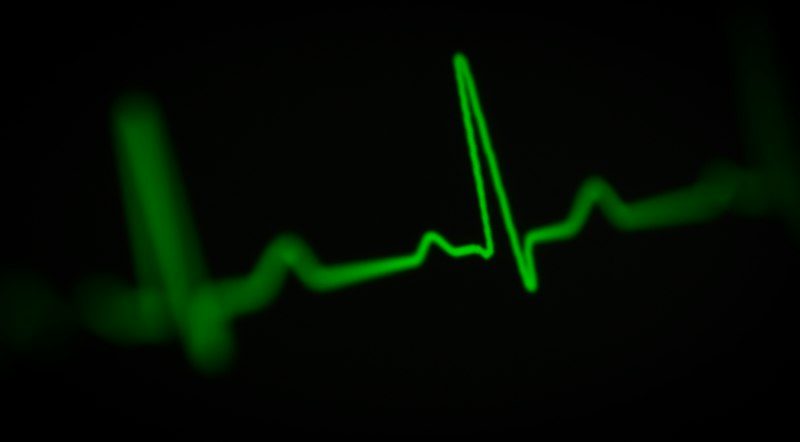
The measurement of cardiac function holds profound significance across clinical psychology and scientific research. In clinical settings, monitoring physiological responses provides objective data that can validate a patient’s self-reported anxiety or distress, especially in cases where verbal articulation is difficult, such as in patients with trauma or severe phobias. Techniques like continuous ECG monitoring or portable heart rate monitors are used to track the patient’s physiological arousal patterns during therapeutic exposure or stressful life events, providing clinicians with crucial feedback on the efficacy of their interventions.
In research, cardiac measures are fundamental tools for studying emotion, attention, and cognitive load. For instance, researchers utilize specific patterns of cardiac deceleration (slowing of the heart rate) as an index of orienting response and attention allocation—the heart momentarily slows when an organism attends to a novel or significant stimulus. Conversely, sustained cardiac acceleration is a reliable marker for sustained mental effort or emotional distress. This ability to objectively chart internal states based on cardiac muscle performance allows for robust, cross-cultural studies of human behavior and emotional processing.
Furthermore, the study of Heart Rate Variability (HRV) has become a major focus in health psychology. Low HRV is now widely recognized as a prognostic marker for various physical and mental health issues, including cardiovascular risk, post-traumatic stress disorder (PTSD), and major depressive disorder. Therefore, the performance characteristics of the cardiac muscle tissue—its ability to be finely tuned by the ANS—serves as a critical biomarker for psychological resilience and general systemic health.
Therapeutic Applications: Biofeedback and HRV Training
One of the most powerful applications derived from the psychophysiology of cardiac muscle is the therapeutic technique known as Biofeedback. Cardiac biofeedback specifically targets the patient’s ability to regulate their heart rate and, more importantly, their heart rhythm variability. Using sensors attached to the body, the patient receives real-time visual or auditory feedback about their current heart function. This allows the individual to observe the direct physiological impact of changes in breathing patterns or mental focus.
The goal of Biofeedback training is to enhance cardiorespiratory coherence, meaning the synchronization between breathing and heart rate patterns. By learning to breathe slowly and deeply at specific resonant frequencies (typically six breaths per minute), individuals can strengthen the influence of the parasympathetic nervous system (the vagal brake) over the sympathetic drive. This training directly improves the efficiency and flexibility of the cardiac muscle’s response to stress, leading to a measurable increase in Heart Rate Variability.
This application is highly effective in treating conditions characterized by chronic sympathetic over-activation, such as generalized anxiety disorder, panic attacks, and stress-related hypertension. By empowering patients to consciously regulate an otherwise involuntary function—the rhythm of the cardiac muscle—psychologists provide a powerful tool for internal self-management. This therapeutic approach underscores the plasticity of the Autonomic Nervous System and the potential for psychological interventions to create lasting, positive physiological changes.
Connections to Broader Psychological Theories
The study of cardiac function integrates deeply with several major psychological theories. It is a cornerstone of the **Psychophysiology** subfield, which bridges psychology and physiology. Furthermore, its involvement in stress and arousal connects it intrinsically to **Health Psychology** and the **Biopsychosocial Model**, which views health outcomes as a complex interaction between biological mechanisms (cardiac muscle), psychological factors (stress coping), and social context.
One crucial theoretical connection is to the **Polyvagal Theory**, proposed by Stephen Porges. This theory emphasizes the hierarchical organization of the vagus nerve (a key regulator of cardiac function) and suggests that different psychological states, from panic to social engagement, correspond to distinct evolutionary circuits of autonomic regulation. The state of the cardiac muscle—highly mobilized or calmly regulated—is seen as the physical manifestation of these hierarchical defensive and restorative systems. When cardiac function is chaotic (low HRV), it signals a state of physiological defense; when it is rhythmic and flexible (high HRV), it supports the psychological capacity for social connection and cognitive complexity.
The concept of cardiac muscle control also relates to **Learning Theories**, particularly **Operant Conditioning**, as demonstrated by Biofeedback. The immediate, objective feedback regarding heart rhythm acts as a reinforcer, allowing individuals to learn which mental or breathing strategies effectively modify the involuntary output of the cardiac muscle. This link proves that even highly automatic biological functions can be influenced by psychological learning, supporting a non-reductionist view of the mind-body system.