Psychophysiology: How Your Heart Shapes Your Mind
Scientifically Reviewed · Dr. Marwa Abd-Alazim · September 28, 2026
Review Criteria & Clinical Standards
This content undergoes rigorous scientific peer-review and medical editorial standards at Arab Psychology Network to ensure clinical accuracy, validity, and compliance with evidence-based guidelines from leading psychological and healthcare authorities (APA / WHO).
Overview of the Cardiovascular System
The cardiovascular system, often referred to as the circulatory system, represents one of the most intricate and vital networks within the human body. It is fundamentally composed of a central pump, the heart, and an extensive network of vessels including arteries, veins, and capillaries. The primary objective of this system is the continuous circulation of blood, which serves as the primary medium for transporting life-sustaining elements to every cell in the organism. Without the seamless operation of this system, the delivery of oxygen and essential nutrients would cease, leading to immediate cellular dysfunction and eventual systemic failure. Furthermore, the cardiovascular system plays a critical role in homeostasis, regulating body temperature, pH balance, and the distribution of hormones that coordinate various physiological and psychological responses.
Beyond the mere transportation of resources, the cardiovascular system is tasked with the vital function of waste removal. As metabolic processes occur within the tissues, byproducts such as carbon dioxide and various nitrogenous toxins are released into the bloodstream. The circulatory network ensures these waste products are efficiently directed toward the lungs and kidneys for excretion. This dual-action mechanism of supply and removal is what allows for the maintenance of a stable internal environment. From a psychological perspective, the cardiovascular system is also deeply intertwined with the autonomic nervous system, reflecting the body’s internal state during periods of stress, anxiety, or physical exertion. Understanding its complex anatomy and physiology is therefore paramount for both medical and psychological professionals.
To maintain a high quality of life and optimal health, every component of the cardiovascular system must function in a highly coordinated manner. Any disruption in the flow of blood or the integrity of the vessel walls can lead to significant morbidity. This article provides a high-level review of the structural components of the system, the physiological processes that govern blood flow, and the various diseases and disorders that can compromise cardiac integrity. By examining the heart’s chambers, the microscopic exchange at the capillary level, and the systemic impact of hypertension and coronary artery disease, we gain a comprehensive understanding of how this biological engine supports human existence.
Anatomy and Functional Mechanics of the Heart
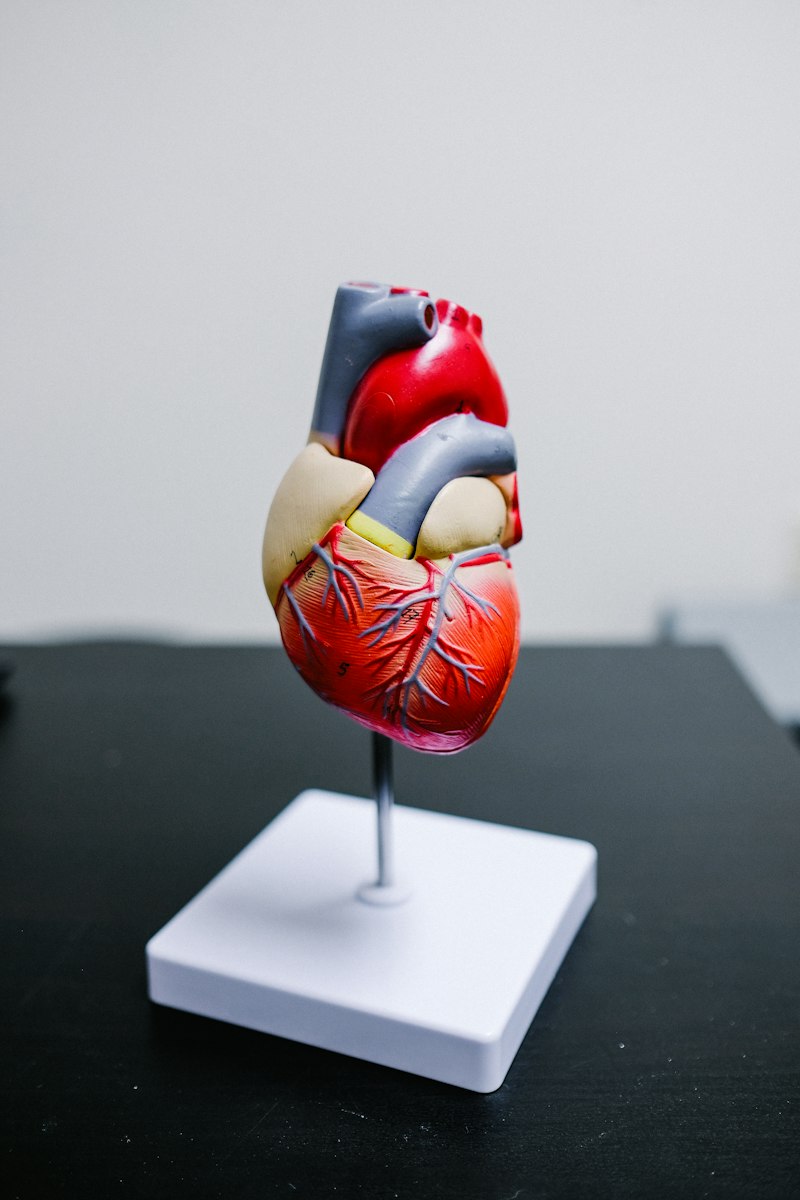
The heart stands as the centerpiece of the cardiovascular system, a powerful muscular organ located within the thoracic cavity. Its primary responsibility is to act as a dual pump that facilitates the movement of blood through two distinct circuits. Structurally, the heart is divided into four chambers: the left and right atria, which serve as receiving chambers, and the left and right ventricles, which act as the primary pumping units. The rhythmic contraction and relaxation of these chambers, known as the cardiac cycle, are controlled by an internal electrical conduction system. This ensures that blood flows in a unidirectional manner, supported by a series of valves that prevent regurgitation or backflow during the high-pressure phases of contraction.
Blood enters the right side of the heart through two massive vessels: the superior vena cava and the inferior vena cava. These vessels collect deoxygenated blood from the upper and lower regions of the body, respectively, and deliver it into the right atrium. From there, the blood passes through the tricuspid valve into the right ventricle, which then propels it toward the lungs. On the opposite side, oxygen-rich blood returns from the lungs and enters the left atrium. It is then moved through the mitral valve into the left ventricle. The left ventricle is notably the most muscular chamber of the heart, as it must generate enough force to eject blood through the aorta and throughout the entire systemic circulation.
The efficiency of the heart is not merely a product of its muscular strength but also its electrophysiological properties. The sinoatrial (SA) node, often called the natural pacemaker, initiates the electrical impulses that trigger atrial contraction. This signal then travels to the atrioventricular (AV) node, allowing for a slight delay that ensures the ventricles are fully filled before they contract. This coordination is essential for maintaining cardiac output, which is the volume of blood pumped by the heart per minute. Any deviation in this rhythm, known as an arrhythmia, can significantly impair the heart’s ability to oxygenate the body’s tissues, highlighting the importance of both structural and electrical integrity.
The Dual Circuits: Pulmonary and Systemic Circulation
The movement of blood through the human body is organized into two primary pathways: the pulmonary circulation and the systemic circulation. The pulmonary circuit is a relatively short loop that carries deoxygenated blood away from the right ventricle to the lungs. Within the alveolar sacs of the lungs, a critical gas exchange occurs where carbon dioxide is released from the blood and fresh oxygen is absorbed. Once the blood is fully oxygenated, it travels back to the heart via the pulmonary veins, entering the left atrium. This circuit is fundamental because it ensures that the blood being sent to the rest of the body is rich in the oxygen required for cellular respiration.
In contrast, the systemic circulation is a much more extensive and complex network. It begins at the left ventricle, where oxygenated blood is pumped into the aorta, the body’s largest artery. From the aorta, blood is distributed through a series of branching arteries that reach every organ, from the brain to the distal extremities. As blood travels through this circuit, it delivers nutrients and oxygen to the tissues while picking up metabolic waste. The systemic circuit eventually converges into the venous system, where deoxygenated blood is funneled back toward the right atrium to begin the process again. This continuous loop is the hallmark of a healthy circulatory system.
The balance between these two circuits is maintained by the heart’s ability to synchronize its outputs. Under normal physiological conditions, the volume of blood pumped into the pulmonary circuit must equal the volume pumped into the systemic circuit. If an imbalance occurs—for instance, if the left side of the heart weakens—blood can “back up” into the pulmonary system, leading to pulmonary edema and respiratory distress. Conversely, failure of the right side can lead to systemic congestion and swelling in the limbs. This interdependence underscores why the cardiovascular system is viewed as a holistic unit rather than a collection of independent parts.
Arterial Structure and Hemodynamic Regulation
Arteries are the high-pressure conduits of the cardiovascular system, specifically designed to carry oxygenated blood away from the heart. To withstand the significant pressure generated by the left ventricle, arterial walls are constructed of three distinct layers, or tunics. The intima is the innermost layer, consisting of a smooth endothelial lining that reduces friction and prevents the formation of blood clots. The media, or middle layer, is the thickest and is composed of smooth muscle cells and elastic fibers. This layer allows the artery to undergo vasoconstriction and vasodilation, processes that are critical for regulating blood pressure and directing blood flow to specific areas based on demand.
The outermost layer of the artery is the adventitia, a tough sheath of connective tissue that provides structural support and anchors the vessel to surrounding tissues. The elasticity of the larger arteries, such as the aorta, allows them to expand when the heart contracts (systole) and recoil when the heart relaxes (diastole). This elastic recoil helps maintain a steady pressure gradient even between heartbeats, ensuring that blood continues to flow forward consistently. As arteries branch into smaller vessels called arterioles, the proportion of smooth muscle increases, allowing these vessels to act as “faucets” that control the amount of blood entering the capillary beds.
Proper arterial function is essential for tissue perfusion. When arteries are healthy, they are flexible and clear of obstructions. However, their complex structure also makes them vulnerable to damage. Chronic high pressure or chemical insults (such as those from smoking) can damage the endothelium, initiating a cascade of inflammatory responses. The regulation of arterial diameter is also a key component of the stress response; during a “fight or flight” scenario, the sympathetic nervous system triggers the media to constrict in certain areas while dilating in others, demonstrating the close link between the cardiovascular system and psychological states.
The Role of Veins and Capillary Exchange
While arteries handle the high-pressure delivery of blood, veins are responsible for the low-pressure return of deoxygenated blood to the heart. Structurally, veins possess the same three layers as arteries—intima, media, and adventitia—but their walls are significantly thinner and less muscular. Because the pressure in the venous system is much lower than in the arterial system, veins often contain valves. These one-way valves are crucial for preventing the retrograde flow of blood, especially in the lower extremities where blood must move against the force of gravity to reach the heart. The “skeletal muscle pump” also assists this process, as muscle contractions during movement compress the veins and push blood upward.
Between the arterial and venous systems lie the capillaries, the smallest and most numerous vessels in the body. Capillaries are so narrow that red blood cells often must pass through them in single file. Their walls consist of only a single layer of endothelial cells, making them highly permeable. This unique structure is what allows for the microcirculation and the exchange of gases, nutrients, and waste. It is at the capillary level where oxygen leaves the blood to enter the cells, and carbon dioxide moves from the cells into the blood. This exchange is driven by diffusion and pressure gradients, ensuring that every cell in the body receives the necessary resources for survival.
The efficiency of the venous return is a critical factor in maintaining preload, which is the amount of blood available for the heart to pump in the next cycle. If the veins become dilated or the valves fail—a condition known as venous insufficiency—blood can pool in the legs, leading to edema and a reduction in effective circulating volume. The capillary beds also play a role in thermoregulation; by opening or closing these beds near the surface of the skin, the body can either dissipate heat or conserve it. Thus, the venous and capillary networks are not just passive return pipes but active participants in hemodynamic stability.
Pathophysiology: Coronary Artery Disease and Hypertension
The cardiovascular system is susceptible to several debilitating conditions, with coronary artery disease (CAD) being one of the most prevalent. CAD occurs when the coronary arteries—the specific vessels that supply the heart muscle itself with blood—become narrowed or blocked by the buildup of plaque. This plaque is composed of cholesterol, fatty substances, and cellular waste. As the plaque accumulates, a process known as atherosclerosis, the flow of oxygenated blood to the myocardium is restricted. This can lead to angina (chest pain) or, if a plaque ruptures and forms a clot, a myocardial infarction (heart attack), which results in the death of heart tissue.
Another major threat to cardiovascular health is hypertension, or chronic high blood pressure. Hypertension is often called the “silent killer” because it typically presents no symptoms until significant damage has been done to the internal organs. It occurs when the force of the blood against the arterial walls is consistently too high. Over time, this excessive pressure causes the arteries to lose their elasticity and become scarred. This damage makes it easier for plaque to accumulate and forces the heart to work much harder to pump blood, eventually leading to left ventricular hypertrophy (thickening of the heart muscle) and increased risk for stroke and kidney failure.
The development of these disorders is frequently linked to a combination of genetic factors and lifestyle choices. Factors such as a high-fat diet, tobacco use, and physical inactivity contribute to the inflammation and lipid imbalances that drive CAD and hypertension. Furthermore, chronic psychological stress has been shown to exacerbate these conditions by maintaining the body in a state of heightened sympathetic arousal, which increases heart rate and blood pressure. Management of these diseases requires a multi-faceted approach involving pharmacological intervention, dietary changes, and behavioral modifications to reduce systemic strain.
Heart Failure and Chronic Cardiac Dysfunction
Heart failure is a chronic and progressive condition that occurs when the heart is unable to pump an adequate volume of blood to meet the metabolic demands of the body. It is important to note that heart failure does not mean the heart has stopped beating; rather, it indicates that the pumping efficiency of the organ has been compromised. This can result from the heart muscle becoming too weak (systolic failure) or too stiff to fill properly (diastolic failure). Common causes of heart failure include long-standing hypertension, previous heart attacks that have left scar tissue, and diseases of the heart valves.
One of the primary consequences of heart failure is the congestion of various organ systems. When the heart cannot effectively move blood forward, fluid begins to leak out of the capillaries and accumulate in the tissues. If the left side of the heart fails, fluid builds up in the lungs, a condition known as pulmonary edema, which causes significant shortness of breath and fatigue. If the right side fails, fluid accumulates in the systemic circulation, leading to peripheral edema, characterized by visible swelling in the legs, ankles, and abdomen. This fluid overload places additional stress on the kidneys and liver, complicating the patient’s clinical profile.
Living with heart failure requires significant adjustments to daily life and ongoing medical supervision. Patients often experience a dramatic reduction in exercise tolerance and may struggle with simple tasks due to the lack of oxygenated blood reaching their skeletal muscles. Treatment typically focuses on managing symptoms and slowing the progression of the disease through the use of diuretics to remove excess fluid and medications that reduce the workload on the heart. Because the condition is so closely tied to physical and emotional wellbeing, psychological support is often necessary to help patients manage the anxiety and depression that frequently accompany chronic cardiac dysfunction.
The Psychophysiological Connection: Stress and the Heart
In the field of health psychology, the relationship between the mind and the cardiovascular system is a major area of study. The heart is highly sensitive to emotional states and psychological stressors. When an individual perceives a threat, the brain activates the sympathetic nervous system, triggering the release of catecholamines like adrenaline and noradrenaline. These hormones cause an immediate increase in heart rate and myocardial contractility, preparing the body for action. While this is a survival mechanism in the short term, chronic stress keeps the cardiovascular system in a state of perpetual over-activation, which can lead to long-term damage of the vessel walls.
Research has identified specific behavioral patterns, such as the Type A personality—characterized by urgency, competitiveness, and hostility—as being linked to a higher risk of developing cardiovascular disease. Hostility, in particular, is associated with prolonged cardiovascular reactivity, meaning the heart and blood pressure take longer to return to baseline levels after a stressful event. This “wear and tear” on the system, known as allostatic load, accelerates the process of atherosclerosis. Understanding these psychological triggers is essential for developing comprehensive prevention strategies that go beyond simple physical metrics.
Furthermore, the vagus nerve serves as a primary link between the brain and the heart, facilitating the parasympathetic “rest and digest” response. A high level of heart rate variability (HRV)—the variation in time between consecutive heartbeats—is often used as a marker of psychological resilience and autonomic health. Individuals with low HRV are often more susceptible to stress-related cardiac events. By employing mindfulness, biofeedback, and cognitive-behavioral techniques, individuals can learn to modulate their physiological responses, demonstrating that the health of the cardiovascular system is inextricably linked to mental health.
Preventive Measures and Lifestyle Management
Maintaining a healthy cardiovascular system is largely dependent on proactive lifestyle management and the reduction of modifiable risk factors. Regular aerobic exercise is perhaps the most effective way to strengthen the heart muscle and improve the efficiency of the circulatory network. Physical activity helps to lower resting heart rate, improve lipid profiles by increasing “good” cholesterol (HDL), and enhance the sensitivity of the body to insulin. By keeping the heart “conditioned,” individuals can significantly reduce their risk of developing hypertension and heart failure later in life.
Nutritional choices also play a foundational role in vascular health. A diet rich in fruits, vegetables, whole grains, and lean proteins provides the antioxidants and fiber necessary to protect the endothelium and manage weight. Reducing the intake of saturated fats, trans fats, and sodium is critical for preventing plaque buildup and maintaining healthy blood pressure levels. Furthermore, the cessation of smoking is one of the single most impactful changes an individual can make. The chemicals in tobacco smoke not only damage the lining of the arteries but also increase the likelihood of blood clots, drastically raising the risk of stroke and heart attack.
Beyond diet and exercise, regular medical screenings are vital for early detection of cardiovascular issues. Monitoring blood pressure, cholesterol levels, and blood glucose allows for early intervention before irreversible damage occurs. Stress management techniques, such as meditation and adequate sleep, also contribute to a lower “cardiovascular burden.” By adopting a holistic approach that addresses both physical and psychological factors, individuals can ensure their cardiovascular system remains robust and capable of supporting a long and active life.
Conclusion and Clinical Implications
In summary, the cardiovascular system is a complex and highly integrated network that serves as the lifeblood of the human body. Its primary components—the heart, arteries, veins, and capillaries—work in perfect unison to ensure the delivery of oxygen and nutrients while facilitating the removal of waste. The structural integrity of the heart’s four chambers and the functional health of the pulmonary and systemic circulations are the pillars upon which all other physiological processes rest. When this system is compromised by diseases such as coronary artery disease or hypertension, the impact is felt across the entire organism, leading to decreased quality of life and increased mortality.
The study of the cardiovascular system also reveals the profound connection between physiology and psychology. The heart is not just a mechanical pump; it is a sensitive indicator of an individual’s emotional and mental state. The chronic activation of the stress response can lead to cardiac dysfunction, while positive psychological interventions can promote recovery and resilience. This interdisciplinary perspective is essential for modern medicine, as it highlights the need to treat the patient as a whole rather than just addressing isolated symptoms. The management of heart failure and other chronic conditions requires a sophisticated understanding of both the physical and behavioral drivers of health.
Ultimately, the preservation of cardiovascular health is a lifelong endeavor that requires a commitment to preventive care and healthy habits. As our understanding of anatomy and physiology continues to evolve, so too do the treatments available for those suffering from cardiovascular disorders. However, the fundamentals remain the same: a strong heart and clear vessels are the keys to optimal health. By prioritizing cardiovascular wellness through informed lifestyle choices and regular medical consultation, individuals can protect this vital system and ensure it continues to function effectively for decades to come.
References
- Ahmed, M., & Al-Haj, A. (2013). Anatomy and physiology of the cardiovascular system. International Journal of Health Sciences, 7(2), 155-162.
- Bhushan, V., & Mittal, S. (2018). Disorders of cardiovascular system: An overview. Journal of Clinical and Diagnostic Research, 12(7), CE01-CE04.
- Harrison, D. (2019). Principles of Internal Medicine (19th ed.). McGraw-Hill Education.