Cell Assemblies: How Neurons Think in Harmony
Scientifically Reviewed · Dr. Marwa Abd-Alazim · October 17, 2026
Review Criteria & Clinical Standards
This content undergoes rigorous scientific peer-review and medical editorial standards at Arab Psychology Network to ensure clinical accuracy, validity, and compliance with evidence-based guidelines from leading psychological and healthcare authorities (APA / WHO).
The Core Definition of the Cell Assembly
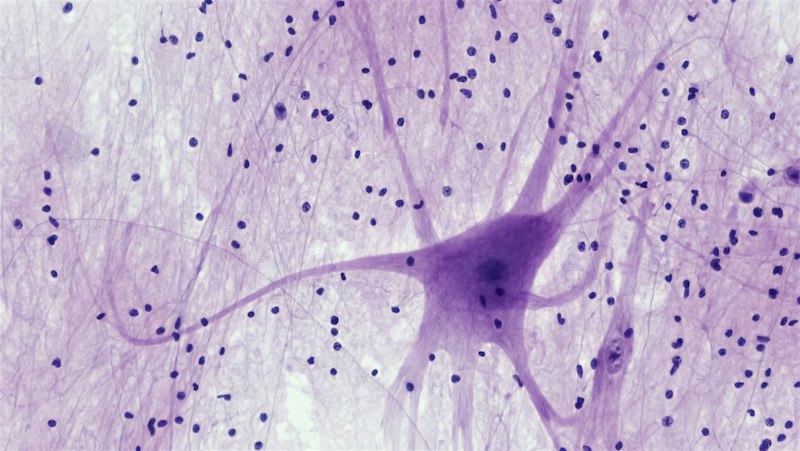
The concept of the Cell Assembly, central to modern cognitive neuroscience, represents a theoretical construct describing how groups of neurons in the brain organize themselves to process and store information. At its heart, a cell assembly is defined as a diffuse, but tightly interconnected, set of neurons that, when simultaneously activated, form a reverberating circuit capable of holding or representing a specific perception, idea, or memory trace. Unlike earlier localized theories of brain function, the cell assembly posits that complex cognitive functions are distributed across populations of neurons rather than residing in single, specialized cells. This assembly is dynamic; its formation and maintenance depend entirely on repeated correlated activity among its constituent members, establishing a powerful and resilient functional unit within the neural architecture.
The fundamental mechanism underlying the cell assembly is the simultaneous firing of these neuronal groups. When an external stimulus or an internal thought activates a subset of neurons, those neurons begin to fire repeatedly in concert. This concurrent activity is believed to strengthen the synaptic connections between them, making it easier for the entire group to fire cohesively the next time even partial input is received. This process ensures that the mental representation—be it the recognition of a familiar face or the memory of a specific event—is robust and readily retrievable. The key insight is that the memory itself is not stored in any single neuron, but rather in the pattern and strength of the connections (the synaptic weights) distributed across the entire assembly.
Crucially, the assembly is not fixed in location; its members may be physically dispersed across different brain regions, but they are functionally unified by their shared firing patterns. For example, the perception of an apple involves neurons processing its visual shape, its color, its associated name, and perhaps memories of its taste. These disparate neural groups are bound together into a single functional unit—the apple cell assembly—through their strengthened, synchronous connections. When activated, the entire assembly lights up, allowing for the complete, integrated experience or recollection of the object. This distributed representation provides redundancy, meaning that the loss of a few neurons does not necessarily destroy the entire memory, contributing significantly to the brain’s resilience against injury.
Historical Foundations: Donald O. Hebb and the Organization of Behavior
The theory of the cell assembly was formally introduced by Canadian psychologist Donald O. Hebb in his groundbreaking 1949 publication, The Organization of Behavior: A Neuropsychological Theory. Before Hebb’s work, psychological theories struggled to bridge the gap between observed complex behaviors (like perception and learning) and the basic known facts of neurophysiology. Hebb sought to develop a comprehensive theory that explained how the nervous system could adapt and learn based purely on neuronal activity, thereby providing a biological foundation for psychological phenomena that had previously been treated purely abstractly. His goal was to move beyond simple reflex arcs and address the organization of higher-order cognitive processes.
Hebb’s work was heavily influenced by the earlier findings of neuroanatomists and physiologists, but he synthesized this knowledge into a functional, learning-based model. He proposed that the brain was not a static organ, but one that continuously reorganized itself based on experience. The prevailing theories of the early 20th century, particularly behaviorism, often treated the brain as a simple input-output mechanism. Hebb, however, hypothesized that complex internal representations must exist to account for phenomena such as abstract thought, imagery, and delayed responses. The cell assembly was his proposed structural unit for these internal representations, providing the necessary complexity and flexibility missing in previous models.
The genesis of the cell assembly concept was rooted in Hebb’s famous postulate regarding synaptic modification, often summarized pithily as: “Cells that fire together wire together.” This postulate suggested a mechanism for associative learning at the cellular level. If a presynaptic neuron repeatedly or persistently takes part in firing a postsynaptic neuron, some growth process or metabolic change takes place in one or both cells such that the presynaptic cell’s efficiency in firing the postsynaptic cell is increased. This was a purely theoretical proposition in 1949, as the neurobiological tools to observe such changes did not yet exist. Nevertheless, this principle—now known as Hebbian Theory—became the cornerstone for understanding how experience physically sculpts the neural circuits, leading to the formation and strengthening of the cell assemblies themselves.
The Mechanism of Hebbian Learning: “Cells That Fire Together Wire Together”
The formation and stabilization of a cell assembly rely entirely on the principle of Hebbian plasticity. This principle details the conditions under which the connection, or synapse, between two neurons strengthens. Specifically, when Neuron A consistently participates in the activation of Neuron B, the chemical and physical efficiency of the synapse connecting A to B increases. This increase in efficiency means that future signals from Neuron A will have a greater likelihood of successfully activating Neuron B. This mutual reinforcement is the engine of learning and memory consolidation, allowing initially weak connections to become powerful, reliable communication pathways that define the structure of the assembly.
The biological reality of Hebbian learning was later confirmed through the discovery of mechanisms such as Long-term Potentiation (LTP), which represents the persistent strengthening of synapses based on recent patterns of activity. LTP provides the molecular basis for the lasting changes Hebb theorized. When a group of neurons fires synchronously, specific molecular cascades are triggered within the neurons, leading to structural modifications—such as an increase in the number of neurotransmitter receptors or physical changes to the synaptic structure—that permanently enhance the synaptic coupling. This biological validation demonstrated that the abstract notion of a cell assembly was grounded in observable neurophysiological changes, revolutionizing the field.
Within the context of the cell assembly, Hebbian learning ensures that once an assembly is formed through repeated exposure to a stimulus (or thought), it requires less external input to be activated subsequently. The assembly becomes self-sustaining through reverberation; the activation of a subset of neurons within the assembly is sufficient to trigger the entire group due to the enhanced synaptic efficacy. This reverberatory activity allows the brain to hold information temporarily, serving as a basis for short-term memory, and if the activity persists long enough, the assembly stabilizes via LTP, transitioning the information into a more permanent, long-term memory trace. The efficiency of the assembly is thus a direct measure of the learning that has occurred.
Phase Sequences: Linking Cell Assemblies to Complex Cognition
While the cell assembly provides the mechanism for storing a single, discrete piece of information or concept, Hebb recognized that complex thought and sequential behaviors require linking these individual units together. This higher level of organization is termed the **Phase Sequence**. A phase sequence is essentially a series of cell assemblies that are activated in a specific, temporally ordered sequence. This sequential activation allows the brain to process a train of thought, execute a complex motor plan, or understand the structure of language, where meaning unfolds over time.
The link between one cell assembly and the next in a phase sequence is also achieved through Hebbian modification, but applied to the connections *between* assemblies rather than within them. For instance, if Assembly A (representing the concept “dog”) consistently fires immediately before Assembly B (representing the concept “leash”), the synaptic connections running from Assembly A to Assembly B will strengthen. Consequently, the activation of “dog” will automatically prime or trigger the subsequent activation of “leash,” forming an associative link that underlies complex learned relationships, causal inferences, and the smooth flow of consciousness.
The development of phase sequences is considered fundamental to the development of higher cognitive functions in an infant or child. Initially, learning is concrete and stimulus-bound, relying on the formation of simple cell assemblies. As the child matures and experiences the world, these assemblies link together into complex phase sequences, which allow for abstract thought and reasoning. For example, understanding a narrative requires the sequential activation of assemblies representing characters, events, and settings, woven together into a coherent sequence. This structure provides the necessary neural substrate for attention, planning, and executive functions, demonstrating how simple neural rules can generate extraordinarily complex mental operations.
Practical Illustration: Learning a New Skill
A powerful practical example illustrating the function of both cell assemblies and phase sequences is the process of learning to drive a car with a manual transmission. Initially, this task requires intense conscious effort, involving numerous discrete, simultaneous actions that feel disjointed and slow. The various components of the task—depressing the clutch, shifting the gear lever, applying accelerator pressure, and monitoring speed—are initially processed by separate, weakly connected neural groups.
In the early stages, each action requires the conscious, sequential activation of individual **cell assemblies**. For example, the visual input of the tachometer needs to activate the assembly for “too high RPMs,” which then needs to consciously trigger the assembly for “depress clutch.” Because the connections between these assemblies are new and weak, the sequence is slow and prone to error. The individual must consciously attend to each step, resulting in jerky shifts and stalled engines. This slow process reflects the nascent state of the phase sequence.
With consistent practice and repetition, the simultaneous activation of these related assemblies (e.g., the sensory input assembly, the motor planning assembly for clutch movement, and the motor output assembly for foot pressure) strengthens the synaptic connections between them, in accordance with Hebbian principles. The individual steps begin to coalesce. The phase sequence forms: the visual cue of high RPMs now automatically and rapidly triggers the entire sequence of motor commands necessary for a smooth shift. The process moves from conscious, effortful sequence execution to an automatic, consolidated **motor phase sequence** that requires minimal conscious oversight. This transition from highly effortful, segmented processing to smooth, automatic execution is the behavioral manifestation of a stabilized phase sequence composed of multiple, interconnected cell assemblies.
Significance, Impact, and Modern Applications
The Cell Assembly theory holds immense significance because it offered the first plausible, testable neurophysiological framework for complex cognitive phenomena like learning, memory, and perception. Before Hebb, the mechanisms linking the physical brain to the mental experience were speculative. Hebb’s work provided a concrete structural unit—the assembly—and a clear mechanism—synaptic strengthening based on co-occurrence—that could be empirically investigated. It effectively ended the strict separation between psychology and neuroscience, positioning itself as the foundational theory for what would later become the field of cognitive neuroscience.
Perhaps the most enduring impact of the cell assembly theory lies in its influence on computational modeling. Hebb’s simple yet powerful rule provided the theoretical basis for **connectionism** and the development of modern artificial neural networks (ANNs) and deep learning algorithms. Machine learning models, which learn by adjusting the “weights” (analogous to synaptic strengths) between artificial neurons based on correlated input, are direct descendants of Hebbian principles. The success of modern AI in pattern recognition, language processing, and image classification validates the core principle that learning is achieved through the modification of connection strengths within distributed networks.
In clinical and applied psychology, the theory helps inform our understanding of neurological disorders and rehabilitation. Conditions involving memory loss, such as amnesia or Alzheimer’s disease, can be interpreted as the degradation or breakdown of cell assemblies and their connecting phase sequences. Therapeutic interventions, particularly those focusing on repetition and patterned learning, aim to exploit neuroplasticity to rebuild or strengthen compromised assemblies. Furthermore, the theory is vital in educational psychology, highlighting the necessity of repeated exposure and meaningful association (correlated activity) to ensure the efficient formation and long-term consolidation of stable knowledge structures in students.
Connections to Related Psychological Concepts
The Cell Assembly theory is fundamentally a concept of **Biological Psychology** and **Cognitive Neuroscience**, bridging the study of mental processes with their underlying neural substrates. It is intrinsically linked to several other major psychological and biological concepts.
Firstly, it is inextricably tied to **Neuroplasticity**, the brain’s ability to change and reorganize itself throughout life. The formation of a cell assembly is the ultimate expression of structural and functional plasticity. Without the continuous ability of synapses to strengthen or weaken based on experience, cell assemblies could neither form nor dissolve, rendering learning impossible. The entire theory rests on the brain’s ability to physically adapt its structure in response to environmental demands.
Secondly, the mechanism of cell assembly formation is the theoretical precursor to the discovered molecular process of **Long-term Potentiation (LTP)**. While Hebb proposed the rule, LTP provided the biological evidence, demonstrating how high-frequency stimulation leads to the long-lasting enhancement of synaptic transmission, which is precisely the mechanism required to stabilize a reverberating cell assembly into a permanent memory trace. Similarly, its counterpart, Long-term Depression (LTD), helps explain how unwanted or irrelevant connections are pruned, maintaining the specificity of the assemblies.
Finally, the cell assembly concept laid the groundwork for **Connectionism**, a major school of thought within cognitive science. Connectionism models the mind as a vast network of simple, interconnected units, where knowledge is represented not by symbols or rules (as in classical cognitive architectures) but by the pattern of weights across the network. Modern parallel distributed processing (PDP) models, which simulate cognitive processes, are essentially formalized, computational versions of Hebb’s original cell assembly and phase sequence framework, demonstrating the concept’s enduring relevance across neuroscience, psychology, and artificial intelligence.