Cellular Biology: How Micro-Processes Shape Your Mind
Scientifically Reviewed · Dr. Marwa Abd-Alazim · August 20, 2026
Review Criteria & Clinical Standards
This content undergoes rigorous scientific peer-review and medical editorial standards at Arab Psychology Network to ensure clinical accuracy, validity, and compliance with evidence-based guidelines from leading psychological and healthcare authorities (APA / WHO).
The Core Definition of Cellular Replication
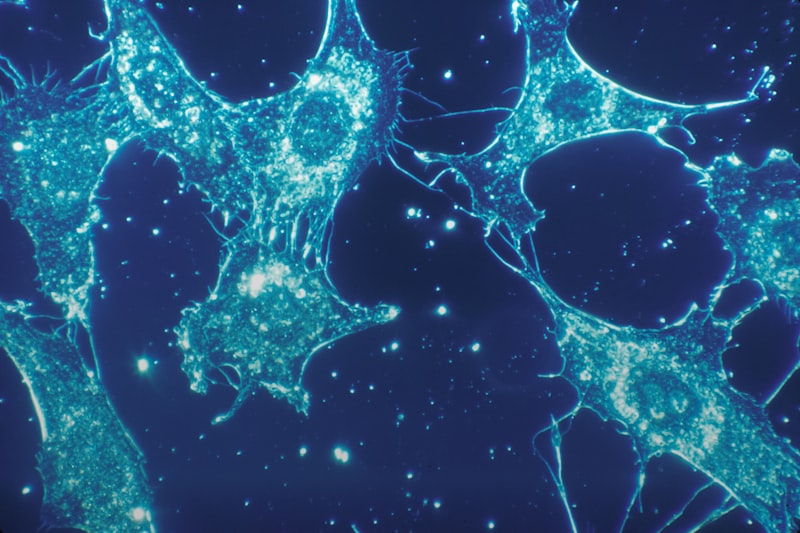
Cell division is the foundational biological process through which a parent cell divides to form two or more daughter cells. This mechanism is absolutely critical for the existence of life, serving as the essential engine for growth, tissue repair, and the propagation of species. The complexity of this process ensures that genetic information is accurately maintained and distributed, a requirement pivotal not only for physical health but also for the underlying structure of the nervous system and the transmission of traits studied extensively in behavioral genetics. Before the physical division occurs, the cell must undergo a meticulous preparatory phase, ensuring all necessary components are available and functional for the demanding task of replication.
The process is characterized by three distinct and mandatory events: the replication of the cell’s genetic material, known as DNA replication; the division of the nucleus (karyokinesis); and the partitioning of the cytoplasm (cytokinesis). Psychologically, understanding the fidelity of DNA replication is crucial, as any errors introduced during this stage can lead to genetic mutations that influence temperament, cognitive function, or predispositions toward psychiatric conditions. The entire process is tightly regulated by complex molecular pathways, acting as checkpoints to prevent the generation of faulty cells, which is paramount for maintaining biological homeostasis required for stable psychological functioning.
Fundamentally, there are two primary categories of cell division: mitosis and meiosis. Mitosis is responsible for the proliferation of somatic cells—all cells excluding reproductive cells—and is used for growth, repair, and the replacement of aging or damaged tissues. In contrast, meiosis is reserved exclusively for the creation of gametes (sperm and egg cells), playing a direct role in sexual reproduction and generating the vast genetic variability that evolutionary psychology seeks to understand. Both processes require the cell to enter interphase, a protracted preparatory period where the cell grows, synthesizes proteins, and duplicates its chromosomes, setting the stage for the dramatic physical separation to follow.
Mitosis: Growth, Repair, and Somatic Development
Mitosis is a remarkable process designed for clonal reproduction, meaning it produces two daughter cells that are genetically identical to the original parent cell. This mechanism ensures that as an organism develops from a single fertilized egg, all resulting somatic cells carry the exact same genetic blueprint. For psychology, this uniformity is essential because it guarantees that the structure and function of complex organs, such as the brain, are built according to a consistent genetic instruction set. Errors in mitotic control during early development can lead to severe structural abnormalities that compromise neurological and psychological capabilities.
The mitotic phase itself is conventionally broken down into four sequential stages: prophase, metaphase, anaphase, and telophase. During metaphase, the chromosomes align precisely along the cell’s equatorial plate, a critical step that ensures each daughter cell receives a complete and balanced set of genetic information. This perfect segregation is essential for preventing aneuploidy, a condition often associated with developmental delays and intellectual disabilities, underscoring the vital link between microscopic biological fidelity and observable psychological function. The entire cycle, which includes interphase, is a repetitive occurrence designed to manage the constant demand for cellular replacement across the body.
In the context of physiological psychology, mitosis is the process underlying neurogenesis—the limited creation of new neurons in certain parts of the adult brain, such as the hippocampus, which is strongly associated with memory formation and learning. While most neurons are generated early in life, the ability of stem cells to undergo controlled mitosis allows for cellular replacement and plasticity. Furthermore, glial cells, which provide critical support, insulation, and maintenance for neurons, rely heavily on mitosis for proliferation throughout the lifespan, influencing the overall efficiency and resilience of the central nervous system.
Meiosis: The Foundation of Genetic Variation and Inheritance
Meiosis is the specialized form of cell division that occurs exclusively in sexually reproducing organisms to generate gametes. Unlike mitosis, meiosis results in four genetically unique daughter cells, each containing half the number of chromosomes (haploid) compared to the parent cell (diploid). When two gametes fuse during fertilization, they restore the full diploid complement, ensuring the resulting zygote has the correct species-specific chromosome count. This reduction in genetic material is indispensable for maintaining the stability of the genome across generations.
The profound importance of meiosis to behavioral genetics lies in its two main mechanisms for generating genetic variation: independent assortment and crossing over. Crossing over, which occurs during prophase I, involves the physical exchange of genetic material between homologous chromosomes. This shuffles alleles, creating novel combinations that were not present in either parent. Independent assortment dictates that the maternal and paternal chromosomes are randomly distributed into the resulting gametes. These processes ensure that every offspring is genetically unique, providing the raw material upon which natural selection operates, thereby shaping the evolution of human behavior and cognition.
Meiosis is divided into two major sequences: Meiosis I and Meiosis II. Meiosis I is the reduction division, where homologous chromosomes separate, decreasing the chromosome number by half. Meiosis II is similar to mitosis, where sister chromatids separate. The successful completion of these stages guarantees that traits, including those underlying complex behavioral phenotypes like intelligence or personality dimensions, are inherited according to Mendelian principles. Faulty meiotic division, such as nondisjunction, can lead to severe chromosomal disorders like Down Syndrome, illustrating the direct and powerful link between precise cellular events and psychological outcomes.
Historical Discovery and the Architects of Cytology
The conceptual framework of cell division emerged gradually through advances in microscopy during the 19th century. Prior to this, scientists debated how organisms grew and how life generated new life. A critical early contribution was made by German physician **Rudolf Virchow** in the mid-1850s with his famous dictum, “Omnis cellula e cellula” (All cells come from cells), firmly establishing that cell division, not spontaneous generation, was the source of new cells. This paradigm shift was essential for moving biological research toward studying the internal mechanics of the cell itself.
The detailed visualization and description of mitosis were largely accomplished by the German anatomist, Walther Flemming, in the 1870s and 1880s. Using newly developed staining techniques, Flemming was able to observe and meticulously document the behavior of thread-like structures within the nucleus during division, which he later termed “chromatin.” His seminal work, “Zellsubstanz, Kern und Zellteilung” (Cell-Substance, Nucleus, and Cell Division), provided the first accurate description of the mitotic phases, transforming cytology into a rigorous scientific discipline and providing the biological context for later theories of inheritance.
The understanding of meiosis followed shortly thereafter, primarily through the work of **Oscar Hertwig** and **Theodor Boveri**, who linked the behavior of chromosomes during germ cell formation to the laws of heredity hypothesized by Gregor Mendel. Boveri’s experiments, particularly, solidified the chromosomal theory of inheritance, demonstrating that chromosomes carry genetic information and that their precise segregation during meiosis is the physical mechanism ensuring genetic continuity. These discoveries provided the foundational cellular knowledge that allowed 20th-century psychologists and geneticists to explore the biological origins of behavior.
Practical Application: Cell Division in Neurodevelopment
To illustrate the profound practical impact of cell division on psychological function, consider the process of early human neurodevelopment, specifically during the first and second trimesters of gestation. During this period, the brain undergoes a massive, rapid increase in size and complexity, driven almost entirely by controlled mitotic activity. Neural stem cells in the ventricular zone of the developing neural tube proliferate exponentially, forming the precursors of billions of neurons and glial cells that will eventually populate the mature central nervous system.
The “How-To” of this application involves precise timing and orientation of mitotic spindles. For instance, if a neural stem cell undergoes a symmetrical mitotic division, it produces two identical stem cells, increasing the population size. If it undergoes an asymmetrical division, it produces one stem cell and one differentiating neuron or glia, balancing growth with specialization. The outcome of these carefully orchestrated divisions determines the size, layered structure, and connectivity of the cerebral cortex.
- Proliferation: Neural stem cells undergo rapid mitosis to establish the necessary population base for the brain (e.g., millions of cells generated daily).
- Migration: Newly born neurons migrate from the ventricular zone to their final positions in the cortical plate, establishing the six layers of the cortex.
- Differentiation: Once in place, these cells cease mitotic division and begin to specialize, forming complex neuronal circuits responsible for sensation, cognition, and motor control.
Any disruption to the timing or mechanism of mitotic division—caused by environmental toxins, genetic defects, or viral exposure—can result in severe structural anomalies, such as lissencephaly (smooth brain) or microcephaly, leading directly to profound cognitive impairment and psychological disorders.
Significance to Physiological Psychology and Aging
Cell division, or rather the cessation and limitation of it, holds immense significance for understanding the limits of human longevity and the mechanisms of aging studied in physiological psychology. Most somatic cells are not immortal; they possess a finite capacity for mitotic division, governed largely by the shortening of telomeres—the protective caps at the ends of chromosomes. This limitation, known as the **Hayflick Limit**, means that as an organism ages, its ability to effectively repair tissue damage and replace worn-out cells diminishes, leading to the generalized decline associated with senescence.
The failure of appropriate mitotic regulation is also central to the study of pathology. Uncontrolled cell division is the hallmark of cancer, where cells ignore regulatory signals and proliferate indefinitely. While cancer is a physical disease, its psychological impact is enormous, affecting mental health, stress levels, and cognitive function due to systemic disruption and treatment side effects. Conversely, the inability of certain cells, particularly neurons in the central nervous system, to re-enter the mitotic cycle limits the body’s ability to repair itself after catastrophic injuries like stroke or spinal cord trauma, posing one of the greatest challenges in regenerative neuroscience.
Furthermore, understanding the cell cycle allows researchers to explore interventions aimed at delaying age-related decline. For instance, research into telomerase, the enzyme that can lengthen telomeres, offers theoretical avenues for extending cellular lifespan, potentially impacting cognitive resilience and psychological well-being late in life. Thus, cell division is a master regulator of biological time, directly dictating the physical foundation upon which all psychological experiences are built and maintained.
Connections to Behavioral Genetics and Evolutionary Theory
Cell division serves as the literal connection point between the abstract concepts of genetics and the observable realities of behavior. In behavioral genetics, which investigates the relative contributions of genetic and environmental factors to behavioral traits, meiosis is the underlying biological mechanism that explains why traits run in families yet still exhibit variability. The segregation and recombination of genes during gamete formation dictate the genetic makeup of every individual, influencing everything from reaction time and memory capacity to susceptibility to mood disorders.
Cell division connects closely with evolutionary theory, particularly evolutionary psychology. Genetic diversity, generated primarily through meiotic crossing over and independent assortment, provides the necessary variation for natural selection to act upon. Traits that confer a survival or reproductive advantage—whether they are physical attributes or complex cognitive abilities like abstract thought or language acquisition—are more likely to be passed on to the next generation because the underlying genes were successfully packaged into successful gametes via meiosis. Without this constant churning of the genetic material, adaptation would halt.
The broader category of psychology to which cell division most directly applies is **Physiological Psychology** (or Biological Psychology) and **Behavioral Genetics**. Additionally, cell division is intimately related to the concept of **homeostasis** and is counterbalanced by the complementary cellular process of Apoptosis, or programmed cell death.
- Apoptosis: This is the controlled, deliberate destruction of cells that are damaged, unnecessary, or potentially harmful (e.g., cells with cancerous potential). While cell division builds and repairs, apoptosis prunes and eliminates, ensuring that tissue size and function are meticulously regulated.
- Genetics: Cell division provides the mechanism for genetic expression and inheritance. Mitosis ensures that every cell in the body expresses the same genes, while meiosis ensures that genetic material is shuffled to create unique offspring.