Computational Modeling: Simulating the Human Mind
Scientifically Reviewed · Dr. Marwa Abd-Alazim · August 23, 2026
Review Criteria & Clinical Standards
This content undergoes rigorous scientific peer-review and medical editorial standards at Arab Psychology Network to ensure clinical accuracy, validity, and compliance with evidence-based guidelines from leading psychological and healthcare authorities (APA / WHO).
Definition and Foundational Concept
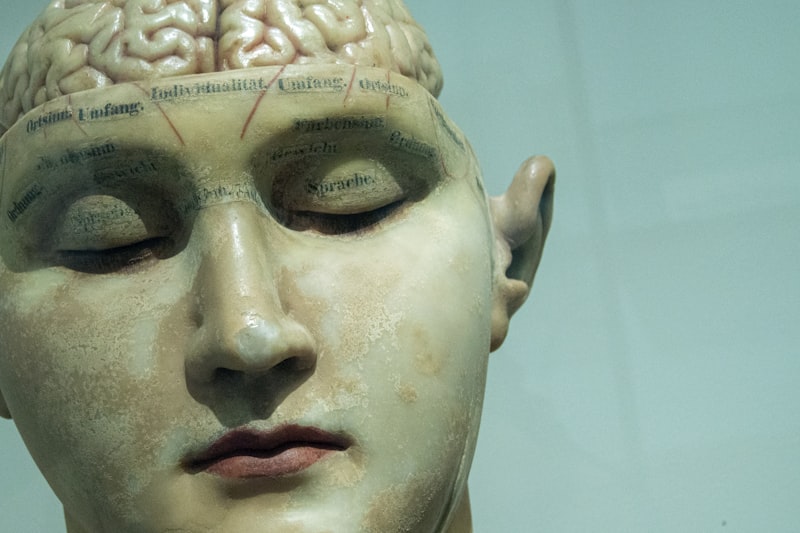
The concept of a computer model within the psychological and cognitive sciences refers to a sophisticated computational emulation designed to mimic the operations, behaviors, or structural relationships of an external system, specifically a psychological phenomenon or biological entity. This emulation serves the critical objective of assisting researchers in comprehending the intricate components and underlying mechanisms of the target phenomenon. Unlike traditional mathematical models that might rely solely on abstract equations, the computer model is executable; it is a working program capable of generating outputs based on defined inputs, thereby allowing for rigorous testing of hypotheses about psychological processes, such as memory retrieval, decision-making, or perceptual processing. The model becomes a formal, explicit statement of a psychological theory, demanding clarity and precision that verbal theories often lack.
A core utility of the computer model is its capacity for prediction and visualization. As exemplified in various industries, where the model showed laborers the intended result and function prior to initiating work, in psychology, the model allows researchers to observe the predicted outcomes of complex interactions that might be impossible to track or isolate in a living organism. When researchers develop a model of a psychological behavior, they are essentially creating an artificial system whose internal dynamics are hypothesized to mirror the dynamics of the human or animal mind. If the model accurately replicates observed human behavior under specific conditions, it lends powerful support to the underlying theoretical assumptions embedded within the model’s architecture. Conversely, discrepancies between the model’s output and empirical data necessitate revision of the theoretical framework, pushing scientific understanding forward through iterative refinement.
These computational simulations are crucial tools for managing the sheer complexity inherent in psychological processes. Because human behavior is rarely governed by simple, linear cause-and-effect relationships, models provide a controlled environment to explore non-linear interactions, feedback loops, and emergent properties. They transform abstract concepts—like attention capacity or working memory buffers—into quantifiable parameters and algorithms. Consequently, the discipline moves beyond mere description toward explanation, enabling scientists to dissect the hypothesized information processing steps that bridge sensory input to behavioral output. The formalization required for computational modeling thus acts as a stringent test for the coherence and completeness of any proposed psychological theory.
Historical Genesis and Evolution
The intellectual roots of computational modeling in psychology trace back to the mid-20th century, spurred by the advent of digital computing and the rise of the cognitive revolution. Prior to this shift, behaviorism dominated, focusing exclusively on observable stimuli and responses. The cognitive perspective, however, posited that the mind was an information processor, drawing a direct analogy between the human brain and the emerging digital computer. Early pioneers, inspired by the work of Alan Turing and John von Neumann, began to conceptualize psychological phenomena not as mystical internal states, but as executable algorithms. This era saw the development of seminal models, such as Newell and Simon’s General Problem Solver (GPS), which attempted to simulate human heuristic strategies for solving complex tasks, marking a pivotal moment where psychological theory was first formally translated into computational code.
Initial models predominantly adhered to the symbolic processing paradigm, often referred to as the classical or “Good Old-Fashioned AI” (GOFAI) approach. These systems treated mental content as discrete symbols (e.g., words, concepts, rules) manipulated by serial, logical rules. The core assumption was that cognition mirrored the structure of a formal programming language, where processes unfolded sequentially and deterministically. While highly effective for modeling certain high-level functions like language comprehension and logical deduction, these early models struggled to account for the robustness, flexibility, and fault tolerance characteristic of biological cognition, particularly in areas like pattern recognition and learning from noisy data. The rigidity of the symbolic system highlighted the need for alternative approaches that better reflected the distributed nature of neural networks.
The subsequent evolution introduced connectionist models, or Parallel Distributed Processing (PDP), which offered a radically different architectural metaphor. Instead of relying on discrete symbols and sequential rules, PDP models represent information via patterns of activation across numerous interconnected, neuron-like units. Learning occurs through the modification of weights (connection strengths) between these units, allowing the system to generalize and handle probabilistic inputs gracefully. This shift in modeling philosophy—from the logical machine to the distributed network—dramatically expanded the scope of phenomena that could be modeled computationally, including perception, motor control, and implicit memory, providing a computational bridge between psychological theory and neurobiological observation.
Methodological Principles of Modeling
Developing a robust computer model involves a meticulous, multi-stage methodology rooted equally in theoretical psychology and computer science. The process begins with the identification of a specific psychological phenomenon and the formulation of a clear, testable theoretical hypothesis about its underlying mechanism. This theoretical framework must then be translated into a formal specification, defining the model’s architecture, parameters, input/output relationships, and the specific algorithms governing the information flow. This translation requires the researcher to make explicit all assumptions, forcing a level of analytical rigor often absent in purely verbal theories. For instance, modeling working memory requires explicit decisions about capacity limits, decay rates, and rehearsal mechanisms, which must all be mathematically instantiated.
Once formally specified, the model must be implemented using appropriate programming languages and computational tools. This implementation phase is critical, as computational errors or inefficiencies can fundamentally skew the results. Following implementation, the model is subjected to rigorous calibration and testing, often against existing empirical data sets collected from human participants. Calibration involves adjusting the model’s free parameters—the variables whose values are not fixed by theory—to achieve the best fit to the data. This adjustment process is frequently automated using optimization algorithms. A successful model is one that not only fits the training data but also exhibits strong generalizability, meaning it can accurately predict outcomes for novel data sets or experimental conditions not used during its development.
A key methodological distinction in modeling involves the difference between descriptive and explanatory models. Descriptive models aim primarily to reproduce observed data patterns efficiently, often using statistical or purely mathematical approaches without claiming psychological reality for their internal components. Explanatory models, conversely, seek to capture the actual cognitive architecture and processes believed to operate in the human mind. The ultimate goal of explanatory modeling is strong isomorphism—a structural correspondence between the model’s components and the psychological or neural components they represent. Achieving explanatory power requires that the model’s internal workings, not just its external behavior, align with independent empirical findings, such as neuroimaging data or reaction time patterns.
Furthermore, a crucial aspect of model evaluation is the principle of parsimony, or Occam’s Razor. When multiple models can account for the same set of data, the preferred model is often the simplest one, possessing the fewest free parameters or the least complex architecture. Researchers must also engage in competitive model testing, explicitly comparing their proposed model against established alternatives to demonstrate its superiority in terms of fit, generalizability, and theoretical plausibility. This comparative approach ensures that the computational theory being advanced is the most compelling explanation currently available, preventing the proliferation of overly complex or specialized models that merely memorize data rather than explain underlying principles.
Key Model Taxonomies in Psychology
Computational models in psychology can be broadly categorized based on their architectural philosophy, reflecting different hypotheses about how the mind processes information. The aforementioned Symbolic Models, rooted in the classic AI paradigm, are characterized by production systems, semantic networks, and logical inference engines. A prime example is the ACT-R (Adaptive Control of Thought—Rational) architecture, which separates knowledge into declarative memory (facts) and procedural memory (skills) and models cognition as a series of productions (if-then rules) that operate sequentially on symbolic representations. These models are excellent for capturing structured knowledge and deliberate, controlled cognitive processes.
In contrast, Connectionist or Neural Network Models emphasize highly parallel, distributed processing, utilizing architectures like feedforward networks, recurrent neural networks (RNNs), and convolutional neural networks (CNNs). These models excel at tasks involving pattern recognition, categorization, and feature extraction, where the input is often noisy or ambiguous, mirroring the challenges faced by the perceptual system. The strength of connectionist models lies in their ability to learn sophisticated, non-linear relationships directly from data through iterative adjustments of connection weights, providing insights into developmental learning and implicit knowledge acquisition that symbolic systems struggle to address.
A third significant category is Dynamical Systems Models, which focus less on the representation of explicit information and more on the continuous, time-dependent nature of cognitive states. These models use differential equations or state-space representations to capture how psychological states evolve over time, such as the smooth trajectory of motor movements, the oscillation of attention, or the continuous flow of decision-making processes. Dynamical models often eschew the rigid input-process-output metaphor, treating cognition as an ongoing, embodied interaction between the organism and its environment, offering a valuable lens for studying real-time performance and ecological validity.
Finally, Bayesian and Probabilistic Models represent a growing class of models that treat the mind as an optimal statistical inference engine. Rooted in Bayesian statistics, these models hypothesize that the brain uses prior knowledge (priors) and incoming sensory evidence (likelihoods) to constantly update its beliefs about the state of the world (posteriors). Bayesian models are highly successful in explaining phenomena related to perceptual ambiguity, prediction error, and rational decision-making under uncertainty, providing a normative framework for understanding why humans often behave in ways that maximize expected utility or informational gain. These diverse taxonomies reflect the complexity of the mind itself, requiring multiple modeling approaches to capture the full spectrum of psychological phenomena.
Applications in Cognitive Science
Computer models are indispensable tools across various domains of cognitive science, providing formal testbeds for theories of human memory. In the study of short-term and working memory, models like the Baddeley-Hitch model’s computational instantiations have helped quantify the capacity limits of the phonological loop and the visual-spatial sketchpad, leading to precise predictions about interference effects and retrieval speed. For long-term memory, connectionist models have successfully simulated aspects of catastrophic interference and the spacing effect, showing how the distribution of learning trials influences the robustness and generalizability of stored information, demonstrating that computational constraints directly influence psychological outcomes.
In the realm of language processing, computational models have been crucial for understanding both syntax and semantics. Symbolic models have tackled the complexities of parsing sentences using rule-based grammars, while connectionist models, particularly large language models (LLMs), have recently shown extraordinary capacity for learning semantic relationships and contextual nuances simply by processing massive datasets of text. These models provide profound insight into the statistical regularities inherent in human language and how those regularities might be leveraged by the cognitive system to achieve rapid and accurate comprehension and generation of speech. Furthermore, they allow for the simulation of language acquisition, tracking how children gradually build complex linguistic competence from simple inputs.
Computer modeling also dominates the study of executive functions and decision-making. Drift-diffusion models (DDMs), for instance, are widely used to model two-choice decisions, formalizing the idea that evidence accumulates over time toward a decision threshold. These models allow researchers to mathematically decompose reaction time data into underlying cognitive components, such as the rate of information accumulation (drift rate), the amount of required evidence (boundary separation), and non-decision time. By manipulating model parameters, scientists can simulate the effects of factors like fatigue, attention allocation, or motivational biases on the speed and accuracy of complex judgments, providing a quantitative framework for understanding human rationality and error.
Finally, in the domain of visual perception, computer models have been essential for formalizing theories of feature detection, object recognition, and spatial attention. Convolutional Neural Networks (CNNs), initially developed in computer vision, have become powerful explanatory models in neuroscience, showing remarkable correspondence with the hierarchical processing stages observed in the primate visual cortex. By training these computational architectures on complex visual tasks, researchers gain critical insights into the computational requirements necessary for robust perception, linking the abstract psychological theory of vision directly to the known anatomy and physiology of the visual pathway.
Advantages and Epistemological Role
The primary epistemological advantage of the computer model is the enforcement of theoretical completeness and coherence. When a psychological theory is translated into an executable model, ambiguities and hidden assumptions are immediately exposed. If a model fails to run or produces nonsensical output, it demonstrates that the underlying theory is incomplete or logically inconsistent. This rigorous formalization elevates psychological theorizing from qualitative speculation to quantitative prediction, ensuring that theoretical claims are precise enough to be empirically refuted. The computer model thus serves as a critical filter, weeding out vague or poorly specified explanations of behavior.
Furthermore, computational modeling offers unparalleled opportunities for conducting “in silico” experiments—simulations that would be impractical, unethical, or impossible to perform with human participants. Researchers can systematically manipulate hundreds of variables, track the trajectory of every processing unit, and observe the system’s behavior across millions of trials without the constraints of time, cost, or human variability. This capability is particularly valuable in studying long-term development, the effects of brain damage, or complex learning trajectories over extended periods, allowing scientists to explore counterfactual scenarios and isolate the causal impact of specific architectural features or processing parameters.
Computer models also play a vital role in integrating data across different levels of analysis. A well-designed model can link observations from behavioral experiments (e.g., reaction times, error rates) to observations from neuroscience (e.g., fMRI activation patterns, electrophysiological recordings). For instance, a connectionist model designed to simulate cognitive control can be constrained both by behavioral data on task switching and by neuroimaging data showing activation in the prefrontal cortex during those same tasks. This multidisciplinary integration helps forge a unified, biologically plausible understanding of the mind, moving psychology closer to a truly comprehensive science of cognition.
Constraints and Future Trajectories
Despite their power, computer models are inherently limited by their reliance on simplifying assumptions. The goal of modeling is not to replicate the full complexity of the brain—which contains trillions of connections—but to capture the essential computational principles. Consequently, models are always abstractions, and their validity is contingent upon the accuracy of the researcher’s initial choices regarding architectural details and parameter settings. A persistent critique is the “free parameter problem”: a model with too many adjustable parameters can fit almost any dataset, reducing its explanatory power and risking the creation of models that are descriptive rather than truly predictive of novel phenomena. Addressing this requires continuous emphasis on parsimony and cross-validation against entirely new data sets.
Another significant challenge revolves around the issue of biological plausibility. While connectionist models have successfully mimicked cognitive functions, critics argue that many current architectures, especially deep learning networks, rely on learning rules (like backpropagation) or computational resources that are not easily mapped onto known neurobiological mechanisms. Future research must increasingly focus on developing models that adhere to known biological constraints, such as energy efficiency, spiking dynamics, and local learning rules, ensuring that computational theories are grounded in the physical realities of the nervous system. This convergence between computational modeling and neurobiology is essential for advancing the field.
The future trajectory of computer modeling in psychology points toward increased sophistication through the integration of artificial intelligence methodologies and large-scale data sets. This includes the development of hybrid models that combine the strengths of symbolic reasoning (for structured knowledge) with the flexibility of neural networks (for pattern recognition). Furthermore, models are becoming increasingly dynamic and embodied, moving beyond static simulations to incorporate real-time feedback from simulated environments, reflecting the continuous interaction between the cognitive agent and its surroundings.
In conclusion, the computer model remains an indispensable core methodology in modern psychological science. It provides the necessary formal language to translate verbal theories into executable hypotheses, enabling rigorous testing, prediction, and integration across multiple levels of analysis. As computing power continues to grow and data collection methods become more refined, the complexity and fidelity of these computational emulations will only increase, driving deeper understanding of the fundamental mechanisms that govern human behavior and cognition.