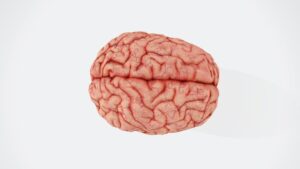
Conceptual Disorder: When Abstract Thought Breaks Down
Scientifically Reviewed · Dr. Marwa Abd-Alazim · September 6, 2026
Review Criteria & Clinical Standards
This content undergoes rigorous scientific peer-review and medical editorial standards at Arab Psychology Network to ensure clinical accuracy, validity, and compliance with evidence-based guidelines from leading psychological and healthcare authorities (APA / WHO).

Defining Conceptual Disorder
Conceptual disorder represents a profound and debilitating disruption in fundamental cognitive procedures, specifically impacting the capacity for composing theoretical, abstract, or generalized thoughts from standardized, concrete information. This difficulty moves beyond simple factual errors or memory retrieval deficits; it denotes a qualitative impairment in the synthesis of novel ideas and the manipulation of symbolic constructs. Individuals struggling with this condition often exhibit a rigid adherence to the literal meaning of words and events, failing to grasp metaphors, analogies, or the complex, nuanced social inferences that underpin effective communication and flexible problem-solving, thereby fundamentally compromising their ability to navigate complex intellectual and social landscapes.
The core pathology of conceptual disorder lies not in the speed or volume of thought, but in its essential structure and coherence. It reflects a failure in the mind’s ability to maintain conceptual boundaries, leading either to overinclusion, where irrelevant or overly broad associations pollute the logical flow, or underinclusion, where the individual cannot generalize a rule learned in one context to a slightly different, but conceptually related, situation. This failure to adequately process and categorize information results in thought patterns characterized by illogical jumps, tangential responses, and a pervasive inability to achieve a shared understanding of abstract concepts, which are essential for academic reasoning, professional planning, and interpersonal relations.
While frequently analyzed as a central feature of formal thought disorder (FTD), particularly associated with the positive symptoms of schizophrenia spectrum disorders, conceptual disorder warrants specific focus due to its critical role in determining functional outcome. The inability to construct and maintain theoretical models severely limits adaptive functioning, impacting everything from financial management to understanding the motives of others. It highlights a breakdown in the executive functions necessary for cognitive flexibility and abstraction, serving as a powerful indicator of underlying neurological or severe psychiatric compromise that necessitates careful diagnostic scrutiny and targeted intervention strategies.
Etiology and Underlying Cognitive Mechanisms
The etiology of conceptual disorder is complex, heavily implicating disturbances within the prefrontal cortex (PFC) and the associated neurocircuitry responsible for executive function and working memory. Research suggests that deficits in the dorsolateral PFC, the region critical for planning, cognitive flexibility, and maintaining mental representations of abstract goals, are strongly correlated with the severity of conceptual disorganization. Furthermore, disruptions in the functional connectivity between the PFC and subcortical structures, particularly those involving dopamine regulation, are hypothesized to impair the filtering mechanisms necessary to select relevant information and suppress irrelevant associations, thus contributing directly to the hallmark symptoms of conceptual slippage and overinclusion.
Genetic factors play a significant, though non-deterministic, role, as conceptual disorder often manifests within the context of highly heritable severe mental illnesses, such as schizophrenia and schizoaffective disorder. Specific genetic variants may influence the efficiency of neurotransmitter systems—especially glutamatergic and dopaminergic pathways—that regulate synaptic plasticity and complex information processing. However, environmental stressors, including early neurodevelopmental insults, trauma, or exposure to neurotoxins during critical periods of brain development, interact with these genetic predispositions, potentially exacerbating the vulnerability to developing severe thought and conceptual disorganization later in life.
At a purely cognitive level, conceptual disorder is fundamentally linked to a failure in set-shifting and inhibitory control. The individual struggles to disengage from a previously established conceptual framework, leading to perseveration—the persistent repetition of a response or concept even when it is no longer appropriate or logical. Simultaneously, there is a failure of inhibition, allowing extraneous or weakly associated ideas to intrude upon the central thought process, resulting in derailment and tangentiality. This dual deficit prevents the smooth transition from concrete, immediate stimuli to the creation of generalized, theoretical schemas required for advanced cognitive operations.
Manifestations and Primary Symptoms
The most pervasive and identifiable manifestation of conceptual disorder is concrete thinking, where the individual loses the capacity to interpret symbolic, metaphorical, or abstract language. When presented with a common proverb like “A rolling stone gathers no moss,” the patient may interpret it literally, focusing solely on the physical properties of the stone, rather than grasping the implied meaning about mobility, stability, or professional stagnation. This literalness is highly disruptive in social settings, where communication relies heavily on inferred meaning, irony, and shared cultural metaphors, leading to frequent misunderstandings and emotional misattributions.
Another key symptom involves disorders of inclusion and exclusion, manifesting as difficulties in categorization. Overinclusion, or the loosening of associations, causes the individual to draw connections between concepts that are logically or contextually irrelevant. For example, when asked to name modes of transport, they might list cars, trains, and then tangent to the color red, a memory of a specific car, and the political climate of the city where that car was seen. Conversely, underinclusion involves the inability to recognize that a concept extends beyond a single specific instance, preventing the formation of generalized rules. A patient might understand that a specific desk is furniture, but fail to classify a table or chair within the same conceptual category, demonstrating a rigid and brittle cognitive structure.
Functionally, conceptual disorder severely impairs problem-solving and planning abilities, which rely heavily on the capacity to generate hypothetical scenarios and manipulate abstract variables. Tasks requiring foresight, such as budgeting, career planning, or managing complex interpersonal conflicts, become extremely challenging because the individual cannot construct the necessary theoretical models of potential outcomes or alternate courses of action. This inability to think theoretically forces reliance on immediate, concrete cues, resulting in poor decision-making, impulsivity, and a pronounced difficulty in setting and pursuing long-term goals that require sustained abstract thought.
Differential Diagnosis and Diagnostic Confusion
A critical challenge in clinical practice is that the symptoms of conceptual disorder are often confused with, or masked by, symptoms of other, more common psychiatric, developmental, or neurological disorders. This diagnostic overlap necessitates meticulous assessment, as misattribution can lead to inappropriate treatment strategies. Conceptual disorganization must be carefully delineated from simple disorganized speech, which may be rapid, illogical, or tangential, but does not necessarily reflect the underlying breakdown in abstract thought formation characteristic of a true conceptual disorder.
Differential diagnosis is particularly important when distinguishing conceptual disorder from primary language disorders like aphasia or global neurocognitive decline, such as dementia. Aphasia primarily affects the retrieval, articulation, or comprehension of language, while conceptual disorder fundamentally affects the *composition* of meaning and the abstract structures underpinning language. While severe dementia certainly involves conceptual deterioration, it is typically accompanied by global memory loss and executive decline; conceptual disorder, particularly in younger patients with psychotic disorders, can present in isolation from such generalized cognitive impairment, focusing specifically on the qualitative failure to synthesize theoretical thought.
Furthermore, conceptual disorganization must be distinguished from the thought disturbances associated with severe mood disorders. Patients experiencing severe mania may exhibit flight of ideas or pressured speech, where thoughts move rapidly but often retain some tenuous, though rapid, association. While challenging to differentiate, conceptual disorder involves a breakdown of the logical links themselves, resulting in ideas that are genuinely bizarre or incomprehensible, rather than simply moving too quickly or being overwhelmed by emotional content. The qualitative nature of the conceptual breakdown—the loss of abstract capacity—remains the distinguishing feature.
Formal Assessment of Conceptual Deficits
The assessment of conceptual disorder relies on a combination of structured clinical interviews, behavioral observation, and standardized neuropsychological testing designed to probe the boundaries of abstract thought and cognitive flexibility. During the clinical interview, the examiner observes the patient’s ability to maintain a coherent narrative, the presence of tangentiality or derailment, and their comprehension of non-literal language. Questions that require the patient to explain the similarities between disparate objects (e.g., “How are an apple and a banana alike?”) are particularly revealing, often exposing the tendency toward concrete, low-level classifications (e.g., “They are both things I ate yesterday”) rather than abstract categories (e.g., “They are both fruit”).
Standardized psychometric tools are crucial for quantifying the severity and nature of the deficit. The Wisconsin Card Sorting Test (WCST) is a cornerstone assessment, measuring the patient’s capacity for cognitive flexibility and set-shifting. A high number of perseverative errors on the WCST strongly indicates a fundamental difficulty in abandoning an established concept (e.g., sorting by color) when the rules of abstraction change (requiring sorting by shape), a hallmark of the rigidity seen in conceptual disorder. Similarly, tests of proverb interpretation are formalized to grade responses on a scale from fully abstract to highly concrete, providing a direct metric of the abstraction deficit.
In research and specialty clinics, instruments such as the Thought Disorder Index (TDI) provide a detailed, quantifiable categorization of conceptual deficits derived from verbal responses in tests like the Rorschach or Thematic Apperception Test (TAT). The TDI identifies specific categories of conceptual disturbance, including conceptual slippage (a gradual departure from the intended meaning) and bizarre verbalizations, offering fine-grained data necessary for research and precise diagnosis. These comprehensive batteries help localize the conceptual deficit within the overall profile of executive function, differentiating it from global intellectual impairment or simple attentional deficits.
Conceptual Disorder in the Context of Thought Disorder
Conceptual disorder is widely regarded as a critical component, or even the defining feature, of the broader category of Formal Thought Disorder (FTD), which encompasses various disturbances in the form or structure of thinking, as opposed to the content (delusions). While FTD includes symptoms like poverty of speech and tangentiality, the underlying conceptual breakdown—the inability to correctly process and synthesize ideas—is what gives FTD its most debilitating character. Conceptual disorder serves as the mechanism by which the individual’s internal logic deviates fundamentally from conventional, shared logical frameworks, leading to the bizarre and idiosyncratic communication patterns characteristic of severe mental illness.
In the framework of psychopathology, conceptual deficits can be understood across a spectrum of severity and type. At one end is the simple, yet profound, concrete thinking described earlier. At the severe end lies conceptual fragmentation, where boundaries between ideas collapse completely, resulting in neologisms (invented words), word salad, or extreme overinclusion where the patient’s discourse becomes utterly unintelligible due to the failure to maintain any conceptual anchor. Recognizing the specific pattern of conceptual failure is vital for treatment planning, as it dictates whether the primary intervention should focus on strengthening cognitive control (in cases of overinclusion) or enhancing the capacity for abstraction (in cases of extreme concreteness).
Furthermore, conceptual disorder is intricately linked to deficits in cognitive flexibility and creativity. Effective creativity requires the ability to quickly shift conceptual sets, combine disparate ideas in novel ways, and tolerate ambiguity—all capacities directly compromised by conceptual disorder. Thus, the presence of conceptual disorder represents an extreme negative deviation from the cognitive agility required for adaptive human functioning, underscoring its profound impact on occupational performance, academic achievement, and the ability to engage in complex social interactions that require rapid, flexible conceptual adjustments.
Therapeutic Strategies and Management
The management of conceptual disorder typically requires a multi-modal approach, integrating pharmacological treatment aimed at the underlying psychiatric condition with specialized cognitive and psychological interventions. Pharmacological strategies primarily target the reduction of positive psychotic symptoms, such as hallucinations and delusions, which frequently exacerbate and contribute to conceptual disorganization. Second-generation antipsychotic medications are standard treatment, aiming to modulate dopaminergic and serotonergic activity to restore some measure of functional connectivity within the prefrontal cortex and stabilize the thought process, thereby creating a window for psychological intervention.
A cornerstone of rehabilitation is Cognitive Remediation Therapy (CRT), a structured psychological intervention specifically designed to address underlying neurocognitive deficits. CRT focuses on training core cognitive abilities such as attention, working memory, and executive function. For conceptual disorder, CRT employs exercises that specifically promote set-shifting, rule generalization, and the gradual introduction of increasingly abstract concepts. By providing repeated, targeted practice, CRT aims to rebuild the neural pathways necessary for flexible thinking and the capacity to synthesize complex theoretical ideas, thereby improving the quality of thought and reducing concrete interpretations.
Finally, psychoeducation and supportive therapy play a crucial role in helping individuals manage the functional limitations imposed by conceptual disorder. This involves teaching patients and their families to recognize the patterns of concrete thinking and conceptual slippage, and developing practical, compensatory strategies. For instance, reliance on external aids, highly structured environments, and explicit verbal communication strategies (avoiding metaphor and inference) can mitigate the negative impact of the disorder on daily life. Supportive therapy also helps the patient manage the distress and social isolation that often accompany the realization of significant, persistent difficulty in achieving conceptual alignment with others.