Confabulation: When Your Brain Rewrites Reality
Scientifically Reviewed · Dr. Marwa Abd-Alazim · September 15, 2026
Review Criteria & Clinical Standards
This content undergoes rigorous scientific peer-review and medical editorial standards at Arab Psychology Network to ensure clinical accuracy, validity, and compliance with evidence-based guidelines from leading psychological and healthcare authorities (APA / WHO).
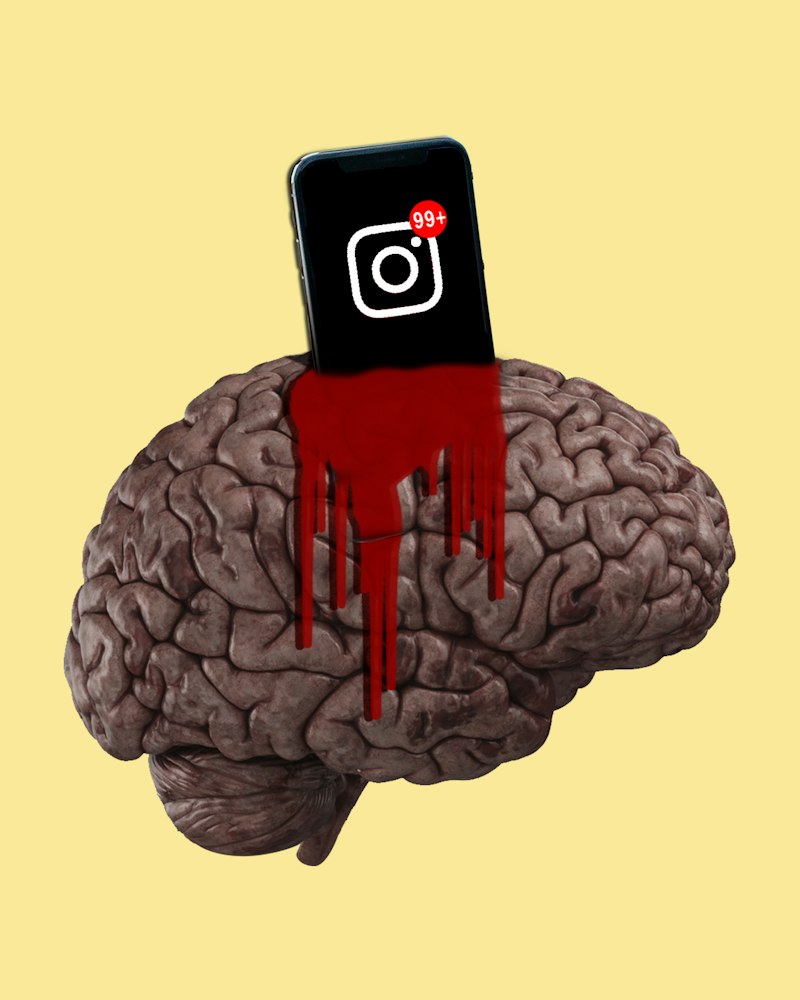
CONFABULATION (PSEUDOREMINISCENCE)
Confabulation, also referred to as pseudoreminiscence, represents a complex and often debilitating disturbance of memory characterized by the production of false or distorted memories that the individual genuinely believes to be accurate. This phenomenon is fundamentally a memory disorder rooted in neurological dysfunction, distinguishing it sharply from intentional deception or lying. The critical element defining confabulation is the individual’s profound conviction in the veracity of the fabricated content, which can range from minor inaccuracies about recent events to elaborate, fantastical narratives concerning personal history. Clinically, confabulation is a diagnostic marker for various neurological conditions, particularly those involving damage to the frontal lobes and associated circuits critical for executive function and memory monitoring. Understanding confabulation requires delving into the intricate relationship between memory retrieval, temporal context processing, and the brain’s capacity for self-monitoring, revealing how damage to these systems compels the brain to fill gaps in the autobiographical record with synthesized, yet convincing, narrative material. It is essential to recognize that this is an involuntary process; the patient is not attempting to mislead others but is rather a victim of a defective memory system that generates errors during retrieval.
The false memories produced during confabulation are typically autobiographical in nature, concerning the individual’s past experiences, current situation, or future intentions. However, the content is not merely inaccurate; it is often temporally misplaced, confusing events that happened years ago with the present moment, or incorporating elements that are entirely fictitious. This temporal confusion highlights a key underlying deficit: the failure of the brain’s ability to properly sequence memories and place them within the correct spatio-temporal context. While minor memory distortions are common in the general population, confabulation is distinguished by its severity, persistence, and the complete lack of insight exhibited by the patient regarding the falsity of their recollections. This lack of insight makes rehabilitation challenging, as the patient cannot be reasoned out of their memories, nor can they utilize external evidence to correct their internal narrative, reinforcing the neurological basis of this condition rather than a psychological or volitional one.
NEUROANATOMICAL BASIS AND ETIOLOGY
The neurological underpinnings of confabulation are strongly linked to damage within the circuits connecting the prefrontal cortex (PFC) and the limbic system, particularly the medial temporal lobes. The frontal lobes, especially the ventromedial and orbitofrontal regions, play a crucial role in executive functions, including monitoring memory retrieval, verifying the source of information, and inhibiting incorrect responses. Damage to these areas, often seen following conditions like rupture of the anterior communicating artery (ACoA) aneurysm or severe traumatic brain injury (TBI), severely compromises the brain’s ability to conduct these verification processes. Consequently, memories that are automatically generated during retrieval—even if irrelevant or incorrect—are accepted as true because the filtering mechanism necessary for error detection has failed. This structural compromise results in a functional deficit where the patient can retrieve fragments of information, but they lack the necessary contextual tags to determine if the retrieved content is appropriate for the current time and situation, leading directly to the fabrication of bridging narratives.
A primary neurological cause of chronic and severe confabulation is Korsakoff’s syndrome, a disorder resulting from thiamine deficiency, usually associated with chronic alcoholism. Korsakoff’s syndrome causes bilateral damage to the mammillary bodies, the dorsomedial thalamus, and often the frontal lobes, resulting in profound anterograde and retrograde amnesia. In these patients, the confabulations serve as an attempt to maintain a coherent self-narrative in the face of massive memory gaps. However, confabulation is not exclusive to Korsakoff’s syndrome. Other etiologies include viral encephalitis, cerebral tumors affecting frontal or basal forebrain structures, and certain types of dementia, though the presence and type of confabulation vary significantly based on the precise location and extent of the lesion. The consistency of frontal lobe involvement across diverse etiologies underscores the role of executive control in managing the fidelity of memory retrieval, establishing confabulation as a primary symptom of executive dysfunction applied to mnemonic processes.
TYPES OF CONFABULATION
Clinicians distinguish between two primary forms of confabulation based on their clinical presentation, severity, and neurological correlates: spontaneous confabulation and provoked confabulation. Spontaneous confabulation is considered the more severe form, occurring without any external prompting. These are often extravagant, fantastic, or grandiose stories that are inconsistent with reality and sometimes defy basic logic. For instance, a patient might claim they were just visited by the President or that they recently flew to the moon. This type of confabulation is typically associated with extensive damage to the frontal lobes, especially the basal forebrain and medial PFC, and is often linked to severe memory disorders like Korsakoff’s syndrome. Spontaneous confabulation reflects a profound failure in the organizational and monitoring systems of the brain, leading to a constant, uncontrolled outpouring of unchecked memories and fantasies that are indistinguishable to the patient from reality.
In contrast, provoked confabulation, sometimes called momentary or bland confabulation, is elicited only when the individual is challenged or questioned about a specific memory they cannot access. For example, if asked what they ate for breakfast, and they genuinely cannot remember due to amnesia, they might quickly invent a plausible but false meal (e.g., “eggs and toast”) rather than admit the memory failure. These responses are usually brief, plausible, and relate to minor, everyday events, often resembling normal memory errors or guesswork, but they are generated with the same conviction as true memories. Provoked confabulation is much more common than the spontaneous form and can occur in a wider range of neurological conditions where amnesia is present but frontal executive function is less severely compromised. It represents an unconscious strategy to avoid acknowledging the memory gap, often reflecting a deficit in the memory retrieval phase itself, rather than the severe breakdown of reality monitoring seen in spontaneous confabulators.
CLINICAL MANIFESTATIONS AND ASSOCIATED SYNDROMES
Confabulation rarely occurs in isolation; it is typically embedded within larger clinical syndromes characterized by severe amnesia and executive dysfunction. The most iconic association is with Korsakoff’s psychosis, where the combination of profound memory loss (inability to form new memories and loss of large segments of past memories) and confabulation creates a challenging clinical picture. Patients with Korsakoff’s syndrome frequently utilize confabulation to maintain a continuous, albeit fictional, stream of consciousness, often demonstrating remarkable fluency and consistency within their false narratives. These narratives are not static; they often change over time, forcing clinicians to constantly reassess the patient’s current perceived reality. The content often relates to the patient’s past life or occupation, displaced into the present—a phenomenon known as temporal displacement, where old, accurate memories are incorrectly placed in the current timeline.
Another critical clinical context involves patients recovering from rupture of an Anterior Communicating Artery (ACoA) aneurysm. Surgical repair of ACoA aneurysms often leads to damage to the basal forebrain structures, resulting in significant amnesia and a high incidence of confabulation. In these cases, the confabulations are often tied to the immediate hospital environment, such as claiming to have just had a lengthy meeting with a relative who hasn’t visited, or insisting they are about to leave for work despite being bedridden. These confabulations are highly disruptive to rehabilitation efforts, as the patient’s misrepresentations of reality interfere with cooperation and adherence to treatment plans. Furthermore, the presence of confabulation is often correlated with significant behavioral changes, including apathy, lack of initiative, and impaired social judgment, all of which point back to the pervasive dysfunction of the frontal-limbic network.
HISTORICAL FOUNDATIONS AND EARLY THEORIES
The formal recognition and documentation of confabulation stretch back to the late 19th century, marking its importance in early neurological practice. The first comprehensive description is credited to German neurologist Karl Wernicke, who, in 1881, identified confabulation as a distinct symptom arising from brain pathology. Wernicke characterized it as an “involuntary, unintentional, and often erroneous fabrication of events and experiences in the absence of any external stimulus.” His work was crucial in establishing confabulation not as a moral failing or deliberate falsehood, but as a neurological manifestation of brain damage, particularly linking it to pathology in structures related to memory processing and behavioral regulation, which were later understood to include the frontal regions. This foundational work provided the necessary framework for separating true neurological memory disturbances from psychiatric disorders or malingering.
Following Wernicke, the concept was substantially advanced by Russian psychiatrist Sergei Korsakoff, who described the severe amnesia and associated confabulation observed in patients suffering from chronic alcoholism (now known as Korsakoff’s syndrome). While Wernicke provided the initial descriptive definition, Korsakoff highlighted the profound memory loss that necessitated the confabulatory filling-in process. Later, in the 1950s, American psychiatrist Mortimer Mishkin contributed to the theoretical understanding by proposing that confabulation might function as an adaptive mechanism. Mishkin argued that the brain, when faced with an inability to access the actual memory trace due to neurological injury, attempts to maintain cognitive coherence by creating a “synthetic” memory in its place. This theory viewed confabulation as a proactive, albeit erroneous, effort by the damaged brain to fill the mnemonic vacuum, suggesting a functional role in preserving the continuity of self-identity, even if based on falsehoods.
MODERN COGNITIVE MODELS
Modern cognitive neuroscience views confabulation primarily through the lens of executive dysfunction, particularly focusing on failures in monitoring and contextual retrieval. Canadian neurologist Kenneth Heilman significantly advanced this perspective in the 1980s, proposing a model based on an imbalance between two key systems: the frontal lobe system and the temporal lobe system. Heilman argued that the temporal lobe system is responsible for generating and retrieving memory content, while the frontal lobe system acts as a crucial inhibitory and verification mechanism, responsible for suppressing incorrect or temporally irrelevant memories. According to Heilman’s hypothesis, when the frontal lobe system is damaged—as is typical in confabulatory syndromes—the temporal lobe system is allowed to generate false or misplaced memories without the necessary inhibition, leading to their acceptance as truth.
Further refinements of cognitive models center on the specific failures of source monitoring and temporal context confusion. Source monitoring refers to the cognitive process that allows us to determine the origin of a memory—whether we experienced it, imagined it, or heard it from someone else. Confabulators often demonstrate a profound deficit in this area; they retrieve real memory fragments (e.g., remembering they have a job) but fail to correctly attribute the temporal or spatial context (e.g., believing they are scheduled to go to work today, despite being hospitalized for months). The brain treats all retrieved content as equally valid because the “tagging” mechanism that marks the memory’s reality and context is broken. This failure results in the generation of narratives that are a mixture of poorly constrained, temporally misplaced facts, guesses, and fantasies, all united under the banner of strong subjective conviction.
DIAGNOSTIC CONSIDERATIONS AND ASSESSMENT
Diagnosing confabulation requires careful clinical observation and differentiation from other forms of false reporting, such as delusion (which is typically fixed and often bizarre, unrelated to memory gaps), intentional lying (which is volitional and usually stops when challenged), or simple memory errors (which lack the patient’s strong conviction). The presence of both severe amnesia and executive control deficits are key indicators. Assessment often involves specific memory tests designed to probe temporal ordering and source memory. For instance, tasks that require patients to recall the sequence in which events occurred, or to distinguish between items they saw in the lab versus items they only imagined, frequently expose the underlying source monitoring failure characteristic of confabulation.
Clinicians must specifically observe whether the confabulation is spontaneous or provoked, as this distinction offers prognostic value. Spontaneous confabulation suggests more severe frontal system pathology and greater long-term challenges, whereas provoked confabulation may diminish as the underlying amnesia improves or as the patient gains minor insight. Furthermore, the content of the confabulation should be carefully analyzed. If the content is highly elaborated, changeable, and often relates to past life events placed in the present, it strongly supports a diagnosis of neurological confabulation rather than a primary psychiatric disorder. The cornerstone of diagnosis, however, remains the observation that the patient genuinely believes their false accounts, demonstrating a complete absence of the self-correction mechanisms that govern normal memory function.
TREATMENT APPROACHES
Treatment for confabulation is highly challenging because the underlying neurological damage is often irreversible, and the patient’s lack of insight prevents the application of standard cognitive behavioral strategies. The primary focus of rehabilitation is managing the underlying neurological condition (e.g., thiamine replacement for Korsakoff’s syndrome) and implementing environmental and behavioral management strategies. Cognitive rehabilitation aims to improve executive functions, but direct attempts to correct the false memories are usually ineffective and can cause patient distress or confrontation, potentially worsening behavioral outcomes.
Effective management strategies typically emphasize reducing situations that provoke confabulation and structuring the environment to minimize the demand on faulty retrieval systems. This includes reality orientation therapy, used cautiously, where consistent, factual information about the patient’s current location and circumstances is provided repeatedly, often through external aids like calendars, whiteboards, and structured routines. Furthermore, training in metacognitive strategies—helping the patient to pause and question the source of a memory—can sometimes be marginally effective in cases of provoked confabulation, though usually not in the severe spontaneous form. The goal is often not eradication of the confabulation, but rather the reduction of its frequency and impact on daily functioning and safety, requiring patience and consistency from caregivers and clinical staff.
REFERENCES
-
Heilman, K. M. (1984). Confabulation: A review and reconceptualization. Neuropsychologia, 22(1), 1-19.
-
Mishkin, M. (1956). The effects of frontal-lobe lesions on memory. Journal of Comparative and Physiological Psychology, 49(1), 87-94.
-
Wernicke, K. (1881). Der aphasische Symptomenkomplex. Breslau, Germany: Cohn & Weigert.