Visual Agnosia: Seeing the World Without Understanding It
Scientifically Reviewed · Dr. Marwa Abd-Alazim · October 20, 2026
Review Criteria & Clinical Standards
This content undergoes rigorous scientific peer-review and medical editorial standards at Arab Psychology Network to ensure clinical accuracy, validity, and compliance with evidence-based guidelines from leading psychological and healthcare authorities (APA / WHO).

The Core Definition of Visual Agnosia
Agnosia is a profound and complex neurological syndrome characterized by the inability to process sensory information, despite the sensory organs themselves being fully functional. Specifically, Visual Agnosia refers to a deficit in recognizing or interpreting visually presented objects. Individuals suffering from this condition can see perfectly well—they have intact visual acuity, can track movement, and can differentiate colors and brightness—yet they cannot assign meaning to what they see. They might describe the shape and texture of a key, for instance, but fail to identify it as a tool used for locking doors. This deficit is not due to general memory loss, intellectual impairment, or language difficulty; it is a specific breakdown in the higher-level cognitive process responsible for mapping visual input onto semantic knowledge.
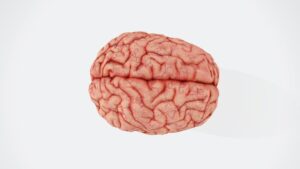
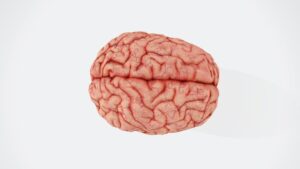
The fundamental mechanism underlying visual agnosia involves a disruption in the seamless connection between the primary visual cortex (V1), which handles basic feature extraction, and the association areas of the brain, particularly those within the temporal lobe, which store conceptual knowledge. The visual information is correctly registered and transmitted up to a certain point in the visual hierarchy, but the final, crucial step of recognition fails. This failure isolates the perception from the meaning, turning familiar objects into meaningless shapes and colors. This core disconnect highlights the specialized nature of visual processing, emphasizing that “seeing” and “understanding” what is seen are distinct, sequential neurological operations.
This inability to recognize visually is categorized based on the specific point of failure in the processing stream. In apperceptive agnosia, the individual cannot form a stable, coherent percept from the visual input, struggling even to copy simple drawings. In associative agnosia, however, the perception is intact (the patient can copy the drawing accurately), but the ability to link that fully formed image to its stored knowledge or name is lost. This distinction is foundational for understanding the precise locus of the neurological deficit.
Differentiation: Congenital vs. Acquired Agnosia
It is vital to distinguish between the two primary forms of visual agnosia: acquired and congenital. Acquired visual agnosia results from damage to the brain typically sustained later in life, often due to stroke, traumatic brain injury, or neurodegenerative disease. In contrast, congenital visual agnosia—the focus of this entry—is present from birth or early infancy, often without a clear history of focal brain trauma. This developmental nature suggests that the specific pathways necessary for normal object recognition failed to develop or organize properly during critical periods of neural growth, rather than being destroyed after maturation.
The presentation of congenital agnosia is often more complex than its acquired counterpart because the individual never experienced the world with normal visual recognition abilities. This lack of initial reference point forces the developing brain to rely heavily on compensatory strategies, such as touch, sound, and contextual cues, to navigate the environment. Research into congenital forms often provides unique insights into the plasticity of the developing nervous system and the obligatory role of early experience in shaping the complex circuits needed for visual consciousness and interpretation. Furthermore, congenital cases often exhibit greater variability in symptom presentation, as the developmental anomalies might affect different parts of the visual association cortex to differing degrees, leading to unique profiles of impairment.
While acquired agnosia involves the loss of previously learned recognition abilities, requiring the patient to relearn identification strategies, congenital agnosia requires the patient to build an entire semantic world without the primary, expected visual input pathway. This necessitates a fundamental restructuring of how the brain maps sensory experience onto stored concepts, often highlighting the remarkable efficiency of non-visual sensory modalities in constructing a functional model of the world.
Historical Foundations and Early Case Studies
The concept of Agnosia first gained significant academic attention in the late 19th century, largely attributed to the work of Austrian neurologist Heinrich Lissauer in 1890. Lissauer proposed a foundational distinction between two types of recognition failure: “apperceptive” and “associative” agnosia, a taxonomy that remains influential today. Lissauer’s framework provided the first systematic method for categorizing visual deficits, moving beyond simple blindness to address failures in interpretation, thereby establishing visual recognition as a distinct, multi-stage cognitive process requiring sequential integrity.
Later, influential figures such as Kurt Goldstein expanded upon the concept, linking agnosia more firmly to specific cerebral lesions and integrating these findings into a broader theory of holistic brain function. However, the study of congenital deficits gained particular prominence as neuroimaging techniques improved in the latter half of the 20th century. Classic early cases, particularly those involving specific deficits like the inability to recognize faces (a form known as prosopagnosia), spurred intense investigation into the precise localization of higher visual functions. These studies demonstrated that the brain is not a monolithic processing unit but rather a collection of specialized modules, reinforcing the modularity hypothesis that continues to drive cognitive neuroscience research today.
The emergence of developmental psychology also played a role, emphasizing that if structural abnormalities occur early in development, the resulting deficits are often more pervasive and complex due to the failure of foundational systems to be laid down correctly. Researchers began to track the developmental trajectories of children struggling with visual identification, often leading to the discovery that many previously undiagnosed learning difficulties stemmed from these underlying congenital visual processing errors rather than purely intellectual or attentional deficits.
Neuroanatomical Basis and Underlying Mechanisms
Visual processing in the human brain is governed by two major anatomical pathways, often referred to as the “Two Streams” hypothesis: the dorsal stream and the ventral stream. The dorsal stream, or the “where/how” pathway, extends toward the parietal lobe and is responsible for processing spatial location, movement, and guiding motor actions in relation to visual objects. The ventral stream, or the “what” pathway, extends toward the temporal lobe and is critically responsible for form processing, identification, and object recognition.
Congenital visual agnosia is overwhelmingly theorized to result from a developmental abnormality within the Ventral Stream. This pathway consists of a hierarchy of visual areas that progressively integrate basic features into complex visual representations. In individuals with this condition, the necessary hierarchical processing within the temporal lobe, including areas like the fusiform gyrus, fails to mature or connect effectively with semantic memory centers in the anterior temporal lobe. This structural or functional anomaly prevents the successful transformation of raw visual data into a recognizable object identity. This developmental failure, unlike acute injury, means the brain never properly establishes the complex feature integration necessary for immediate recognition, necessitating the reliance on slower, more analytical strategies utilizing the intact dorsal stream or other sensory modalities.
The specific brain regions implicated often include the lateral occipital complex (LOC) and the inferior temporal cortex. The LOC is critical for object shape perception, and developmental issues here can lead to profound deficits in holistic object recognition. Research often uses functional magnetic resonance imaging (fMRI) to show reduced or atypical activation in these Ventral Stream regions when congenital agnosia patients attempt visual identification tasks, confirming the anatomical basis of the functional impairment.
Illustrative Case Study and Practical Application
A classic, relatable example illustrating the coping mechanisms employed by someone with congenital visual agnosia involves navigating a common grocery store. Imagine a person, whom we will call Sarah, who has congenital visual agnosia. When Sarah looks at the produce section, she sees a mass of green and red shapes, but the visual information alone does not tell her which shapes are apples and which are oranges, or even which are edible fruit versus decorative plastic props. She can describe the colors and relative size, but the “apple-ness” is absent from the visual input.
Sarah overcomes this recognition failure by employing a multi-sensory and contextual strategy, demonstrating the brain’s enormous capacity for compensation. This process transforms what should be instant recognition into a deliberate, sequential problem-solving task.
-
Step 1: Contextual Inference and Location Mapping: Sarah relies heavily on the environment and memory, knowing that the “round, red things” are located in the specific bin of the produce aisle that usually contains apples. This contextual cue significantly narrows the possible identities of the object, reducing reliance on visual form analysis.
-
Step 2: Haptic Exploration (Touch): She actively reaches out and handles the item, feeling its shape, texture, and weight. The smooth, waxy skin and spherical shape, combined with its specific firmness, are tactile cues that confirm the identity of an apple. This haptic information bypasses the damaged visual recognition system entirely, providing a reliable alternative route to semantic knowledge.
-
Step 3: Analytical Feature Scanning: If the environment is confusing (e.g., items are mixed), she might revert to analyzing specific, non-holistic visual features, such as the small stem or a specific characteristic discoloration, using a point-by-point analysis rather than instant, global recognition. This slow, deliberate scanning is highly inefficient but necessary when other cues fail.
This methodical process shows that while the immediate, automatic visual recognition is impaired, the semantic knowledge (what an apple is, what it does, and what it feels like) remains perfectly intact. The challenge lies solely in the access route—the visual pathway—to that knowledge base, demonstrating the critical difference between visual perception and visual recognition.
Clinical Significance and Therapeutic Approaches
The study of Agnosia, both acquired and congenital, holds immense significance for clinical psychology and cognitive neuroscience. It provides crucial evidence for the modularity of the brain—the idea that specific cognitive functions are handled by dedicated neural systems. Clinically, understanding the developmental origins of congenital agnosia is essential for early diagnosis and intervention, particularly in pediatric neurology, as early diagnosis can prevent mislabeling the child with broader intellectual or behavioral disorders.
Treatment for congenital visual agnosia is rarely curative, focusing instead on intensive rehabilitative strategies designed to maximize the use of intact sensory and cognitive systems. These therapeutic approaches often focus on perceptual learning and compensatory training, aiming to build new, functional neural pathways to semantic memory.
-
Perceptual Learning: This involves highly structured, repetitive training tasks designed to force the brain to reorganize the processing of visual features. For example, focusing on distinctive features of objects (the handle of a cup, the sharp point of a pencil) rather than relying on holistic shape processing. This approach attempts to retrain the visual system to use analytical, feature-based identification instead of the failed holistic recognition.
-
Contextual and Feature Substitution Training: Patients are taught to consciously substitute visual recognition with alternative cues, such as learning to identify voices and gaits instead of faces for those with prosopagnosia, or relying heavily on spatial memory (intact dorsal stream function) to navigate known environments and locate objects.
-
Technological Aids: The increasing sophistication of descriptive technology, such as apps that use machine learning and artificial intelligence to identify objects and speak the name aloud, can bridge the gap between visual input and semantic understanding, offering a crucial lifeline for independence and access to information previously blocked by the visual deficit.
Related Disorders and Psychological Connections
Congenital visual agnosia sits within the broader category of Cognitive Neuropsychology, a subfield dedicated to understanding the neural basis of mental processes. It is closely related to several other neurological conditions involving specific sensory or cognitive deficits that follow the principle of modularity.
One of the most frequently discussed connections is with Developmental Prosopagnosia (DP), which is often considered a highly specific, domain-limited form of congenital associative agnosia. Individuals with DP struggle specifically with face recognition, suggesting a developmental failure confined primarily to the Fusiform Face Area, a specialized region within the Ventral Stream. While general object recognition might be functional, face recognition is impaired, highlighting the brain’s specialized architecture for processing complex social stimuli.
Furthermore, agnosia is contrasted with aphasia (difficulty with language generation or comprehension) and apraxia (difficulty performing purposeful movements). These conditions, along with agnosia, are all examples of higher-order cognitive deficits resulting from specific localized brain damage or developmental anomalies. The study of all these specific deficits helps to map the functional organization of the brain, reinforcing the understanding that complex human behavior is the result of intricate, interconnected, yet specialized neural modules. The profound failure of visual interpretation in agnosia provides a unique and powerful model for studying the intricate journey from raw sensory data to conscious, meaningful recognition.