Conscience: Harnessing Your Internal Moral Compass
Scientifically Reviewed · Dr. Marwa Abd-Alazim · August 24, 2026
Review Criteria & Clinical Standards
This content undergoes rigorous scientific peer-review and medical editorial standards at Arab Psychology Network to ensure clinical accuracy, validity, and compliance with evidence-based guidelines from leading psychological and healthcare authorities (APA / WHO).

Defining Conscience: The Moral Compass
Conscience is fundamentally defined as a person’s intrinsic knowledge of right and wrong, acting as an internal moral compass that guides behavioral choices and evaluates past actions. This complex psychological construct serves as the primary mechanism for self-adjudication, involving both cognitive deliberation regarding ethical principles and affective responses, such as feelings of guilt or satisfaction, following adherence to or deviation from those principles. Unlike abstract philosophical ethics, conscience operates on an immediate, personal level, translating societal or parental moral mandates into actionable, internalized standards. The operation of conscience is often described as a self-regulatory system, essential for maintaining social cohesion and individual moral integrity within a community.
The crucial function of conscience is its role as a prescriptive and evaluative moderator. Prescriptively, it informs the individual about the moral necessity of a certain action before it is taken, urging conformity to established moral codes. Evaluatively, it judges behavior retroactively, generating feelings of moral distress, commonly referred to as guilt, when actions violate these internalized standards, or feelings of virtue and self-respect when behaviors align with them. This continuous internal dialogue demonstrates that conscience is not merely a static repository of rules, but a dynamic, active process involving self-reflection, emotional feedback, and the application of moral reasoning to specific, real-world situations. The effectiveness of this internal system is highly dependent upon the clarity and coherence of the moral framework the individual has adopted, whether consciously or unconsciously.
While often perceived as an innate moral faculty, psychological research overwhelmingly suggests that conscience is largely a product of learning, socialization, and internalization. It is the result of thousands of interactions where external authority figures—parents, teachers, and religious institutions—impart values, rules, and expectations. Over time, these external demands are assimilated and transformed into an internal voice, making the individual responsible for their own moral conduct rather than reliant solely on external surveillance or punishment. This transition from extrinsic control to intrinsic moral self-governance marks a key milestone in psychological maturity, enabling individuals to make autonomous ethical choices even in the absence of immediate social accountability.
Historical and Philosophical Foundations
The concept of conscience, though named differently, has been central to Western philosophical inquiry since antiquity. Ancient Greek thinkers, notably Socrates and Aristotle, explored the idea of an innate moral knowledge that drives humans towards the good life. Socrates spoke of his daimonion, an internal divine sign that restrained him from incorrect actions, illustrating an early recognition of an inhibitory moral function. Aristotle, in his ethical framework, emphasized practical wisdom (phronesis), suggesting that moral decision-making is a rational process requiring knowledge and habitual practice leading to virtue. These early views established conscience not as a separate entity, but as an integral aspect of rational thought and the pursuit of flourishing.
During the Medieval period, particularly in Scholastic philosophy, the concept was formalized into the dual notions of synderesis and conscientia. Synderesis was defined as the innate habit or power of the soul to grasp the first principles of morality—the universal moral law, such as “do good and avoid evil.” Conscientia, in contrast, was the specific application of those universal principles to particular actions, representing the practical judgment of conscience we recognize today. This distinction provided a robust framework for understanding how fundamental moral truths are accessed and then utilized in the messy complexity of daily life, firmly grounding conscience within rational theology and natural law theory.
The Enlightenment era saw a significant shift away from divine command towards human reason as the source of moral authority. Perhaps the most influential philosophical articulation of conscience during this period came from Immanuel Kant, who viewed conscience as the inner court of judgment where all thoughts stand accused or acquitted. Kant’s ethics are defined by the Categorical Imperative, which demands that one act only according to that maxim whereby one can, at the same time, will that it should become a universal law. For Kant, conscience is the faculty that tests the maxims of one’s actions against this universal standard of rationality, asserting that a moral act must be motivated purely by duty and respect for the moral law, thereby elevating the individual’s internal reasoning above external consequences or emotional inclinations.
The Psychoanalytic Perspective: Conscience as Superego
In the realm of psychoanalysis, Sigmund Freud provided a structural model of the psyche that inextricably linked conscience to the concept of the superego. The superego is the third component of the psychic apparatus, alongside the id (primitive instincts) and the ego (reality principle). The superego represents the moral and ethical restraints placed upon a person, functioning as the internal representative of societal and parental standards and prohibitions. It is the critical, self-observing, and moralizing agency of the mind, acting as the primary evaluator and moderator of one’s behaviors and state of mind, fulfilling the role traditionally ascribed to conscience.
Freud posited that the superego develops primarily during the phallic stage of psychosexual development (around ages 3-5), specifically through the resolution of the Oedipus complex. The child, fearing parental disapproval and punishment, internalizes the moral standards and prohibitions of the parents, particularly the father figure, in a process known as identification. This internalization transforms external control into internalized moral authority. The intensity of the early emotional experience, coupled with the power dynamics of the parent-child relationship, dictates the strength and severity of the resulting superego. A powerful, overly harsh superego can lead to chronic feelings of guilt and self-punishment, whereas a deficient or underdeveloped superego may manifest in moral laxity or antisocial behavior.
The superego itself is composed of two distinct, yet integrated, subsystems. The first is the Conscience (often capitalized in this specific context), which is responsible for administering punishment. It houses the prohibitions and negative injunctions learned from parents—the “don’ts.” When the ego acts contrary to these prohibitions, the Conscience inflicts moral pain in the form of guilt, shame, and self-reproach, thereby punishing the transgression and compelling the ego towards corrective action. This mechanism explains why Mary’s conscience got the best of her and she confessed her role in the crime, as described in the original example, illustrating the punitive and compelling power of this internalized moral judge.
The second subsystem is the Ego Ideal, which represents the positive aspirations, moral goals, and images of perfection derived from the admired qualities of parents and other authoritative figures. The Ego Ideal establishes the standards one strives to meet and, when successful, rewards the ego with feelings of pride, self-worth, and accomplishment. Thus, the superego operates through a dual system of internal punishment (guilt from the Conscience) and internal reward (pride from the Ego Ideal), ensuring continuous moral self-regulation and driving the individual toward socially acceptable and morally virtuous behavior throughout life.
Developmental Psychology and Moral Acquisition
Developmental psychologists have sought to map the trajectory by which conscience is acquired and refined throughout childhood and adolescence. Early work by Jean Piaget, and later the highly influential research of Lawrence Kohlberg, demonstrated that moral reasoning, the cognitive component of conscience, progresses through distinct, hierarchical stages. Kohlberg’s model identifies three major levels of morality: the Preconventional, Conventional, and Postconventional. In the earliest stages, moral judgments are based on external consequences, such as punishment avoidance or reward seeking, indicating that conscience is initially driven by pragmatic self-interest rather than true moral internalization.
The transition to the Conventional level, typically occurring during middle childhood, signifies the true emergence of a socialized conscience. At this stage, individuals internalize the rules and expectations of society and authority figures, recognizing the importance of maintaining social order and fulfilling one’s duty. The moral evaluation shifts from “Will I get punished?” to “Is this action legal or approved by my group?” This stage is crucial because it solidifies the understanding that moral principles apply universally within the community, providing the foundation for reliable, predictable ethical behavior. The child begins to experience genuine guilt when violating established norms, reflecting the consolidation of the internalized superego structure.
Beyond the conventional adherence to rules, the Postconventional level, rarely reached by all adults, involves the development of moral principles that transcend specific laws or group norms. Here, conscience is informed by abstract, universal ethical principles, such as justice, human rights, and the dignity of the individual. A person operating at this level might consciously violate a law if they perceive it to be unjust, indicating a highly autonomous and deeply reasoned moral faculty. The maturation of conscience therefore involves not just memorizing rules, but developing the cognitive capacity for abstract reasoning, allowing the individual to engage in sophisticated moral deliberation and the adjudication of complex ethical dilemmas.
Further research, particularly within the framework of Social Learning Theory, emphasizes the role of emotional bonds and observational learning in the formation of conscience. Children learn moral behavior and emotional responses to transgression (guilt, shame) by observing and identifying with their primary caregivers. The quality of attachment is critical; secure attachments facilitate the development of a resilient and flexible conscience, as children are motivated to please trusted caregivers and maintain the relationship. Modeling of compassionate and fair behavior by adults, combined with consistent, yet supportive, discipline, ensures that the child internalizes appropriate emotional responses essential for moral self-regulation.
Neuroscientific Correlates of Moral Judgment
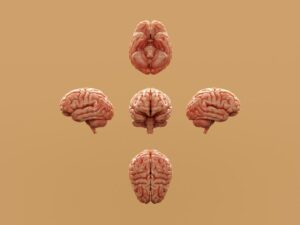
Modern neuroscience provides empirical insight into the biological underpinnings of conscience, treating moral judgment not as a purely abstract philosophical concept but as a function localized within specific neural circuits. Research utilizing functional magnetic resonance imaging (fMRI) has identified several key brain regions consistently activated during complex moral reasoning tasks, such as the famous “Trolley Problem” dilemmas, which force a conflict between utilitarian outcomes and personal moral prohibitions.
The Prefrontal Cortex (PFC), particularly the ventromedial prefrontal cortex (VMPFC), is central to the cognitive and emotional integration necessary for conscientious decision-making. The VMPFC is crucial for generating intuitive moral sentiments and integrating emotional responses—like empathy and anticipated guilt—into complex judgments. Damage to the VMPFC does not impair abstract knowledge of moral rules, but significantly compromises the ability to act morally, often leading to impulsive, self-serving, and utilitarian choices, demonstrating a disconnection between knowing what is right and feeling the necessary emotional compulsion to act upon that knowledge.
Moral judgments are fundamentally a balance between cognitive assessment and emotional processing. While the PFC handles deliberation and long-term planning, structures like the amygdala and the insula are critical for processing emotional saliency, fear, and disgust, which are powerful inputs into the system of conscience. The amygdala’s role in assessing threat and generating fear is linked to the development of avoiding prohibited actions due to the anticipation of punishment or guilt. A functioning conscience requires this intricate neural network to seamlessly link learned social rules with robust emotional feedback, ensuring that moral principles are not just intellectual concepts but carry sufficient motivational weight to influence behavior.
Conscience, Guilt, and Ethical Behavior
The functional output of conscience is the regulation of ethical behavior, primarily managed through the experience of guilt. Guilt is the specific moral emotion generated when an individual recognizes that they have transgressed their own internalized standards, often focusing on the harm done to others. Psychologists distinguish between healthy, motivational guilt and pathological shame. Functional guilt serves a prosocial purpose: it motivates confession, apology, and reparative action, restoring the moral balance and reinforcing the individual’s commitment to ethical norms.
In contrast, shame is generally focused on the self (“I am a bad person”) rather than the action (“I did a bad thing”). Shame is often paralyzing and destructive, leading to withdrawal and avoidance, whereas guilt is action-oriented and constructive. A well-developed conscience utilizes guilt as a feedback mechanism to ensure future compliance and accountability. The capacity to feel genuine guilt is often seen as a prerequisite for empathy, as the individual must be able to understand and internalize the impact of their actions on others to trigger the internal moral distress.
The presence of a robust conscience is also strongly correlated with prosocial behavior—actions intended to benefit others. Individuals with strong moral integrity tend to exhibit higher levels of altruism, cooperation, and ethical consistency, even when these actions incur a personal cost. This demonstrates that the function of conscience extends beyond merely inhibiting negative behavior; it actively promotes positive engagement with the social world, driving the individual towards communal responsibility and altruistic action.
A mature and well-integrated conscience is characterized by several key traits. It is flexible enough to adapt to new situations but firm enough to resist temptation. It is informed by reason but backed by emotional conviction. Key characteristics include:
- Moral Consistency: Applying the same standards across different situations and relationships.
- Self-Correction Capacity: The ability to acknowledge wrongdoing, experience reparative guilt, and modify future behavior.
- Empathy-Driven Judgment: Integrating the perspective and emotional state of others into moral calculations.
- Autonomy: Basing moral decisions on internalized principles rather than solely on fear of external punishment or desire for reward.
Conscience in Clinical and Social Contexts
The absence or severe impairment of conscience is a critical feature in various clinical diagnoses, most notably Antisocial Personality Disorder (APD) and psychopathy. These conditions are characterized by a profound deficit in moral affect, specifically the inability to experience genuine guilt, remorse, or empathy for the suffering caused to others. While individuals with APD often possess an intellectual understanding of moral rules (cognitive knowledge of right and wrong), they lack the emotional conviction or internal moderator—the superego’s punitive function—to compel adherence to those rules.
In clinical practice, the assessment of conscience often involves evaluating the patient’s capacity for introspection, their response to ethical dilemmas, and their history of moral consistency. A lack of conscience is linked to manipulative behavior, chronic irresponsibility, and a tendency toward violating the rights of others without distress. This deficiency is often attributed to a failure in the early developmental stages of the superego, potentially compounded by biological factors affecting the VMPFC and amygdala, leading to a state of moral disengagement where ethical constraints are routinely bypassed.
Beyond the individual, the concept of conscience scales up to address collective ethics, often referred to as collective conscience or social morality. This refers to the shared beliefs, moral attitudes, and ethical frameworks that bind a society or organization together. Institutions, corporations, and governments are increasingly expected to operate with a “corporate conscience,” meaning they must integrate ethical considerations—such as sustainability, social justice, and fair labor practices—into their operational frameworks, demonstrating accountability that extends beyond mere legal compliance.
Ultimately, conscience remains a cornerstone of psychological and ethical life. Whether viewed through the deterministic lens of the Freudian superego, the rational framework of Kantian duty, or the empirical findings of neurobiology, conscience functions as the essential psychological apparatus that transforms humans from creatures of instinct into moral agents capable of self-regulation, empathy, and deliberate ethical choice, ensuring both individual psychological health and the stability of the social order.