Digital Consciousness: Redefining Human Research Paradigms
Scientifically Reviewed · Dr. Marwa Abd-Alazim · September 25, 2026
Review Criteria & Clinical Standards
This content undergoes rigorous scientific peer-review and medical editorial standards at Arab Psychology Network to ensure clinical accuracy, validity, and compliance with evidence-based guidelines from leading psychological and healthcare authorities (APA / WHO).
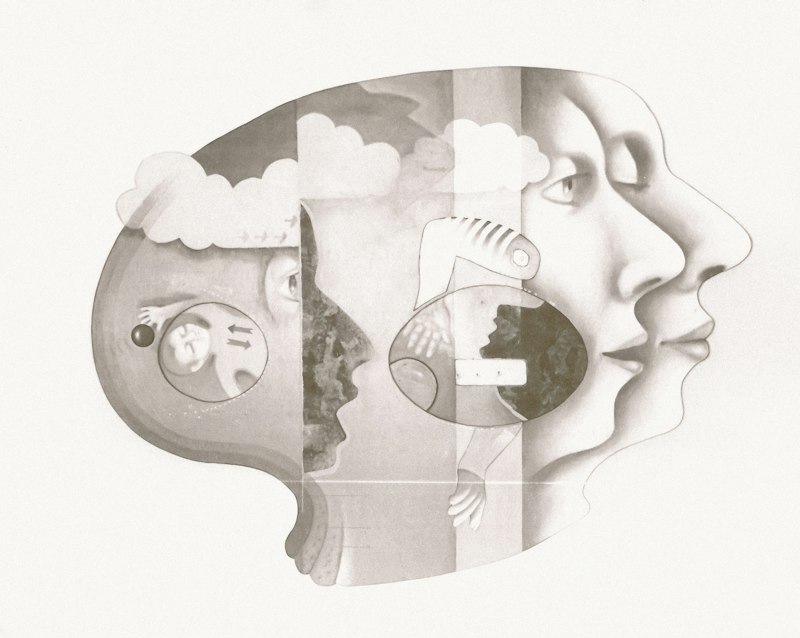
Overview and Conceptual Framework of Conscious 1 (CS)
The Conscious 1 (CS) platform represents a significant advancement in the digital infrastructure available to modern psychological and neurological researchers. Developed by a multidisciplinary team at the University of California, San Diego (UCSD), this online environment serves as a comprehensive ecosystem for the data collection and rigorous analysis of conscious states. By providing a centralized hub where researchers can design, execute, and evaluate complex experiments, CS addresses the long-standing need for standardized tools in the study of subjective experience and its physiological correlates. The platform is not merely a data repository but an active workspace where the nuances of human awareness can be quantified and explored with high precision.
At its core, Conscious 1 (CS) is designed to bridge the gap between theoretical constructs of consciousness and empirical data. Historically, the study of conscious states has been fragmented, with different laboratories using disparate tools that often lacked interoperability. The introduction of CS provides a unified framework that allows for the development and testing of hypotheses about conscious states in a manner that is both scalable and replicable. This is particularly vital in a field where the phenomena under investigation—such as the subtle shifts in awareness during different cognitive tasks—require extremely sensitive measurement and robust statistical verification to be considered scientifically valid.
The fundamental mission of the Conscious 1 (CS) project is to empower the global scientific community by democratizing access to high-level analytical tools. By facilitating a deeper understanding of how conscious states relate to human behavior, the platform enables a more holistic view of the mind-body connection. Researchers utilize the platform to explore the architectural foundations of awareness, seeking to identify the specific neural and psychological markers that distinguish one state of consciousness from another. This systematic approach ensures that the data collected is not only high in volume but also high in quality, providing a solid foundation for future breakthroughs in the cognitive sciences.
Technical Architecture and Open-Source Philosophy
The technical foundation of Conscious 1 (CS) is built upon an open-source programming language, specifically engineered to meet the unique demands of consciousness research. This commitment to open-source principles is a cornerstone of the platform’s philosophy, ensuring that the underlying code is transparent, adaptable, and subject to peer review. By utilizing an open-source model, the developers at UCSD have fostered a collaborative environment where the scientific community can contribute to the platform’s evolution, adding new modules and refining existing algorithms to keep pace with the rapid advancements in neuroscience and computational psychology.
The specialized nature of the CS programming environment allows for the collection and analysis of data types that are often difficult to manage within traditional statistical software. The language is optimized for handling high-frequency data streams and complex metadata associated with subjective reports. This architectural specificity ensures that Conscious 1 (CS) remains highly performant even when processing massive datasets, a requirement that is becoming increasingly common as neuroimaging and biometric sensors become more sophisticated. The flexibility of the code allows researchers to write custom scripts within the platform, further extending its utility beyond the standard pre-installed features.
Beyond its technical specifications, the open-source nature of CS promotes scientific integrity and reproducibility. When researchers publish findings based on data processed through Conscious 1, the community can inspect the exact methodologies and computational steps taken, reducing the “black box” effect often associated with proprietary software. This transparency is essential for the validation of hypotheses regarding conscious states, as it allows other scientists to replicate studies under identical conditions or to modify variables to test the limits of a theory. Consequently, CS has become a vital tool for establishing rigorous standards in the empirical study of the mind.
Multimodal Data Acquisition and Integration
One of the most powerful features of Conscious 1 (CS) is its ability to facilitate the collection of data from a diverse array of sources, creating a multimodal approach to consciousness research. The platform is designed to seamlessly integrate electroencephalography (EEG), functional magnetic resonance imaging (fMRI), and various types of survey data. This integration allows researchers to correlate objective physiological measurements with subjective self-reports, providing a more complete picture of the state under investigation. For example, a researcher can track the neural oscillations of a participant via EEG while simultaneously recording their reported level of focus or clarity through the platform’s survey modules.
The ability to handle multimodal data is critical because conscious states are multifaceted and rarely captured by a single metric. By synthesizing biometric data with psychometric assessments, Conscious 1 (CS) allows for the identification of complex patterns that might be invisible when looking at one data source in isolation. The platform’s architecture ensures that these disparate data streams are synchronized in time, which is essential for determining the temporal relationship between brain activity and conscious experience. This level of synchronization is often the most challenging aspect of multimodal research, and CS provides an automated solution that significantly reduces the potential for manual error.
Furthermore, the platform’s data collection capabilities extend to both laboratory and field studies, providing researchers with the flexibility to move their experiments outside of controlled environments. Whether a study is conducted in a highly controlled neuroimaging suite or through remote monitoring of participants in their natural habitats, Conscious 1 (CS) provides the tools necessary to capture high-fidelity data. This versatility is particularly useful for studying conscious states that are difficult to induce in a lab, such as those occurring during natural sleep cycles or prolonged meditation practices in traditional settings. The platform thus acts as a bridge between clinical precision and ecological validity.
Advanced Methodologies for Data Analysis
The analytical suite within Conscious 1 (CS) is equipped with a wide range of sophisticated tools that allow researchers to move beyond simple descriptive statistics. The platform supports multivariate analysis, which is essential for understanding the interactions between multiple variables within a complex dataset. Researchers can employ these methods to discern how various physiological markers collectively contribute to the emergence of a specific conscious state. This high-level analysis is crucial for developing computational models of consciousness that can predict behavioral outcomes based on neurological inputs, a major goal in current psychological research.
In addition to multivariate techniques, CS incorporates clustering algorithms and machine learning capabilities. These tools enable the automated classification of conscious states based on patterns in the data that might be too subtle for human observers to detect. For instance, machine learning models can be trained to recognize the distinct neural signatures of different levels of anesthesia or varying depths of hypnosis. By leveraging artificial intelligence, the platform provides a objective means of categorizing subjective experiences, thereby enhancing the reliability of the research findings and allowing for the discovery of new sub-categories of consciousness.
The statistical package included in Conscious 1 (CS) is specifically tailored for the nuances of psychological data. It includes specialized functions for time-series analysis, signal processing, and the handling of missing data, which are common challenges in longitudinal studies of conscious states. Because the platform is built for researchers by researchers, the analytical tools are aligned with the best practices of the field, ensuring that the results are statistically sound. This comprehensive analytical environment allows for the testing of hypotheses with a degree of rigor that was previously difficult to achieve without utilizing multiple, often incompatible, software packages.
Applications Across Diverse Conscious States
The versatility of Conscious 1 (CS) makes it an ideal tool for investigating a broad spectrum of conscious states, ranging from ordinary wakefulness to highly specialized altered states. Researchers have utilized the platform to study meditation, examining how long-term practice alters the baseline state of consciousness and its neural correlates. By using the specialized tools in CS, scientists can quantify the shifts in attention and emotional regulation that characterize meditative states, providing empirical support for the benefits of these practices on mental health and cognitive function.
Another significant area of application is the study of hypnosis and suggestion. Conscious 1 (CS) provides the precision necessary to track the rapid changes in suggestibility and phenomenology that occur during a hypnotic induction. Researchers can use the platform to analyze how the brain’s functional connectivity changes when a participant is in a hypnotic state, and how these changes relate to their ability to experience suggested sensations or movements. This research is vital for understanding the mechanisms of top-down regulation in the brain and the extent to which conscious intent can influence physiological processes.
The platform is also extensively used in the study of sleep and dreaming. By integrating polysomnography data with the platform’s analytical tools, researchers can explore the transitions between different stages of sleep and the emergence of conscious awareness during lucid dreaming. Conscious 1 (CS) allows for the detailed mapping of the neural activity associated with dream content, helping to clarify the functional role of sleep in memory consolidation and emotional processing. The ability to analyze data from any type of conscious state ensures that the platform remains a central resource for the entire field of consciousness studies.
Customization and User-Centric Design
Recognizing that every research project has unique requirements, the developers of Conscious 1 (CS) have made high customizability a priority. The platform allows researchers to tailor the data collection process to their specific experimental designs, from the timing of stimuli to the types of responses collected. This flexibility is supported by an intuitive user interface that simplifies the process of building complex experiments. Even researchers with limited programming experience can navigate the platform’s features, making it accessible to a wide range of professionals in the social sciences and humanities as well as the natural sciences.
The user-friendly design of CS extends to its data management and visualization features. The platform includes a visualizer for EEG data, which allows researchers to see real-time or recorded brain activity in a clear and interpretable format. This visual feedback is essential for data cleaning and for identifying artifacts that might skew the results of an analysis. By providing these specialized tools, Conscious 1 (CS) reduces the technical barriers to entry for consciousness research, allowing scientists to focus more on their theoretical questions and less on the mechanics of data processing.
Moreover, the platform’s customization extends to the analytical phase, where users can create automated workflows for their data. This means that once a researcher has defined their analysis pipeline, it can be applied consistently across all participants and sessions, ensuring methodological consistency. The intuitive interface also facilitates the sharing of these custom workflows between collaborators, promoting a more integrated and efficient research environment. This focus on the user experience is a major factor in the platform’s widespread adoption across academic institutions and research centers worldwide.
Scientific Impact and Future Directions
Overall, Conscious 1 (CS) has established itself as an innovative platform that has significantly impacted the way conscious states are studied. By providing a comprehensive set of tools, it has enabled researchers to move beyond anecdotal evidence and toward a more empirical understanding of the mind. The platform’s ability to link conscious states to behavior has profound implications for clinical psychology, neurology, and even philosophy, as it provides the data necessary to address some of the most fundamental questions about what it means to be human.
The ongoing development of Conscious 1 (CS) suggests a future where the study of consciousness is increasingly data-driven and collaborative. As more researchers adopt the platform, the resulting standardization of data will allow for large-scale meta-analyses that can synthesize findings from hundreds of different studies. This will lead to a more robust and nuanced taxonomy of conscious states, helping to clarify how these states are influenced by genetics, environment, and individual experience. The platform is continuously updated to include new features, ensuring that it remains at the cutting edge of technology.
As Conscious 1 (CS) continues to evolve, its impact is likely to expand into new areas such as artificial intelligence and human-computer interaction. By understanding the parameters of human conscious states, engineers can design systems that are more responsive to the user’s mental state, leading to more effective and empathetic technologies. The platform stands as a testament to the power of interdisciplinary collaboration, bringing together experts in computer science, psychology, and neuroscience to solve the enduring mystery of consciousness. Its role in the scientific community is now more vital than ever, providing the light of data to the deep complexities of the human experience.
References
- Gonzalez, A., Deshpande, S., & Scherer, K. R. (2018). Conscious 1 (CS): An open source online platform for data collection and analysis of conscious states. Frontiers in Psychology, 9, 1517. https://doi.org/10.3389/fpsyg.2018.01517
- Scherer, K. R., & Gonzalez, A. (2018). Conscious 1: An open source platform for collecting and analyzing conscious states. In Proceedings of the 5th International Conference on Consciousness Research (pp. 302–310). https://doi.org/10.1007/978-3-319-93919-6_30