Cognitive Control: Master Your Mental Focus
Scientifically Reviewed · Dr. Marwa Abd-Alazim · August 24, 2026
Review Criteria & Clinical Standards
This content undergoes rigorous scientific peer-review and medical editorial standards at Arab Psychology Network to ensure clinical accuracy, validity, and compliance with evidence-based guidelines from leading psychological and healthcare authorities (APA / WHO).

Introduction and Definitional Scope
Control processes, within the field of cognitive psychology, refer to the dynamic, effortful, and optional procedures that govern the flow and manipulation of information within the human memory system. These processes are fundamentally distinct from the fixed structural components of memory itself, such as the sensory register or long-term store. They represent the active management and strategic direction of cognitive resources necessary for goal-directed behavior. The conceptual foundation for control processes was initially formalized by prominent American cognitive psychologists, Richard C. Atkinson and Richard M. Shiffrin, in their influential 1968 and 1971 work detailing the Multi-Store Model of Memory. Their theory posited that while the architecture of memory (the storage locations) remains relatively constant, the operations performed on the stored data—the control processes—are flexible, adaptable, and subject to conscious volition. This distinction highlights the active role of the individual in managing their own cognitive state, particularly when faced with novel or complex informational demands.
The initial definition focused heavily on the mechanics of data transformation and maintenance, specifically regarding procedures which change or modify data stored in Short-Term Memory (STM). STM, viewed as a limited-capacity, temporary working space, requires constant active intervention to prevent information decay or displacement. Control processes, therefore, are the procedures employed to sustain information in STM long enough for utilization or transfer, or to strategically encode it for future, permanent storage. Because these operations are effortful and require attentional resources, they contrast sharply with automatic processes which occur without conscious monitoring or significant cognitive load. The effectiveness of any cognitive task—from problem-solving to complex comprehension—is largely dependent upon the efficiency and sophistication of the control processes utilized by the individual.
In modern cognitive frameworks, control processes remain essential, often overlapping conceptually with the operational aspects of working memory and executive functions. They are the mechanisms by which we organize the movement of data within information-processing arenas, ensuring that crucial data is prioritized, maintained, and accurately retrieved when needed. This organizational function is not passive; it involves continuous monitoring, selection, and inhibition. For instance, deciding which piece of information warrants rehearsal, or selecting a specific strategy for accessing a distant memory, are all manifestations of control processes at work. Their strategic nature underscores their importance in learning, adaptation, and complex human cognition, placing them at the center of how individuals regulate their interaction with the information-rich environment.
The Atkinson-Shiffrin Model and STM Interaction
The theoretical significance of control processes is inseparable from the Atkinson-Shiffrin Multi-Store Model, which provided the first major cognitive architecture highlighting the interplay between different memory stores. Within this model, the sensory registers capture fleeting information, which may then be transferred to the STM. The STM acts as the crucial bottleneck, holding information for only a short duration (typically 15–30 seconds) unless actively manipulated. Control processes were conceptualized as the operator’s toolkit, residing primarily within the STM, dedicated to overcoming these temporal and capacity limitations. Without the application of control processes, information entering the STM is rapidly lost, rendering learning impossible. Therefore, the strategic application of procedures such as rehearsal or selective attention determines the fate of incoming data—whether it is maintained, lost, or successfully transferred into the expansive Long-Term Memory (LTM) store.
The interaction between control processes and the structural components is highly dynamic. For example, the rate and quality of information transfer from STM to LTM are entirely contingent upon the specific control process employed. Simple maintenance rehearsal (e.g., repeating a phone number) is a low-level control process that keeps data active in STM but is relatively ineffective for permanent learning. Conversely, elaborative rehearsal, a higher-order control process, involves linking new information to pre-existing knowledge structures in LTM, thereby forging a durable memory trace. This strategic choice—whether to simply maintain or to deeply elaborate—demonstrates the fundamental role of control processes in determining the depth of processing and, consequently, the likelihood of long-term retention.
Furthermore, control processes are indispensable for managing the limited capacity of STM, typically cited as holding about seven plus or minus two chunks of information. The control process of chunking allows the system to overcome this limitation by actively grouping individual items into meaningful, larger units. A string of twelve random digits, for example, exceeds STM capacity; however, applying the control process of chunking (e.g., grouping the digits into three four-digit years) allows the twelve items to be held as three unified chunks. This strategic restructuring of data is a quintessential example of how these flexible procedures enhance the efficiency and operational capacity of the cognitive system, optimizing the use of scarce attentional resources for ongoing cognitive tasks.
Core Characteristics and Functions of Control Processes
Control processes possess several defining characteristics that distinguish them from structural memory mechanisms. Firstly, they are fundamentally optional, meaning an individual must consciously choose to engage them. If a task is simple or familiar, the individual may rely on automatic processing; however, novel or challenging tasks necessitate the deliberate recruitment of control processes. Secondly, they are inherently strategy-dependent. The efficacy of the cognitive system is not just about having the capacity to store data, but about possessing a repertoire of strategies (e.g., mnemonic devices, organizational techniques, or retrieval cues) and the metacognitive ability to select the most appropriate strategy for a given situation. This strategic nature makes control processes the focal point of educational interventions aimed at improving learning and memory.
The functions performed by control processes can be categorized into four primary areas, all dedicated to the optimal management of information throughout the memory system. These functions ensure that information is actively managed from the moment it is perceived until it is permanently stored or retrieved:
- Selection and Attention: Directing attentional resources toward relevant stimuli and inhibiting distraction, thereby determining which information enters the STM workbench.
- Maintenance: Employing procedures like rehearsal to keep information active within STM, preventing decay or displacement by new incoming data.
- Encoding and Transfer: Strategically linking new information to established knowledge structures in LTM through elaborative techniques, facilitating durable storage.
- Retrieval: Implementing strategic search plans, often relying on contextual cues or specific organizational strategies, to efficiently locate and access stored information from LTM.
These coordinated functions illustrate that control processes are not isolated events but an integrated system of procedures designed to maintain cognitive efficiency. They operate constantly as the individual navigates the environment, translating goals into actionable steps that leverage the memory system’s capabilities.
The requirement for conscious control is perhaps the most critical characteristic. Unlike reflexes or highly practiced, automated behaviors, control processes demand focused attention and often increase cognitive load. This reliance on executive resources means that control processes are susceptible to fatigue, stress, and simultaneous competing tasks. When cognitive resources are depleted, individuals revert to simpler, less effective automatic strategies, leading to errors in encoding or retrieval. Understanding this resource dependency is key to appreciating why complex learning requires focused effort and sustained mental energy, as the conscious management of information flow is the most taxing aspect of cognitive work.
Specific Examples of Strategic Procedures
The most widely studied control process is rehearsal, the mental repetition of information. However, rehearsal is not monolithic; its effectiveness depends entirely on its form. Maintenance rehearsal, the simple repetition of an item, serves primarily to keep the item active in STM, preventing loss. While useful for temporarily holding a phone number or a short instruction, it does little to promote long-term learning. The more sophisticated and effective form is elaborative rehearsal. This procedure involves actively analyzing the meaning of the information, relating it to previous knowledge, generating associations, creating analogies, or visualizing the concept. Elaborative rehearsal is a powerful control process because it transforms the data from a simple acoustic or visual code into a rich, interconnected semantic network, vastly increasing the number of potential retrieval pathways in LTM.
Another essential category of control processes involves organizational strategies. The human mind seeks structure, and control processes leverage this tendency by structuring incoming data. Chunking, as previously noted, groups items into meaningful units. Beyond this, advanced organizational procedures include the creation of hierarchies, outlines, and mental maps. For instance, when studying complex biological concepts, a student might intentionally use a control process to create a hierarchical flow chart, placing general categories at the top and specific examples below. This active organization of material, before it is even stored, significantly improves the efficiency of both encoding and subsequent retrieval, as accessing one node in the network automatically activates related concepts.
The control process of strategic retrieval demonstrates the system’s reliance on active effort even after encoding is complete. Retrieval is rarely a passive ‘playback’ of a memory trace. Instead, when we attempt to recall something difficult, we engage in a controlled search process. This might involve mentally recreating the context in which the information was learned (relying on the encoding specificity principle), systematically running through categories, or initiating a focused, sequential search. For example, trying to recall a forgotten name might involve cycling through possible initial letters, recalling the social setting, or remembering the person’s profession. Such structured searching is a deliberate cognitive procedure, requiring sustained effort and monitoring—a pure example of a control process managing the movement of data within the information arena of LTM.
Control Processes and Executive Function
In contemporary cognitive models, control processes are considered the fundamental operational mechanisms of the broader construct known as Executive Functions (EF). Executive functions are high-level cognitive skills necessary for planning, decision-making, error correction, and goal-directed action. The three core components of EF—inhibitory control, cognitive flexibility (shifting), and working memory updating—are all intrinsically linked to and executed through strategic control processes. Inhibitory control, for example, is the control process that allows an individual to suppress irrelevant information (e.g., a distracting noise or a competing thought) so that attentional resources can be fully dedicated to the task at hand, such as elaborative rehearsal. Without effective inhibitory control as a control process, the STM workbench would quickly become cluttered and ineffective.
Cognitive flexibility, the ability to switch between different tasks or mental sets, also relies heavily on control processes. When a task demands a change in strategy—for instance, switching from studying facts to solving application problems—the individual must initiate a control process to disengage from the previous method and select a new, appropriate procedure. This switching mechanism requires the conscious manipulation and reorganization of the mental workspace, demonstrating the dynamism inherent in these procedures. Deficits in these executive control processes often manifest as difficulty with complex planning, persistent reliance on ineffective strategies (perseveration), or poor organizational skills, highlighting their criticality in adaptive behavior.
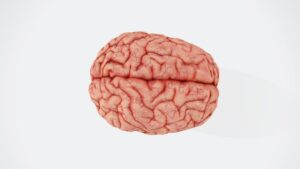
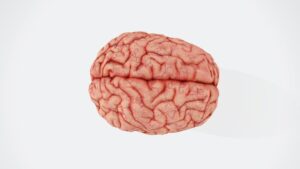
The neural substrate for these high-level regulatory mechanisms is primarily located in the prefrontal cortex (PFC). The PFC acts as the central orchestrator, managing the recruitment and deployment of control processes across different brain regions. Damage to the PFC often results in profound impairments in strategic thinking and self-regulation, even when basic sensory and memory capacities remain intact. This neurological evidence reinforces the concept that control processes are not merely theoretical constructs but are the tangible, measurable procedures by which the brain consciously manages its internal information flow to achieve complex, long-term objectives. They allow the individual to move beyond reflexive responses toward reasoned, strategic action.
Control Processes in Metacognition and Learning
The relationship between control processes and metacognition is foundational to effective learning. Metacognition, often defined as “cognition about cognition” or “thinking about thinking,” refers to an individual’s knowledge concerning their own cognitive processes and products, and the active regulation of those processes. Control processes are the behavioral manifestation of metacognitive knowledge. When a learner monitors their comprehension, judges the effectiveness of a study technique, or plans how much time to allocate to a difficult topic, they are engaging metacognitive abilities, which are executed via strategic control processes. For example, if a student realizes they have not understood a paragraph (metacognitive monitoring), they initiate a control process, such as re-reading with focused attention or summarizing the content aloud (elaborative rehearsal).
Effective learners are distinguished from less effective ones by the sophistication and flexibility of their control processes. They not only possess a wider array of strategies but also demonstrate greater skill in matching the strategy to the task demands. This is known as conditional knowledge within metacognition—knowing when and why to use a particular control process. When faced with a list of dates, a sophisticated learner might choose a mnemonic device (a specialized control process); when faced with a complex conceptual chapter, they might choose self-explanation and diagramming. Poor learners, conversely, may rely on a single, often ineffective, strategy like simple repetitive reading, regardless of the material, illustrating a deficiency in both metacognitive monitoring and strategic control process execution.
In educational contexts, the training of control processes is synonymous with teaching students how to study and learn autonomously. Curricula designed to foster metacognitive awareness explicitly teach students to employ strategic procedures, such as generating self-test questions, summarizing material in their own words, or using visual organization tools. By making these procedures conscious and explicit, educators help students internalize the organizational requirements of effective learning, shifting the student from a passive recipient of information to an active manager of their own cognitive resources. This development underscores the vital link between controlled cognitive procedures and lifelong intellectual development.
Developmental Trajectories and Training
Control processes are not innate but develop gradually throughout childhood and adolescence, often lagging behind the development of structural memory capacity. Young children frequently exhibit what psychologists term production deficiencies: they possess the physical ability to perform a strategic control process (like rehearsal) but fail to spontaneously produce or implement it when appropriate. An older child, upon realizing they need to remember a list of items, will automatically initiate rehearsal; a younger child may not. Later, children may enter a phase of utilization deficiencies, where they attempt to use a strategy but do not yet gain a performance benefit, perhaps due to the attentional cost of initiating the new control process overwhelming the benefits of the strategy itself.
Cognitive training interventions are specifically designed to address these deficiencies by teaching and practicing effective control processes. Training often involves modeling the strategic procedure, providing guided practice, and offering feedback aimed at increasing the learner’s awareness of how the strategy improves performance. For instance, instructing students on how to use a specific organizational strategy for note-taking—a key control process—can significantly boost academic outcomes. The ultimate goal of such training is the internalization and automation of these procedures, moving them from effortful, consciously controlled operations to automatic, efficient habits that are readily deployed without excessive cognitive load.
The maturation of the prefrontal cortex correlates with the increasing sophistication and efficiency of control processes. As the PFC develops, adolescents become increasingly proficient at long-term planning, complex inhibition, and the sustained application of multi-step strategic procedures. This developmental arc culminates in the adult capacity for self-regulated learning, where the individual possesses a robust toolkit of control processes and the metacognitive skills necessary to apply them flexibly and effectively across diverse cognitive challenges. Thus, the development of control processes is a critical indicator of cognitive maturity and readiness for independent learning and complex professional tasks.
Practical Applications and Significance
In summation, control processes are indispensable procedures that organize the movement of data within information-processing arenas, mediating the delicate and critical transfer of data between temporary and permanent memory stores. They represent the active, conscious effort an individual exerts to structure, maintain, and retrieve information. Their practical significance extends far beyond the laboratory, touching every aspect of complex human endeavor that requires learning, adaptation, and skill acquisition.
The application of effective control processes is particularly evident in high-stakes cognitive tasks, such as academic preparation and the acquisition of complex procedural knowledge. As the initial observation noted, control processes are indeed great ways to study for tests. A student who employs the control process of active recall (testing oneself) or elaborative summarization will outperform a student who relies solely on passive re-reading. Furthermore, these processes are beneficial to those learning to read music. Reading music requires the rapid and temporary storage of visual information (notes on the staff), the chunking of those notes into meaningful chords or rhythmic phrases, and the simultaneous coordination of motor output—all dependent on highly efficient, rapid control processes managing the working memory load. The ability to inhibit irrelevant visual stimuli and maintain the sequence of notes through rehearsal are necessary procedures for fluent musical performance.
Ultimately, control processes are the cognitive mechanisms that transform raw sensory input into meaningful, actionable knowledge. They are the essence of strategic thought, allowing individuals to exert mastery over their own cognitive apparatus. By providing the flexibility to select and execute specific procedures—from simple repetition to complex metacognitive planning—these processes serve as the key determinant of cognitive performance, problem-solving ability, and overall intellectual competence across the lifespan.