Cortical Deafness: When the Brain Fails to Hear
Scientifically Reviewed · Dr. Marwa Abd-Alazim · October 14, 2026
Review Criteria & Clinical Standards
This content undergoes rigorous scientific peer-review and medical editorial standards at Arab Psychology Network to ensure clinical accuracy, validity, and compliance with evidence-based guidelines from leading psychological and healthcare authorities (APA / WHO).
The Core Definition of Cortical Deafness
Cortical Deafness (CD) is a profound and rare neurological disorder characterized by the complete inability to hear sounds, despite the physical integrity of the peripheral auditory system, including the outer ear, middle ear, inner ear, and auditory nerve. It is fundamentally a disorder of conscious auditory perception, meaning that while the sound waves are successfully transduced into neural signals and transmitted to the brainstem, the higher processing centers responsible for interpreting these signals are non-functional. The patient experiences a world of absolute silence, utterly devoid of perceived environmental sounds, speech, or music, leading to significant functional impairment and isolation.
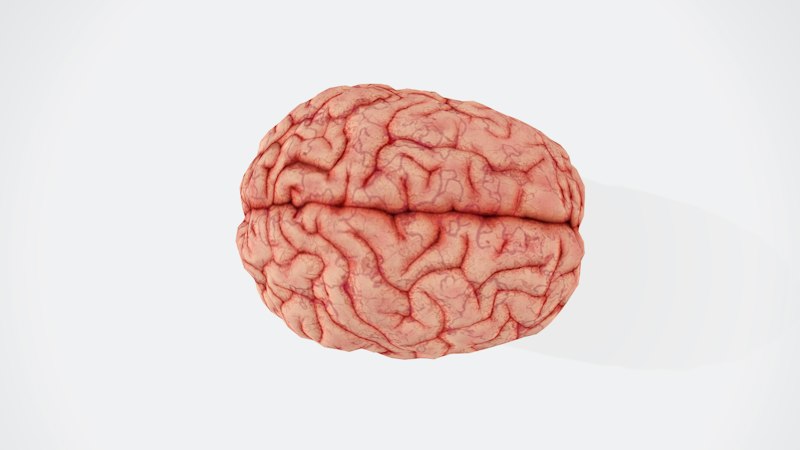
The core mechanism underlying Cortical Deafness is the bilateral destruction of the primary auditory cortex (PAC), also known as Heschl’s gyri, located deep within the Sylvian fissure of the superior temporal lobe. This area serves as the mandatory relay station for the conscious appreciation of sound. When both hemispheres suffer damage, the neural pathways necessary for sound awareness are severed or destroyed, resulting in deafness. This condition is distinct from profound sensorineural hearing loss, where the damage occurs in the cochlea or the auditory nerve itself, and is instead classified as a central auditory processing disorder.
It is crucial to understand that while the patient cannot consciously perceive sound, certain non-conscious responses may remain intact, providing a key diagnostic differentiation. For instance, the acoustic startle reflex—an involuntary physical response to a sudden, loud noise—often persists. This preservation confirms that the auditory signal is still reaching lower brainstem nuclei responsible for primitive reflexes, but fails to reach the cortical areas required for conscious interpretation. Therefore, CD represents a devastating disconnect between the physical presence of sound waves and the subjective experience of hearing, illustrating the critical role of the cortex in sensory awareness.
Neurological Basis and Etiology
The pathology of Cortical Deafness is strictly confined to lesions that impact the bilateral primary auditory processing centers. The most common cause of such widespread, bilateral damage is typically a severe vascular event, specifically an ischemic or hemorrhagic stroke, involving the territories supplied by the posterior cerebral arteries (PCAs) or the superior cerebellar arteries, which feed the deep temporal and parietal regions. Since the auditory cortex is typically supplied by these specific vascular systems, blockage often results in symmetrical damage across both hemispheres, which is necessary for the manifestation of complete cortical deafness.
Beyond strokes, other catastrophic events that lead to global cerebral oxygen deprivation can also precipitate Cortical Deafness. These include cardiac arrest leading to anoxic brain injury, severe head trauma resulting in diffuse axonal injury, or certain neurodegenerative diseases, though these are less common etiologies. The critical factor is the simultaneous destruction of the Heschl’s gyrus in both the left and right hemispheres. Because auditory information projects bilaterally from the brainstem nuclei, unilateral damage, while potentially causing specific deficits like monaural hearing loss or difficulty localizing sound, is insufficient to cause total deafness.
The integrity of the surrounding cortical tissue determines the severity and specificity of the resulting deficit. If the damage extends anteriorly and posteriorly into the associative auditory cortices (such as Wernicke’s Area), the patient often develops accompanying language comprehension deficits, a condition known as Wernicke’s Aphasia. Conversely, if the damage is highly localized to the primary auditory cortex, the patient may suffer from pure deafness while maintaining excellent lip-reading skills, normal speech production, and intact general cognitive abilities, underscoring the modularity of sensory processing in the brain.
Historical Discovery and Early Case Studies
The concept of Cortical Deafness emerged primarily during the late 19th and early 20th centuries, a period marked by intensive study of brain localization and function. Early researchers and neurologists began systematically correlating specific post-mortem brain lesions with previously observed clinical deficits. The definitive recognition that the cortex played a role in hearing, beyond just transmitting signals, was a major step in the development of Neuropsychology. Initial descriptions often focused on patients who exhibited deafness despite having perfectly normal tympanic membranes and intact stapes reflexes, baffling physicians accustomed to peripheral causes of hearing loss.
Key early cases solidified the understanding of CD. For example, reports from the early 1900s documented patients who, following severe bilateral injuries or strokes, reported complete silence. Post-mortem examination of these individuals consistently revealed bilateral destruction of the transverse temporal gyri—the area now precisely identified as the Primary Auditory Cortex. These findings provided compelling evidence for the necessity of this specific cortical region for conscious auditory processing, establishing it as the final destination for auditory sensory input before it is consciously perceived.
These historical observations were fundamental because they helped delineate the difference between *hearing* (the mechanical process of signal detection) and *listening* (the cognitive process of signal interpretation and awareness). The study of CD provided irrefutable proof that sensory experience is not merely an automatic result of nerve signal transmission, but requires the specialized, intact function of high-level cortical structures. It also laid the groundwork for differentiating various forms of central auditory processing disorders, such as Auditory Agnosia, where the patient hears but cannot recognize or identify the sound.
A Practical Illustration of Impairment
To appreciate the unique nature of Cortical Deafness, consider a practical scenario involving a patient, Mr. J, who developed CD following bilateral strokes. Unlike a person with peripheral deafness who might hear muffled or distorted sounds, Mr. J perceives utter silence. If a fire alarm blares loudly, or if his spouse speaks directly to him, he registers absolutely nothing through his ears. His immediate reaction is based solely on visual input, such as seeing the alarm flashing or observing his spouse’s mouth moving.
The crucial application of the psychological principle here lies in the diagnostic process and the contrast between conscious experience and physiological response. When tested, Mr. J’s audiogram—which measures the function of the cochlea and auditory nerve—is entirely normal. If functional MRI (fMRI) were used, the brainstem and thalamic relay stations might show activity in response to sound. However, the subsequent processing stages in the superior temporal lobe remain silent or unresponsive. This contrast illustrates the hierarchical nature of auditory processing:
- Sound Transmission: A loud clap generates pressure waves that vibrate the eardrum and are successfully transduced into electrical signals by the cochlea.
- Subcortical Relay: These signals travel up the auditory nerve to the brainstem (e.g., cochlear nucleus and superior olive) and the thalamus (medial geniculate nucleus), successfully triggering basic reflexes.
- Cortical Failure: Upon reaching the damaged primary auditory cortex, the signal processing terminates. The neural activity required to translate the electrical impulse into the conscious sensation of “sound” never occurs.
- Behavioral Outcome: Mr. J reports hearing nothing, demonstrating that conscious perception is dependent on the integrity of the bilateral cortical receiving areas, not just the mere presence of the electrical signal.
In daily life, the patient must rely entirely on non-auditory cues. Communication relies heavily on reading lips and written notes, and environmental awareness shifts entirely to visual and tactile cues. The telephone, radio, and television become useless unless subtitles are available, highlighting the profound sensory deprivation caused by this condition.
Significance in Cognitive Neuroscience
Cortical Deafness holds immense significance for the field of Cognitive Neuroscience and the study of sensory perception. It provides arguably the most compelling evidence for the localization of sensory awareness. By isolating the deficit—the inability to consciously hear—to a specific, circumscribed area of the brain, researchers gain critical insight into how the brain constructs subjective reality from raw sensory data. CD essentially defines the neurological boundary between subcortical reflex and cortical consciousness.
The impact of CD extends to the development of models for auditory processing. Historically, researchers debated whether auditory processing was strictly serial or involved parallel pathways. Cases of CD, particularly those where the acoustic startle reflex remains, strongly support models that propose dual pathways: a primitive, subcortical pathway for rapid reaction and localization, and a sophisticated, cortical pathway required for conscious awareness, recognition, and interpretation. This distinction is vital for understanding other conditions, such as blindsight in the visual system.
Furthermore, the study of CD is crucial in clinical applications, especially in informing rehabilitation strategies. While the bilateral lesion means that true hearing recovery is rare, understanding the remaining neural capacity helps clinicians develop targeted interventions, such as intensive training in visual communication (lip-reading) and tactile signaling systems. It also serves as a benchmark for understanding recovery mechanisms, where slow, limited hearing might return if adjacent cortical tissue can partially take over the function of the destroyed primary auditory cortex.
Related Auditory Disorders and Connections
Cortical Deafness belongs to the broader category of central auditory processing disorders, falling specifically under the subfield of Neuropsychology. It is often discussed in conjunction with several related, yet distinct, auditory syndromes, which help illustrate the modularity of cortical function. The primary distinction lies in the degree and location of the lesion within the auditory hierarchy.
The most closely related concept is Auditory Agnosia, a condition where the patient can hear sounds and speech but cannot recognize or interpret them. For example, a person with agnosia might hear a doorbell but be unable to identify it as a doorbell. CD can be viewed as the most severe form of agnosia, where the fundamental perception of sound is lost entirely. If damage is unilateral, or restricted to the secondary association areas, agnosia occurs; if the bilateral primary receiving areas are destroyed, CD results.
Another important connection is Pure Word Deafness (PWD), sometimes called auditory verbal agnosia. In PWD, the patient hears non-speech sounds (like music or doorbells) normally, but cannot understand spoken language, perceiving it as an unintelligible stream of noise. This condition typically results from damage affecting the pathways between the primary auditory cortex and Wernicke’s Area, often sparing the primary sensory input itself. The existence of PWD confirms that the neural processing of speech requires specific cortical areas separate from those necessary for recognizing general environmental sounds, whereas CD eliminates all forms of auditory input.
Finally, specialized deficits such as Phonagnosia—the inability to recognize familiar voices—are further examples of highly localized auditory processing failure, usually affecting the right hemisphere’s auditory association areas. By studying this spectrum of central auditory disorders, from total deafness (CD) to selective recognition failure (Phonagnosia), neuropsychologists construct a detailed map of the brain’s complex auditory network, demonstrating that recognition, awareness, and comprehension each rely on distinct, yet interconnected, cortical regions.