Crossed Dominance: Why Your Brain Prefers Mixed Signals
Scientifically Reviewed · Dr. Marwa Abd-Alazim · August 24, 2026
Review Criteria & Clinical Standards
This content undergoes rigorous scientific peer-review and medical editorial standards at Arab Psychology Network to ensure clinical accuracy, validity, and compliance with evidence-based guidelines from leading psychological and healthcare authorities (APA / WHO).
Introduction to Crossed Dominance
The concept of Crossed Dominance, often referred to interchangeably as cross-laterality or mixed dominance, describes a specific configuration of human functional asymmetry where the dominant hand and the dominant eye are situated on opposite sides of the body. This configuration is characterized by the propensity for a person who is primarily right-handed to exhibit a more forceful, superior, or preferential use of their left eye for sighting, alignment, and visual processing tasks. Conversely, a left-handed individual displaying crossed dominance would utilize their right eye as the primary visual guide. This phenomenon stands in contrast to the typical pattern of homolateral dominance, where the dominant hand and eye reside on the same side, reinforcing the efficient integration of motor and sensory input. Understanding crossed dominance requires a deep appreciation for cerebral lateralization and the complex, non-absolute nature of functional specialization in the human nervous system.
While laterality—the preferential use of one side of the body over the other—is a fundamental aspect of human neurophysiology, its expression is rarely perfectly synchronized across all sensory and motor modalities. Handedness (manual dexterity) is perhaps the most obvious manifestation of laterality, determined primarily by the contralateral organization of the motor cortex. However, eyedness (ocular dominance), footedness, and earedness also contribute to the overall lateral profile. When these individual dominant preferences fail to align perfectly, resulting in a conflict between the leading motor implement (the hand) and the leading sensory organ (the eye), the state of crossed dominance is confirmed. It is crucial to distinguish this natural variation from neurological pathology; crossed dominance represents a common, non-pathological variation in the population, though its presence may necessitate specific adaptation strategies in tasks requiring high levels of precision and integration.
The significance of identifying crossed dominance extends beyond mere academic curiosity, touching upon fields such as developmental psychology, sports performance, and occupational therapy. For instance, tasks requiring precise hand-eye coordination, such as aiming a rifle, looking through a microscope, or even reading, demand seamless cooperation between the visually dominant eye, which establishes the reference point, and the manually dominant hand, which executes the action. When these two primary systems are mismatched, the individual may experience subtle or overt challenges in alignment and spatial judgment, potentially leading to reduced efficiency or requiring greater cognitive effort to compensate for the conflicting sensory-motor feedback. This introductory overview sets the stage for a detailed examination of the neurobiological underpinnings, manifestations, and practical implications of this intriguing lateral profile.
Neurobiological Basis of Lateralization
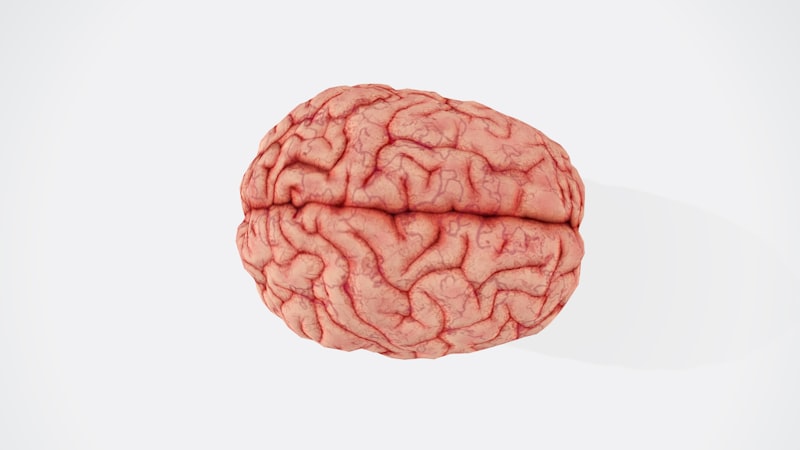
The foundation of dominance lies in cerebral lateralization, the specialization of the two cerebral hemispheres for different functions. In the vast majority of the population, the left hemisphere is dominant for language processing and sequential motor control, thus controlling the movements of the right side of the body (including the right hand). Conversely, the right hemisphere often handles spatial reasoning, emotional perception, and controls the left side of the body. Handedness is the most reliable external indicator of this lateral specialization, but ocular dominance involves a slightly different neurological pathway. Visual input from the eyes travels via the optic nerves to the optic chiasm, where fibers from the nasal (inner) halves of the retinas cross to the opposite hemisphere, while fibers from the temporal (outer) halves remain on the same side. This means both hemispheres receive input from both eyes, but one eye is consistently favored by the brain for primary visual input and sighting.
The specific mechanism determining which eye becomes dominant is complex and not fully understood, involving both genetic and developmental factors. Unlike handedness, which is highly lateralized, ocular dominance is often less absolute and can sometimes be influenced by environmental factors or training. However, when the neural circuitry establishes a dominant eye corresponding to the non-dominant motor hemisphere—for example, the left eye (predominantly processed by the right hemisphere) becomes dominant in a right-handed person (whose motor control is primarily left hemispheric)—the condition of crossed dominance arises. This crossing is not a failure of the system but rather an expression of the brain’s ability to allocate functions flexibly. The mismatch suggests that the factors dictating motor control specialization (handedness) operate somewhat independently of those dictating visual input priority (eyedness).
Further complexity is introduced by the concept of laterality index, which measures the strength of preference across different modalities. A person may have a strong preference for their right hand but only a weak preference for their left eye. The integration of these modalities requires robust communication across the corpus callosum, the primary bundle of neural fibers connecting the two hemispheres. In individuals with crossed dominance, the brain must efficiently manage and reconcile the slightly disparate processing speeds and spatial orientation cues received from the dominant hand’s motor center and the dominant eye’s visual center. This inherent requirement for inter-hemispheric cooperation in high-coordination tasks is a defining characteristic of the crossed dominance profile, necessitating refined neural coordination pathways that differ from those used by individuals with homolateral dominance.
Manifestations and Common Examples
The practical manifestation of crossed dominance becomes most apparent in activities demanding precise visual alignment with manual execution. A classic example is the action of aiming. A right-handed shooter with a dominant left eye must either physically shift their body or tilt their head significantly to align the left eye with the sights of the weapon, which is typically held and manipulated by the right hand. If the shooter attempts to use the right eye (the non-dominant eye) simply because it is aligned with the right hand, they may experience reduced visual acuity and sighting accuracy, as the brain tends to suppress or deemphasize input from the non-dominant eye during precision tasks. This necessity for physical or compensatory adjustment highlights the direct conflict inherent in the crossed profile.
Beyond specialized skills like archery or shooting, crossed dominance is observable in everyday activities. When using a telescope, a camera viewfinder, or a monocular, an individual with cross-laterality will instinctively bring the device to their dominant eye, regardless of which hand is holding the device steady or manipulating the controls. Similarly, when performing tasks that involve small apertures, such as threading a needle or looking through a keyhole, the dominant eye naturally takes precedence. In sports, the impact can be highly significant; for example, a baseball batter who is right-handed but left-eye dominant may benefit from a visual advantage when facing a pitcher, as the dominant eye is closer to the incoming ball, providing superior visual tracking and depth perception relative to the target.
It is important to recognize that crossed dominance is not limited solely to the hand-eye pairing. The full spectrum of laterality includes combinations involving the feet and ears. For instance, a person might be right-handed and right-eyed (homolateral) but left-footed (e.g., kicking a ball predominantly with the left foot). True Crossed Dominance, in the strictest sense used in psychological and performance literature, focuses primarily on the hand-eye mismatch due to its critical role in coordinated motor performance. However, a person exhibiting multiple forms of laterality mismatch (e.g., right hand, left eye, right foot, left ear) is often categorized under the broader umbrella of mixed laterality, suggesting a highly flexible and non-fixed pattern of dominance across the body’s sensory and motor systems.
The Spectrum of Dominance and Laterality
Laterality exists not as a binary state (left vs. right) but as a measurable spectrum, ranging from strong, absolute dominance to weak or mixed dominance. Individuals who exhibit a powerful, consistent preference for the same side across all tested modalities (hand, eye, foot, ear) are considered strongly homolateral. Conversely, individuals exhibiting mixed dominance—where the preference is weak or inconsistent, perhaps displaying near-ambidexterity in manual tasks—occupy the center of the spectrum. Crossed dominance represents a specific and distinct configuration within this spectrum, characterized by a clear, often strong, dominance in each modality, but with the primary modalities (hand and eye) operating in opposition. It is the clarity of the opposition, rather than the weakness of the individual preferences, that defines the condition.
Measurement of laterality is typically performed using standardized tests that quantify both preference (which side is chosen) and performance (which side executes the task more accurately or quickly). For manual dexterity, tests such as the Edinburgh Handedness Inventory or pegboard tasks are used to establish the strength of handedness. Ocular dominance is assessed via sighting tests, such as the Miles test or the hole-in-the-card test, which determine which eye the individual naturally uses to fixate on a distant object. The resulting data allows researchers to calculate a laterality index for each modality. A person with clear crossed dominance will typically score highly positive (indicating strong right-hand preference) and highly negative (indicating strong left-eye preference) on the respective indices, confirming the robust nature of the mismatch.
The psychological implications of where an individual falls on the laterality spectrum are significant. Strong homolaterality is often associated with highly streamlined and efficient neural processing for standardized tasks. Mixed laterality, while sometimes linked to potential delays in specialized motor skills, can also confer advantages in tasks requiring bilateral coordination or flexibility. Crossed dominance, however, requires the brain to establish unique compensatory strategies. Although the individual systems (hand and eye) are highly efficient on their own side, their coordinated use demands a higher level of inter-hemispheric communication and cognitive control to ensure accurate spatial mapping, especially during rapid movements. This adaptation process highlights the plasticity of the human brain in overcoming structural asymmetry patterns.
Historical Context and Early Theories
The study of laterality and crossed dominance has roots dating back to the late 19th and early 20th centuries, a period when researchers first began systematically linking brain structure to behavioral and cognitive outcomes. Early theories were often rooted in the observation that strong lateralization was critical for efficient brain function, leading to the hypothesis that any deviation from strong homolateral dominance might be indicative of neurological instability or developmental delay. One of the most influential early figures was Samuel T. Orton, who, in the 1920s and 1930s, developed the concept of strephosymbolia (twisted symbols) to explain certain reading difficulties, now recognized as dyslexia.
Orton hypothesized that reading disabilities stemmed from incomplete or confused cerebral lateralization, suggesting that if the two hemispheres were not perfectly aligned in their dominance, visual input might be processed inconsistently, leading to letter reversals (p/q, b/d). He specifically identified crossed laterality as a potential contributing factor to this confusion, proposing that the conflict between the dominant eye and the dominant hand interfered with the establishment of consistent directionality needed for reading English (left-to-right). This historical perspective strongly pathologized crossed dominance, viewing it not as a natural variation but as a potential impediment to learning and cognitive organization.
While Orton’s work spurred significant research into the relationship between laterality and learning, modern neuroscientific consensus has largely refuted the idea of a direct, causal link between crossed dominance and specific learning disorders like dyslexia. Contemporary research indicates that dyslexia is primarily a phonological processing deficit, rooted in language centers, rather than a purely visual or laterality-based problem. However, the historical focus on crossed dominance did serve an important purpose: it drew attention to the complexity of sensory-motor integration and laid the groundwork for modern assessment techniques used to characterize an individual’s unique lateral profile, moving the field away from simple classifications toward a nuanced understanding of functional asymmetry.
Implications for Motor Skill Acquisition and Sports Performance
In the realm of high-performance sports, particularly those demanding exceptional hand-eye coordination and spatial judgment, crossed dominance presents a unique set of challenges and, surprisingly, potential advantages. Athletes in activities such as baseball, golf, shooting, fencing, and archery must integrate visual targeting with precise motor execution. For athletes with crossed dominance, the initial acquisition of skills may involve a longer period of adaptation to reconcile the conflicting sensory inputs. Coaches must recognize that standard training techniques designed for homolateral athletes may prove inefficient or counterproductive.
Consider a right-handed golfer who is left-eye dominant. As the golfer addresses the ball, the left eye is naturally positioned further away from the target line than the right eye, requiring the head to be subtly turned or tilted more than usual to maximize the dominant eye’s visual field over the ball. Furthermore, in aiming sports like archery or target shooting, the choice is critical: either the athlete must train the non-dominant eye to take over the sighting role (a difficult task) or fundamentally alter their stance and body position to align the dominant eye with the weapon’s sight. Many elite athletes with crossed dominance have developed highly specific, often idiosyncratic, compensatory mechanisms that allow them to perform at the highest levels, demonstrating that the profile is manageable with tailored instruction.
In certain dynamic sports, crossed dominance can confer a strategic advantage. For example, in competitive batting (e.g., cricket or baseball), a right-handed batter who is left-eye dominant has their dominant eye facing the pitcher and the approaching ball from an “inside” perspective. This positioning is theorized to enhance depth perception and tracking speed, providing a fraction of a second advantage in calculating the trajectory of the incoming pitch compared to a homolateral batter. Thus, while crossed dominance requires an initial hurdle in skill acquisition, the resulting unique visual-motor pathway, once integrated, can lead to highly specialized and effective performance patterns, transforming a structural variation into a functional asset in competitive environments.
Assessment and Diagnostic Criteria
Accurate identification of crossed dominance relies on systematic assessment of laterality across various motor and sensory domains. The diagnostic process involves establishing definitive handedness, eyedness, footedness, and earedness using validated psychometric tools and performance tests. This comprehensive assessment ensures that the diagnosis is not based merely on self-report but on objective, measurable performance data, thereby distinguishing true crossed dominance from general mixed laterality or ambidexterity.
Assessment tools fall into two main categories: preference inventories and performance tests.
- Handedness Assessment: This is typically established using preference questionnaires (e.g., the Edinburgh Handedness Inventory) and timed performance tasks (e.g., Purdue Pegboard Test or tapping speed tests) to quantify the speed, strength, and dexterity difference between the two hands.
- Ocular Dominance Assessment: This is the most critical step for identifying crossed dominance. Common tests include the Hole-in-the-Card Test, where the subject is asked to quickly view a distant object through a small hole in a card, revealing the eye naturally chosen for fixation. The Miles Test uses finger framing to determine which eye is preferentially used for sighting.
- Footedness/Earedness Assessment: These are assessed by asking the individual to perform tasks such as kicking a ball, stepping up onto a stool, or listening through a pipe or keyhole, establishing the overall laterality profile.
A diagnosis of Crossed Dominance is confirmed when there is a significant and consistent mismatch between the established dominant hand and the established dominant eye—for instance, right-hand dominance combined with left-eye dominance. It is essential for clinicians, educators, and coaches to utilize these objective measures, particularly when addressing coordination challenges or tailoring instructional methods. Furthermore, understanding the strength of the laterality in each domain is crucial; a person with weak ocular dominance may adjust to the mismatch more easily than someone with extremely strong, fixed dominance in both the hand and the eye.
Conclusion and Modern Understanding
The modern understanding of Crossed Dominance has evolved significantly from early, pathologizing theories. Today, it is recognized as a specific, naturally occurring variation in the organization of functional asymmetry within the human nervous system. It represents a common outcome of the flexible processes of cerebral lateralization, where the neural pathways governing manual control and ocular sighting develop independently, resulting in a contralateral pairing of the dominant motor and sensory systems. This condition is neither inherently disadvantageous nor indicative of neurological deficit.
The principal importance of identifying crossed dominance lies in its practical implications for performance, adaptation, and specialized training. Individuals with this profile may face initial challenges in tasks requiring rapid, precise hand-eye integration, necessitating increased cognitive effort or the development of unique compensatory motor strategies. However, the presence of crossed dominance in no way limits the potential for high achievement, as evidenced by numerous successful athletes and professionals whose profiles exhibit this lateral configuration. Awareness of this specific laterality profile allows educators and trainers to design instructions that align with the individual’s unique visual-motor integration system, maximizing efficiency and minimizing frustration.
In summary, the study of crossed dominance underscores the non-unitary nature of laterality. The human brain is highly adaptable, capable of managing complex sensory and motor inputs even when they originate from opposing sides of the body. Far from being a disorder, crossed dominance is a testament to the brain’s plasticity and its capacity to synthesize disparate information into coherent action, thereby expanding the diversity of human functional organization.