Scrying: Unlocking the Subconscious Through Reflection
Scientifically Reviewed · Dr. Marwa Abd-Alazim · August 26, 2026
Review Criteria & Clinical Standards
This content undergoes rigorous scientific peer-review and medical editorial standards at Arab Psychology Network to ensure clinical accuracy, validity, and compliance with evidence-based guidelines from leading psychological and healthcare authorities (APA / WHO).
Introduction to Crystal Gazing (Scrying)
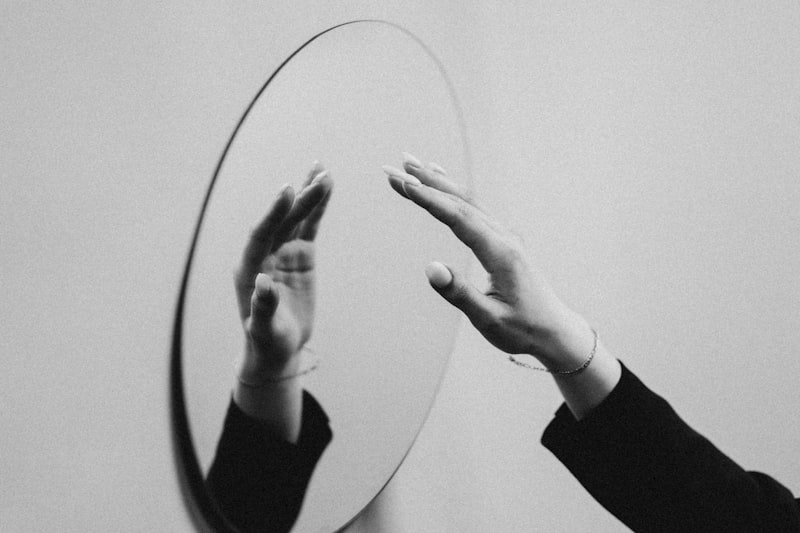
Crystal gazing, fundamentally known in historical and anthropological contexts as scrying, is a practice involving deep, focused contemplation upon a reflective or translucent surface—such as a crystal ball, polished obsidian, a mirror, or even a pool of water—with the explicit aim of gaining spiritual, psychological, or predictive insight. This ancient methodology spans two distinct, though occasionally overlapping, fields of inquiry: the divinatory art, where the practitioner seeks to envision future events or access hidden knowledge, and the therapeutic application, where the focus object serves as a tool for intense visualization and the facilitation of subconscious exploration. The term itself is often popularly associated with the classic image of a clairvoyant peering into a spherical quartz crystal, attempting to discern the destiny of a specific individual or client. However, a deeper examination reveals scrying’s roots in various global cultures, utilized not merely for fortune-telling but for complex visionary experiences that bridge the conscious mind with deeper psychological strata. The core mechanism involves inducing a mild, self-hypnotic state through sustained visual attention, allowing the mind to project images and symbols onto the otherwise featureless surface, interpreted subsequently as meaningful data.
The psychological definition of crystal gazing emphasizes its role in specific optional therapies, where an individual is directed to imagine immense experiences or generate complex correlating thoughts while simultaneously focusing their gaze upon a reflective medium, such as a glass orb, a treated mirror, or even a simple light source. In this context, the practice functions as a highly focused method of guided imagery or active imagination, designed to bypass ordinary critical thought processes. By fixing attention externally on a neutral, non-distracting object, the internal stream of consciousness, often rich with symbolic or suppressed material, is given space to manifest. The resulting visions, whether perceived internally or projected onto the surface, are then analyzed for their psychological significance, potentially revealing underlying conflicts, desired outcomes, or complex associative patterns that are otherwise inaccessible to standard introspection. This therapeutic approach distinctly separates itself from the divinatory model by prioritizing self-understanding and personal integration over external future prediction.
Despite its long history and persistent presence in metaphysical traditions, crystal gazing, particularly in its capacity as a method for prophesying the future, is met with considerable skepticism within empirical scientific frameworks and is not widely considered an authentic or reliable methodology for future prediction. The phenomena experienced during scrying are typically attributed to well-documented psychological processes, including auto-suggestion, sensory deprivation effects, and the cognitive phenomenon of pareidolia—the tendency to perceive meaningful patterns in random stimuli. Nevertheless, the practice remains a potent cultural symbol of the mysterious and the unknown, fueling popular interest and maintaining a consistent presence in occult literature and popular media. Understanding crystal gazing requires navigating these dual interpretations: acknowledging its role as a persistent form of folk magic and examining its potential, albeit limited, utility as an instrument for psychological exploration and the enhancement of personal visualization skills.
Historical and Cultural Roots of Scrying
The practice of scrying is exceptionally ancient, predating recorded history in many cultures, suggesting that the human impulse to seek meaning in reflective surfaces is primal. Early forms often involved natural elements rather than manufactured crystals. The use of water was particularly prevalent; ancient Babylonians, Persians, and Greeks utilized polished bowls filled with water or oil to receive visions, often seeking advice from deities or attempting to identify criminals. Similarly, the ancient Egyptians employed highly polished bronze mirrors or darkened pools of ink for divination, a technique that later inspired the European practice of catoptromancy (divination by mirror). These historical precedents establish that the reflective medium is secondary to the focused mental state it induces, serving primarily as a visual anchor designed to stabilize and concentrate the attention of the seer. The objective was rarely just to see a picture, but to enter a trance state where the ordinary barriers between the mundane and the spiritual were perceived as temporarily lifted, facilitating communication with non-physical entities or accessing universal knowledge.
During the Roman Empire and the subsequent Middle Ages, scrying evolved, often becoming intertwined with necromancy and complex ritual magic. While water and mirrors remained common, the use of naturally occurring crystals, particularly beryl or quartz spheres, gained prominence due to their perceived purity and scarcity, enhancing their mystical value. A pivotal figure in the history of sophisticated crystal gazing was the Elizabethan mathematician, astronomer, and mystic, Dr. John Dee. Dee, along with his associate Edward Kelley, utilized a polished obsidian mirror (speculum) and large crystal spheres in the late 16th century, not merely for fortune-telling, but for complex attempts at communicating with angels and exploring what they believed was a universal, pre-Adamic language known as Enochian. Dee’s detailed records of these scrying sessions, though controversial, provided one of the most structured and documented methodologies for the practice, influencing subsequent generations of ceremonial magicians and occult practitioners who sought structured dialogue with the spiritual realm through the reflective medium.
The evolution of scrying illustrates a consistent shift in its social function. In antiquity, it was often the domain of temple priests or official state oracles, sanctioned by religious authority to offer guidance to rulers or armies. By the time of the Renaissance, and particularly during the Romantic era of the 18th and 19th centuries, scrying became increasingly democratized, moving into the realm of folk magic and parlor entertainment. This shift coincided with the rise of Spiritualism and Theosophy, movements that sought to bridge science and mysticism. Professional clairvoyants and mediums adopted the crystal ball as a standardized tool, capitalizing on its exotic and mysterious appeal. The crystal orb, specifically, became an iconic symbol of the mysterious practice wherein a clairvoyant gazes into the crystal ball in an effort to envision foretold events, generally concerning the future of a specific person or customer. This commercialization cemented the popular image of crystal gazing, often overshadowing its earlier, more ritualistic or philosophical applications and focusing public perception almost entirely on its predictive capacity.
Furthermore, various non-Western traditions have utilized similar techniques with indigenous materials. In some parts of Mesoamerica, polished volcanic glass (obsidian) was revered for its reflective properties and used by priests for prophetic and diagnostic purposes. Throughout Asia, practices utilizing reflective metal bowls or even the surface of ink wells served analogous functions. These parallel developments confirm that the fundamental technique—sustained, focused gazing at a visually simple, non-threatening surface—is a cross-cultural human response, suggesting a deep-seated neurological or psychological connection between visual focus and the induction of altered states of consciousness. The consistent presence of these methods across diverse cultures underscores the powerful role that visual stimuli and sensory monotony play in facilitating internal visualization and accessing imaginative resources.
Mechanics and Methodology of the Practice
The methodology of crystal gazing is deceptively simple, relying heavily on environmental control and the creation of a receptive mental state. The primary mechanical requirement is the focus object, which must possess certain qualities: it must be reflective or translucent enough to capture light but uniform enough to lack distracting internal detail. While the iconic crystal ball is preferred for its symmetry and aesthetic appeal, practitioners frequently employ various alternatives, including dark mirrors, bowls of black ink, clear glass spheres, or highly polished metals. The environment must typically be quiet, ensuring minimal auditory distraction, and the lighting is crucial. Usually, dim, indirect lighting is preferred, often sourced from a single candle or a low-wattage bulb positioned so that it illuminates the orb without reflecting harsh glare directly into the practitioner’s eyes. This specific lighting setup is designed to eliminate peripheral distractions and encourage the eyes to relax into a state of semi-fixation, a precursor to the mild trance state necessary for successful scrying.
The actual process of gazing involves the practitioner settling into a comfortable position and directing their gaze steadily at the center of the reflective surface. It is critical that the gaze is not a strained stare, but a relaxed, passive observation. The goal is to inhibit the normal function of the visual cortex, which typically seeks to analyze and categorize incoming data. By preventing the eyes from constantly refocusing, the practitioner begins to experience a blurring of the object’s edges. As sensory input is minimized and monotony is introduced, the brain enters a state similar to the hypnagogic phase, the transitional state between wakefulness and sleep. During this phase, the mind becomes highly susceptible to suggestion and internal imagery. The practitioner is often directed to clear the mind of analytical thought and simply wait for images, colors, or fog-like patterns to appear, either perceived as manifesting within the crystal itself or appearing upon the internal screen of the mind.
What follows the initial trance induction is the manifestation of the visual phenomena. Experienced scryers report seeing a cloudy mist or colored haze forming within the orb, which then resolves into discernible images, symbols, or even complex scenes. These visions are often fleeting, symbolic, and highly personal, requiring sophisticated interpretation based on the practitioner’s knowledge of symbolic language, myth, or, in a therapeutic context, the client’s personal history. The success of the practice relies not only on the ability to induce the trance state but on the subsequent ability to maintain mental passivity—resisting the urge to analyze the vision while it is occurring. Any attempt at rigorous, analytical thought risks breaking the delicate trance state and dissolving the projection. Thus, crystal gazing is a discipline of controlled relaxation and focused non-action, where the physical act of gazing serves merely as a gateway for unlocking subconscious imaginative capacity.
Psychological Mechanisms: The Role of the Subconscious
From a psychological perspective, the visions and insights gained during crystal gazing are not attributed to external spiritual forces but rather to the powerful internal workings of the subconscious mind, facilitated by specific cognitive and perceptual biases. The consistent, monotonous visual input generated by gazing into a neutral, reflective sphere acts as a powerful initiator of a mild dissociative state. By restricting external sensory input (sensory monotony), the brain often attempts to compensate by generating its own stimuli. This process is similar to that observed in laboratory settings involving sensory deprivation, where subjects frequently report vivid hallucinations or complex internal imagery. The crystal ball thus acts as a psychological focusing device, creating a controlled environment where the barrier between conscious perception and subconscious projection is lowered significantly.
One of the most critical psychological phenomena at play is pareidolia, the tendency for the human mind to perceive familiar patterns, such as faces or figures, in random or ambiguous visual data. Because the crystal ball or reflective surface presents a visually ambiguous field—often containing subtle internal distortions, reflections, or shadows—the brain naturally attempts to impose order and meaning onto this randomness. The images “seen” are not literal external events but are constructions born from the practitioner’s expectations, memories, and immediate emotional concerns. If the client is worried about financial loss, the subconscious mind, under the influence of the trance, might project images of breakage or emptiness onto the crystal, which the practitioner then interprets as a relevant prediction or psychological correlate. This mechanism explains why scrying results are often highly personalized and relevant to the seeker’s existing mental landscape.
Furthermore, the element of auto-suggestion plays an immense role in the efficacy of the practice, particularly in divinatory settings. If a clairvoyant believes strongly in their ability, or if a client has powerful expectations regarding the outcome, the subconscious mind is primed to deliver images that confirm these internal beliefs or desires. The trance state enhances suggestibility, meaning that even subtle, pre-conscious thoughts or fears held by the gazer can rapidly materialize into visual symbols. This self-generated data is then interpreted through the lens of established symbolic systems, completing the feedback loop. The visions, therefore, serve as externalized representations of internal psychological data, a form of active imagination where the images are momentarily perceived as external realities projected onto the glass surface.
The therapeutic application leverages these psychological mechanisms intentionally. When a person is directed to imagine immense experiences or generate correlating ideas while gazing into the orb, the orb serves as a blank canvas for subconscious projection. By externalizing deeply buried emotional or symbolic content onto the neutral medium, the individual can observe these projections with a degree of detachment. This process is invaluable for accessing material that might be too threatening or abstract to articulate through standard verbal therapy. The crystal acts as a focal point for the integration of disparate psychological elements, helping the individual to correlate complex, internal narratives and emotional states with tangible, though symbolic, visual data.
Ultimately, the power of crystal gazing lies in its ability to harness the brain’s innate capacity for pattern recognition and its susceptibility to suggestion under conditions of sensory monotony. The state induced by prolonged gazing is fundamentally a self-induced, mild hypnotic state, maximizing access to the deep reservoirs of memory, fantasy, and emotional truth stored in the subconscious mind. The visions are highly structured internal narratives that the mind provides when the usual filtering mechanisms of the conscious, critical intellect are temporarily suspended.
Application in Therapeutic Settings
While crystal gazing is most commonly associated with divination, its application in specific optional therapies represents a specialized, though less mainstream, utilization within psychological practice. This therapeutic approach utilizes the crystal orb or reflective device not as a predictive tool, but as a catalyst for profound visualization and the exploration of inner psychological landscapes. The primary objective is to enhance the patient’s capacity for deep, focused introspection and to facilitate the generation of complex, correlating emotional or experiential narratives. By directing the patient to gaze into the reflective surface while simultaneously focusing on a specific emotional problem or desired outcome, the crystal acts as a concentration aid, anchoring the visualization process and preventing the mind from drifting into unrelated thought patterns.
In this controlled setting, the focus object aids in what is known as active imagination, a concept pioneered by Carl Jung. The patient is encouraged to allow images, feelings, or symbols related to their current psychological state to manifest visually, either internally or projected onto the orb. Unlike verbal therapy, which relies on the patient’s ability to rationally articulate their experiences, therapeutic scrying provides a non-verbal channel for expression. The resulting “visions”—which may simply be colors, textures, or abstract shapes—are then used as starting points for dialogue. For instance, a patient grappling with anxiety might report seeing a rapidly rotating, chaotic blur within the glass. The therapist can then use this projected image to discuss the feeling of lack of control, providing a concrete visual metaphor for an abstract emotional state, thereby making the internal experience more accessible for conscious processing and integration.
Furthermore, the technique is valuable for encouraging the generation of correlating experiences. When a person is directed to imagine immense positive experiences, the act of gazing helps to solidify and externalize these imagined states. The crystal serves as a kind of temporary visualization screen, enhancing the vividness and emotional impact of the imagined scenario. This is particularly useful in therapies focusing on self-efficacy and goal attainment. By practicing the visualization of a successful outcome while anchored by the reflective gaze, the patient strengthens the neural pathways associated with that positive outcome, thereby enhancing the likelihood of generating the correlating internal drive and motivation needed to achieve it in reality. The therapeutic utility is thus derived entirely from the manipulation of internal cognitive and emotional states, completely bypassing any claim to genuine external prediction or mystical foresight.
Critical Analysis and Skeptical Perspectives
The divinatory claims of crystal gazing face rigorous and uniform rejection from the scientific community, primarily because the perceived outcomes are demonstrably attributable to well-understood cognitive biases and psychological phenomena, rendering the practice non-falsifiable and lacking empirical evidence. The primary critique rests upon the mechanisms of confirmation bias and the Forer effect (or subjective validation). Clients seeking predictions are often highly motivated to find relevance in ambiguous or generalized statements. When a clairvoyant interprets a vague symbol seen in the crystal—such as an image of a journey or a closed door—the client automatically filters their personal history and current circumstances to find a specific, matching event. This cognitive filtering makes the reading seem remarkably accurate, regardless of the actual predictive power of the scrying session. The success of the prediction is thus a function of the client’s interpretive effort, not the crystal’s intrinsic power.
Another significant factor is the Observer Expectancy Effect. The practitioner, often highly invested in the outcome of the reading, may subconsciously influence the interpretation of the ambiguous visual data. If the scryer knows the client is concerned about a relationship, their subconscious, primed by this knowledge, is more likely to project relationship-related symbols onto the crystal. Furthermore, through subtle verbal or non-verbal cues provided during the initial consultation, the client often reveals significant information, which the scryer then unconsciously weaves into the subsequent reading, giving the impression that the information was derived mysteriously from the crystal itself. This technique, often referred to as “cold reading,” relies on psychological acuity rather than supernatural insight, further undermining the authenticity of the predictive process.
The entire experience, when viewed critically, is best understood as a form of placebo effect. In both divinatory and minor therapeutic contexts, the ritualistic setup—the dim lights, the mysterious object, the focused attention, and the expectation of revelation—creates a powerful psychological atmosphere conducive to belief. If the client believes the crystal gazing process will yield valuable insight or emotional relief, the act itself can trigger genuine psychological shifts, including reduced anxiety or increased clarity, regardless of whether the information provided holds any objective truth. This demonstrates that the power resides not in the crystal itself, but in the psychological investment of the participant, highlighting why the academic consensus maintains that crystal gazing is not widely believed to be an authentic form of predicting the future, but rather a complex interplay of suggestion and cognitive processing.
From a neuroscientific perspective, the phenomena are linked to the effects of sustained visual fixation on neural activity. Prolonged gazing at a uniform, low-contrast field can lead to the “Troxler effect,” where peripheral visual stimuli fade from perception, intensifying the sense of focus on the central object. Simultaneously, the reduction of input triggers the brain’s imaginative centers to become more active. The resulting visions are therefore internal hallucinations generated by the brain in response to sensory deprivation, a natural physiological reaction that has been misinterpreted across history as external or spiritual communication. Skepticism is thus grounded in the ability to fully explain the entire process—from induction to interpretation—through established principles of psychology and neuroscience.
Modern Practice and Popular Perception
In the contemporary landscape, crystal gazing maintains a prominent, though often theatrical, presence. It is a staple element of modern esoteric and New Age practices, where it is often integrated into broader systems of meditation, chakra work, or energy healing. The modern practitioner frequently emphasizes the psychological aspects of scrying, framing the practice as a tool for intuition development and accessing the collective unconscious, rather than strictly focusing on deterministic future prediction. The crystal ball remains a powerful symbol, marketed widely to those seeking self-improvement or a heightened connection to their inner resources. Modern texts often guide users to focus on specific questions or intentions before gazing, thereby maximizing the likelihood that the subconscious projections will be relevant to their immediate psychological concerns.
The popular perception of crystal gazing, however, remains heavily influenced by media and entertainment portrayals. Films, literature, and television have consistently utilized the image of the crystal ball as shorthand for mysticism, fortune-telling, and occasionally, charlatanism. This continuous cultural reinforcement has solidified the public’s view of crystal gazing as primarily a divinatory spectacle, overshadowing its complex historical origins and its niche applications in therapeutic visualization. Consequently, the practice often struggles to be taken seriously outside of dedicated occult communities, frequently relegated to the status of novelty or entertainment rather than a serious discipline of mental focus.
The technological evolution of modern society has also introduced novel forms of scrying. While traditionalists adhere to quartz and obsidian, some contemporary practitioners explore gazing into computer screens displaying complex, repetitive patterns, or utilizing digitally enhanced reflective surfaces. These modern adaptations underscore the understanding that the material object itself is less important than its function as a consistent visual anchor designed to facilitate a shift in consciousness. Whether using a thousand-year-old obsidian mirror or a modern glass orb, the fundamental goal remains the same: to utilize focused, sustained gazing to initiate a dialogue with the subconscious mind, allowing hidden psychological content to surface and be interpreted for guidance, insight, or correlation generation.