Deathbed Phenomena: Visions of the Final Transition
Scientifically Reviewed · Dr. Marwa Abd-Alazim · August 19, 2026
Review Criteria & Clinical Standards
This content undergoes rigorous scientific peer-review and medical editorial standards at Arab Psychology Network to ensure clinical accuracy, validity, and compliance with evidence-based guidelines from leading psychological and healthcare authorities (APA / WHO).
The Core Definition of Deathbed Phenomena
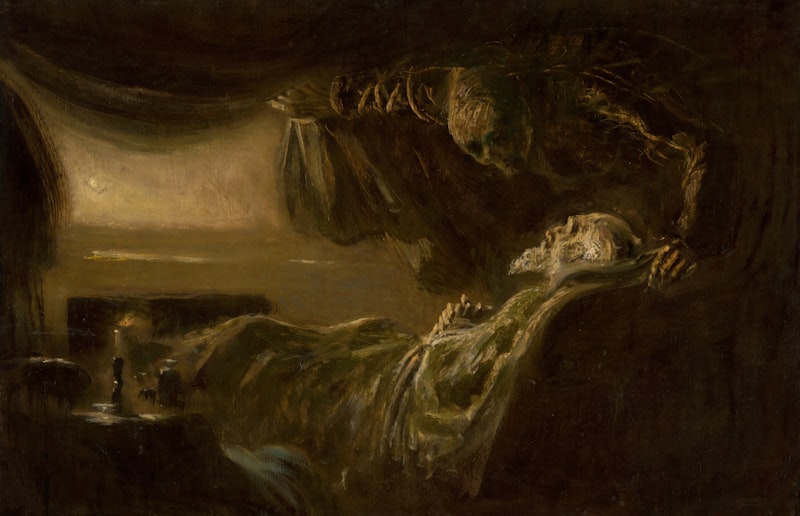
Deathbed Escorts and Visions, often categorized under the broader umbrella of deathbed phenomena, refer to the auditory and visual experiences reported by individuals who are nearing the end of their lives. These occurrences typically involve the perception of deceased relatives, friends, or spiritual figures who appear to guide the dying person from this life to the next. The defining characteristic of these visions is their seemingly comforting and purposeful nature, often resulting in a profound sense of peace or acceptance in the patient. Unlike typical hallucinations associated with illness or medication, these experiences are frequently lucid, coherent, and often described with striking detail by individuals who may otherwise be confused or unresponsive.
The fundamental mechanism underlying these phenomena remains a subject of intense interdisciplinary debate, spanning psychology, neurology, and philosophy. From a psychological perspective, these visions may represent a final, powerful cognitive mechanism employed by the mind to process impending mortality and reduce the intense anxiety associated with the final transition. The appearance of familiar, beloved figures—the “escorts”—serves as a psychological anchor, facilitating a perceived continuity of self and relationships beyond physical cessation. These experiences are distinct from delirium, as patients often describe them as profoundly real, sometimes differentiating them clearly from their waking reality while simultaneously accepting their presence as non-threatening.
While the term “visions” suggests a purely visual component, many accounts include auditory elements, such as hearing voices, music, or whispers that communicate reassurance or readiness. The experiences usually occur within hours or days of death, and their consistency across diverse cultures and belief systems suggests a potentially universal component of human psychology when facing death. These occurrences are crucial for understanding the emotional and spiritual needs of the dying, offering unique insight into the final stages of human consciousness and perception.
Historical and Cultural Context
The documentation of deathbed phenomena is not a modern development; accounts of final visions have been recorded in literature and medical records for centuries, though formal psychological study began much later. One of the most influential early works was conducted by physician and psychologist Dr. Karlis Osis in the mid-20th century. Osis, along with later researchers like Erlendur Haraldsson, collected thousands of detailed accounts from nurses and doctors, providing a systematic basis for classifying and analyzing these end-of-life experiences. Their research highlighted the consistent themes—specifically the appearance of deceased loved ones—which differentiated these experiences from typical psychiatric or drug-induced hallucinations.
The historical context of these observations is deeply rooted in the rise of modern parapsychology and thanatology, the scientific study of death. During the mid-20th century, as medical science became increasingly focused on prolonging life, there was also a growing academic curiosity regarding the subjective experiences surrounding death itself. Researchers were keen to distinguish genuine psychological phenomena from superstitious beliefs. The consistency of the “escort” motif—often reporting the presence of a mother, father, or spouse who had previously died—suggested that these were more than random mental firings; they seemed organized around themes of attachment, loss, and reunion.
Culturally, these visions resonate strongly with traditional narratives of the afterlife, where guides or psychopomps facilitate the soul’s journey. This cross-cultural consistency lends weight to the idea that facing impending death triggers deeply ingrained human narratives about transition. The historical record demonstrates that whether the dying person belongs to an Eastern or Western tradition, the sense of being “met” or “accompanied” often provides the same psychological benefit: the alleviation of fear and the acceptance of the inevitable. This historical documentation provides a robust framework for contemporary clinical interpretations.
Mechanisms and Psychological Explanations
Psychology offers several models to explain the origin of Deathbed Escorts and Visions, which generally fall into three categories: neurological/physiological, psychological coping, and anomalous experiences. The physiological explanation posits that as the brain suffers hypoxia, dehydration, or metabolic shifts associated with organ failure, altered states of consciousness arise. These states can certainly produce complex hallucinations. However, the consistent structure, emotional clarity, and lack of fear often reported in DVEs contrast sharply with the disorganized and distressing nature of typical delirium. Furthermore, many DVEs occur when the patient is clinically lucid, challenging a purely physiological reductionist view.
The coping mechanism theory emphasizes the powerful role of the subconscious mind in managing existential threat. Facing the ultimate loss—the loss of self—triggers profound psychological defense mechanisms. The mind may generate comforting imagery, drawing upon the most powerful relational bonds (deceased loved ones), to create a narrative of safe passage. This process acts as a final, highly effective form of psychological integration, resolving unresolved grief and providing closure. The presence of the escort is a symbolic representation of continuity and unconditional love, which is essential for achieving what Erik Erikson termed “Ego Integrity” in the face of despair.
A separate but related psychological concept is the phenomenon of Terminal Lucidity, where patients suffering from severe dementia or other debilitating neurological conditions suddenly experience a temporary return to clarity and coherence shortly before death. DVEs often occur during these lucid windows, suggesting that the phenomena are not solely products of confusion, but perhaps a final, highly organized cognitive event. This complexity necessitates that clinical practitioners avoid immediately dismissing these accounts as merely pathological and instead recognize their therapeutic value in the final hours of life.
A Practical Case Study: The Experience of Escorts
Consider the case of “Joe,” a 78-year-old patient receiving Palliative Care for terminal lung cancer, who had been struggling with anxiety and fear regarding his death. Despite medication, Joe experienced significant restlessness and difficulty sleeping. One afternoon, his nurse entered the room and found Joe gazing intently at the corner of the ceiling, a look of profound peace replacing his usual expression of distress. Joe then softly stated, “Mom and Dad are here. They look wonderful, just like they did at the lake house.” This perfectly exemplifies the central dynamic of Deathbed Escorts: Joe saw his parents in his deathbed escorts and vision hallucinations, which provided immediate solace.
The application of the psychological principle in this scenario follows a clear step-by-step process. First, the patient reaches a physiological and psychological threshold where the reality of impending death is undeniable. Second, the mind, seeking comfort and resolution, accesses powerful memory schemas related to security and unconditional love (represented by the deceased parents). Third, these memories are projected externally as a cohesive vision, providing a highly personalized narrative for the transition. Fourth, the patient interacts with this vision, accepting the presence of the escorts as real and beneficial. In Joe’s case, the vision immediately reduced his measurable anxiety and allowed him to physically relax in a way that medication had failed to achieve.
The crucial element in this practical example is the reaction of the clinical staff. The nurse, trained in hospice and Palliative Care protocols, did not challenge the reality of the vision but instead affirmed Joe’s feelings, asking if his parents had said anything comforting. This validation reinforced the positive psychological effect of the experience, enabling Joe to pass away peacefully hours later, seemingly guided by the presence he perceived. This demonstrates the necessity of validation over confrontation when dealing with DVEs.
Significance and Impact
The study of Deathbed Escorts and Visions holds immense significance for the field of psychology, particularly in thanatology and clinical practice. Primarily, these phenomena offer a unique window into the final processes of human consciousness, challenging strict materialist interpretations of the brain-mind relationship. They underscore the profound human need for meaningful closure and transcendence when faced with existential termination. Psychologically, understanding DVEs helps clinicians recognize that the dying process is not merely biological failure but a complex psycho-spiritual event rich with subjective experience.
The most immediate and practical application of DVE research is within hospice and Palliative Care settings. Knowledge of these visions allows caregivers to anticipate, validate, and incorporate these experiences into their care plans. Instead of treating the visions as pathology requiring suppression, they are treated as therapeutic assets. When a patient reports seeing an escort, the caregiver can use that experience to ease fear, facilitate communication, and reassure the patient that they are not alone. This approach ensures a patient-centered death, prioritizing comfort and dignity over purely physiological management.
Furthermore, these experiences have a significant impact on the surviving family members. When a dying loved one reports a peaceful encounter with a deceased relative, it often provides profound comfort to the grieving family, lessening their immediate sense of loss and facilitating the initial stages of the grief process. The description of the deceased being “happy” or “ready to go” transforms the narrative of death from one of abandonment and suffering to one of transition and reunion. Thus, DVEs serve as a psychological bridge not only for the dying but also for those they leave behind.
Connections and Relations
Deathbed Escorts and Visions are intricately connected to several other key psychological and medical concepts, primarily falling under the broader category of **Psychology of Consciousness** and **Clinical Psychology**. The most frequently compared phenomenon is the Near-Death Experience (NDE). While both involve altered states of consciousness, the experience of DVEs occurs while the patient is actively dying, usually confined to a bed and aware of the process, whereas NDEs occur during a physical crisis (e.g., cardiac arrest) from which the patient recovers. NDEs often involve out-of-body experiences, tunnels, and life reviews, which are less frequent components of the more intimate and relational DVEs.
Another related concept is the aforementioned Terminal Lucidity. While lucidity is the return of mental clarity, DVEs are the specific content that often appears during this period of clarity. The relationship is symbiotic: the return of organized cognitive function allows the dying individual to articulate the vision of the escort, making the DVE reportable and distinguishable from confused ramblings. Additionally, DVEs are sometimes confused with simple delirium, but careful clinical differentiation is key. Delirium is characterized by fragmented thought, disorientation, and fluctuating levels of consciousness, whereas DVEs are often emotionally calming, organized, and focused on the theme of transition.
Finally, these visions relate closely to the psychological study of attachment theory and grief. The appearance of primary attachment figures (parents, spouses) in the visions highlights the enduring power of these bonds even at the moment of death. The mind utilizes these foundational relationships to ease the anxiety of separation. Therefore, DVE research informs not only how we die, but also how the deepest psychological relationships function as coping resources throughout the entire lifespan, right up until the final moments.