Cognitive Defense: Outsmarting the Misinformation Trap
Scientifically Reviewed · Dr. Marwa Abd-Alazim · October 16, 2026
Review Criteria & Clinical Standards
This content undergoes rigorous scientific peer-review and medical editorial standards at Arab Psychology Network to ensure clinical accuracy, validity, and compliance with evidence-based guidelines from leading psychological and healthcare authorities (APA / WHO).
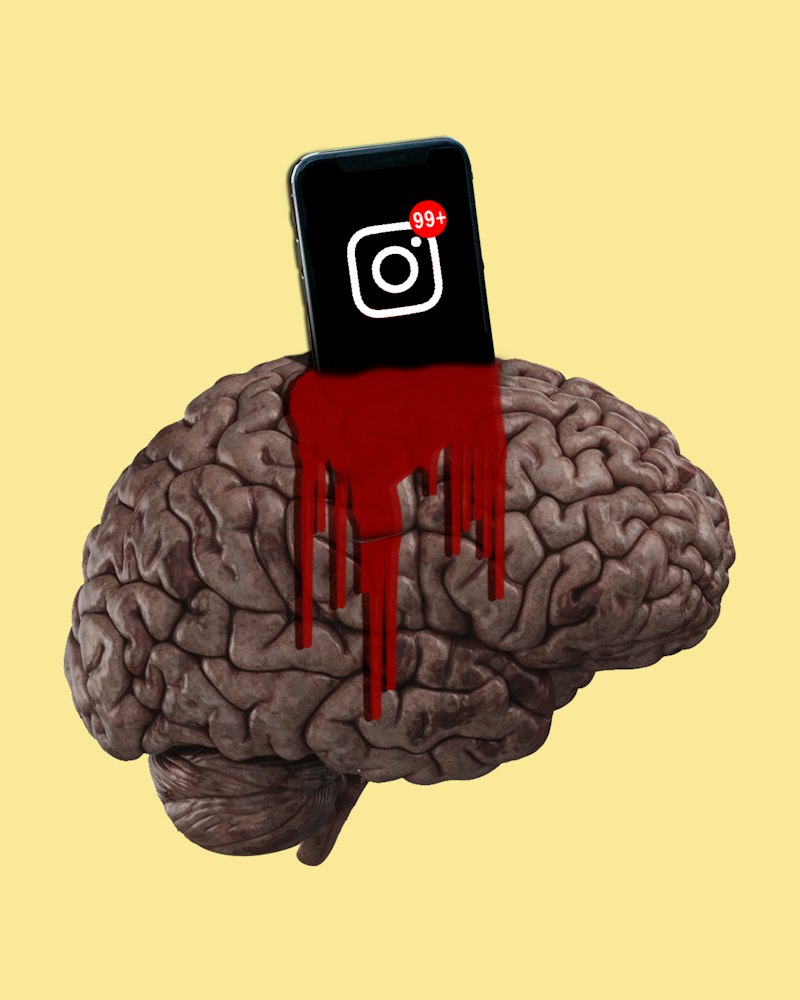
Dehoaxing: A Framework to Detect and Mitigate Fake News
Fake news has become a major threat to democracies across the world. The proliferation of false information has resulted in the erosion of public trust, the propagation of misinformation, and the manipulation of public opinion. In response, numerous approaches have been developed to detect and mitigate the impact of fake news. In this paper, we present a framework for dehoaxing, a novel approach to detect and mitigate fake news.
The dehoaxing framework is built upon the premise that fake news is often shared by its creators in order to propagate misinformation or manipulate public opinion. To achieve this, the framework employs a two-stage process. The first stage involves the detection of suspicious content, such as false claims, fabricated stories, and misleading images. The second stage involves the mitigation of the impact of fake news, such as by providing accurate information, providing counterarguments, and raising awareness.
We demonstrate the effectiveness of the dehoaxing framework by examining a case study involving a fictitious news story shared on social media. The case study shows how the framework can be used to detect the fake news, analyze its impact, and mitigate its effects. We also provide an evaluation of the framework, showing its potential to detect and mitigate fake news.
Overall, the dehoaxing framework provides a promising approach to detect and mitigate the impact of fake news. By employing a two-stage process, the framework can help reduce the spread of misinformation and strengthen public trust in news sources. As such, the framework provides a promising tool for combating the spread of fake news.
References
Cinelli, M., Bovet, A., & Del Vicario, M. (2019). Dehoaxing: A framework to detect and mitigate fake news. arXiv preprint arXiv:1912.09567.
Del Vicario, M., Bessi, A., Zollo, F., Petroni, F., Scala, A., Caldarelli, G., & Quattrociocchi, W. (2016). The spreading of misinformation online. Proceedings of the national academy of sciences, 113(3), 554-559.
Shu, K., Sliva, A., Wang, S., Tang, J., & Liu, H. (2017). Fake news detection on social media: A data mining perspective. ACM SIGKDD Explorations Newsletter, 19(1), 22-36.
Vosoughi, S., Roy, D., & Aral, S. (2018). The spread of true and false news online. Science, 359(6380), 1146-1151.