Déjà Vu: Why Your Brain Recycles Reality
Scientifically Reviewed · Dr. Marwa Abd-Alazim · October 15, 2026
Review Criteria & Clinical Standards
This content undergoes rigorous scientific peer-review and medical editorial standards at Arab Psychology Network to ensure clinical accuracy, validity, and compliance with evidence-based guidelines from leading psychological and healthcare authorities (APA / WHO).
The Core Definition of Déjà Vu
Déjà Vu (DV) is fundamentally defined as a compelling, yet often transient and unsettling, subjective experience of recognizing a present moment or situation as having been encountered or lived through previously, even though the individual retains no conscious, explicit recollection of the specific past event. This feeling of pre-experiencing, which translates literally from French as “already seen,” represents a unique memory anomaly that bridges the gap between familiarity and conscious recall, creating a strong sense of knowing without the underlying factual basis required to justify that feeling. It is a common phenomenon, estimated to be experienced by a vast majority of the healthy population—ranging between 60 and 80 percent—making it a fascinating neurological and Déjà Vu mystery studied across various scientific and philosophical disciplines, including neurology, cognitive science, and philosophy of mind.
The core mechanism believed to underlie Déjà Vu involves a temporary malfunction or asynchronous processing within the brain’s memory retrieval systems, particularly those responsible for recognition. Unlike normal memory processing, where sensory input is simultaneously matched with both familiarity signals and contextual recall, DV is thought to occur when the brain mistakenly perceives a new input as highly familiar without being able to retrieve the accompanying details of the supposed past encounter. This is often conceptualized as a “split perception” theory, where the brain’s initial rapid processing of a scene, perhaps under conditions of distraction or fatigue, is immediately followed by a second, conscious processing, leading the second perception to feel like a repetition of the first. This fundamental error in distinguishing between novel and previously encountered stimuli is central to most modern cognitive explanations of the phenomenon.
A crucial distinction must be made between the simple feeling of familiarity and the full Déjà Vu experience. While familiarity involves recognizing an element (like a face or an object), Déjà Vu involves recognizing the entirety of a complex, dynamic situation or scene. The experience is often accompanied by a fleeting, but intense, sense of precognition—the feeling that one knows precisely what will happen next, only to have this predictive feeling vanish the moment the experience ends. This paradoxical combination of intense familiarity and the inability to recall the supposed prior event highlights the complex interplay between different memory systems in the brain, including those responsible for automatic recognition and those mediating intentional recall.
Historical and Philosophical Context
The formal investigation of Déjà Vu began in the late 19th century, moving the phenomenon from purely anecdotal accounts and philosophical speculation toward empirical psychological inquiry. Key figures in early psychology sought to categorize and explain these transient episodes, attempting to link the subjective experience to verifiable neurological or psychological mechanisms. The Swiss psychiatrist Édouard Claparède was instrumental in early research, focusing on the relationship between reality, memory, and the feeling of recollection. His work, particularly related to amnesia and temporal lobe disorders, suggested that the feeling of familiarity could be dissociated from actual memory retrieval, laying the groundwork for later cognitive theories that frame DV as a processing error rather than a genuine past life memory.
Before empirical studies gained traction, philosophical theories often dominated the explanation of Déjà Vu. These theories ranged from the metaphysical, proposing that the experience was the result of a connection between the present moment and a past life or a hidden spiritual reality, to the purely psychological, viewing it as a manifestation of wish fulfillment or repression. The early 20th century saw the emergence of psychoanalytic interpretations, which sometimes linked the experience to repressed memories or the unconscious desire to return to a past, often infantile, state. However, these interpretations lacked the testable mechanisms provided by the later advancements in Cognitive Psychology and neuroscience, which provided a more grounded, biologically plausible framework for understanding the phenomenon.
The term itself, coined by the French psychic researcher Émile Boirac in the late 19th century, provided a standardized label that allowed researchers across different linguistic and scientific traditions to communicate about this common experience. The recognition that DV was widespread among healthy individuals—and not just a symptom of neurological or psychiatric illness—was crucial. This realization shifted the focus from pathology to normal human cognitive processing, suggesting that DV is likely an occasional byproduct of a highly efficient, though imperfect, memory system constantly striving to match new sensory data against existing memory traces.
Cognitive and Neural Mechanisms
Modern scientific understanding, largely driven by cognitive neuroscience, interprets Déjà Vu primarily as a manifestation of a memory processing malfunction. One of the most supported theories, often called the “divided attention” theory, suggests that when we initially process a complex scene while distracted or focusing only peripherally, the brain forms a weak, non-conscious memory trace. When we subsequently refocus attention on the same scene moments later, the brain registers the strong familiarity signal generated by the weak, non-conscious trace, but because the initial processing was not fully integrated into explicit memory, the individual cannot recall the source of that familiarity, thus experiencing the scene as having happened long ago.
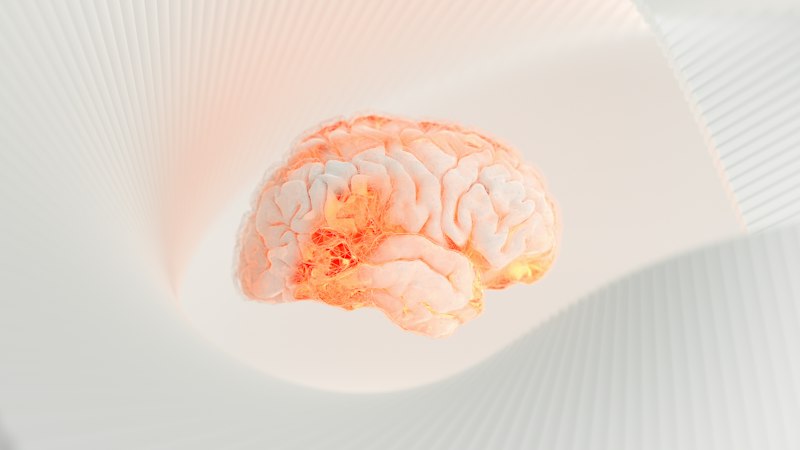
Neurologically, research has strongly implicated structures within the medial Temporal Lobe, particularly the rhinal cortices and the Hippocampus, in the mechanism of Déjà Vu. The rhinal cortices are known to mediate feelings of familiarity, while the hippocampus is critical for the contextual binding and explicit recall of events. Studies using functional magnetic resonance imaging (fMRI) and electroencephalography (EEG), especially in patients with temporal lobe epilepsy, where DV is a frequent aura symptom, indicate unusual electrical activity or transient dysfunction in these regions during DV episodes. It is hypothesized that a brief, abnormal electrical discharge or signal delay allows the familiarity system to fire independently of the contextual recall system, resulting in the isolated, compelling feeling of recognition without the corresponding memory data.
Another significant cognitive theory is the “Gestalt familiarity” hypothesis, which suggests that Déjà Vu is triggered when the current arrangement of elements in a new environment matches the spatial layout of an entirely different, previously encountered setting, even if the individual objects within the scene are new. For example, the arrangement of furniture, windows, and doors in a new restaurant might strongly mirror the layout of a completely forgotten classroom from childhood. The brain registers the overall geometric congruence and spatial context as deeply familiar, but because the specific details of the past scene are not recalled, the mind mistakenly attributes the familiarity to the current situation itself, creating the illusion of having lived through that exact moment before.
The Subjective Experience: Déjà Vécu and Related Phenomena
The subjective nature of Déjà Vu is highly varied, leading researchers to classify several related sensations that fall under the umbrella of “paramnesia.” While Déjà Vu specifically means “already seen,” other related experiences include déjà entendu (“already heard”) and déjà senti (“already felt”). The most intense and encompassing variant is Déjà Vécu (“already experienced” or “already lived through”). Déjà Vécu is characterized by an overwhelming conviction that the current situation is not just familiar, but is being actively and precisely relived, often accompanied by a narrative quality where the individual feels they can predict the immediate future sequence of events. This powerful, immersive sensation is generally considered less common in the healthy population and is more frequently reported in clinical populations, particularly those with epilepsy.
The phenomenological aspect of DV involves the immediate feeling of incongruity; the conscious mind simultaneously knows the situation is new (explicit knowledge) while the recognition system insists it is old (implicit familiarity). This cognitive conflict is what makes the experience so memorable and often unsettling. Many individuals report feeling a sense of awe, wonder, or profound realization during DV episodes, as if they have momentarily glimpsed a hidden world or an alternate reality. This spiritual or metaphysical interpretation is likely a coping mechanism to explain the strong dissonance between the feeling of recognition and the logical reality that the event is truly novel.
The intensity of the feeling is highly correlated with the context in which it occurs. DV is more common in states of fatigue, stress, or when traveling to unfamiliar places, suggesting that environmental novelty combined with temporary cognitive vulnerability might increase the likelihood of memory misfiring. The experience is typically fleeting, lasting only seconds or minutes, and rarely interferes with daily functioning in healthy individuals, although those who experience chronic or extremely intense episodes often seek psychological explanations due to the disturbing nature of the cognitive breakdown.
A Practical Example of Déjà Vu
To illustrate the mechanism of Déjà Vu, consider a scenario involving a student entering a new coffee shop for the first time while rushing to meet a deadline. The student enters the shop, orders a drink, and sits down at a small table near a window, glancing quickly at the decor and the arrangement of the counter, but their primary focus is on the phone and the pressing work. Later that day, the student returns to the same coffee shop to relax and fully pay attention to the environment. As they look up and take in the specific arrangement of the exposed brick, the vintage poster, and the peculiar placement of a potted plant on a high shelf, they are struck by an overwhelming feeling of Déjà Vu—the conviction that they have sat in this exact spot, observing these exact details, at some point in the distant past.
The “How-To” application of the cognitive theory breaks down this experience into steps involving asynchronous memory processing. The first visit, characterized by divided attention and rushed mental state, allowed the brain’s familiarity system (the rhinal cortex) to register the overall visual and spatial components of the scene, creating an implicit memory trace. However, the explicit memory system (the hippocampus) failed to fully bind this context with the “new event” tag due to the distraction. Upon the second visit, when the student is relaxed and paying full attention, the brain accesses the pre-existing, implicit familiarity trace. Because the trace exists but lacks the corresponding explicit tag of “Coffee Shop Visit 1,” the brain incorrectly attributes the strong sense of recognition to an ancient, unrecallable memory, leading the student to feel they are reliving a moment rather than simply registering a recent, poorly encoded experience.
This example demonstrates why the sensation is powerful but lacks detail. The student does not recall ordering the coffee or rushing; they simply feel that the visual and spatial arrangement of the room is known. If the student could recall the first visit, the experience would simply be normal recognition. The failure to retrieve the contextual details of the *source* of the memory is the defining factor that transforms recognition into the distinct, illusory experience of Déjà Vu.
Significance, Impact, and Clinical Relevance
The study of Déjà Vu holds significant importance for the field of psychology, primarily because it provides a unique window into the functioning, and potential frailties, of the human memory system. As a non-pathological, transient cognitive error, DV allows researchers to explore the fundamental distinction between the feeling of familiarity (implicit recognition) and the process of actual recall (explicit memory retrieval). By understanding how these systems can decouple, researchers gain insight into the intricate mechanisms underlying normal memory encoding, storage, and retrieval, which is essential for developing models of cognitive function.
In applied psychology and clinical settings, the concept of Déjà Vu is crucial, particularly in neurology. While common in healthy individuals, frequent, prolonged, or intense episodes of DV can be a key indicator of underlying neurological conditions, most notably Temporal Lobe Epilepsy (TLE). For TLE patients, DV often serves as an “aura,” a sensory or psychic warning sign that precedes a seizure. In such cases, the DV episode is not a simple cognitive quirk but a consequence of abnormal, localized electrical activity originating in the temporal lobe, highlighting the deep physiological basis of the phenomenon. Therefore, understanding the characteristics of pathological DV versus benign DV is vital for accurate differential diagnosis in clinical neuropsychology.
Furthermore, the phenomenon has broader implications for understanding mental distress. While most DV is harmless, the extreme forms, such as chronic Déjà Vécu, have been linked to anxiety and depression, particularly when the individual lacks a scientific understanding of the experience and attributes it to spiritual or delusional causes. Counseling and psychoeducation often play a role in mitigating distress for those who frequently experience these strange phenomena, helping them to frame the experience as a normal, albeit confusing, function of the brain’s internal processes rather than a sign of profound mental breakdown or supernatural occurrence.
Connections to Related Psychological Concepts
Déjà Vu belongs primarily to the subfield of Cognitive Neuroscience and is classified under the broader category of paramnesias—distortions or falsifications of memory. It has crucial connections with several other psychological concepts that involve memory errors and cognitive illusions. One closely related concept is Jamais Vu (“never seen”), which is the opposite experience: a situation or person that is known to be familiar is temporarily perceived as completely unknown or foreign. This phenomenon suggests that the systems responsible for mediating familiarity can be suppressed just as easily as they can be mistakenly activated, reinforcing the idea that these are highly sensitive, dissociable neurological systems.
Another key connection is to source monitoring errors. Source Monitoring refers to the cognitive process that allows us to recall the origin of a memory—for instance, remembering whether we actually saw an event or only imagined it, or whether we heard information from a reliable source. Déjà Vu is fundamentally an extreme source monitoring error: the brain successfully retrieves the familiarity signal (the implicit trace) but fails entirely to monitor or locate the source (the first instance of perception), leading to the erroneous conclusion that the current moment must be the source itself, resulting in the feeling of reliving. This connection highlights the fragility of memory attribution in everyday life.
Finally, DV relates to the broader study of false memories, a field that explores how easily the brain can construct or implant memories that never occurred. While Déjà Vu does not typically involve the construction of a full, false narrative (like confabulation), it shares the core element of the brain generating an intense feeling of certainty about a past event that did not happen in the way it is perceived. Research into DV contributes valuable data to the understanding of how feelings of certainty and recognition can be manipulated or misattributed, which has implications extending to eyewitness testimony and therapeutic memory recovery.