Cartesian Dualism: Are Your Mind and Body Truly One?
Scientifically Reviewed · Dr. Marwa Abd-Alazim · September 19, 2026
Review Criteria & Clinical Standards
This content undergoes rigorous scientific peer-review and medical editorial standards at Arab Psychology Network to ensure clinical accuracy, validity, and compliance with evidence-based guidelines from leading psychological and healthcare authorities (APA / WHO).

DESCARTES, RENE (1596-1650)
Rene Descartes, born in La Haye en Touraine, France, in 1596, was an intellectual polymath whose contributions spanned philosophy, mathematics, and science. Often hailed as the Father of Modern Philosophy, his work fundamentally shifted the trajectory of Western thought, challenging centuries of reliance on Aristotelian scholasticism and ushering in the Age of Reason. Descartes’ intellectual journey was marked by a profound dissatisfaction with the uncertainty inherent in the prevailing educational systems of his time, leading him to embark on a radical quest for absolute, undeniable knowledge. Educated at the Jesuit College of La Flèche, where he received a thorough grounding in classical learning, philosophy, and mathematics, he eventually rejected much of this curriculum, believing that true knowledge required a new methodological foundation built upon rigorous self-examination and rational deduction. This foundational rejection spurred his development of a systematic approach that prioritized internal consistency and clarity, ultimately defining the characteristics of modern philosophical inquiry.
Following his formal education, Descartes briefly pursued law but soon turned to travel and military service, experiences he leveraged not for martial ambition but for the observation of the “great book of the world.” His travels across Europe, including service in the Dutch and Bavarian armies, provided him with isolation necessary for intense intellectual contemplation. A pivotal moment occurred in November 1619, while stationed in Germany, when he experienced a series of dreams that he interpreted as divine confirmation of his mission: to unify all knowledge under the certainty of mathematics. This mystical revelation crystallized his commitment to developing a universal method—the mathesis universalis—capable of solving problems across all disciplines, whether metaphysical, physical, or geometrical. This dedication to method over content is perhaps his most enduring legacy, setting the stage for the scientific revolution that followed.
Descartes spent the latter half of his life primarily in the Netherlands, seeking a peaceful environment conducive to writing and reflection, away from the immediate political and religious turmoil of France. This period proved incredibly fruitful, resulting in his major published works, including the seminal *Discourse on the Method* (1637) and *Meditations on First Philosophy* (1641). His decision to publish some of his most revolutionary ideas, such as the heliocentric theory, in a guarded manner, or even to postpone publication entirely, reflected the intellectual climate following the condemnation of Galileo. Nevertheless, his systematic development of rationalism—the belief that knowledge is primarily derived from reason rather than sensory experience—provided a robust alternative to empirical approaches, positioning him as the key transitional figure between Renaissance humanism and Enlightenment rationalism.
The Quest for Certainty: Foundational Philosophy
Descartes’ philosophy is centrally driven by his desire to establish knowledge upon an unshakable foundation, free from the doubts that plagued traditional philosophical systems. To achieve this, he employed methodological skepticism, a powerful technique wherein he systematically doubted everything that could conceivably be false, including sensory input, external reality, and even mathematical truths (through the hypothesis of an omnipotent deceiver). This radical skepticism was not an end in itself but a tool designed to clear the intellectual slate, ensuring that only ideas that were “clear and distinct” could serve as premises for further reasoning. He sought to identify an ultimate truth that was so self-evident that its denial was logically impossible, thereby providing the necessary Archimedean point for reconstructing the entire edifice of knowledge.
The famous conclusion of this skeptical process is the declaration, “Cogito, ergo sum” (I think, therefore I am). When Descartes attempted to doubt his own existence, he realized that the very act of doubting presupposed a doubter. The existence of the thinking substance (the ‘I’) was proven by the very mental operation of thinking. This realization served as the primary, indubitable truth from which all subsequent knowledge could be deduced. It established the certainty of the mind (*res cogitans*) as a substance whose essence is thought, making epistemology—the theory of knowledge—the starting point for modern philosophy, displacing ontology. Furthermore, the criteria by which the *Cogito* was known—its clarity and distinctness—became the standard for accepting other truths, setting the stage for his subsequent proofs of God and the external world.
Having established the certainty of the self, Descartes then faced the challenge of moving beyond the isolated mind to validate the existence of external reality. He argued that the mind contains the idea of God—a perfect, infinite being—and that such an idea could not have originated solely within the finite, imperfect human mind. Therefore, God must exist as the cause of this idea. This argument, known as the Cartesian Circle by some critics, was crucial because the existence of a non-deceiving God guaranteed that the clear and distinct perceptions the mind holds regarding the external world (particularly mathematical and physical properties) are reliable. By synthesizing faith and reason in this structured manner, Descartes attempted to provide a philosophical justification for scientific inquiry, ensuring that the rigorous application of human intellect could indeed grasp the objective truths of the universe, moving away from subjective or arbitrary beliefs.
Key Philosophical Contributions: Dualism and the Pineal Gland
Descartes is perhaps most famous for articulating the philosophical position known as Substance Dualism, which posits that reality consists of two fundamentally distinct kinds of substance: mind (*res cogitans*, or thinking substance) and matter (*res extensa*, or extended substance). The essence of the mind is pure thought, lacking physical dimension, weight, or location. Conversely, the essence of matter is extension in space, and it is entirely passive and non-thinking. This radical separation provided a clean philosophical space for the emerging physical sciences, allowing matter to be studied mechanically without recourse to spiritual or vitalistic explanations, while preserving the immaterial nature of the human soul and free will, thereby accommodating theological concerns.
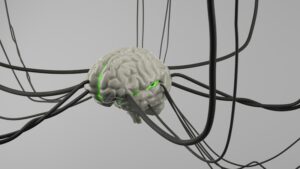
This dualistic framework, however, immediately generated the profound mind-body problem: if the mind and body are entirely different substances governed by different laws (thought versus mechanical motion), how do they interact? It is evident that mental events (like the decision to raise an arm) cause physical events, and physical events (like sensory input) cause mental events. Descartes recognized this interaction problem as critical to understanding human nature. He sought a specific point of interface where the immaterial mind could exert control over the extended body, and where sensory data could be transmitted to the consciousness. This location, he proposed, was the pineal gland, a small, centrally located structure in the brain that he believed was unique to humans and served as the ‘seat of the soul.’
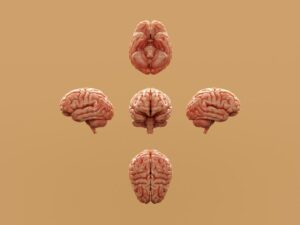
Descartes theorized that the pineal gland, because it was singular and centrally situated (unlike other brain structures which he believed were paired), was the ideal location for the mind to receive sensory information carried by “animal spirits” (a concept referring to fine, subtle matter) and to direct the body’s movements. While his anatomical hypothesis regarding the pineal gland was quickly discredited by later science, the conceptual challenge he articulated—the interaction problem between distinct physical and mental realms—has remained central to philosophy of mind for centuries. His clear demarcation between the material brain (which functions purely mechanically) and the immaterial mind (which governs consciousness and reason) established the terms of debate for subsequent thinkers like Leibniz and Locke, who attempted either to refine, modify, or entirely reject Cartesian dualism.
Revolutionary Mathematics: Analytic Geometry
Beyond his philosophical contributions, Descartes stands as a giant in the history of mathematics, primarily due to his invention of analytic geometry, a profound innovation that synthesized two previously distinct fields: algebra and geometry. Prior to Descartes, geometry dealt with shapes and figures, while algebra dealt with equations and unknown quantities. Descartes’ breakthrough, detailed in his 1637 appendix *La Géométrie*, was the realization that points in space could be uniquely represented by pairs of numbers, and that geometric figures could, therefore, be expressed as algebraic equations. This unification provided a powerful new tool for mathematicians and scientists alike.
The core of this invention is the Cartesian coordinate system, named in his honor. By establishing two perpendicular axes (the x and y axes), Descartes created a framework where any location on a plane could be precisely defined by its distance from those axes. This simple yet revolutionary concept meant that complex geometric problems could be translated into algebraic manipulation, often making them easier to solve. Conversely, algebraic equations could be visualized geometrically, giving abstract concepts tangible representation. This methodology provided the necessary mathematical language for describing motion, curves, and physical relationships with unprecedented precision, directly contributing to the burgeoning field of theoretical physics.
The impact of analytic geometry was immediate and long-lasting. It provided the essential groundwork for the development of calculus by Isaac Newton and Gottfried Leibniz later in the 17th century, as calculus fundamentally relies on the ability to define and analyze variable quantities and the slopes of curves using algebraic functions. Descartes’ mathematical innovations were foundational to the quantitative revolution in science, enabling physicists to model natural phenomena—from planetary orbits to projectile trajectories—using precise mathematical equations. His work effectively transformed mathematics from a static tool for measurement into a dynamic language for describing change and motion, confirming his belief that the certainty of mathematics was the key to unlocking the truths of the natural world.
Scientific Paradigm Shift: The Mechanistic Worldview
Descartes was a vital figure in the scientific revolution due to his forceful rejection of the prevailing Aristotelian physics. Aristotle’s view explained motion and change through teleology—the belief that objects behave according to inherent purposes or “final causes” (e.g., a stone falls because its natural place is the center of the earth). Descartes discarded this framework entirely, proposing instead a rigorous mechanistic view of nature. He argued that the entire physical universe (*res extensa*) operates solely according to fixed, deterministic laws, much like a complex clockwork machine. Every physical event is caused only by prior physical contact and motion; there are no hidden qualities, inherent purposes, or vital forces needed to explain natural phenomena.
This mechanistic philosophy extended even to biological systems. Descartes viewed the bodies of humans and animals as complex, intricate machines, capable of sophisticated actions (reflexes, circulation, digestion) without requiring a mind or soul to govern them. The animal body, in his view, was an automaton—a machine operating purely according to the laws of hydraulics and mechanics. This strict adherence to mechanism was crucial for the emerging modern science because it legitimized the study of the physical world through observation, experimentation, and mathematical modeling, treating matter as inert substance governed only by external forces, thereby paving the way for classical mechanics.
In his work *Principles of Philosophy* (1644), Descartes formulated his own laws of motion, which, while later refined by Newton, were revolutionary for their time. His key principles included the concept of inertia (that a body remains in its state of rest or motion unless acted upon by an external force) and the principle of the conservation of motion (that the total quantity of motion in the universe remains constant). These laws were derived not from empirical observation but primarily from metaphysical principles, such as the immutability of God. Although his specific physics, including his theory of vortices to explain planetary motion, ultimately proved incorrect, his insistence that the physical world must be explained through universal, quantifiable, and deterministic laws set the standard for modern scientific inquiry.
Major Works: Discourse and Meditations
Descartes’ methodological approach and core philosophical tenets are best accessed through his two most influential publications, which often serve as the starting point for students of philosophy. *Discourse on the Method* (1637), published anonymously alongside *La Géométrie* and *La Dioptrique*, was intended as a preface to his scientific essays, outlining the intellectual journey that led him to his new method. The *Discourse* not only introduces the four famous rules of his method—never accept anything unless it is clearly and distinctly known, divide problems into their simplest parts, proceed from the simple to the complex, and review thoroughly—but also contains the first public statement of the *Cogito, ergo sum*, framing it within his personal intellectual autobiography.
Crucially, the *Discourse* also introduced Descartes’ concept of provisional morality, recognizing that while he was engaged in the radical task of tearing down and rebuilding his beliefs on a certain foundation, he needed practical rules for everyday life. This provisional morality included maxims such as obeying the laws and customs of his country, being firm and decisive in action once a course was chosen, and striving always to conquer himself rather than fortune. This practical framework highlights Descartes’ awareness of the societal implications of his radical skepticism, ensuring that the pursuit of intellectual certainty did not lead to complete moral paralysis.
Four years later, Descartes published *Meditations on First Philosophy* (1641), which presents his foundational arguments in a much more rigorous, structured format, written from the first-person perspective as a six-day intellectual exercise. The *Meditations* provide the most detailed exposition of his methodological skepticism, the proof of the existence of God, the distinction between mind and body, and the validation of the external material world. Unlike the *Discourse*, which was a personal narrative, the *Meditations* are a tightly argued metaphysical text, immediately generating controversy and attracting responses from prominent thinkers like Thomas Hobbes and Pierre Gassendi, which Descartes then published along with his own replies, demonstrating a commitment to open scholarly debate.
Influence on Successors and Modern Thought
The influence of Rene Descartes on the subsequent history of philosophy and science is arguably unparalleled. His work effectively launched the Continental Rationalist school, which included figures such as Baruch Spinoza and Gottfried Leibniz, who inherited Descartes’ emphasis on innate ideas, reason, and mathematical deduction as the primary sources of knowledge. Spinoza’s monism, for example, was a direct attempt to resolve the dualistic problems inherent in Descartes’ system by positing only one substance (God or Nature). Leibniz developed the theory of monads and pre-established harmony specifically to overcome the interaction problem associated with the Cartesian pineal gland.
Furthermore, Descartes’ challenge provided the necessary opposition for the rise of British Empiricism. Philosophers like John Locke and David Hume dedicated significant intellectual energy to refuting Descartes’ doctrine of innate ideas, arguing instead that all knowledge originates in sensory experience (*tabula rasa*). Despite their disagreements, both schools accepted Descartes’ fundamental shift in focus: epistemology—the question of *how* we know—became the central philosophical problem, a legacy that reached its peak in the critical philosophy of Immanuel Kant, who sought to synthesize the insights of both Rationalism and Empiricism.
In science, the rejection of Aristotelian physics and the establishment of the mechanistic worldview irrevocably shaped modern inquiry. Descartes’ requirement that all physical phenomena be explained through quantifiable, mathematical terms solidified the scientific method. Even though Newton replaced Cartesian physics with his own laws of gravity and motion, Newton’s work was fundamentally built upon the foundation of analytic geometry and the acceptance of a mathematically describable universe that Descartes had championed. The Cartesian coordinate system remains an essential tool in mathematics, engineering, and physics worldwide, demonstrating the lasting practical utility of his intellectual breakthroughs.
Enduring Legacy and Scholarly Debate
Descartes’ legacy remains a vibrant source of both inspiration and intense scholarly debate. His philosophical ideas have been subjected to rigorous scrutiny since their initial publication. The most persistent and famous critique revolves around the dualist model and the mind-body interaction problem, often termed the “ghost in the machine” by philosopher Gilbert Ryle in the 20th century. Critics argue that postulating an immaterial mind interacting with matter violates the physical laws of conservation of energy and leaves the mechanism of interaction entirely mysterious. Contemporary philosophy of mind, largely materialistic or functionalist, often defines itself in opposition to Cartesian dualism.
Despite these philosophical challenges, Descartes’ methodology and mathematical contributions are universally acclaimed. His insistence on clarity, distinctness, and rigorous deduction established the standard for academic philosophy and scientific theory formation. His work on analytic geometry is seen as one of the most significant intellectual achievements of the 17th century, providing the language necessary for the development of classical physics and modern engineering. Descartes succeeded in his ambition to provide a stable, certain foundation for knowledge, even if later thinkers debated the specific contents built upon that foundation.
In conclusion, Rene Descartes was a pivotal figure who bridged medieval scholasticism and modern science. His works continue to be studied not merely as historical documents, but as active participants in ongoing debates about the nature of reality, consciousness, and knowledge acquisition. His challenge—to doubt everything until certainty is found—remains a powerful imperative for critical thinking, ensuring that the legacy of this French philosopher, mathematician, and scientist continues to inspire research and exploration across the intellectual spectrum.
References
-
Descartes, R. (1637). Discourse on the Method. Oxford: Oxford University Press.
-
Descartes, R. (1641). Meditations on First Philosophy. Oxford: Oxford University Press.
-
Garber, D. (1992). Descartes’ Metaphysical Physics. Chicago: University of Chicago Press.
-
Gaukroger, S. (1995). Descartes: An Intellectual Biography. Oxford: Oxford University Press.
-
Klein, C. (2006). Descartes’s Dualism. Cambridge, MA: Harvard University Press.